If legislators want to put their stamp on a $930 million investment in rural health, they might have to be patient.
That’s because the state Department of Health and Welfare is under a tight deadline to roll out the first round of the federal money.
The feds are requiring states to commit their first-year grants by Oct. 30, with no exceptions. States that hit their deadlines could get a bigger grant in 2027. Stragglers could end up with a smaller grant. Idaho could receive nearly $186 million a year per five years — if it stays on schedule.
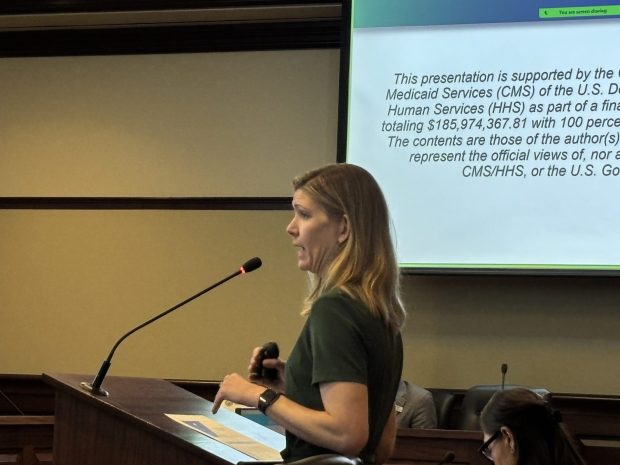
“It’s going to be fairly fast and furious,” Health and Welfare Director Juliet Charron told a legislative committee Thursday morning.
The Rural Health Transformation Program grants — an offshoot of the 2025 One Big Beautiful Bill — will pour $50 billion into states over the next five years. Some of Idaho’s share could go into education programs, to address worker shortages across the state’s health care system.
But the influx of federal money has set off a power struggle in the Idaho Statehouse. Health and Welfare submitted the grant application on the state’s behalf, and in late December, the agency received word that the money was on the way. But during the 2026 session, legislators created a committee to oversee the grant spending.
This panel, the Rural Health Transformation Committee, held its second meeting at the Statehouse Thursday. Eight Republican legislators comprise the committee; Charron is a nonvoting ninth member.
During Thursday’s meeting, one lawmaker got to the heart of the issue.
“Are we locked in,” said Rep. Dustin Manwaring, R-Pocatello, “or do we have any flexibility?”
For this year, Charron said, the flexibility is limited. The Oct. 30 deadline will leave the state scrambling to commit its $186 million — and give legislative committee members very little time to review grants. Given that, first-year programs will likely adhere closely to the goals Health and Welfare spelled out last year, in Idaho’s application for the federal grants.
This, in turn, could affect education programs.
The state wants to use some federal grant money to beef up residencies for medical school graduates — a linchpin for enticing young doctors to begin their careers in Idaho.
Lawmakers, however, might have other ideas about addressing a longstanding physicians’ shortage, which leaves Idaho last in the nation for doctors per capita. They might look at subsidizing additional seats at out-of-state medical schools, allowing Idaho students to attend at a lower cost. Earlier this year, Manwaring floated the idea of using federal grant money to purchase the Idaho College of Osteopathic Medicine, a private, for-profit school in Meridian.
But the prevailing message Thursday was that the clock is ticking, for Idaho and other states.
If states don’t commit their first-year grants by Oct. 30, the feds are required to pull back any unspent money. “There is no leeway,” said Kate Sapra, acting director of the federal Centers for Medicare & Medicaid Services’ rural health transformation office.
Inevitably, the feds could wind up shifting grant dollars around for Year Two — rewarding high-performing states. It is an inherently competitive process, Sapra told Idaho lawmakers Thursday.
“When we compete, rural communities win,” Sapra said.