
A new state law gives qualifying public schools greater freedom over spending state funding, but the timing could keep many from participating in the program’s first year.
The “earned autonomy” program took effect July 1 — after school boards adopted budgets — and the Idaho Department of Education has not yet released guidance or an application for districts and charters to submit.
Department spokesperson Andrea Dearden said staff plan on releasing the materials before school begins next month. Districts and charters that meet certain academic and financial benchmarks would have to apply annually for the program, created through House Bill 883, in order to gain flexibility over spending state money. Virtual charter schools cannot participate.
Dearden said she expects the program to be available for the current fiscal year, using last year’s data, but a lobbyist for the nonprofit that helped write the bill said he’s not sure if any schools will take advantage of it yet.
“I don’t think anybody’s really going to want to go through the exercise of redoing their budget,” Idaho Charter School Network lobbyist Blake Youde told EdNews.
And some school districts that qualify may not be interested in applying.
Cottonwood Joint School District appears to meet the academic requirements, including high standardized test scores and graduation rates, but Superintendent Jon Rehder told EdNews that he doesn’t think the district needs the added flexibility.
“I think at this point we are good,” Rehder wrote in an email. “Our district does a good job of spending funds accordingly.”
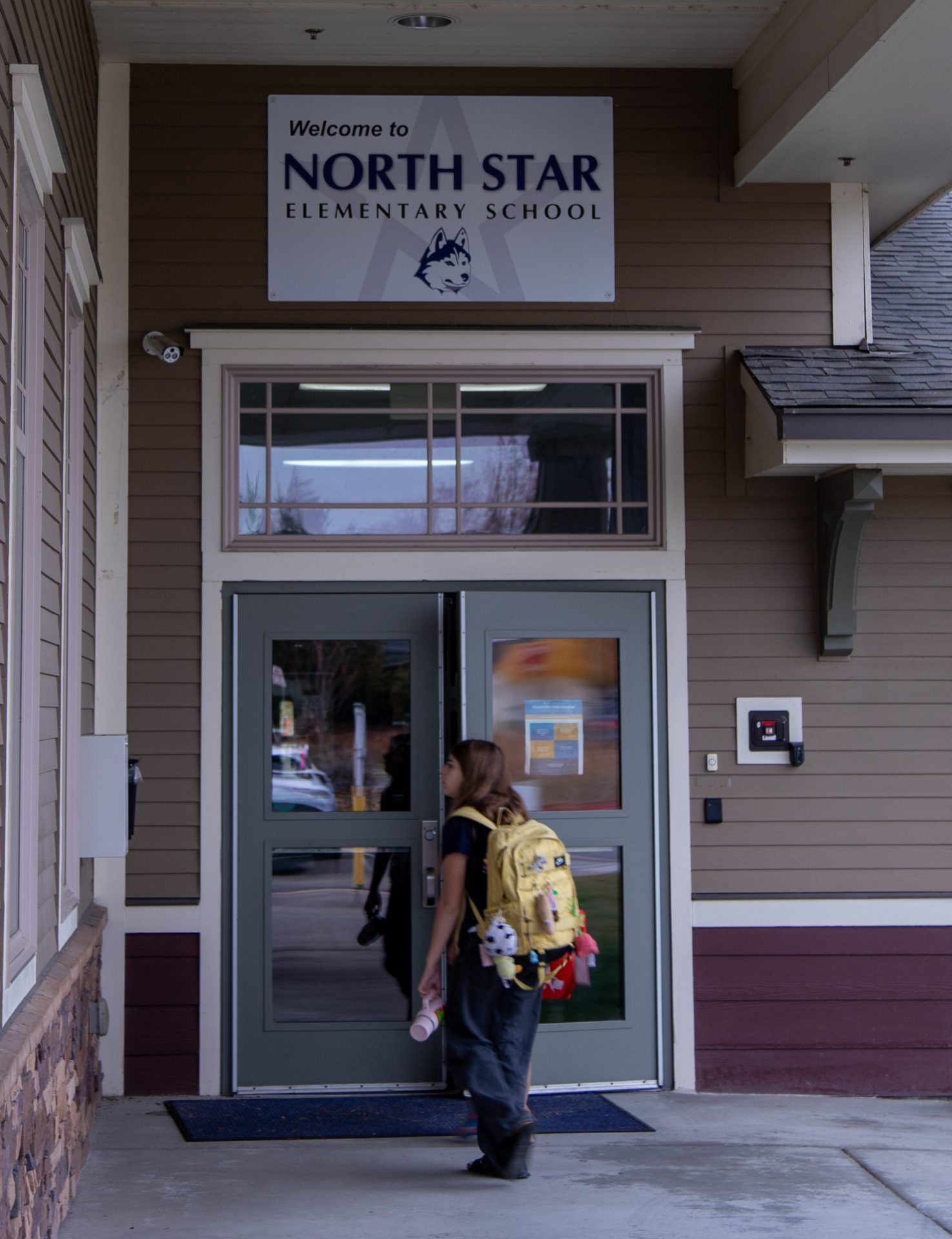
Charter school leaders appear more enthusiastic about the new flexibility.
Kate French, chief operating officer for the nonprofit American Classical Schools of Idaho, said the law won’t have as much flexibility as some charter leaders originally wanted, but it’s a step in the right direction.
“I think as charters we just value maximum flexibility in how we spend our resources,” French told EdNews.
For an example of the benefits of having more autonomy, she said state funding for teachers is based on the career ladder and years of experience. If a charter school wants to hire a teacher from out-of-state who worked at a private school, the state would not recognize that experience. With funding flexibility, the charter could pull funding from another bucket to pay that teacher.
Youde provided another example. If a charter doesn’t need to spend all of its money appropriated for technology, leaders could choose to use that money to buy curriculum.
In addition to more autonomy in spending funds, the new law removes some reporting requirements. The Idaho Department of Education’s data acquisition calendar lists more than 130 reports that public schools are required to submit in fiscal year 2027.
Some schools could eliminate half of a full-time equivalent position by reducing some of those requirements, according to the Idaho Charter School Network.
“There are people spending time doing this that could be doing other things,” French said.
Giving local boards more control
The bill’s House sponsor — Assistant Majority Leader Doug Pickett, R-Oakley — said HB 883 gives public schools what they’ve been asking for: more discretion in spending state funding and fewer reporting requirements.
“How many of us have not heard a desire for that?” Pickett told the House Education Committee in March.
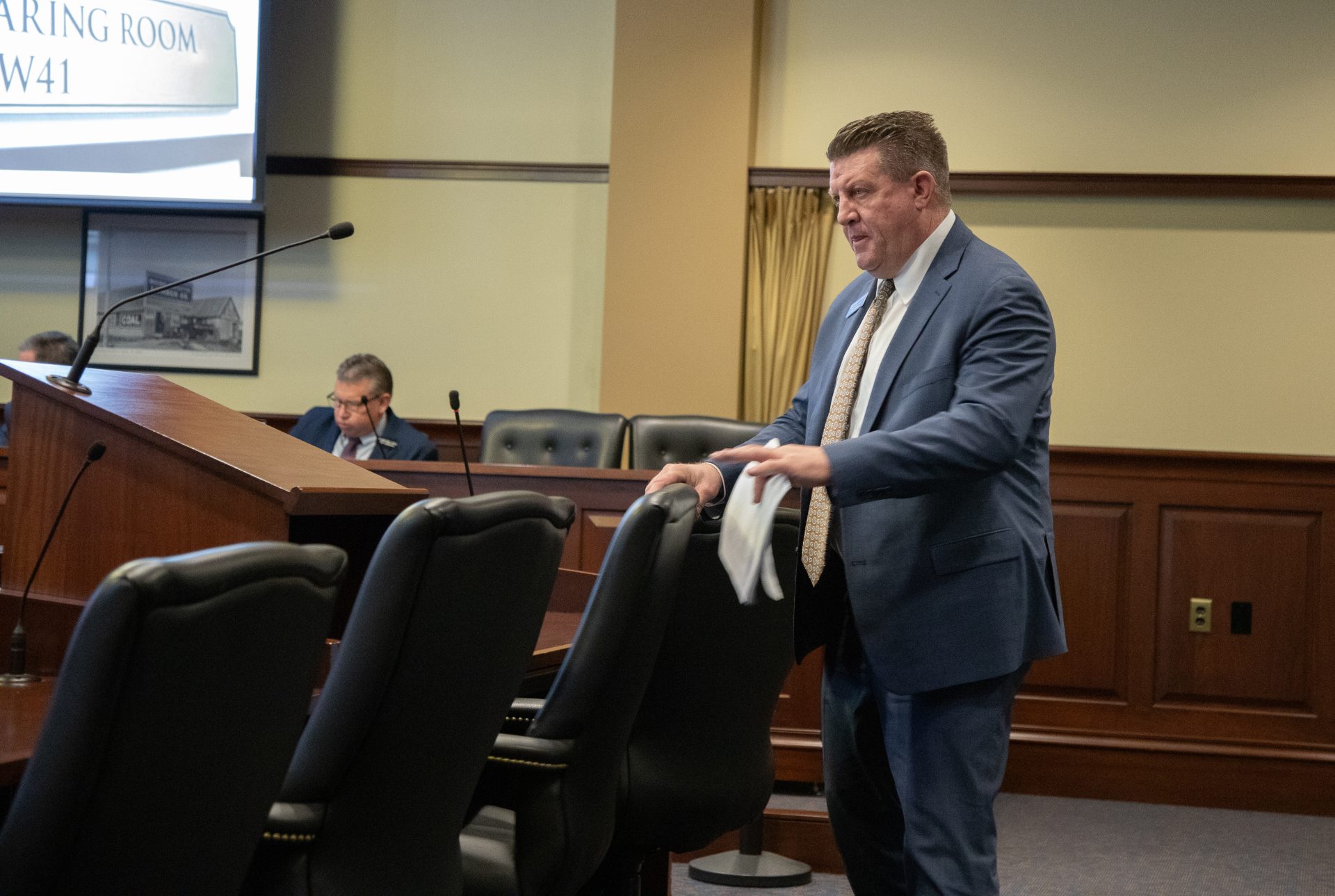
Over in Senate Ed, sponsor and Majority Leader Lori Den Hartog, R-Meridian, said it’s a concept that’s been kicked around for a while in the Legislature.
“One of the things that I think we’ve talked about a lot this session is flexibility for our local school districts,” Den Hartog said in committee. “That those local school boards really can take control.”
The first draft of the bill focused only on charter schools, but legislators wanted to include traditional school districts. The Idaho Charter School Network helped draft the bill with input from the Idaho School Boards Association and the Idaho State Board of Education.
The state does not have a list of which districts and charters qualify, but Emily McClure, another lobbyist for the charter network, has said she expects about 10 of 116 school districts and about 15 of 76 charter schools could qualify.
Districts and charters face different qualification standards
To qualify, school districts must meet three academic benchmarks and show evidence of financial stability over the past three years by completing audits without significant deficiencies or concerns.
The academic benchmarks for school districts are:
- ISAT proficiency in top 20% of school districts, or 15% above state average in language arts and math
- 75% of K-3 students proficient on spring IRI, or a 15% reduction in students scoring below basic annually
- Graduation rate 3% above the state average, or 5% above the state average for graduates who earn a college and career readiness indicator that includes an advanced course
An EdNews analysis of test scores and data on the Idaho Report Card shows at least eight districts may qualify: McCall-Donnelly, Troy, West Ada, Cottonwood, Rockland, Coeur d’Alene, Lake Pend Oreille and Dietrich.
The bill does not include as many specific benchmarks for charter schools. Instead, it pulls three requirements from another section of Idaho code called the Public Charter School Facilities Program.
The benchmarks for charter schools are:
- Good standing in academics, operations and finances for three years, according to a charter’s authorizer
- Strong audits for three consecutive years
- Evidence of strong academic results, including above state average growth or proficiency on standardized tests
At the House Education hearing, Rep. Soñia Galaviz, D-Boise, asked Pickett why school districts have to hit specific numbers to qualify while charters don’t.
He said the language was negotiated among the parties that wrote the bill.
“The benchmarks — I think they are arbitrary,” Pickett said. “There’s nothing magical about whether it’s a 20 or 25 or 15% or whatever the case may be.”
According to the Idaho Charter School Network, the following charters have qualified for the facilities program and may also qualify for earned autonomy.
- Alturas Preparatory Academy
- Anser Charter School
- Connor Academy
- Elevate Academy: Nampa
- Elevate Academy: North
- Gem Prep: Meridian
- Gem Prep: Nampa
- Gem Prep: Pocatello
- Idaho Arts Charter School
- MOSAICS Public School
- North Star Charter School
- Palouse Prairie Charter School
- Payette River Technical Academy
- Sage International School of Boise
- Sage International School of Middleton
- Treasure Valley Classical Academy
- Victory Charter School
- Vision Charter School
- White Pine Charter School
‘How can we make it better?’
The earned autonomy program may be tweaked in a few years.
The bill requires the Idaho State Board of Education to report to the 2029 Legislature how many districts and charters have participated and any changes to student growth or proficiency.
“We’re going to look and see how this is doing,” Pickett said during the session. “We’re going to have some information to make decisions on, and if it’s working, how do we need to tweak it? How can we make it better?”