BALLOT BEAT
Two PACs with East and West coast money spend in Idaho legislative races
Sean Dolan | 10/02/2026
A conservative PAC with East Coast money and a liberal PAC with West Coast money have reported electioneering expenses in Idaho legislative races, with a particular focus on candidate’s stance on the abortion initiative on the November ballot.
The conservative Citizens Alliance of Idaho PAC has reported about $9,500 in independent expenditures on a west Boise race in District 15 between Rep. Steve Berch, D-Boise, and Republican challenger Steve Keyser. Berch’s campaign has raised the most money of all legislative candidates this year with a total of $213,580. Keyser has raised $44,460.
The PAC, which has received $556,000 in contributions this cycle from the Northern Virginia-based Citizens Alliance Political Action Committee, has spent $4,736 in literature opposing Berch and an equal amount supporting Keyser. In the same filing it reported $8,298 in opposition to Proposition 1, the Reproductive Freedom and Privacy Act that would legalize abortion before fetus viability, and post-viability in cases of “medical emergency.”
Planned Parenthood Votes Idaho PAC last week reported a smaller amount of independent expenditures, $957, on 25 candidates running for the Legislature and another $246 in support of Proposition 1.
The PAC this election cycle received $40,000 from a federal Planned Parenthood Alliance PAC based in Seattle and $20,000 from Boise residents Katie and Scott Andrews.
Here’s the list of legislative candidates the Planned Parenthood Votes Idaho PAC is supporting and opposing:
Support (All Democrats) Oppose (All Republicans) Sen. Melissa Wintrow Sen. Dan Foreman Sen. Janie Ward-Engelking Rep. Dustin Manwaring Sen. Carrie Semmelroth Scott Herndon (D1 Senate) Sen. Ron Taylor Sen. James Ruchti Rep. Ilana Rubel Rep. Soñia Galaviz Rep. John Gannon Rep. Anne Henderson Haws Rep. Monica Church Rep. Chris Mathias Rep. Megan Egbert Robin Weldy (D6 Senate) Trish Carter-Goodheart (D6 House A) Megan Woller (D16 House A) Karlie Easley (D22 Senate) Amanda Easley (D22 House B) Kevin Marsh (D26 House B) Mary Shea (D29 House A) Nate Roberts (D29 House B) Jan Brown (D33 Senate) Chance Marshall (D33 House A) Stegner criticizes Little, Legislature in gubernatorial campaign kickoff
Sean Dolan | 07/10/2026
John Stegner said he was raised to believe that when something isn’t working, you step up and fix it.
The former Idaho Supreme Court justice said he is running for governor as an independent after spending his career making decisions based on the Constitution, not on the expectations of a political party.
“We have become so divided by political labels that we’ve started forgetting about the people,” he said. “I think Idahoans are looking for leaders over labels.”
Stegner officially launched his campaign Thursday night during an hour-long Zoom call with about 140 viewers from around the state. He shared how he is different from Gov. Brad Little but was vague in some responses during a Q&A.
He criticized Little for signing off on the $50 million Parental Choice Tax Credit after receiving letters from Idahoans urging him to veto House Bill 93.
“I want to try to do what the people want to do,” Stegner said. “I’m a believer in democracy.”
He criticized the Legislature for reducing taxes, cutting spending and creating the private school tax credit program. In a tight budget year, he said he would have preferred dipping into the fund balance.
“I think the rainy-day fund would have been a great mechanism to avoid cutting,” he said.
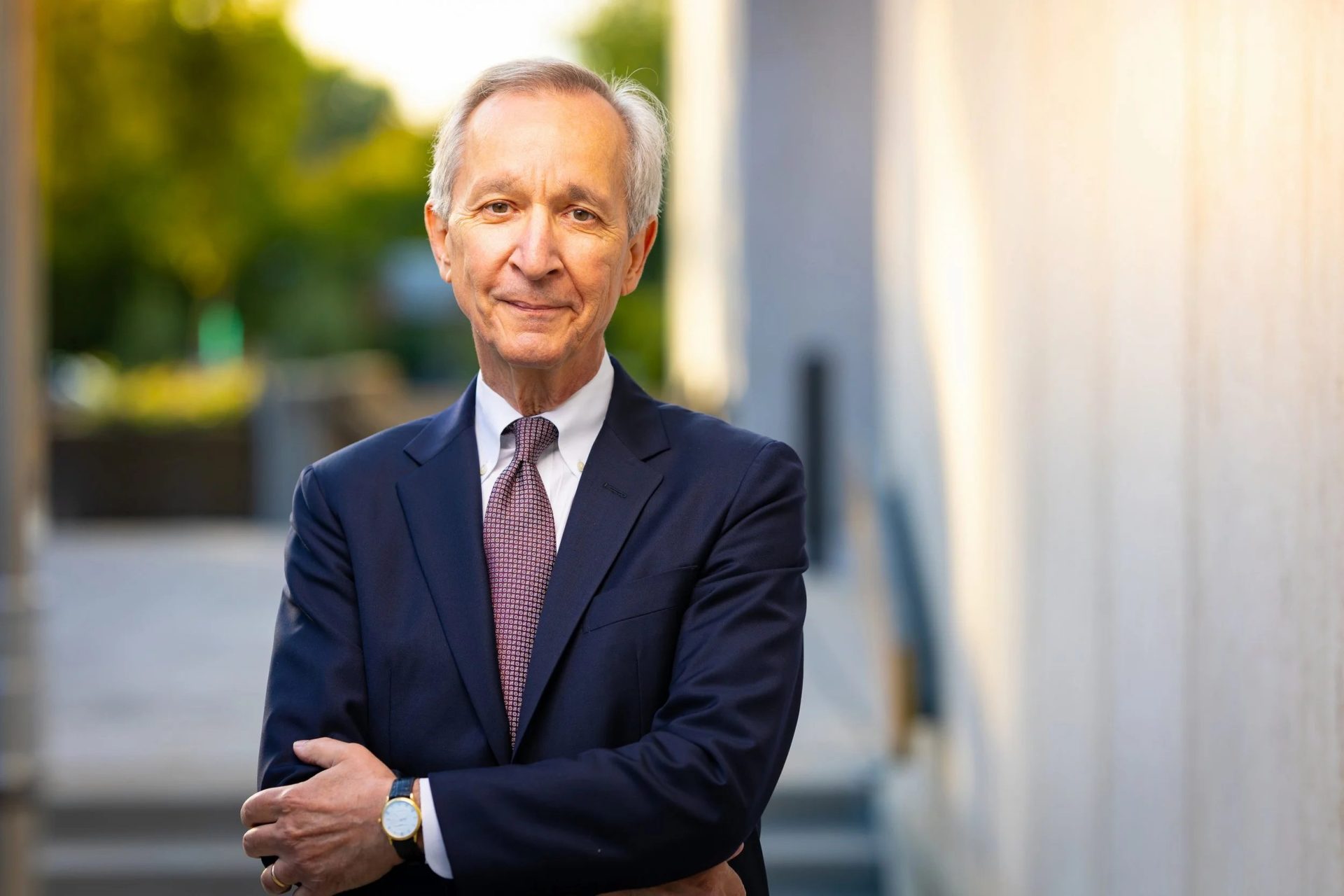
John Stegner (Photo courtesy of Stegner for Idaho) Stegner repeatedly mentioned Idaho’s constitutional duty to fund a general, uniform, thorough public school system — and said the state isn’t doing that right now. The Idaho Republican Party’s new platform plank calling for the abolition of all property taxes, he said, should be a non-starter for the damage it would do to schools.
“We have a solemn obligation to fund our public schools, and if you want to take $410 million away and not replace it with something else, I think you’re not fulfilling your obligation to uphold the Constitution of Idaho,” he said.
In response to a question about how to improve the “dire” education system in Idaho, Stegner said he would like to have smaller classrooms.
“We are now 51st in the country as far as our per capita expenditure for our students in the public school system,” he said. “I find that embarrassing, frankly. I’m tired of being last in the country, as far as our devotion to our constitutional obligation to educate students.”
But Stegner offered scant specifics in some of his responses.
When asked how his platform differs from Democratic candidate Terri Pickens’, Stegner didn’t mention any policy differences.
“One of the reasons I’m running as an independent is I think that’s a way to run a competitive race in this state, and that’s one of the ways in which I am distinct from her,” Stegner said. “That’s, I think, the answer to that question.”
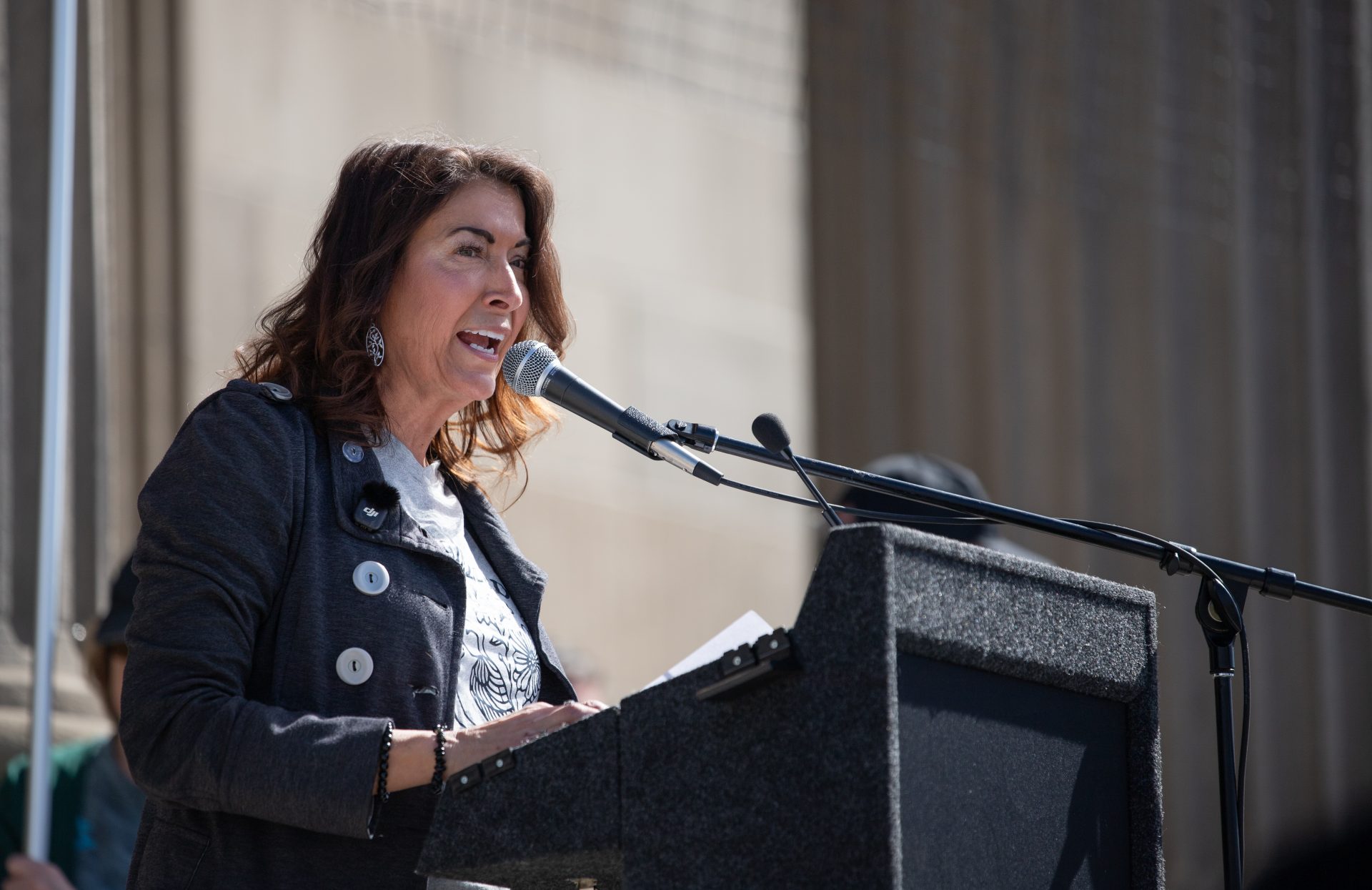
Terri Pickens, a Democratic candidate for Idaho governor, speaks at a No Kings protest on Saturday, March 28, 2026, at the Idaho State Capitol in Boise. (Sean Dolan/EdNews) In response to a question about how his candidacy could split the vote, leading to Little’s re-election, Stegner said his responsibility is not to tell voters who to support, but to earn that support.
“I’m building the strongest campaign I can,” he said. “We have what I think is a very strong and viable team on board right now, and we’re in it to win it.”
On lowering taxes on food and repealing the grocery tax, Stegner did not state his position.
“I know that that’s come up a number of times. I know that it’s never gone anywhere. I think it’s regressive to tax food, but I don’t know that there are the votes available to undo the tax on food right now,” he said.
When asked about his position on LGBTQ rights and the recent law on transgender bathroom use, Stegner said he doesn’t want to go back to “the ways that we used to operate,” without specifically stating a position on the bathroom issue. He has a gay nephew and said it is disconcerting to see challenges to marriage equality gaining ground.
“We don’t want to turn the times back to what they used to be,” he said.
Stegner was open about his thoughts on the Legislature’s culture wars. He said lawmakers are crafting solutions in search of problems.
“I think one of the things that a governor can do is employ the bully pulpit and tell the Legislature to worry about things that matter to people, as opposed to those that are seeking to create, as I said, solutions in search of problems,” he said.
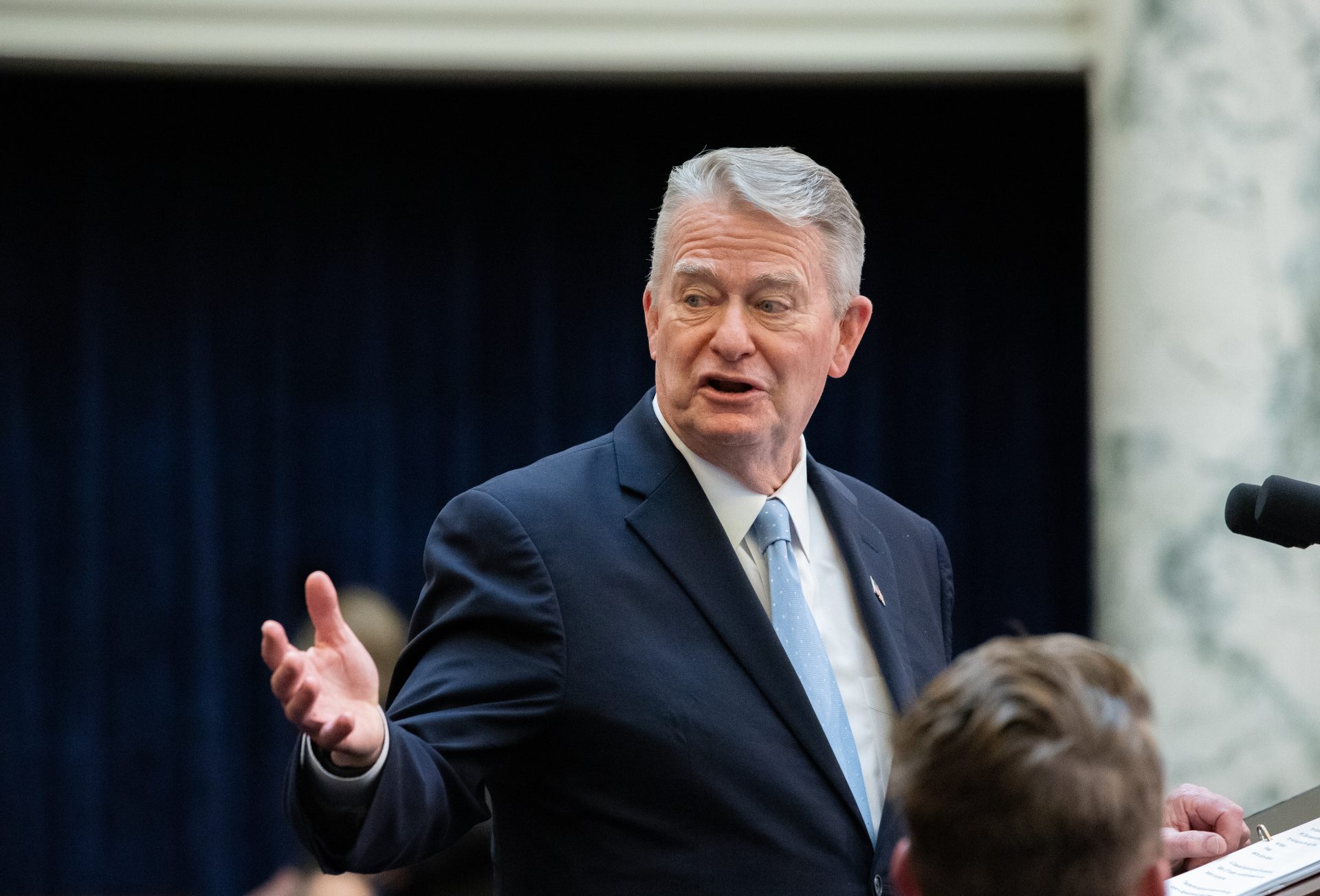
Gov. Brad Little delivers the 2026 State of the State address. (Sean Dolan/EdNews) Stegner and Little are both 72.
One participant asked how Stegner will avoid burning out over the next four months of campaigning across the state. Stegner said he is an “inveterate runner” and ran 1,200 miles last year.
“That’s how I maintain my stamina, and that’s what I’ll continue to do,” he said.
Fundraising
Stegner has raised $393,000 as of Friday morning, compared with Little’s $2.1 million.
Pickens, the Democrat, is far behind both with $142,000 in donations. Nearly all of that money comes from individuals who live in Idaho.
Stegner similarly is mostly funded through individuals, but about 37% of campaign contributors live out of state.
Little’s campaign, on the other hand, is mostly funded through corporate donors, such as Idaho Power, the Idaho Bankers Association and the Idaho Association of Realtors.
The general election is Nov. 3. Visit VoteIdaho.gov for voter information.
Election results to be audited in eight counties
Sean Dolan | 05/29/2026
Ada County election officials let out an exasperated sigh on Friday afternoon when State Controller Brandon Woolf pulled tile No. 17 from a bingo cage.
“Sorry, Trent,” Woolf said, referring to Ada County Clerk Trent Tripple.
The tile means Idaho’s most populous county will be one of eight to have their primary election results audited next week. Officials in Franklin, Canyon, Lemhi, Gooding, Owyhee, Butte, Power and Ada counties will have to open up their books to state auditors for a spot check.
Idaho Secretary of State Phil McGrane said the random post-election audits help verify the accuracy of elections around the state, and make sure counties are complying with Idaho law.
“Most notably, it’s for Idaho voters,” McGrane said. “Just to ensure that when voters go to the polls and they cast their ballot, that they can have confidence that their vote does count.”
Two of his lieutenants oversaw the process. Megan Hill, state elections director, added small wooden tiles into a bingo cage then spun it around for Woolf to draw. Dan Lee, election systems specialist, then added the information into a spreadsheet.
After selecting the eight counties, Woolf picked more tiles to designate which precincts will be audited.
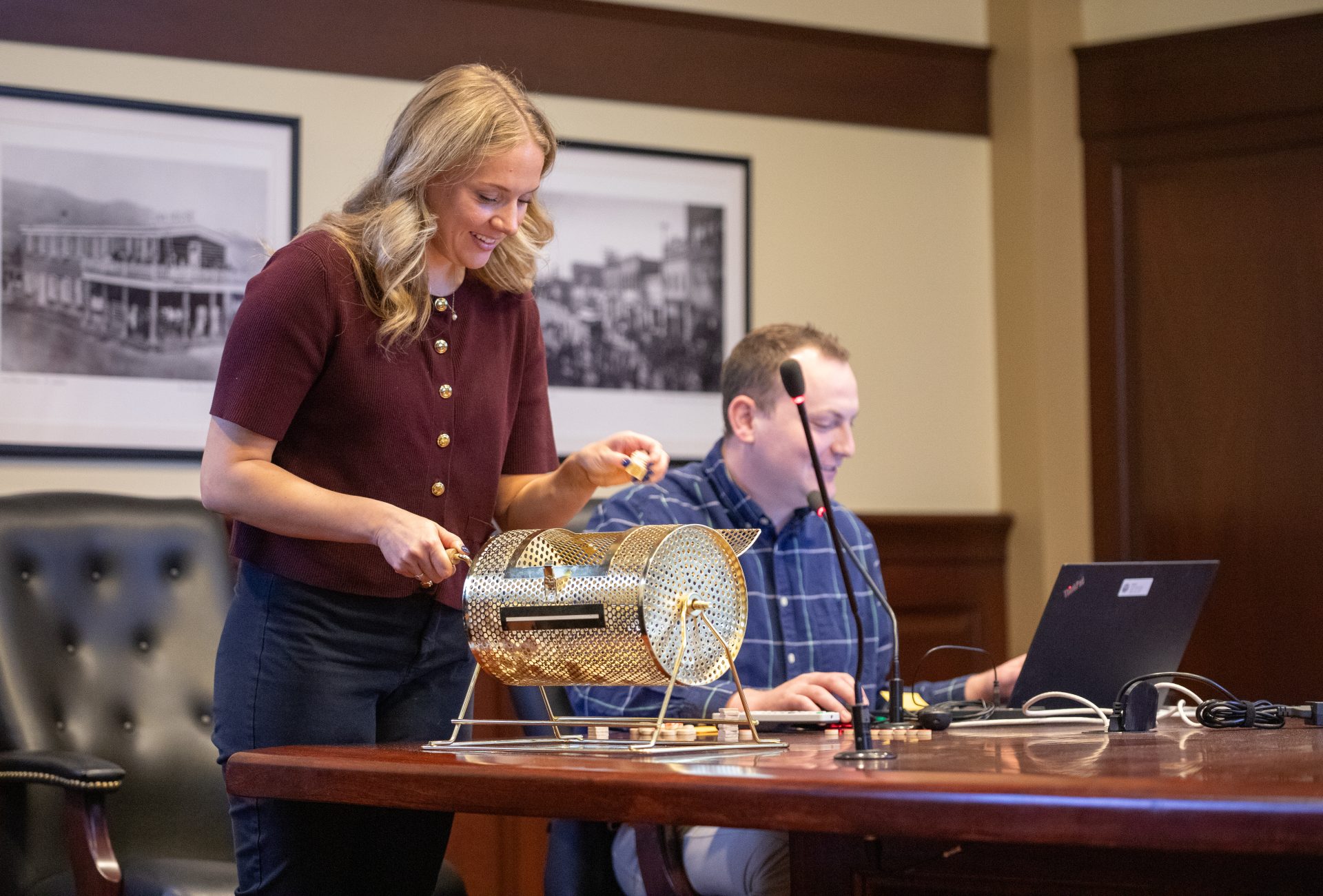
Megan Hill, state elections director, places tiles in a bingo cage for an election audit drawing on Friday, May 29, 2026, at the Statehouse in Boise. (Sean Dolan/EdNews) The drawings marked the beginning of the audit process. McGrane said his staff will make travel arrangements to visit the eight counties.
“We’ll be comparing our audited results to the official results that were posted previously by the county,” McGrane said.
A few hours after the drawing, McGrane’s staff released a schedule for the audits:
- Monday, June 1: Gooding, Lemhi and Franklin counties
- Tuesday, June 2: Canyon County
- Wednesday, June 3: Ada County
- Thursday, June 4: Butte, Power counties
- Friday, June 5: Owyhee County
The audits are open to the public. For more information visit VoteIdaho.gov.
Round 2: Idaho’s general election is set. Here are November’s contenders.
Sean Dolan | 05/28/2026
With the 2026 primary election in the rearview, it’s time to look ahead to the November general election.
All 105 state legislative seats and seven constitutional offices are up for grabs this year.
Eleven of those legislators, however, will not have a contested election in November and will cruise to another term. On the other side of the spectrum, the Legislature is guaranteed to have at least 16 new faces due to the lack of an incumbent on the ballot.
Here’s a breakdown of the legislative candidates, by party:
- 102 Republicans
- 90 Democrats
- 8 independent
- 2 Constitution
- 1 Libertarian
All seven statewide officers will face challengers in November. They are all Republicans, and it has been years since a Democrat was elected to a statewide office.
Gov. Brad Little will have four opponents, one from each party. State superintendent Debbie Critchfield will face Democrat Becky Sundin Mitchell and Constitution Party candidate Teresa Roundy.
After polls closed last Tuesday, the Idaho Secretary of State’s website launched a fresh countdown clock. The general election is 158 days away as of May 28.

VoteIdaho.gov displays a new countdown clock, showing the general election is 158 days away as of May 28. Here is the full list of candidates running in all 105 legislative races and in seven statewide races. Find your legislative district here.
Key: Incumbents in bold, Republicans in red, Democrats in blue, Libertarians in yellow, Constitutionalists in purple and unaffiliated candidates in green.
Legislative races
District Seat Candidates 1 Senate Scott Herndon (Republican)
Steve Johnson (Independent)
House A Jane Sauter (Republican)
Karen Matthee (Democrat)
House B Cornel Rasor (Republican)
Kathryn Larson (Independent)
2 Senate Phil Hart (Republican)
Valerie Wade (Democrat)
House A Heather Scott (Republican)
Birgid Niedenzu (Democrat)
House B Dale Hawkins (Republican)
Sabine Krier (Democrat)
3 Senate Doug “Doug O” Okuniewicz (Republican)
Brian Seguin (Democrat)
House A Vito Barbieri (Republican)
Melissa Mateer (Democrat)
House B Jordan Redman (Republican) 4 Senate Ben Toews (Republican)
Carissa Brewer (Democrat)
House A Joe Alfieri (Republican)
Maxwell McSwain (Democrat)
House B Elaine Price (Republican)
Aaron Hayes (Democrat)
5 Senate Carl J. Bjerke (Republican)
Adam Chapman (Democrat)
House A Ron Mendive (Republican)
Mirna Pleines (Democrat)
House B Tony Wisniewski (Republican)
Lee Wallace (Democrat)
6 Senate Dan Foreman (Republican)
Robin Weldy (Democrat)
House A Colton Bennett (Republican)
Trish Carter-Goodheart (Democrat)
House B Brandon Mitchell (Republican)
Kathy Dawes (Democrat)
7 Senate Cindy Carlson (Republican)
Patrice Yeatter (Democrat)
House A Kyle Harris (Republican)
Larry Nostrant (Democrat)
House B Charlie Shepherd (Republican)
Pete Gertonson (Democrat)
8 Senate Christy Zito (Republican)
John H. Garrett (Democrat)
House A Rob Beiswenger (Republican)
Heather S. Lewis (Independent)
House B Brian Beckley (Republican)
Jared Dawson (Democrat)
9 Senate Brandon Shippy (Republican)
Janice Martell (Democrat)
House A John C. Shirts (Republican)
House B Judy Boyle (Republican)
Lupita Connor (Democrat)
10 Senate Tammy Nichols (Republican)
Nancy M. Parker (Democrat)
House A Mike Moyle (Republican)
Michael Hofferber (Democrat)
House B Bruce D. Skaug (Republican)
Beth Ann McFalls (Democrat)
11 Senate Camille Blaylock (Republican)
Susan Counsil (Democrat)
Ester Ma (Constitution)
House A Kent Marmon (Republican)
House B Debbie Geyer (Republican)
Joshua Preminger (Democrat)
12 Senate Ben Adams (Republican)
Krystal Flippence (Democrat)
House A Jeff Cornilles (Republican)
Sterling Barnett (Democrat)
House B Jaron Crane (Republican)
Curtis James (Democrat)
13 Senate Brian Lenney (Republican)
Letishia Silva (Democrat)
House A Brent J. Crane (Republican)
Cliff Hohman (Democrat)
House B Steven Tanner (Republican)
Cody Gorman (Democrat)
14 Senate C. Scott Grow (Republican)
Kirsten Faith Richardson (Constitution)
House A Ted Hill (Republican)
Jo Daly (Democrat)
House B Josh Tanner (Republican)
Valerie Ruxton (Democrat)
15 Senate Desi Burbank (Republican)
Nancy Gregory (Democrat)
House A Steve Berch (Democrat)
Steve Keyser (Republican)
House B Dori Healey (Republican)
Jae Etchart (Democrat)
16 Senate Soñia Galaviz (Democrat)
Geoffrey Surbeck (Republican)
House A Megan Woller (Democrat)
Jackie Davidson (Republican)
House B Annie Haws (Democrat)
Chandler Stewart Hadraba (Republican)
17 Senate Carrie Semmelroth (Democrat)
Benjamin Chafetz (Republican)
House A John Gannon (Democrat)
James R. Nechwedowich (Republican)
House B Megan Egbert (Democrat)
Justin Alexander Peter Hughes (Republican)
18 Senate Janie Ward-Engelking (Democrat) House A Ilana Rubel (Democrat) House B Brooke Green (Democrat)
Joseph Bishop (Libertarian)
19 Senate Melissa Wintrow (Democrat)
Melissa J. Christian (Republican)
House A Monica C. Church (Democrat)
Bryan Hopkins (Republican)
House B Chris Mathias (Democrat)
Stanley Roach (Republican)
20 Senate Josh Keyser (Republican)
Pamela Renee Wilson (Democrat)
House A Joe A. Palmer (Republican)
Jennifer Stephens (Democrat)
House B James D. Holtzclaw (Republican)
Mary A. Mosley (Democrat)
21 Senate Treg A. Bernt (Republican)
Brenda H. Quick (Democrat)
House A James Petzke (Republican)
Camille Allan (Democrat)
House B Jeff Ehlers (Republican)
Casey Hess (Democrat)
22 Senate Lori Den Hartog (Republican)
Karlie Easley (Democrat)
House A Kelly Walton (Republican)
Loren Petty (Democrat)
House B Jason A. Monks (Republican)
Amanda Easley (Democrat)
23 Senate Todd Lakey (Republican)
Paul Morgan (Democrat)
House A Chris Bruce (Republican)
Paul M. Smith (Constitution)
House B Shawn R. Dygert (Republican)
Joe Fuller (Democrat)
24 Senate Brent D. Reinke (Republican)
Mary Jo Durfee (Democrat)
Anna Germana Scholes (Independent)
House A Clint Hostetler (Republican)
Kevin Moxley (Independent)
House B Chance Requa (Republican)
Enrique Salas Viernes (Democrat)
25 Senate Casey Swensen (Republican)
W. Lane Startin (Democrat)
House A Grayson Stone (Republican)
Marla Palmer (Democrat)
House B Cherie Vollmer (Republican)
Liyah Babayan (Independent)
26 Senate Ron Taylor (Democrat)
Bryan Hyde (Republican)
Shaila Tate (Independent)
House A Mike Pohanka (Republican)
Anita Janis (Democrat)
Bella Schiffler (Independent)
House B Lyle Johnstone (Republican)
Kevin Marsh (Democrat)
27 Senate Kelly Arthur Anthon (Republican)
Margo Saunders (Democrat)
House A Douglas T. Pickett (Republican) House B Clay Handy (Republican) 28 Senate Jim Guthrie (Republican)
Mandy Peace (Democrat)
House A Richard “Rick” Cheatum (Republican)
Kim Jackman (Democrat)
House B Dan Garner (Republican)
Jayson Meline (Democrat)
29 Senate James D. Ruchti (Democrat)
John Crowder (Republican)
House A Dustin W. Manwaring (Republican)
Mary Shea (Democrat)
House B Jennifer Miles (Republican)
Nate Roberts (Democrat)
30 Senate Julie VanOrden (Republican)
Joni Lin Sorensen (Democrat)
House A David Cannon (Republican) House B Ben G. Fuhriman (Republican)
Bree Buckingham (Democrat)
31 Senate Van T. Burtenshaw (Republican)
Kevin Gerrard (Democrat)
House A Jerald Dallas Raymond (Republican)
Kindsey Smith (Democrat)
House B Rod Furniss (Republican)
Wendy Norman (Democrat)
32 Senate Kevin J. Cook (Republican)
Konnor Whitfield (Democrat)
House A Stephanie Mickelsen (Republican)
House B Erin Bingham (Republican)
Kamber Weninger (Democrat)
33 Senate Dave Lent (Republican)
Jan Brown (Democrat)
House A Barbara Ehardt (Republican)
Chance Marshall (Democrat)
House B Marco Erickson (Republican)
Todd DeVries (Democrat)
34 Senate Doug Ricks (Republican)
Ethan Sanford (Democrat)
House A Jon O. Weber (Republican) House B Britt Raybould (Republican)
35 Senate Mark Harris (Republican)
Marty Rotz Kilhefner (Democrat)
House A Mike Veile (Republican)
Walter Boyd (Democrat)
House B Joshua D. Wheeler (Republican)
Mary Kaufman (Democrat)
Statewide races
Office Candidates Governor Brad Little (Republican)
Terri Pickens (Democrat)
John R. Stegner (Independent)
Paul Sand (Libertarian)
Pro-Life (Constitution)
Lieutenant Governor Scott Bedke (Republican)
Eric Myricks (Democrat)
Superintendent of Public Instruction Debbie Critchfield (Republican)
Becky Sundin Mitchell (Democrat)
Teresa Roundy (Constitution)
Attorney General Raúl R. Labrador (Republican)
Lori Hickman (Democrat)
Secretary of State Phil McGrane (Republican)
Shawn Keenan (Democrat)
Controller Brandon D. Woolf (Republican)
Rakesh Mohan (Democrat)
Treasurer Julie A. Ellsworth (Republican)
Kevin A. Jones (Democrat)
Key: Incumbents in bold, Republicans in red, Democrats in blue, Libertarians in yellow, Constitutionalists in purple and unaffiliated candidates in green.
Eagle group circulates influential voter guide while avoiding state disclosure rules
Sean Dolan | 05/19/2026
A federally registered political action committee based in Eagle can endorse candidates and share an influential voter guide without spending enough money to require reporting to the Idaho Secretary of State’s Office, according to its founder.
Eagle resident Winston Sanders created “Conservatives Of” in 2019, shortly after moving from California. It has since expanded across Idaho and sparked chapters across the country. The super PAC has spent $39,290 since 2023, according to the Federal Election Commission.
“Here’s the beauty of our voter guide,” Sanders told EdNews by phone on Friday. “We literally can push it out with literally zero expenditures, and that’s literally not even an exaggeration.”
Sanders, who has a background in marketing, said the PAC is a grassroots effort that does not rely on a lot of money. That grassroots network helps spread the voter guide organically, without any expenditures.
The PAC has national, state and local groups aligned on the same mission: to promote constitutional conservative values and political candidates.
The name allows chapters to add their locality, such as ConservativesOf: America, ConservativesOf: Idaho or ConservativesOf: Meridian. Sanders said the PAC has people all over the country, but Idaho is the most built out.
Money draws scrutiny, he said, and can lead people to question if the group has out-of-state or in-state funding. By avoiding donations and spreading the voter guide for free on its website and social media, he said the group eliminates that problem.
“We’re really kind of milking everything free for all it’s worth,” Sanders said.
Idaho law requires anyone who spends at least $100 per candidate in independent expenditures to report those expenses to the Secretary of State’s Office. That includes federal super PACs. But, according to Sanders, Conservatives Of does not meet that threshold.
Joe Parris, a spokesperson for the secretary of state, told EdNews the PAC is “probably fine” as long as it hasn’t spent money. If the group is just putting a list of names on a website, it’s likely not an expense, so there’s nothing to report.
“If they have a large audience that is on their own going to this guide, or going to these pages, if they didn’t have to pay to promote it — I guess that’s just good business for them,” Parris said.
He said this gets into a tricky area of campaign finance.
“If there’s no finance, what are the rules around it?” Parris said. “Well, that’s just First Amendment.”
Constitutional and Judeo-Christian values
Sanders said Conservatives Of is not party-centric and sometimes endorses third-party candidates, but the Republican Party’s platform aligns “almost entirely with our values.”
It’s a constitutional conservative organization with an emphasis on Judeo-Christian principles. Sanders said group members are not Christian nationalists, but they do believe the founding fathers were Christian.
“They believed that the Judeo-Christian value system, or biblical value system, was essential for liberty and for freedom,” Sanders said. “That includes the liberty and freedom of other people to practice their religions as well as they see fit.”
To make decisions on who to endorse, Sanders said the PAC has two main criteria: a candidate’s voting record and personal relationships with members.
He said candidates can say whatever they want on a survey, but the benefit of having a vast grassroots network is they often have a member who knows a candidate personally and can attest to their conservative bona fides.
Endorsements
Conservatives Of has endorsed Mark Fitzpatrick for governor and more than 250 other candidates running for the Legislature, county offices and precinct committeemen.
The group has endorsed Sen. Dan Foreman, Sen. Christy Zito, Rep. Jordan Redman, Rep. Clint Hostetler, and candidates David Worley, Colton Bennett and James Lamborn.
click here to view the full list of endorsements.
Group opposing political extremism doubles Idaho election spending
Sean Dolan | 05/18/2026
A Boise political action committee that combats extremism in Idaho has spent more than twice as much on legislative primaries this year than in 2024.
Defend and Protect Idaho has reported $739,047 in independent expenditures this year, up from $309,674 two years ago.
The PAC, formed in January 2024, is opposing 13 legislative candidates, mostly incumbents focused on culture war issues, and supporting 18 candidates, typically more mainstream or moderate Republicans.
Its biggest target is Sen. Dan Foreman, R-Moscow, with $97,875 spent to oppose him. He faces Rep. Lori McCann, R-Lewiston.
The biggest beneficiary is Senate candidate and former House Majority Leader Megan Blanksma, with $26,705 spent in support. She is running against Sen. Christy Zito, R-Mountain Home.
A majority of the PAC’s spending this year, 65%, has gone toward opposing candidates. Other targets include District 20 Senate candidate Josh Keyser, District 33 Rep. Barbara Ehardt, District 1 Senate candidate Scott Herndon, and District 30B candidate Julianne Young. See the full list below.
Where the money comes from
A mix of in-state and out-of-state money funds Defend and Protect Idaho, but voters who checked Idaho Sunshine before Monday afternoon would not have known that, due to an error the PAC made in filing contribution reports.
The PAC’s largest donation comes from Way Back PAC, a federal hybrid PAC based in Wyoming, which chipped in $350,000 this year.
But Defend and Protect Idaho chairperson Gary Raney made errors in five timed contribution reports he signed and submitted to the Idaho Secretary of State’s Office since February 2024. The reports say Way Back PAC is based in Sheridan, Idaho, which does not exist. Way Back PAC is a federal committee based in Sheridan, Wyo.
EdNews flagged the error on Monday to both the Idaho Secretary of State’s Office and Defend and Protect Idaho.
“Thank you so much for bringing this (to) our attention,” Defend and Protect Idaho wrote in an email to EdNews on Monday. “This was, indeed, a mistake. We will go correct it right away!”
Two hours after EdNews notified the Secretary of State’s Office, staff updated Idaho Sunshine with the correct information.
Before the correction, the committee profile in Idaho Sunshine incorrectly showed 95% of Defend and Protect Idaho’s contributions came from in-state. After the Secretary of State’s Office corrected the error, the profile now shows 45% of the PAC’s funding comes from in-state.
According to the Federal Election Commission, Way Back PAC received $1,125,000 from the nonprofit Western Futures Fund, also based in Sheridan, Wyoming. Another $350,000 comes from Toolbox, a Virginia-based nonprofit.

A screenshot of Idaho Sunshine at 1 p.m. on Monday incorrectly shows 95% of Defend and Protect Idaho’s funding comes from in-state. 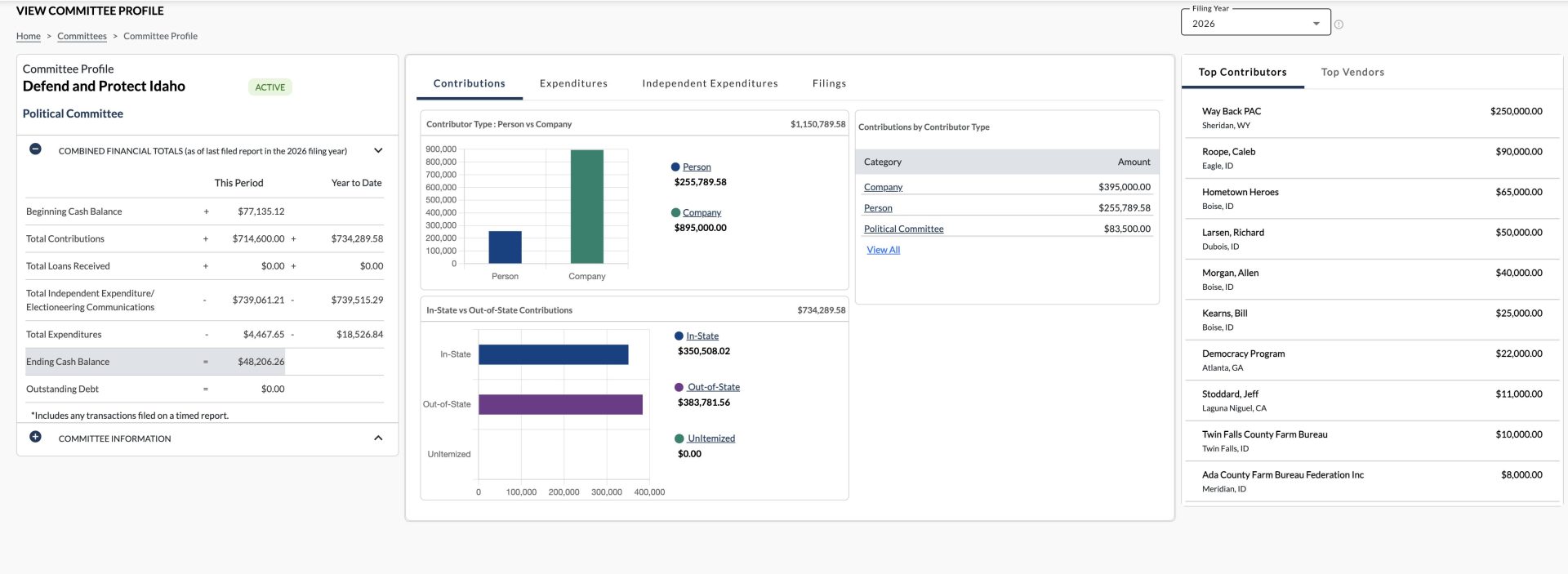
A screenshot of Idaho Sunshine at 3 p.m. on Monday correctly shows 45% of Defend and Protect Idaho’s funding comes from in-state. Where the money goes
Here’s the list of Defend and Protect Idaho’s independent expenditures this year:
Opposition
District/seat Candidate Money spent in opposition Opponent(s) D6 Senate Sen. Dan Foreman $97,875 Rep. Lori McCann D20 Senate Sen. Josh Keyser $66,381 Russ Spencer, Richard Marsh D8 Senate Sen. Christy Zito $65,492 Megan Blanksma, Terry Gestrin D33 House A Rep. Barbara Ehardt $44,214 Connor Cook D1 Senate Scott Herndon $39,921 Sen. Jim Woodward D30 House B Julianne Young $37,622 Rep. Ben Fuhriman D24 Senate Sen. Glenneda Zuiderveld $36,532 Brent Reinke D25 Senate Sen. Josh Kohl $31,990 Casey Swensen D28 Senate David Worley $20,078 Sen. Jim Guthrie D25 House B Rep. David Leavitt $16,138 Cherie Vollmer D35 House A Chad Christensen $12,268 Rep. Mike Veile D4 House B Elaine Price $11,069 Christa Hazel D31 House B Karey Hanks $2,974 Rep. Rod Furniss Total $482,554 Support
District/seat Candidate Money spent in support Opponent(s) D8 Senate Megan Blanksma $26,705 Sen. Christy Zito, Terry Gestrin D1 Senate Sen. Jim Woodward $24,644 Scott Herndon D35 House A Rep. Mike Veile $20,097 Chad Christensen D1 House A Rep. Mark Sauter $18,627 Jane Sauter D30 House B Rep. Ben Fuhriman $18,459 Julianne Young D6 Senate Rep. Lori McCann $17,833 Sen. Dan Foreman D28 House A Rep. Rick Cheatum $17,767 James Lamborn, Mike Saville D28 Senate Sen. Jim Guthrie $17,767 David Worley D31 House B Rep. Rod Furniss $14,974 Karey Hanks D33 House A Connor Cook $14,249 Rep. Barbara Ehardt D24 Senate Brent Reinke $11,914 Sen. Glenneda Zuiderveld D25 Senate Casey Swensen $11,811 Sen. Josh Kohl D6 House A Cindy Agidius $11,741 Colton Bennett D32 House A Rep. Stephanie Mickelsen $9,638 Kelly Golden D23 House A Melissa Durrant $8,000 Rep. Chris Bruce D32 House B Rep. Erin Bingham $6,000 Brian McKellar D20 Senate Richard Marsh $5,980 Sen. Josh Keyser, Russ Spencer D4 House B Christa Hazel $286 Rep. Elaine Price Total $256,492 Idaho’s most expensive primary: Guthrie vs. Worley
Sean Dolan | 05/14/2026
More than half-a-million dollars have been spent on the race between Sen. Jim Guthrie and challenger David Worley, making it the most expensive legislative primary matchup this year.
As of Thursday morning, political action committees have reported spending a combined $375,107 for and against both candidates, and the two campaigns have spent a combined $128,545, for total spending of $503,652. Guthrie, R-McCammon, is running for a ninth legislative term in District 28, which includes Preston, American Falls and rural areas around Pocatello.
Of the $237,205 in PAC spending on Guthrie’s campaign, 89% is in support. Most of that is from mainstream groups funded by the business community.
The longtime legislator is benefiting from $72,392 in independent expenditure support from the Idaho Prosperity Fund PAC, which is aligned with the Idaho Association of Commerce and Industry, and $72,771 from the Idaho Liberty PAC, which received contributions from St. Luke’s and Micron.
Guthrie also has the support of the WinAg PAC and the PAC for Public Lands.
Two PACs funded by out-of-state money oppose the senator. Make Liberty Win, associated with Young Americans for Liberty, has spent $23,203 to oppose Guthrie. The Citizens Alliance of Idaho has spent $1,844 in opposition.
All of these PACs have taken the opposite position on Worley. PACs have spent $137,902 for and against Worley, with 50% of that in support.
The Citizens Alliance of Idaho has spent $10,498 to support Worley. Make Liberty Win has reported $9,220 to support his campaign. The 36-18-1 PAC, funded by Rep. Jordan Redman, R-Coeur d’Alene, has spent $22,872 to support the challenger.
Meanwhile, the Idaho Liberty PAC has spent $35,114 to oppose Worley and Defend and Protect Idaho has spent $20,078 to oppose him.
Six of Idaho’s constitutional officers have weighed in on the race. Attorney General Raul Labrador endorsed Worley, while Gov. Brad Little, Lt. Gov. Scott Bedke, Superintendent of Public Instruction Debbie Critchfield, Secretary of State Phil McGrane and Controller Brandon Woolf have united behind Guthrie.
Honorable mention: Woodward vs. Herndon
The second most expensive race so far this year is the North Idaho rematch between Sen. Jim Woodward and Scott Herndon, both Republicans from Sagle.
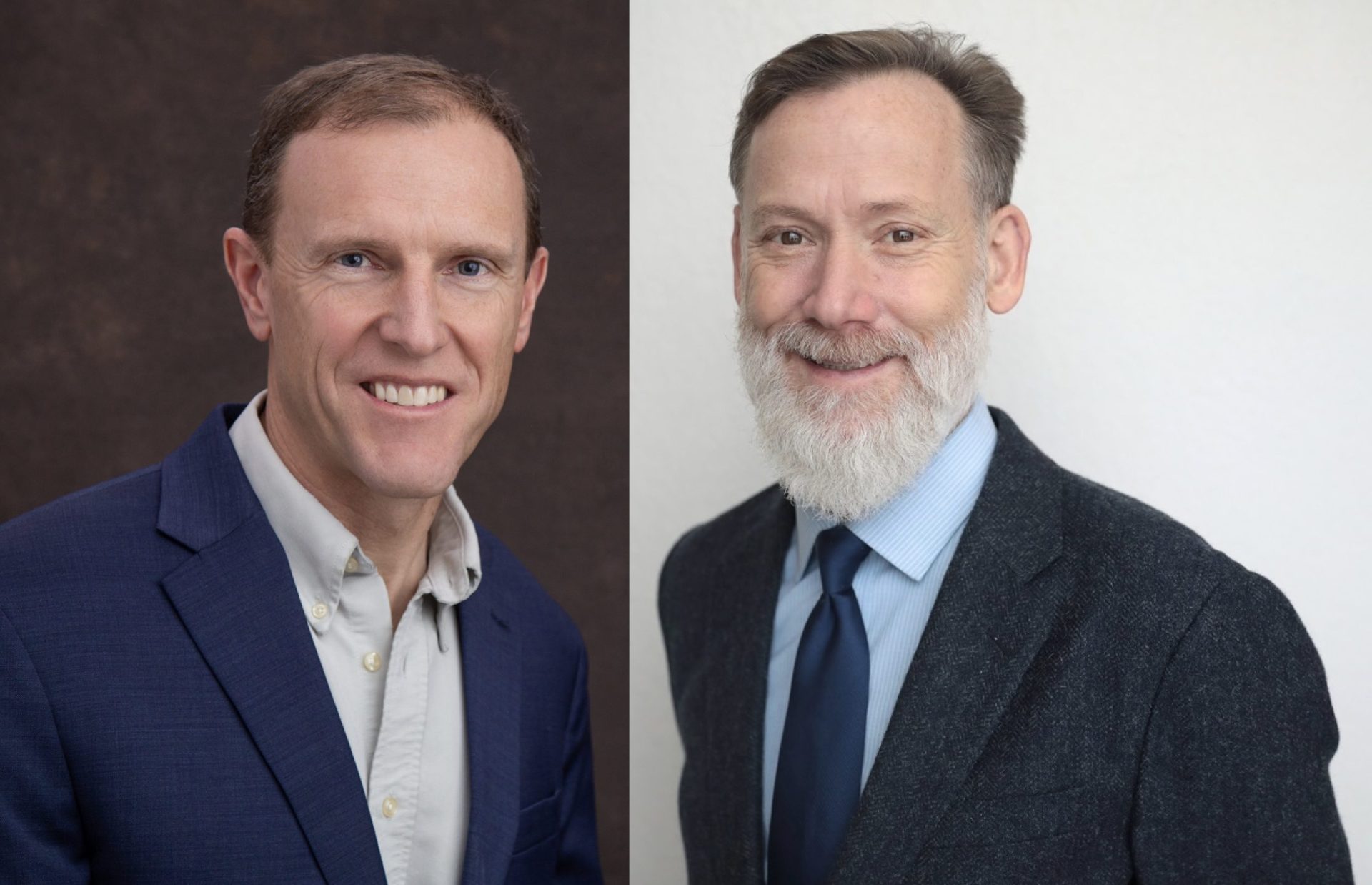
Jim Woodward and Scott Herndon (Campaign photos) PACs have reported spending $134,570 on the race and the two campaigns have spent $133,220, for a total of $267,790.
Herndon, who is to the right of Woodward and wants to eliminate property taxes, has benefited from independent expenditures from Redman’s 36-18-1 PAC and the Idaho Summit PAC. Rep. Josh Tanner, R-Eagle, is the treasurer of that PAC and Redman is chair.
Woodward’s campaign has benefited from independent expenditure support from Defend and Protect Idaho, a PAC that combats political extremism in Idaho, and the PAC for Public Lands.
With six days until the May 19 primary, there will likely be more money poured into these elections from PACs and the campaigns themselves. We will know more about total primary election spending in June.
What to know before voting
Idaho EdNews Staff | 05/08/2026
The May 19 primary is around the corner, and whether you’re voting for the first time or need a refresher, we’ve got you covered.
School districts are asking local taxpayers for $183 million in funding. Legislative seats across the state are up for grabs. Gov. Brad Little has attracted a crowded field of primary challengers.
Here’s a quick guide to help you prep.
Where and when to vote
Click here to find your polling place. Polls are open from 8 a.m. to 8 p.m. on Election Day.
Idaho voters who are out of town on Election Day or who want to vote from home can request an absentee ballot here. The deadline to request an absentee ballot is 5 p.m. Friday, May 8.
How to register
Voters can register online here up to 11 days before an election. They can also register at their polling place with a photo ID and proof of residence. Click here to check your registration.
NOTE: In Idaho, political parties choose which voters may participate in their primary election. Learn more here.
Any voter may choose to vote via a nonpartisan ballot, which includes ballot measure questions and judicial positions.
Get a sample ballot
All ballots differ by county, precinct and party affiliation. Reviewing your ballot beforehand can shorten lines and help you research unfamiliar races.
Click here to search for and view your sample ballot.
Find results at IdahoEdNews.org
Check EdNews’ homepage throughout election night for breaking news and results, including a live blog by Kevin Richert and updates on school measures and key races from across the state.
We’ll also share results with our newsletter subscribers. Sign up here if you haven’t.
Find all of our election coverage here.
Five of Idaho’s constitutional officers endorse Sen. Guthrie
Sean Dolan | 05/06/2026
Five of Idaho’s constitutional officers on Tuesday endorsed Sen. Jim Guthrie for re-election, one month after Attorney General Raúl Labrador endorsed his opponent.
Gov. Brad Little, Lt. Gov. Scott Bedke, Superintendent of Public Instruction Debbie Critchfield, Secretary of State Phil McGrane and Controller Brandon Woolf have united behind Guthrie.
Guthrie faces a primary election in two weeks against challenger David Worley, an Idaho National Guard officer and hardline conservative who believes that Christian morality is the “foundation of Western Civilization.” Worley last year filed a religious discrimination lawsuit against Little and the Idaho National Guard. A federal judge dismissed the suit.
Click here to read Worley’s lawsuit and here to read the judge’s order to dismiss.
In a news release paid for by Guthrie’s campaign, the five constitutional officers said Guthrie has a record of “conservative, common-sense leadership” and has championed fiscal responsibility, agriculture, public safety and rural communities. Guthrie represents District 28, which includes Power County and parts of rural Bannock County.
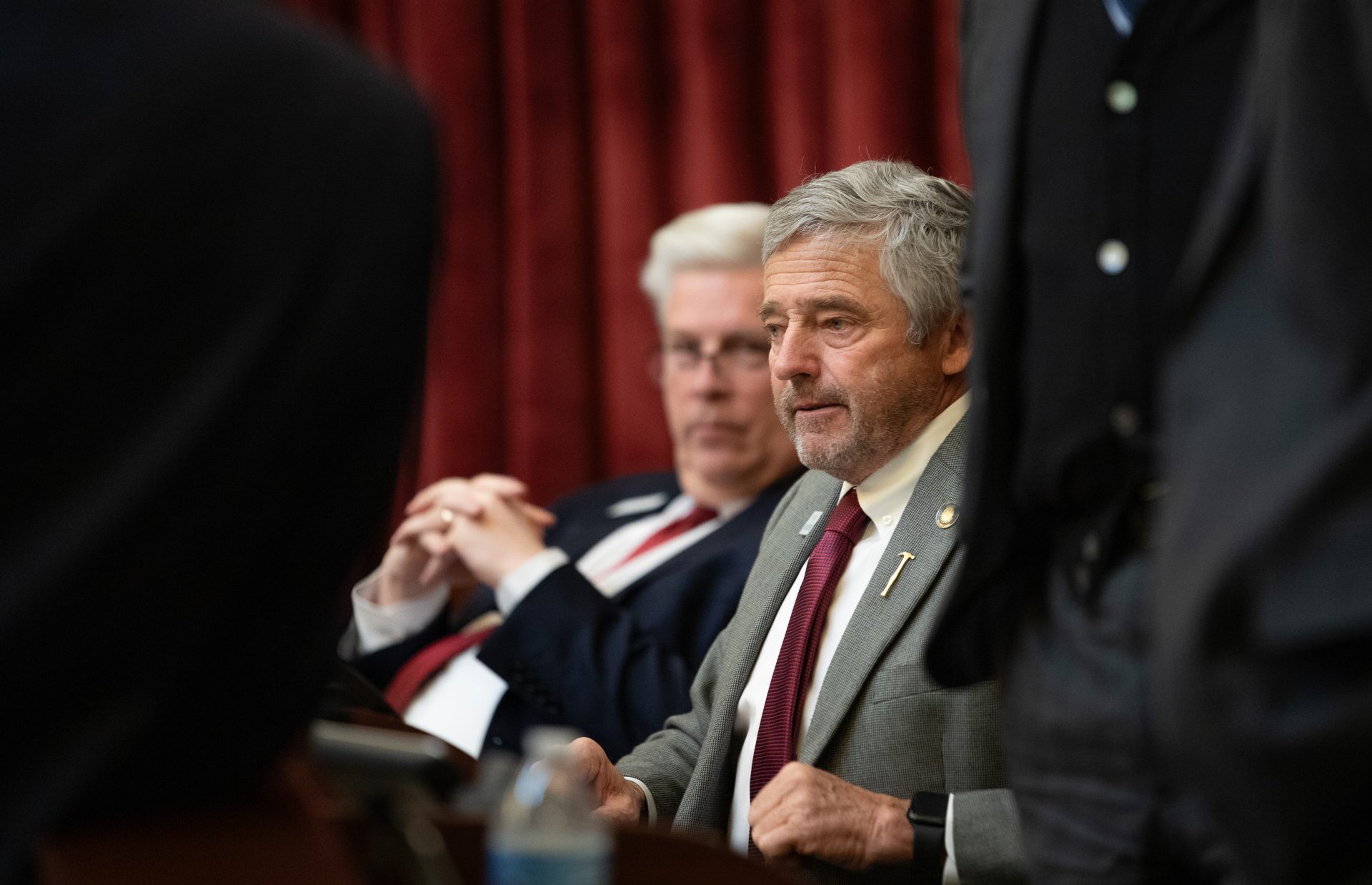
Sen. Jim Guthrie, R-McCammon, works on the Senate floor on Thursday, April 2, 2026. (Sean Dolan/EdNews) “This election is an opportunity to keep strong, dependable leadership in the Idaho Senate, and that means supporting Sen. Jim Guthrie,” Little stated.
Critchfield said Idaho needs Guthrie’s leadership.
“Jim understands a fundamental truth: public education is the fuel for Idaho’s economy,” Critchfield stated. “By investing in our students today, he is building the skilled workforce our businesses need for tomorrow.”
Labrador endorsed Worley in early April. In a news release, Labrador said Worley will fight for Idaho families, support border security and hold government accountable.
“Voters are tired of politicians who campaign one way at home and govern another when they are in Boise,” Labrador stated. “David is different. He’ll bring integrity, courage, and common sense to the Senate.”
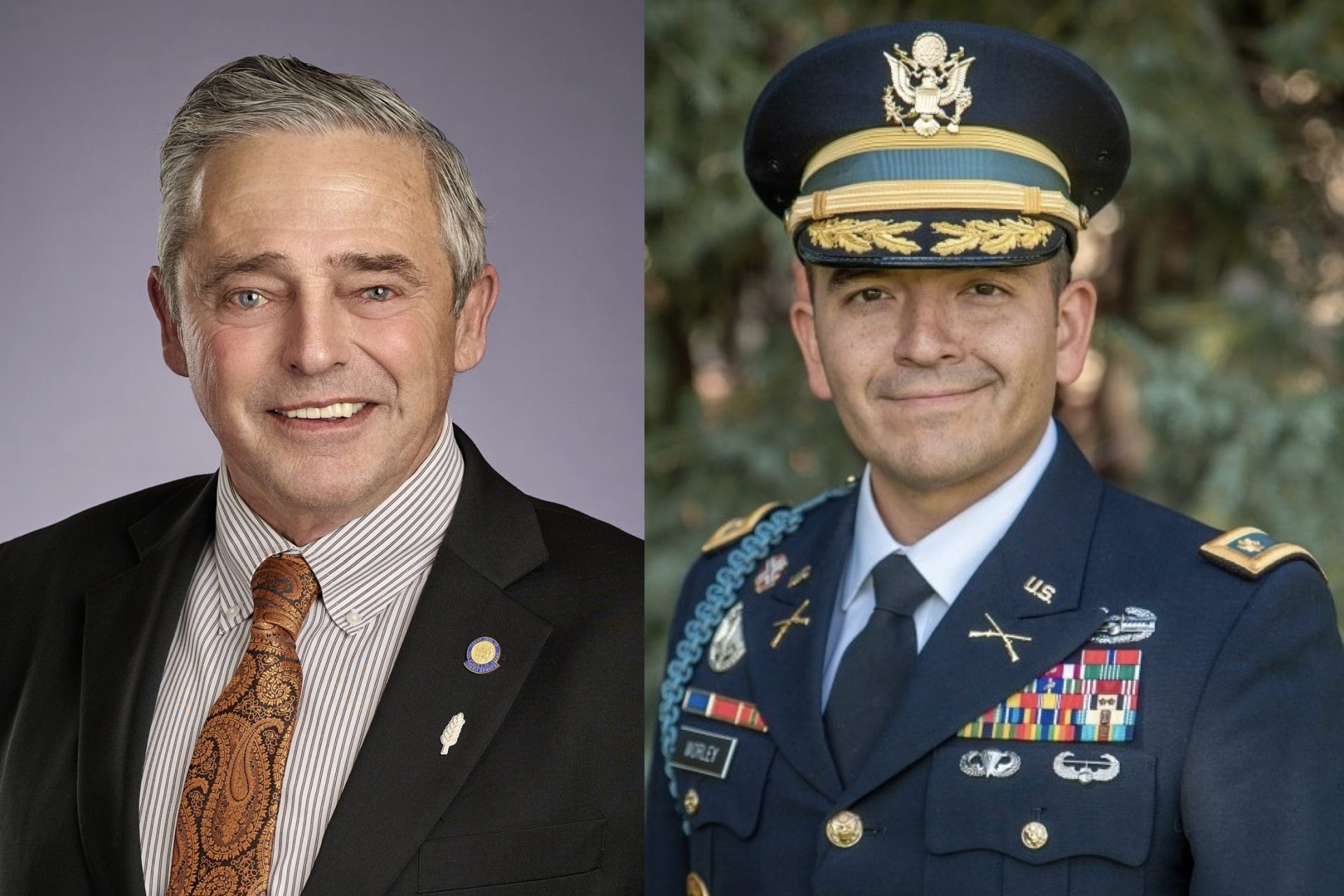
Jim Guthrie and David Worley Guthrie, R-McCammon, was first elected in 2010 and chairs the Senate State Affairs Committee. He voted against the $50 million Parental Choice Tax Credit last year and was the only Senate Republican to oppose the transgender bathroom bill this session.
In his campaign’s news release, Guthrie said he is humbled and grateful for the five endorsements.
“These are leaders I have had the privilege of working alongside to deliver real results for Idaho — lower taxes, less government overreach, stronger support for our law enforcement, and policies that respect the values of hardworking families,” Guthrie stated. “But at the end of the day, this campaign isn’t about endorsements — it’s about the people of District 28.”
Election Day is May 19. Find voter information and sample ballots at VoteIdaho.gov. Explore EdNews’ election coverage here.
North Idaho lawmaker pours $250K into new PAC backing legislative candidates
Sean Dolan | 05/04/2026
Rep. Jordan Redman, R-Coeur d’Alene, last week contributed $250,000 of his own money to a new political action committee and has spent nearly $200,000 in independent expenditures to support like-minded Republican primary candidates running for the Legislature.
Registered on April 26, the “36-18-1 Inc. Political Action Committee” has spent $199,393 to buy advertisements to support 20 candidates from around the state. The name appears to reference the 36 House votes, 18 Senate votes and one governor’s signature needed to pass legislation. Redman’s father, former state Rep. Eric Redman, is the PAC’s treasurer.
The $250,000 donation was reported on April 30. Redman did not immediately respond to a phone call or email from EdNews on Monday morning.
According to Redman’s campaign website, he is an entrepreneur who in 2005 purchased his parents’ insurance agency, Redman & Company Insurance in Coeur d’Alene. He has also been involved in real estate development since 2018 and purchased several local pharmacies in 2021.
While direct contributions to legislative candidates are capped at $1,000 per election, there are no limits on independent expenditures in Idaho. But PACs cannot coordinate with campaigns when making independent expenditures.
Election Day is two weeks away, on May 19.
Here’s the full list of candidates the 36-18-1 PAC has supported so far, in alphabetical order:
District/seat Candidate Level of support Primary opponent(s) D6 House A Colton Bennett $16,478 Cindy Agidius D23 House A Rep. Chris Bruce $17,939 Melissa Durrant D29 House B Rep. Tanya Burgoyne $13,751 Jennifer Miles D35 House A Chad Christensen $3,250 Rep. Mike Veile D33 House A Rep. Barbara Ehardt $14,699 Connor Cook D32 House A Kelly Golden $1,755 Rep. Stephanie Mickelsen D7 House A Rep. Kyle Harris $17,383 Michael Collins D1 Senate Scott Herndon $5,362 Sen. Jim Woodward D24 House A Rep. Clint Hostetler $1,463 Alexandra Caval D25 Senate Sen. Josh Kohl $11,198 Casey Swensen D25 House B Rep. David Leavitt $4,480 Cherie Vollmer D32 House B Brian McKellar $1,755 Rep. Erin Bingham D25 House A Andrew Messer $1,725 Grayson Stone, Zaine Newberry, Josh Callen D24 House B William Mostoller $1,463 Rep. Steve Miller, Chance Requa D4 House B Rep. Elaine Price $16,732 Christa Hazel D1 House B Rep. Cornel Rasor $5,362 Chuck Lowman D1 House A Jane Sauter $16,192 Rep. Mark Sauter D13 House B Rep. Steve Tanner $15,374 Kody Daffer D28 Senate David Worley $15,883 Sen. Jim Guthrie D30 House B Julianne Young $16,848 Rep. Ben Fuhriman
The Latest
-
Two PACs with East and West coast money spend in Idaho legislative races
-
Stegner criticizes Little, Legislature in gubernatorial campaign kickoff
-
Election results to be audited in eight counties
-
Round 2: Idaho’s general election is set. Here are November’s contenders.
-
Eagle group circulates influential voter guide while avoiding state disclosure rules
-
Group opposing political extremism doubles Idaho election spending
-
Idaho’s most expensive primary: Guthrie vs. Worley
-
What to know before voting
-
Five of Idaho’s constitutional officers endorse Sen. Guthrie
-
North Idaho lawmaker pours $250K into new PAC backing legislative candidates