But we’re not just talking about campaign contributions or PAC spending.
We’re talking about gambling.
The recent rise of online prediction markets has spread, allowing anyone with a smartphone to bet money on the outcome of a Phillies game, the top Netflix show of the week, when the Iran conflict will end, or who will win the Idaho Democratic primary for governor.
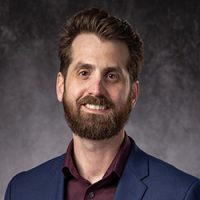
But these are not random events, said Jonathan Krutz, a Boise State University professor emeritus. Krutz, board chairman of the nonprofit Stop Predatory Gambling, has studied gambling since the 1990s.
“You’re betting on events that other people may have information on,” Krutz said. “You’re betting on events that can be manipulated.”
In a strange turn of events, one prediction market has reported over $35,000 in trading volume for an Idaho Democratic candidate that never even filed to run this year and won’t be on the primary ballot.
The lack of oversight on prediction markets, the possibility of corruption and the risk of gambling addiction are all issues that need careful consideration, Krutz said.

‘Easily manipulatable’
Krutz gave an example. A hypothetical candidate named Rusty Baker is running for the Idaho Legislature. He’s raising money, putting up yard signs and talking to folks on the campaign trail.
Krutz said someone could go on a prediction market and bet that Baker will lose. And then they could do everything they can to derail his campaign.
“How much would it cost me to spread rumors about Rusty Baker, such that he drops out of the race or that he loses the race, versus how much do I stand to gain?” Krutz said.
In another example, Krutz said candidate Baker could file to run, launch a campaign and then bet on himself to lose. Baker could then drop out of the race.
“People are playing in this ‘quote-unquote’ market, thinking it’s a level playing field, that it’s a fair thing,” Krutz said. “It is absolutely not. It’s easily manipulatable, and there is no federal oversight. And the feds are saying that states aren’t allowed to regulate this either.”
Recent crackdowns
Several developments this week suggest the tides may be turning.
The two biggest players in the prediction market game are Polymarket and Kalshi.
Kalshi on Wednesday announced it had fined and suspended three congressional candidates who wagered on their own elections.
A day later, federal prosecutors released an indictment of a U.S. Army soldier who made $400,000 on a Polymarket bet on the military operation to capture Venezuelan President Nicolas Maduro. As several media outlets reported, the soldier was involved in the planning of the operation.
Idaho election markets
For a comedian’s take on prediction markets, check out John Oliver’s recent episode of Last Week Tonight.
The Idaho election with the biggest trading volume on Polymarket is the Idaho Democratic primary for governor, with a total of $80,000 in “predictions.”
“We won’t call them bets, but they’re bets, right?” Krutz said. “That’s what they are.”
Candidate Terri Pickens is the front-runner, according to predictions on Polymarket, with a total of $43,221 in bets for and against her.
But the candidate with the second most trading volume is not even a candidate. Stephen Heidt won the Democratic nomination in 2022, but he never filed to run for governor this year and is not on the primary ballot.
Still, there’s $35,601 in bets for and against him.
According to filings on Idaho Sunshine, Heidt in March of 2024 appointed a campaign treasurer for the 2026 governor race but has since terminated his campaign. The first Polymarket bet on his campaign was placed on Dec. 6.
When the Idaho Democratic Party learned of the Polymarket bet, the organization adopted a policy prohibiting staff members from betting on elections, according to a statement from spokesperson Avery Roberts.
“Idahoans deserve an open and transparent election process and representation, free from the financial self-interest of political insiders,” Roberts wrote in a message to EdNews.
On Kalshi, the Idaho election with the highest volume is the race for U.S. Sen. Jim Risch’s seat, with a total wagering of $42,211. Users can “predict” if a Republican or Democrat will win the seat in November.
State officials know about the markets
When reached for a comment on prediction market betting on Idaho elections, a spokesman for the Idaho Secretary of State’s Office said they are “aware of the existence of the platforms” but will defer to the Idaho attorney general’s office.
A spokesperson for Attorney General Raúl Labrador did not immediately respond to a request for comment this week, but Labrador last month addressed sports betting on prediction markets.
He said in a news release that Idaho has joined a 39-state coalition to challenge the Commodity Futures Trading Commission’s attempt to claim authority over sports betting and override state gambling laws.
“States like Idaho that choose to ban sports betting would be prevented from enforcing those bans under the CFTC’s theory,” Labrador said in the release.
A history of regulation, or lack thereof
Krutz provided some background and history on the CFTC and prediction markets in general.
Prediction markets and futures trading are not a new phenomenon.
“As a concept it’s been around for a while in a very tightly controlled box,” Krutz said. “With Kalshi and Polymarket, that box has exploded.”
In 1988, staff members at the University of Iowa — where Krutz earned a master’s degree in business — created a market to predict election outcomes for academic purposes.
“It was under threat multiple times because of very legitimate concerns that once you start allowing people to bet on elections, you create opportunities to corrupt those elections,” Krutz said.
But there are legitimate uses for futures trading. Krutz explained that a farmer in Idaho can sell a crop in advance and lock in a price to make farming a much less risky activity.
“To say that that situation is the same as me betting on whether a free throw is going to be made or missed — it’s absurd to say that those are the same thing,” he said.
When Kalshi and Polymarket began taking bets on elections during the Biden administration, Krutz said the CFTC attempted to investigate and regulate the markets. But things changed when President Donald Trump returned to office.
As Politico reported, Trump dropped the investigations into prediction markets. The president’s son, Donald Trump Jr., is now a strategic advisor to Kalshi and an investor and unpaid advisor to Polymarket.
“When the Trump administration came in, they just blew the doors off of it,” Krutz said.
There’s one factor that is often lost in these discussions on prediction markets, Krutz said. Betting is driven by addiction, and these companies are spending millions to promote their markets.
“Because of the massive promotion of it, people are trying it out and some of those people are getting addicted,” he said.
As board chair of Stop Predatory Gambling, Krutz said he thinks the prediction markets should be stopped until there are regulations in place and staff to enforce the regulations.
“There’s a reason why that has never been allowed before,” Krutz said. “It’s highly corruptible, and it shouldn’t be allowed now.”