
How much growth is too much, and too fast?
The State Board of Education grappled with that question last week, and couldn’t wrestle it into submission.
The board punted on a three-year plan that guides new growth and new programs at the state’s colleges and universities. In its stead, the board gave the schools a one-year go-ahead, enough to let them keep working on new programs for 2027-28. The three-year plan is on hold until the board’s December meeting.
Yes, three-year plans are wonky and boring. Until you think about what’s being planned.
If you’re a taxpayer, here’s why you ought to care. The whole idea behind the three-year plan is to grow the higher education portfolio in an orderly way — without wasting tax dollars on redundant programs.
If you’re student, or soon to be one, here’s why you ought to care. These plans will help determine what you can study, and where, laying out your options for career credentials or a full-blown degree.
And if you’re an employer, here’s why you ought to care. Many of the new additions to the three-year plans focus on the state’s hottest job sectors — such as healthcare and cybersecurity. These are the new programs Idaho employers need: pipelines from the campus to the workplace.
So the State Board is debating something that sounds dull, but is actually crucial.
Who wants what?
Here’s what Idaho’s eight colleges and universities hope to add by 2030, according to three-year plans submitted to the State Board of Education.
| College or university | Graduate degrees | Undergrad degrees | Certificate programs | Career-technical | Total |
| University of Idaho | 19 | 12 | 35 | 0 | 66 |
| Idaho State University | 18 | 5 | 27 | 13 | 63 |
| Boise State University | 17 | 16 | 19 | 0 | 52 |
| College of Eastern Idaho | 0 | 3 | 26 | 15 | 44 |
| Lewis-Clark State College | 5 | 3 | 0 | 7 | 15 |
| College of Southern Idaho | 0 | 3 | 2 | 9 | 14 |
| North Idaho College | 0 | 1 | 2 | 10 | 13 |
| College of Western Idaho | 0 | 3 | 0 | 7 | 10 |
| Total | 59 | 46 | 111 | 61 | 277 |
And board members found themselves hung up — not surprisingly — on a few numbers.
- The eight colleges and universities are looking at creating 277 new programs over the next three years. Nearly half of these new adds, 111 in all, are professional certificates, and 61 are career-technical programs. The remaining 105 are undergraduate or graduate degree programs.
- Meanwhile, the colleges and universities are looking at dropping 93 programs: 42 undergraduate or graduate degree programs; 32 career-technical programs and 19 professional certificates.
For some board members, this math simply didn’t math.

“I’m watching mission creep,” Pete Koehler said during the board’s Oct. 14 meeting in Lewiston. “All we’re doing is adding more and more and more and more.”
How much more?
Last week, State Board staff placed a moratorium on new certificates, chief academic officer Heidi Estrem told board members. That puts 111 “new” programs on hold, pending further study.
And the University of Idaho’s 66 “new” requests — tops in the higher education system — aren’t necessarily all new. The U of I wants to slightly modify some existing programs, or simply rebrand an old program under a new moniker. “They are not all brand-new programs,” interim provost and executive vice president Brooke Blevins told the board.
And for State Board President Kurt Liebich, this is part of the problem. There’s no way to look at the list and tell the difference between a simple rebranding and a costlier startup that requires a college or university to hire staff. “They’re just all names on a sheet,” he said.
Many of those items on the sheet should come as no surprise — reflecting the kind of academic disciplines that line up with job creation in 2026. The healthcare professions. AI. Cybersecurity. Nuclear science.
In these fields, some overlap is pretty much inevitable. With Idaho facing a worker shortage in healthcare, higher ed is taking an “all-hands-on-deck” approach that moves educational programs into all corners of the state, Estrem said.
And if you feel overwhelmed by the inexorable surge of AI in just about every aspect of your life, it shouldn’t be a surprise that higher ed is swamped as well. Some AI programs that seem like a good idea now might not pan out.
“It is just too early to tell what we really need, what students will respond to,” said Estrem, who added that State Board staff are already talking amongst themselves about the “proliferation” of AI programs.
Which all leads to the heart of the issue. If a new program fails to draw in students, does it go away? What about an old program that no longer serves a niche?
Estrem predicted that there will be some weeding out in AI programs.
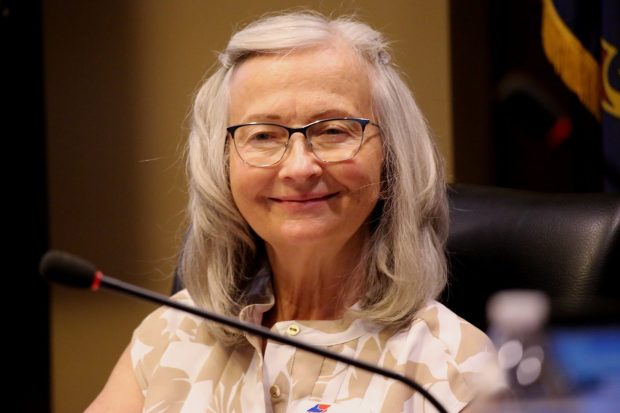
But as the discussion unfolded last week, State Board member Cally Roach floated one idea aloud: If a college or university adds a program, that institution must drop a program. Think of it as a walk-in closet approach to higher education offerings: Buy a new sweater, throw an old sweater into the donation bin.
Whether it comes to that — or whatever happens next — rests with the State Board. And no matter what the board does with the three-year plans, even that isn’t the last word. Even if a new program ends up on a three-year plan, the board still has to formally approve it at a later date.
This is the granular job that falls to the State Board. The governor and the Legislature set the budget contours — as they did earlier this year, when they burdened higher education with a disproportionate share of the state’s budget cuts. It’s then up to the State Board, with its far-reaching policymaking authority, to balance program expansion against budget contraction.
So, how much growth is too much, and too fast? The answer may hinge on a different question: How much growth is Idaho willing to bankroll?
Senior reporter Kevin Richert writes a weekly analysis on education policy and education politics.