Gov. Brad Little didn’t celebrate budget cuts last week.
But he didn’t mourn them either.
Closing the books on Idaho’s tumultuous 2025-26 budget year — and testing out his narrative for the fall election — Little lauded the $250 million Idaho left on the balance sheet. But Little downplayed what it took to get there, and glossed over the fact that the Legislature pushed him into deeper spending cuts.
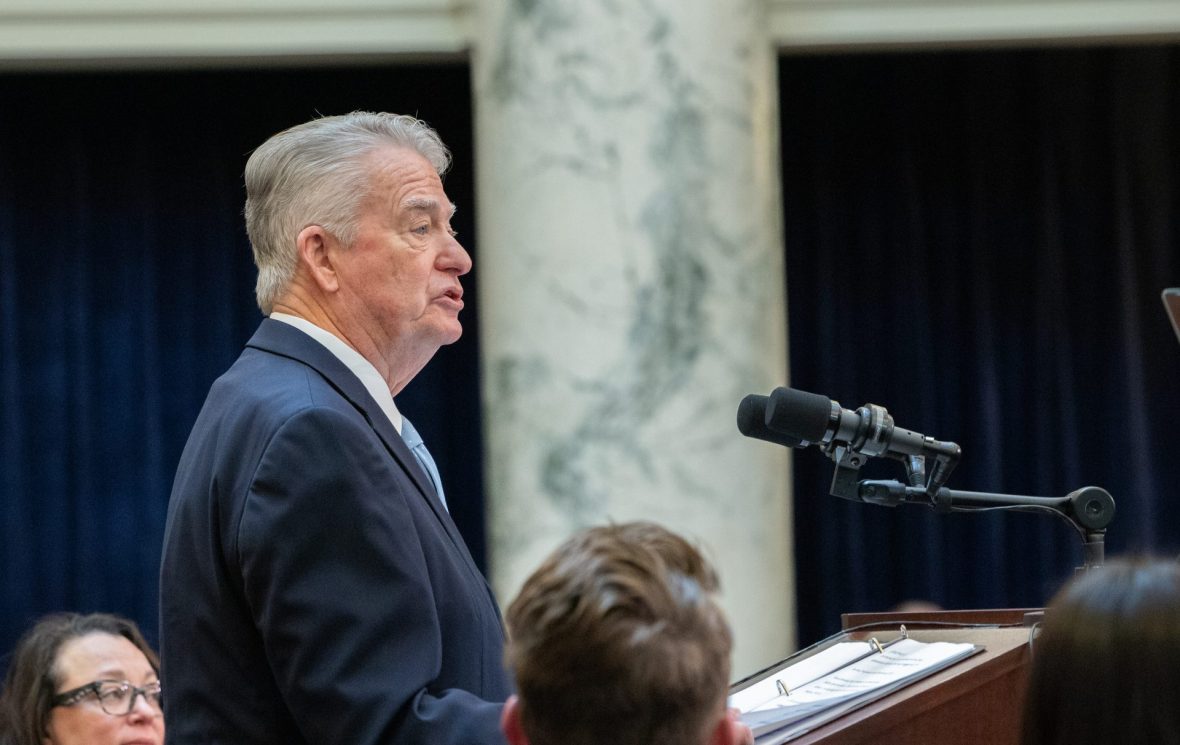
“Some decisions were not easy but they were the right ones,” Little said in a statement last week. “We stayed disciplined, and as a result Idaho protected its priorities, maintained healthy reserves, and finished the year in an even stronger financial position than anticipated.”
That word “we” is working hard here.
Sure, Little began the 2025-26 budget downsizing in August, less than two months into the fiscal year, with a 3% cut that spared public schools but hit higher education and the rest of state government. But legislators cut budgets further, and Little went along with it. The bottom line: Legislators and Little cut most agency budgets by 4% last year, and 5% for the spending year that began July 1.
Last year’s cuts did improve the state’s bottom line. When revenue collections came in ahead of projections, that left the $250 million Idaho can roll into this new budget year.
That’s a considerable cushion, but it came at a considerable cost. And that’s where those “not easy” decisions lurk into the equation.
When legislators took a deeper slice out of the budgets — but spared K-12, Medicaid, prisons and the Idaho State Police — that left higher education to shoulder an outsized share of the burden. Tuition and fee increases were all but inevitable for this fall. But the sticker price at Idaho’s public four-year schools is going up by $350 to $425, the largest increase in three years, and that didn’t happen in a vacuum. In a June meeting, State Board of Education President (and Little appointee) Kurt Liebich put the higher ed budgets in refreshingly proper perspective.
“(They) represent a shift in the cost of education from the state of Idaho to our students,” Liebich said.
There are plenty of other signs of budget pain.
The 2026 session generally left K-12 shielded from the budget axe — deep cuts to the Idaho Digital Learning Alliance notwithstanding — but that doesn’t mean public schools are flourishing. The Middleton School District is cutting 36 positions and increasing fees, after voters in May rejected a two-year, $3.9 million supplemental levy. Outside the shadow of the Statehouse, a school district can be just one failed election away from a budget crisis.
The signs extend beyond education as well. Wildland firefighting — an expense as inevitable as, you know, July — could burn through the cobbled-together $32.8 million the state has on hand. If, or when, the money runs out, the state will have to issue “deficiency warrants” to cover the difference. Essentially, the state would fight fires now and pay later.
The $250 million on the bottom line doesn’t tell the whole story. Which might explain why Little celebrated it this week, and then in the next breath tempered expectations.
“Some may look at the year-end cash balance and conclude that Idaho should restore spending reductions or significantly expand government,” Little said in a guest opinion, published Tuesday at Idaho EdNews. “We won’t.”
There’s that “we” word again.
The governor’s caveat should not come as even vaguely surprising. In late May, Little’s budget chief drew a bright line on the governor’s behalf. In a memo, Division of Financial Management head Lori Wolff directed agency heads to submit “maintenance-only” budget proposals for the 2027-28 budget year.
No more money. Plenty of more of the same.
And this will be Little’s recent record, as he seeks a third term in office in November. He leaned into the austerity theme with this week’s not-so-subtly political guest opinion.
Not everyone is buying. EdNews Facebook readers submitted 162 comments on Little’s guest opinion. The comments skewed critical, and some openly mocked Little. “When you don’t pay your rent, insurance premiums, or do needed car maintenance it is a heck of a lot easier to come in ‘under budget,’” wrote former state Rep. John Rusche, a Lewiston Democrat.
Maybe there is some daylight for Little’s major opponents, Democrat Terri Pickens and independent John Stegner, to run on the fiscal record and the implications for K-12 and higher ed. That’s predictable. But maybe only so successful, in a three-person election that inherently favors an eight-year incumbent.
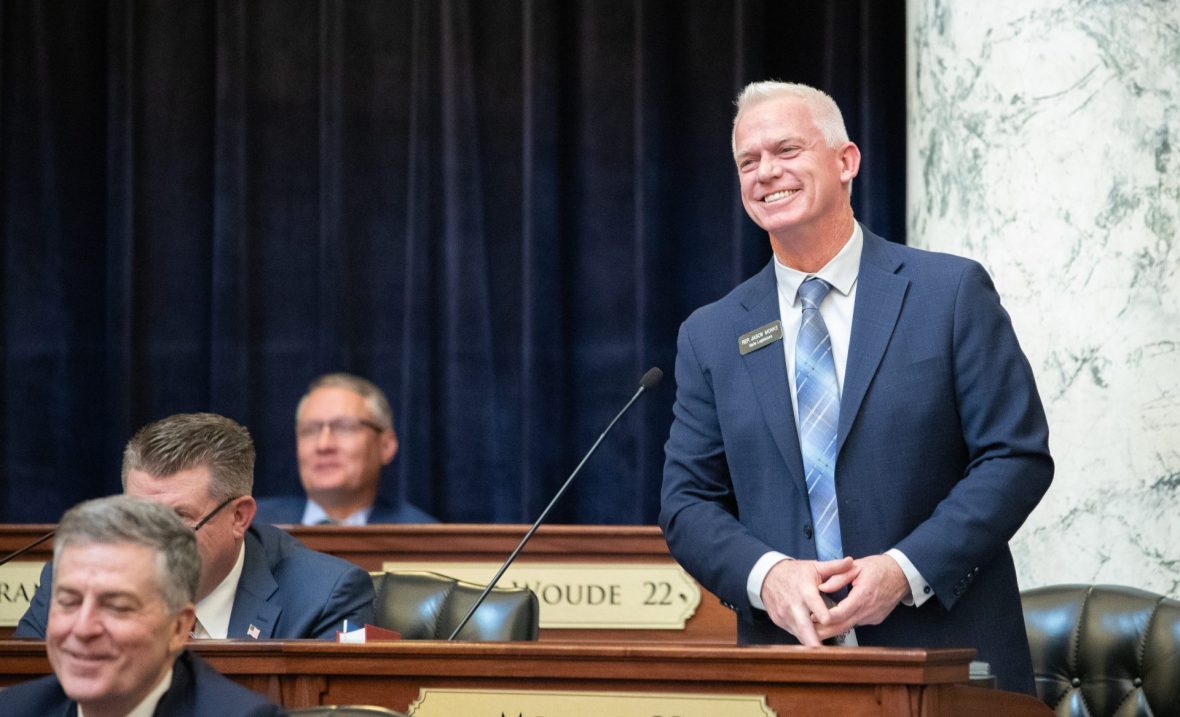
What was unpredictable was the broadside Little took Wednesday — from House Majority Leader Jason Monks.
In a salty news release, Monks said the $250 million on the bottom line was not “one man’s accomplishment.” He said lawmakers deserve the flowers for setting a “firm (and) realistic” revenue target and fitting the spending decisions around it.
“One hundred and five legislators went home to their neighbors and explained why we tightened the state’s belt,” said Monks, R-Meridian. “That’s what accountability looks like, and that’s why Idaho finished strong.”
It’s not every day when elected officials sing the praises of spending cuts. And also not every day when they openly joust over who deserves the credit.
Kevin Richert writes a weekly analysis on education policy and education politics.