
Voter registration numbers show Republicans have made significant ground in District 6 since the 2024 general election, hinting that it may no longer be a swing district, but Idaho Democrats say it’s still a competitive battleground.
The panhandle district includes the cities of Moscow and Lewiston in Latah, Nez Perce and Lewis counties. Democrats have considered it a swing district for years.
In October 2024, registered Republicans accounted for 47.5% of registered voters in the district, but as of this month, Republicans make up the majority, with 53.3%, according to voter registration totals on the secretary of state’s website. There are 1,767 more Republicans now than there were two years ago.
Meanwhile, state data shows Democrats have lost strength. Two years ago, Democrats made up 18.1% of the voters base, but that has now dropped to 16.6%. There are 531 fewer registered Democrats now than in October 2024.
But Avery Roberts, spokesperson for the Idaho Democratic Party, said there are a lot more Democratic voters in District 6 than those records reflect.
“We see those areas as very competitive,” Roberts told EdNews.
The Idaho Republican Party holds closed primaries, meaning only registered Republicans can participate. Joe Parris, public information officer for the Idaho Secretary of State’s Office, told EdNews in May that many Democrats change affiliation to vote in Republican primaries.
“We know that a lot of voters, whether they’re Republicans or not in true practice, they do affiliate as Republicans, so they can be a part of that primary,” Parris said.
Even so, election history over the past three cycles shows Republicans have widened their margins in District 6.
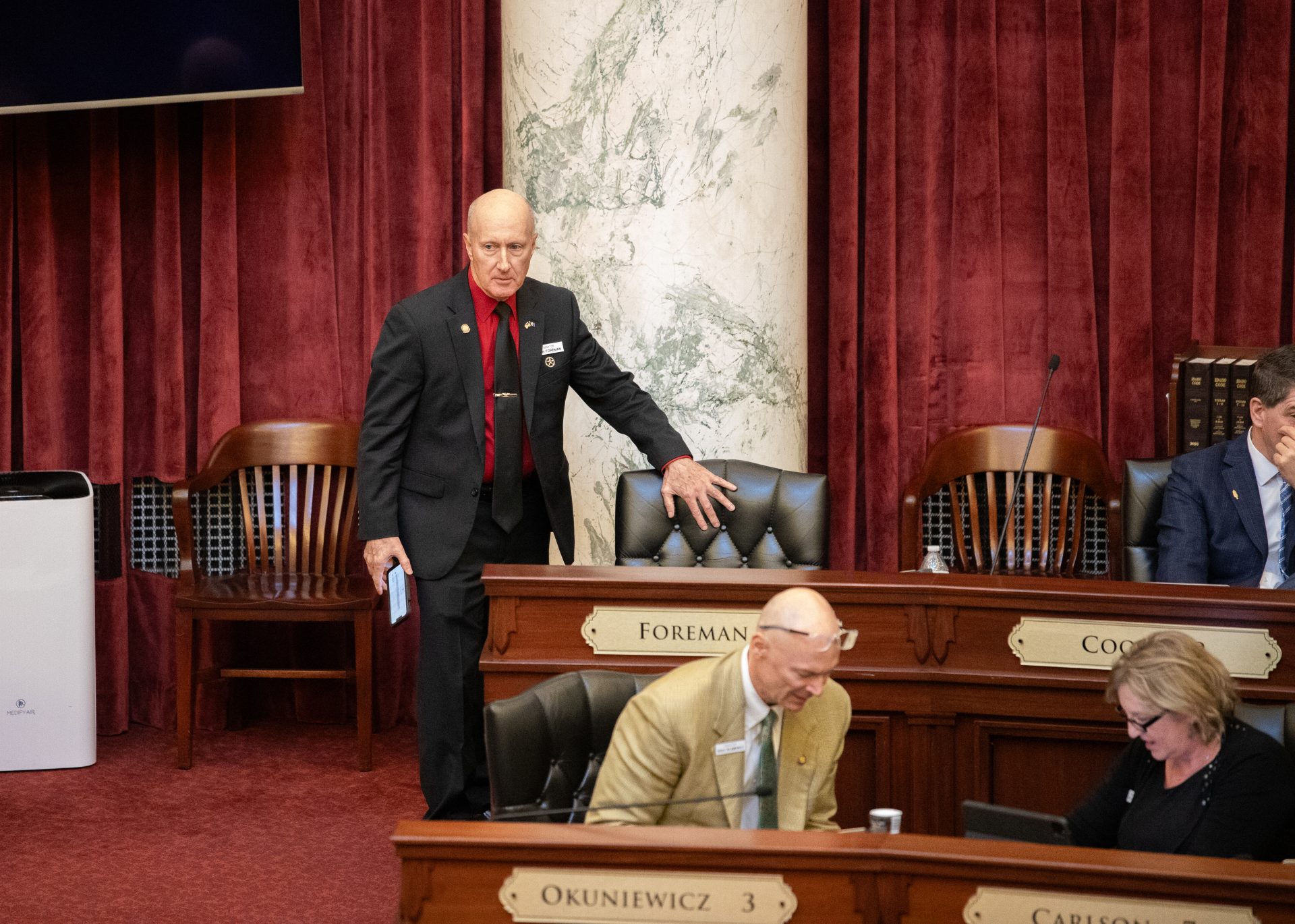
The last Democrat elected in District 6 was Sen. David Nelson, who defeated Dan Foreman in 2020 by a 0.8% margin. But two years later, Foreman ousted Nelson by a 2.1% margin. Foreman then held on to his seat in 2024, winning re-election over Democrat Julia Parker by 6.6 percentage points.
Foreman now faces Democrat Robin Weldy in November.
The race for House Seat A has even wider margins: Rep. Brandon Mitchell won by 10.8 percentage points in 2020, Rep. Lori McCann won by 19 points in 2022 and defeated Democrat Trish Carter-Goodheart by a 29.6% margin in 2024.
McCann took a risky move in May, vacating her seat to run against Foreman in the primary, but she lost. Carter-Goodheart now faces Republican Colton Bennett, who has a $15,292 campaign cash lead over the Democrat, to fill McCann’s old seat.
The Democrat running in House Seat B, however, leads in fundraising.
Mitchell, who switched from Seat A to Seat B in 2022, faces a rematch with Democrat Kathy Dawes, whom he defeated with a 16.2% margin in 2024.
So far this year, Dawes has raised $69,166, with $57,345 in cash, compared with Mitchell’s $30,492 in contributions and $39,057 in his warchest.
Roberts said all three Democrats on the ballot in District 6 are running really strong campaigns, adding that Foreman is particularly unpopular with voters.
“The list of things he’s done and voted for that hurt the folks in his community is quite numerous,” Roberts said.
Even if some Democrats switched affiliation to vote for McCann in the primary, inflating the numbers for registered Republicans, it wasn’t enough. Voters selected Foreman over the more moderate McCann in May by a 5.4% margin.