
Dozens of school trustees were granted an impromptu session with Idaho Department of Insurance Director Dean Cameron on Wednesday to discuss the collapse of an employee health insurance program.
Nothing has changed — they all had to pay their share of the Idaho School Benefit Trust’s $13 million shortfall — but they had the opportunity to get some questions answered during their annual Idaho School Boards Association conference in Boise.
Cameron provided some new details about what happened to the trust, as his department is conducting an investigation that is expected to wrap up this month. Those managing the trust set rates too low and were counting on a “hope, a wing and a prayer” to get through the latest benefit year. Instead, their plan didn’t work. The trust became insolvent and a district court judge has taken all authority away from the trust’s leaders and granted full power to Cameron to rehabilitate the benefit trust.
“The nightmare took place really over a couple-year period of time,” Cameron said. “The trust had assumed the risk, and the risk occurred.”
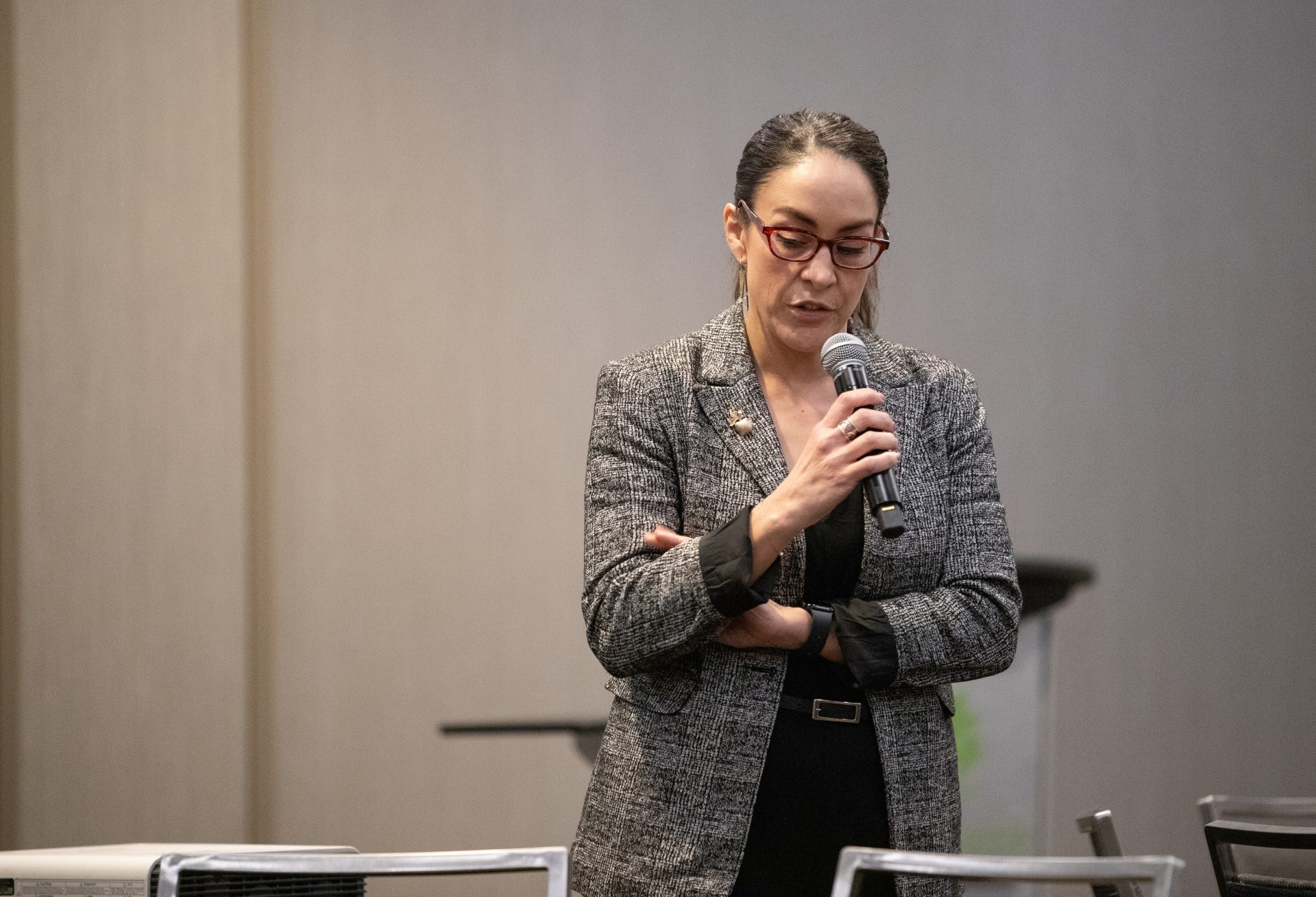
Sen.-elect Soñia Galaviz, D-Boise, asked Cameron to speak at the ISBA conference and said he had to rearrange his schedule to attend. The hourlong presentation and Q&A on Wednesday was tacked on to the end of the day’s scheduled events. Attendees were informed about it at lunchtime.
As Galaviz introduced Cameron, she said he understands what is at stake and he knows that “our hearts are heavy right now.”
“Dean Cameron is a friend,” she said.
Trustees disregarded actuary’s recommendations
Cameron revealed some information about what the department has found in its investigation.
The trustees behind the Idaho School Benefit Trust set rates below what their actuaries recommended for two years in a row, Cameron said, which contributed to the $13 million shortfall that more than 100 member districts and charters schools are now paying off.
“This was more than one year,” he said. “It took place two years in a row. We know that rates were set lower.”
Those trustees were counting on a “hope, a wing and a prayer” that the trust had enough money to pay claims through the end of the 2025-26 benefit year, which ended Aug. 31, Cameron said. The trustees had voted in January to move to a fully insured plan on Sept. 1, when Blue Cross of Idaho would assume the risk if claims exceeded contributions, instead of the trust and its members.
Looking back, Cameron said the trust’s decision to go to a fully insured plan “spoke volumes” to him.
“That said they know that staying self-funded is not going to work,” he said. “I think they were holding on to a prayer and a hope that they could get through this year with the funds that were being collected, and then be happy with the fully insured program going forward.”

The new details from Cameron line up with what Gaylen Smyer, one of the benefit trust’s five trustees, told EdNews in July. Smyer said the trust was aware that the fund balance was dwindling, and they were “taking steps to address it.”
“We thought we were navigating our way through this,” Smyer said.
But their plan didn’t work out.
The Idaho School Benefit Trust trustees
- Chairman Gordon Woolley, former Teton County superintendent
- Vice Chairman Chuck Kinsey, former Lakeland superintendent
- Treasurer Darren Uranga, CFO for Elevate Academy
- Trustee Gaylen Smyer, former Cassia County superintendent
- Trustee Wil Overgaard, former Weiser superintendent
Those lower rates, below the actuary’s recommendation, ended up creating a $13 million gap between what was actually funded and where the benefit trust’s stop-loss coverage through Blue Cross of Idaho would kick in.
“Had they funded at the level the actuary said, you maybe wouldn’t have had a shortage,” Cameron told the school board members. “But you would have all paid higher in your premiums.”
Cameron acknowledged that the department could have taken more aggressive action in February, when the trust submitted its 2025 audit showing it ended the benefit year with $2.1 million in reserves while it needed $13.4 million to comply with statute. The trust recorded a $9 million loss that year.
“In hindsight, we should have — instead of just questioning — we should have taken demand action at that point,” he said.
Cameron tells school leaders they should have asked questions
The attendees and their school districts have had to pay down the trust’s $13 million shortfall, mostly through lump sums paid in September — and they aren’t happy about it.
As trustees and administrators expressed angst and frustration over not being told earlier that the trust was in trouble, Cameron said his mama always taught him when you point the finger there are three pointing back at you.
“I’ve had folks call and say, ‘How are we supposed to know?'” Cameron said. “I said, ‘Well, let me see who your broker was. How did he not tell you?'”
By joining a self-funded insurance program, he said school leaders should have known they were taking on risk.
More coverage
Click here to read all of our stories on the Idaho School Benefit Trust. We also recorded a video podcast available on YouTube and Soundcloud.
He pushed back on questions about why the department didn’t share information on the trust’s finances sooner. If another insurance program with many members had financial troubles, such as the Associated General Contractors, Cameron said the department wouldn’t send out notices to all general contractors in Idaho and tell them to pay attention.
He said the trust carried the responsibility to keep its members informed, and the members should have asked questions.
“Good questions should have been asked. Good questions should have been asked by the trustees, by the [Idaho School District Council], by the superintendents, by the HR professionals in districts. Those things should have happened,” Cameron said to murmurs in the crowd.
If a district was building a new school, for example, he said a superintendent would want to know the exposure and if there were any cost overruns.
Jan Bayer, superintendent of Boundary County School District, said there was no reason for school leaders to ask questions. They didn’t know anything was wrong.
“Your statement was that superintendents should have asked questions,” Bayer said. “We had no indication from the trust, or the council or from our broker that there was even an issue coming forward.”

Luke Schroeder, superintendent of Kimberly School District, expressed a similar sentiment. He’s also a board member of the Idaho School District Council, which was the trust’s sponsor, but had no decision-making authority over it.
“I did attend the meetings. I was on the council. I read the minutes. These discussions weren’t happening in the open,” Schroeder said. “There were a lot of executive sessions. And that’s what we all want to know: Were they doing what they were supposed to doing for the audit of ’25?”
“Wait until the examination,” Cameron replied.
The department in September posted three years of the trust’s board meeting minutes on its website. The first mention of financial troubles in the minutes was on June 22. The minutes state the department was analyzing data from Blue Cross and the trust to “determine what the next steps should be moving forward with our funding shortfall.”
The minutes from April 23 — two months after the department received the 2025 audit showing the trust did not meet legal requirements to operate and had lost $9 million in one year — lists four “Advantages of ISBT Participation.” One of those advantages: “Stability.”
The minutes also show Hainke made efforts to inform members of the trust’s low rates. In February 2025, the minutes state Hainke wanted to inform members that the annual rate increases over the last nine years was below 6%.
Examination report expected early December
Cameron gave the attendees a brief rundown of what has happened this year and what will happen in the coming weeks.
The department learned on June 24 that the trust was insolvent, he said, at which point the department took “pretty serious actions.”
That included filing a petition of rehabilitation in district court, asking a judge to appoint Cameron as rehabilitator of the trust and allow the state to completely take it over. Judge Lynn Norton approved the petition on Sept. 24.
Norton granted Cameron full control of the trust and its assets. Its five trustees and benefits manager Debbie Hainke are now forbidden from “transacting any business” of the trust, according to the order of rehabilitation.
As rehabilitator, the department launched a financial audit and examination to determine how the trust went from a healthy surplus to not having enough money to pay claims.
Internal certified examiners and outside actuaries are interviewing people and examining documents. That includes looking at what the trust’s actuary, Milliman, recommended and what the board adopted and “looking at all of the relationships there.”
Cameron told the crowd on Wednesday that he anticipates the examination will be complete by the middle of this month, and then the department will issue a public report around Dec. 1.
“We will be kind but direct as to where the problems existed,” Cameron said. “We feel like we owe it to the school districts who are members. We owe it to the public. We owe it to the taxpayers to identify the issues.”
Toward the end of the session, Post Falls trustee Neil Uhrig thanked Cameron for having a frank conversation with the school board members, adding that the attendees were all “eating this shit sandwich together.”
“If the trust would have done what you’re doing tonight, we would not be here, and so I appreciate your leadership on the issue,” Uhrig said.
“Thank you,” Cameron said. “I’m sorry we’re in this situation.”