
School trustees want Idaho to bring its K-12 funding model into the 21st century.
No, really, they do.
Convening in Boise last week, the state’s school trustees overwhelmingly passed three different resolutions calling for changes to a much-maligned and aging school funding formula, which was last modified in 1994.
The trustees aren’t alone. State superintendent Debbie Critchfield, easily re-elected to a second term last week, has made a funding formula rewrite her top priority.
But the big question mark is still Gov. Brad Little, also easily re-elected last week. In his first two terms, Little has supported Idaho’s current school funding approach, while keeping his options open. Any funding formula rewrite must go through Little. Predictably enough, Little isn’t committing himself.
For those just checking in — or those who need a refresher — here’s a summary of the debate, and what’s at stake.
Attendance vs. enrollment
The formula has long been based on student attendance. And Little has been on board with this status quo approach. Supporters of an attendance-based model want schools to have an incentive to get (and keep) kids in classroom seats.
Supporters of a rewrite, such as Critchfield, point out that those kids in the seats are fundamentally different. It costs more to teach a special education student, an English language learner, or a gifted and talented student. They also point out that students are more mobile than they were in 1994 — more likely to split up their schedule, instead of spending their entire day in one building. Hence the argument for an enrollment-based model that reflects individual student needs and student schedules.
The funding formula drives the largest distribution of dollars in the state budget — the $2.8 billion in tax revenues that go out to K-12 schools. The high stakes help explain why elected officials and education lobbyists have haggled over a rewrite for a decade.
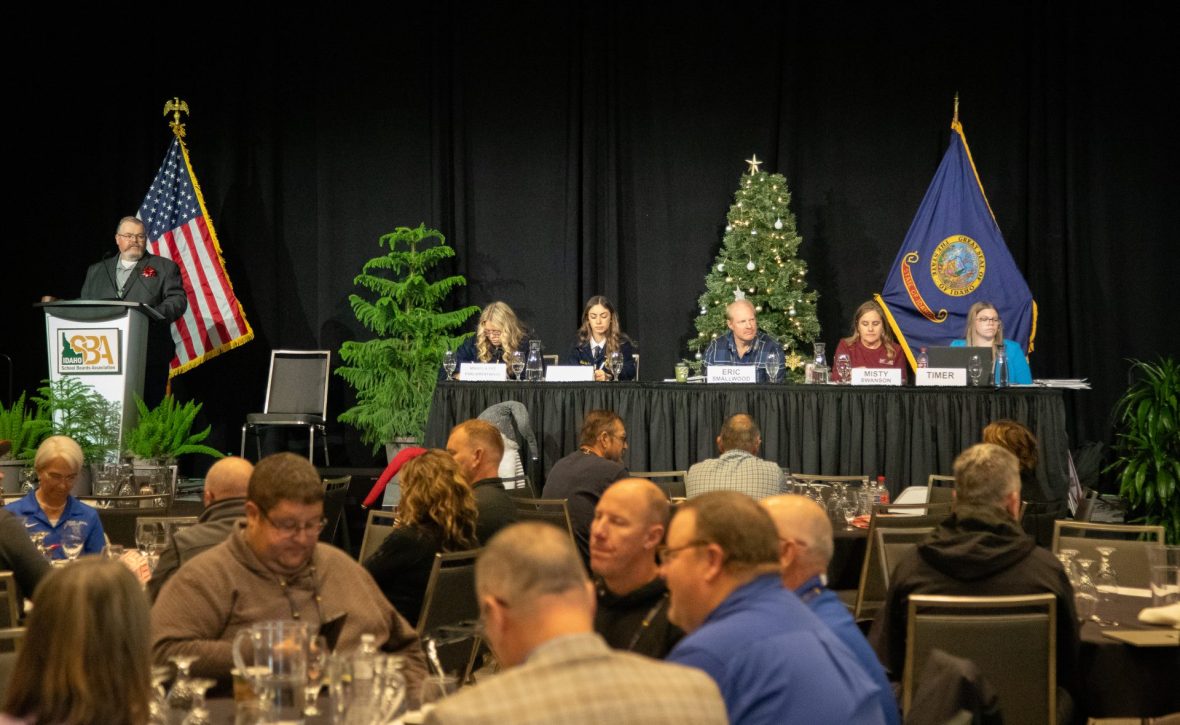
Trustees have seen this movie before — enough times that they can pretty much recite the dialogue out loud. Undeterred, Idaho School Boards Association members jumped back into the fray Friday.
Coming in December: An in-depth Idaho Education News series will take a close look at the special education funding crunch, and the struggle to hire and keep teachers and aides in the classroom.
One ISBA resolution calls for full special education funding and “predictable funding based on student enrollment and the actual operational needs of school districts.” A second resolution says the current formula fails to meet Idaho’s constitutional mandate of a “general, uniform and thorough” public school system. A third resolution attempts to split the baby; the handful of school districts that hit a 90% attendance rate would qualify for a bonus, a funding boost based on enrollment-based calculations.
All three resolutions passed with at least 95% support. They are now on ISBA’s lobbying to-do list, alongside two other resolutions, passed in 2025, that also call for funding formula changes.
OK, ISBA, we catch the drift.
Critchfield — who was a local school trustee herself, in a prior political life — has also been tireless on this issue. Joined by Senate Education Committee Chairman Dave Lent, an Idaho Falls Republican poised to play a key role in this debate, Critchfield crisscrossed the state this summer for a series of funding formula listening sessions. Critchfield is asking for only one K-12 budget increase for 2027-28, a $20 million increase that could help keep some schools whole, as a recalibrated funding formula creates some winners and losers.
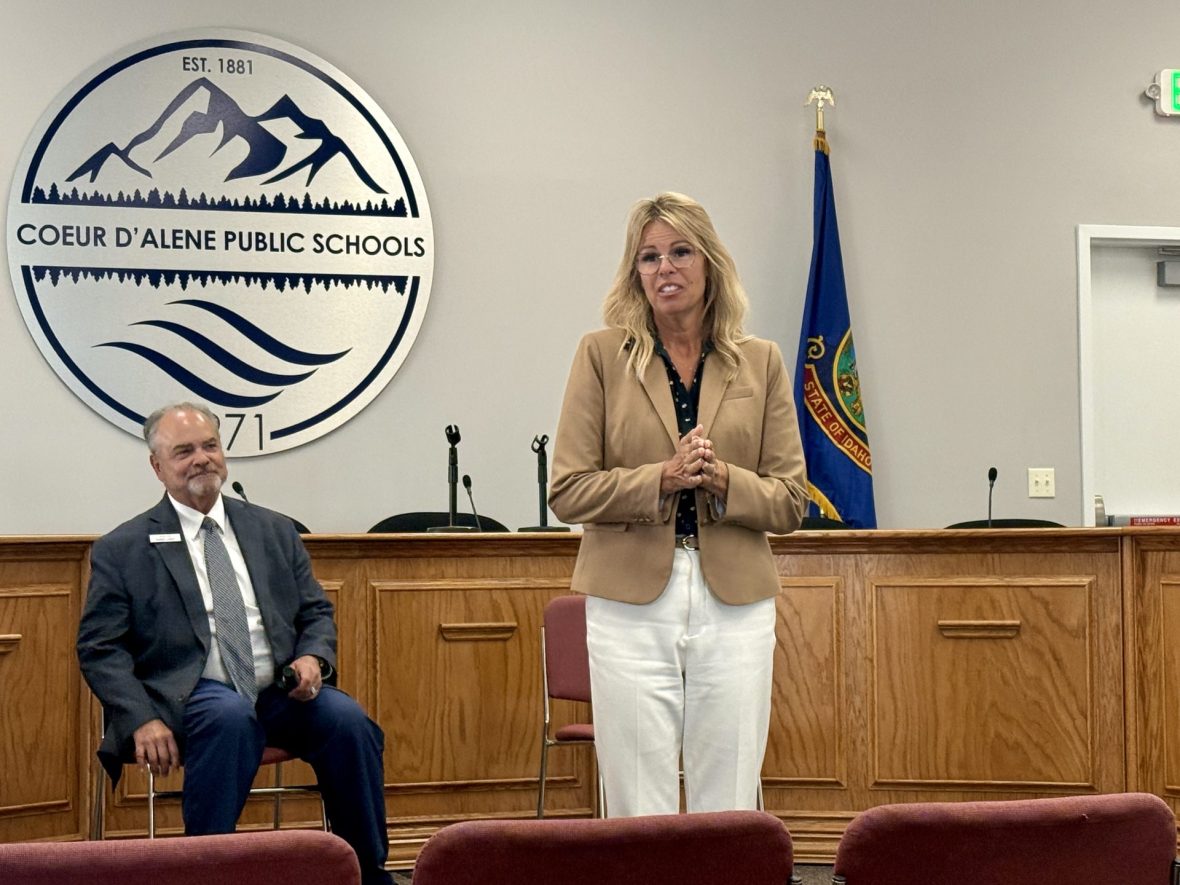
Like the trustees, Critchfield has seen this movie before herself. She managed to get a first stab at a funding formula rewrite through the Senate in 2025. And the 2025 bill had no funding attached to it. The $20 million increase wouldn’t necessarily cover the shift to a new formula, but Critchfield says it would ease into a multiyear transition. “That’s a pretty good first step,” Critchfield said in a September interview.
So where does Little stand?
Spokeswoman Emily Callihan said Little was unavailable this week for an interview. Instead, Callihan released a statement from her boss Wednesday. Here it is, in full, all 115 words of it.
“The discussion about overhauling our school funding formula is certainly not new, but I am glad to see a renewed interest in having these conversations. Idaho is proud to offer families an abundance of school choice options and students are learning in all kinds of new settings that our current funding model didn’t anticipate. It is important that we account for those changes and deliver our public schools a fair and predictable funding model that allows them to continue providing excellent educational opportunities for all students who walk through their doors.
“I am grateful for Superintendent Critchfield’s efforts to solicit feedback from as many interested parties as possible and look forward to receiving her recommendations.”
The takeaways?
Idaho’s been debating the funding formula for a long time. But trustees already knew that.
Idaho education has changed a lot since the state rolled out its 1994 funding formula. But trustees already knew that, too.
What we don’t know is where Little might come down on any proposed changes to the formula. The message this week was a resounding “wait and see.” As governors tend to do, Little isn’t tipping off much in the prelude to the 2027 legislative session.
But the thing is, Little’s track record is also tough to read.
In 2022, Little vetoed a bill to keep Idaho on an enrollment-based funding formula — an offshoot of the COVID-19 pandemic, which played havoc on school funding by prompting attendance decreases of 15% or more. The veto essentially shifted Idaho back into attendance-based funding, the model that remains in place today. But in a letter explaining his veto, Little also said he was open to a funding formula rewrite.
Educators and advocates will get some more answers, maybe, on Jan. 11, when Little unveils his budget proposal and delivers his ninth State of the State address. But for now, at least, the prospects for a new funding formula are as uncertain as ever.
A movie we’ve seen before.
Senior reporter Kevin Richert writes a weekly analysis on education policy and education politics.