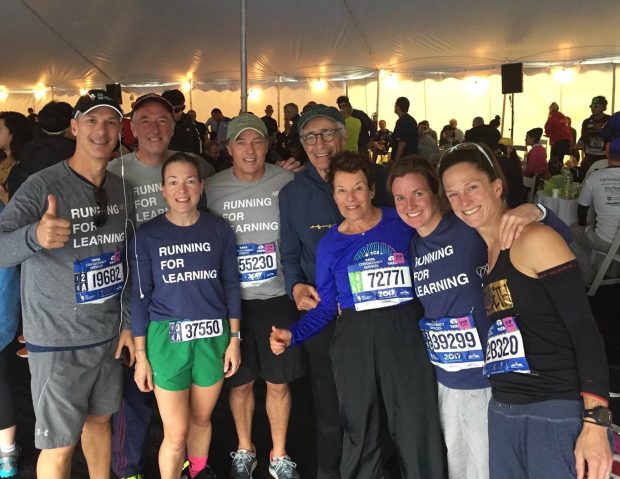
When Alan Pesky’s son Lee was in the fourth grade, Alan was called in to see the headmaster. Lee was, supposedly, underperforming and acting out. The headmaster recommended that Lee would fare better in a different school.
Alan got the message: “That was shorthand for he’s not very smart. The words at that time, back in the early 70s, were that the child is dumb,” he said.
But Alan knew Lee was not dumb. “On the contrary — he was curious and intelligent; he just didn’t fit neatly into the picture of the school’s typical student,” Alan wrote in his memoir, “More to Life than More.”
It was eventually determined that Lee had learning disabilities, but in the 70s and 80s, the diagnosis was fairly new. Alan and his wife, Wendy, struggled with finding their son the correct resources to help him.
“When Lee was a child, the words “learning disability” weren’t even in the English language,” Alan said. “We didn’t have knowledge at that time of what special education and learning disabilities were all about.”
Alan struggled to understand his son for many years. He said he had a hard time grasping Lee’s disabilities, which led to friction in their relationship. Sadly, in 1995, when Lee was 30, he died from a cancerous brain tumor. The loss profoundly changed Alan, and to honor his son, he was devoted to advancing research and resources for other kids like Lee.
In 1997, Alan and Wendy founded the Lee Pesky Learning Center (LPLC) in Boise.
“[My dad] and my mom started the Lee Pesky Center at probably the toughest times in both their lives,” said Greg Pesky, Alan and Wendy’s youngest son. “They had this crazy idea of how we could memorialize Lee … and they came up with the Pesky Center.”
What started as a place for kids with dyslexia to receive tutoring has turned into a holistic approach to understanding and aiding students, families and teachers with special education resources. The programming has served at least 100,000 students and 7,000 teachers in every Idaho county over the years.
Now, less than a month away from 93, Alan travels across the country, splitting his time between New York and Idaho. Although he is retired, he is still deeply involved with Lee Pesky Learning Center.
“In fact, yesterday I was on a meeting for two hours with the Lee Pesky Learning Center,” Alan said. “What happens with the Lee Pesky Learning Center, and the impact that this organization can still have in the future is something that continues to excite me at my ripe old age of 93.”
Alan reflects on how a place like the Lee Pesky Learning Center could have helped his family. “It would have made an enormous difference in Lee’s life,” Alan said.
Despite Lee’s hardships, he graduated from Lafayette College in Pennsylvania in 1987 and became an entrepreneur. Lee co-founded The Buckin’ Bagel, a Bagel shop with multiple locations in the Boise area in the ‘90s.
“If Lee were here, I would put my arms around him, give him a hug and say to him, I may have been a little difficult during your early years, but I have so much pride in how much you have achieved,” Alan said.
Alan Pesky’s legacy
In the 1970s, Alan was a founding partner of one of the most successful marketing firms in the nation, which he says greatly helped to establish Lee Pesky Learning Center as a pillar of the community.
“My marketing background gave me an understanding of how to communicate what Lee Pesky Learning Center was doing,” he said.
Along with the Lee Pesky Learning Center, Alan continues to stay engaged in his community, focusing his time on his other interests, such as the New York Philharmonic, as an avid classical music lover.
“I’m a very curious individual. When something interests me, I grab onto it, and I try to find out more about it or understand it more,” Alan said.
Nowadays, Alan isn’t as active as he once was, but he recounted days when he and Wendy traveled the world, including trekking through the snow in Antarctica, a 10-day bike trip through the Austrian Outback, and climbing Mt. Kilimanjaro in Africa for Alan’s 50th Birthday.
“I believe that life is to be lived, and you’re not to exist, but to enjoy it and to do what you can to make the world a little bit better,” Alan said. “I don’t need more things…it has nothing to do with money, it has nothing to do with collecting things. The “more to” life that I’m talking about is the self-fulfillment that I get from helping others.”
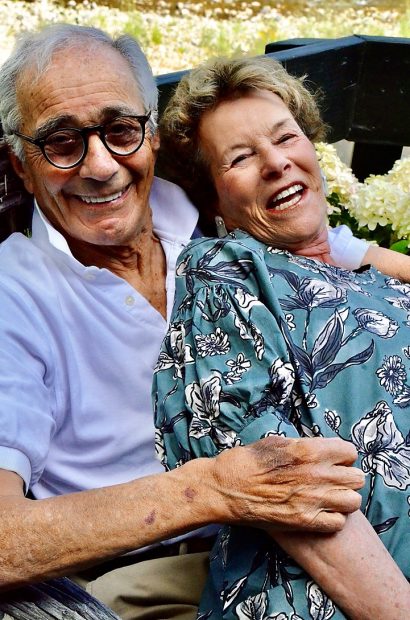
Another beautiful part of Alan’s life was his marriage, he said. Alan and Wendy were married for 61 years before Wendy passed away unexpectedly in 2022.
“She was just the most extraordinary human being, and my partner in every way possible, especially in the creation that we had with the Lee Pesky Learning Center,” Alan said
“My wife, from the day we opened the doors and until she passed away, anybody who knew her, and certainly in the world at the Lee Pesky Learning Center, saw a very beautiful human being who just made people feel good.”
When asked to describe his legacy, Alan declined. He said his legacy would be best described through those who know him.
“I’ve always been a believer that you do not craft your own legacy; that a legacy is how other people view you, not how I view myself,” he said. “So I think the best way for me to answer a question about legacy is for you to ask other people about what I’m like.”
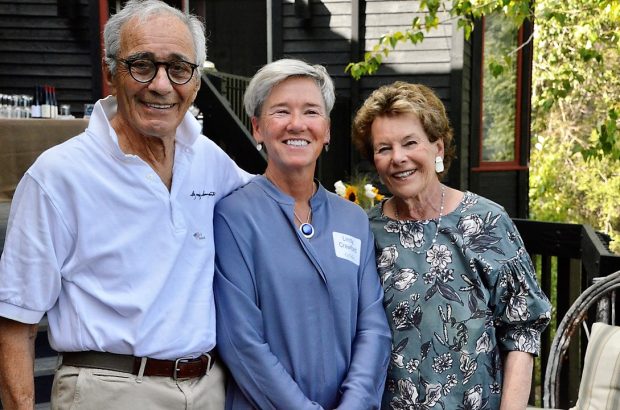
Lindy Crawford has been the executive director of Lee Pesky Learning Center for six years. She’s worked closely with Alan and said she feels like she’s become a better leader learning from him.
“He’s an incredible individual, like honestly nobody I’ve ever met before in my life,” Crawford said.
Alan is great at communicating, and she said it makes her job easier.
“I’ve never seen him act in anything other than being a full gentleman,” Crawford said. “That’s hard because he’s the founder, and so I’m sure sometimes it’s hard for him not to want to tell the leader of the organization how to do her job, and he hasn’t done that with me.”
Jim Foudy is the chairman of the board of Lee Pesky Learning Center. He’s known Alan for many years, and is still amazed by his leadership.
“He is first and foremost so compassionate, and he’s also no-nonsense. He has an incredible background in marketing, and understands the importance of staying relevant, ” Foudy said. “Brilliant, brilliant man. If you meet him, you’ll never know that he’s 92.”
Greg Pesky, Alan and Wendy’s youngest son, has also served on the LPLC board since 2008. Being involved in LPLC is important to Greg, as it serves as a connection to his late brother.
He mentioned that his parents shielded him from his brother’s struggles.
“I didn’t have nearly as much of an understanding or a connection to Lee’s struggles as my parents did,” Greg said. “He was my older brother who I always admired and looked up to.”
Greg said he admires his father’s ambition and persistence throughout his whole life. He said that whatever Alan put his mind to, he got done. He looks forward to carrying the torch of his parents’ progress, and in his brother’s memory.
“I am driven now to make sure that the Pesky Center continues to be available to young learners and families for as long as there’s a need for people with learning differences, and I don’t see that going away,” Greg said.
When Greg was asked to talk about his father’s legacy, there was no hesitation: “I would describe my father’s legacy as being someone who really, really cares about making a really positive impact…and he will continue to make a huge impact when he’s no longer with us.”
Thirty years of the Lee Pesky Learning Center
The Lee Pesky Learning Center will be celebrating its 30-year anniversary in February. The organization’s growth has impacted over 100,000 students in Idaho since 1997 through research-based programming and teacher services.
The nonprofit organization now has a full-time staff of 17, including education specialists and a pediatric clinical psychologist. There are five main services that the Lee Pesky Learning Center provides.
The first is teacher training. LPLC holds in-person and virtual training sessions for K-12 teachers across Idaho that focus on instruction for students with dyslexia. According to Lindy Crawford, LPLC has trained teachers or provided learning materials to every county in the state.
This approach reaches students who may never personally come into contact with LPLC, but by sharing these tools with teachers, students can receive the same services in their classroom.
Specialized, in-person services for students with learning disabilities include Literacy Pods and one-on-one coaching. Literacy Pods is a program in which LPLC partners with local schools to provide small-group instruction delivered by LPLC staff directly at participating school sites.
One-on-one coaching at the LPLC building is centered on clinical services, academic skills intervention, and academic coaching. Through the LPLC clinical services, students can meet with a neuropsychologist and receive a formal diagnosis, which they pay for on a sliding scale, meaning the student’s family only pays what they can afford.
From there, students can participate in specialized academic tutoring sessions, and older students can participate in academic coaching sessions that include help with organization skills and stress and time management.
Alan Pesky has been there for every step of the Lee Pesky Learning Center’s achievements. He recalled starting with only two employees and a couple of students. Now, the LPLC has reached heights that have propelled the organization into national recognition.
However, Alan knows there is much more to come to both the world of special education and the Lee Pesky Learning Center.
“The field of special education is constantly evolving, and yet in many ways it hasn’t made the great progress that I still think it has an opportunity to,” he said.
Though Alan recognizes that the next chapter of the Lee Pesky Learning Center may not involve him as intimately, he plans to pass LPLC to the next generation to expand their services beyond just Idaho.
Alan reflected on what grounds LPLC’s mission: its deep commitment to understanding and supporting every student it serves.
“We strive to never lose sight of the fact that we are dealing with individual children and individual families and individual situations,” Alan said. “Each child that comes to the Lee Pesky Learning Center is the most important child that comes to the Lee Pesky Learning Center.”