
School districts and charters that are part of the Idaho School Benefit Trust will have some decisions to make next year.
The trust, which collapsed this year after managers set rates below their actuary’s recommendation two years in a row and is now under the control of the Idaho Department of Insurance, will continue to exist until all member schools pay off their share of a $13 million loan from Blue Cross of Idaho, which was needed to cover unpaid claims. That could take three years for districts that opted for monthly payments.
The trust had approximately 108 member school districts, charters and education-related organizations last year, covering about 16,600 teachers, staff members and dependents. Some of those districts left the trust at the start of the new benefit year, on Sept. 1, and others may want to start exploring other options before it comes time to renew next summer.
Those employers will have several options to find new coverage for their employees. Here’s what they could consider in the coming months:
- Stay on the benefit trust for another year.
- Find their own private insurance plan.
- Band together to form a new healthcare cooperative.
- Join the state of Idaho’s employee insurance program.
Sen.-elect Soñia Galaviz, D-Boise, told EdNews she expects several districts will leave — especially those that have been vocal in their opposition to the trust debacle.
“I would put money that the pool is going to be much smaller because folks are going to leave because there is no trust in the trust,” Galaviz said.
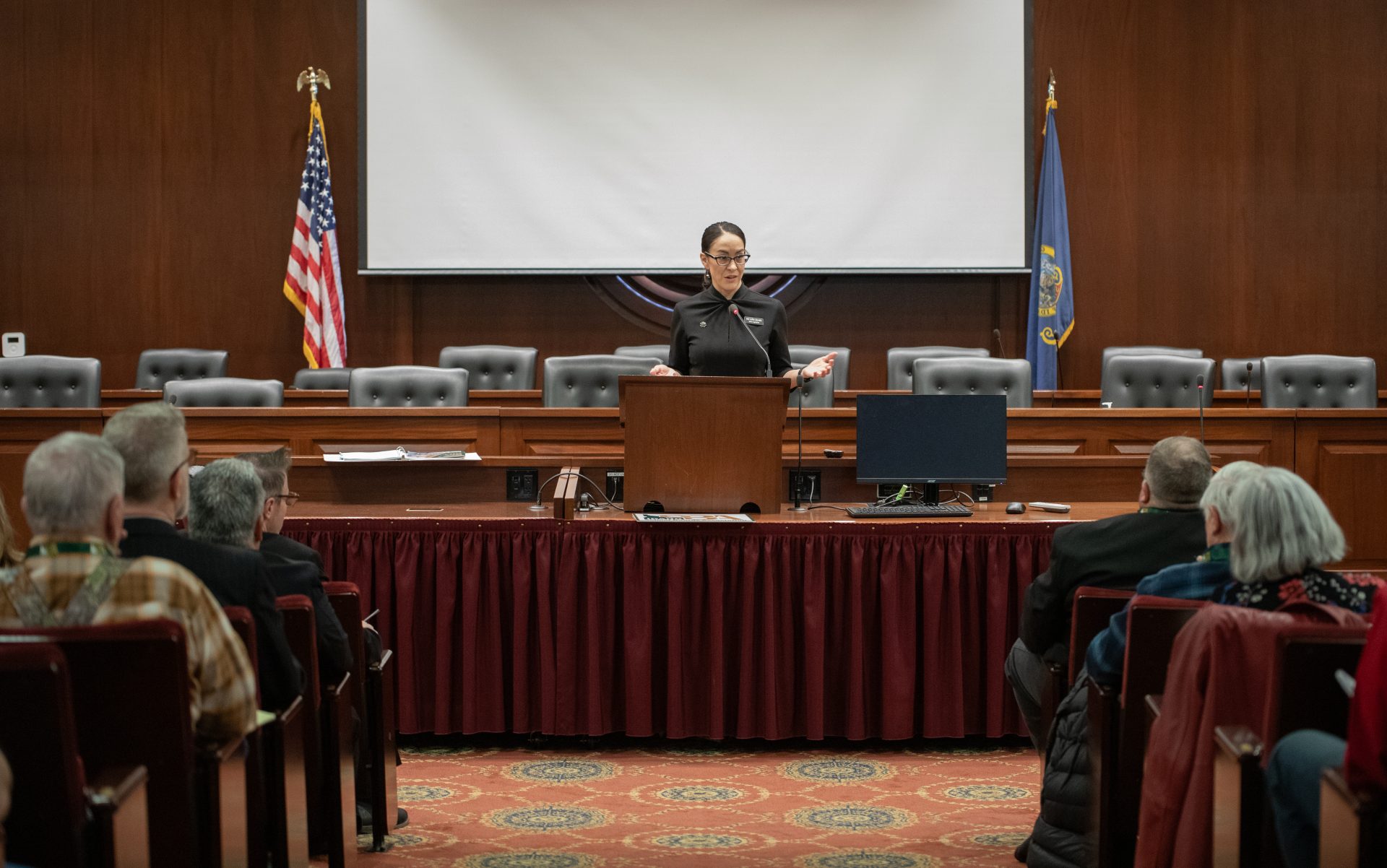
School leaders could explore these options through the winter, then present options to their school boards and communities in the spring, said Coeur d’Alene Superintendent Shon Hocker.
“They’ve got to figure out what they’re going to do,” Hocker told EdNews. “Whether they form a new group, go to the state plan or get self-insured.”
Galaviz, who has served two terms in the House and won a Senate seat this year in District 16, has been involved in finding solutions for trust members since they were informed of the insolvency in July. She is planning a meeting with school districts in February to look at options for districts that want to find something new.
While larger districts like West Ada and Boise are big enough to form their own insurance pool in the private market, most Idaho districts don’t have that ability. That’s why they joined the benefit trust in the first place — in the insurance world, there is strength in numbers.
“Going it alone for rural and small LEAs is very challenging,” Galaviz said, referring to local education agencies. “So we want to be able to give them some options to join a larger pool or afford to be able to get onto the state plan.”
While healthcare decisions are left up to local school districts — the state just provides funding per support unit — Galaviz said she fears schools will cut staff, stretch their budgets or go out for a levy to make up for the unexpected shortfall they’ve had to pay. She said taxpayers will be responsible no matter what, so it would behoove lawmakers to be a part of the conversation.
“Candidly, I’ll be looking for some additional dollars and financial support to bring them onto the state plan, which is probably my preference, or help them in a conversation to start a new trust or some other health insurance co-op,” Galaviz said.
Joining the state plan requires school districts to pay a hefty one-time buy-in, which is needed to ensure the pool remains solvent as new members join. Lawmakers four years ago tried to help school districts cover that buy-in, but it wasn’t as successful as they had hoped. The self-funded benefit trust was the cheaper, yet more risky, way to go.
Plan to bring districts on state plan was supposed to be a ‘game changer’
Public schools have struggled for years with high health insurance costs, and Rep. Rod Furniss wanted to do something about it.
As a longtime insurance agent, the Rigby Republican said the state of Idaho’s employee insurance plan was one of the best he’d ever seen, with low fixed expenses and no commissions. When he reviewed several school district insurance plans, he found they were “poorly put together.”
A patchwork of different rates and benefits among districts meant some teachers were making long commutes to work at schools with better benefits. He wanted to find a way to get teachers on the state plan.
“Every district has different premiums. Every district has different coverages,” Furniss said before the House Education Committee in 2021. “Ideally, we’d like those to all be the same, so teachers would be incentivized to work where they live.”

His first attempt, House Bill 248, would have allowed school districts to use a portion of salary funding to join the state insurance plan. It died in the Senate Education Committee when Sen. Janie Ward-Engelking, D-Boise, said the state had fought hard for that salary money. She didn’t want to see it spread thin to cover benefits.
“I’m reluctant to take that money and use it for benefits when we should be doing both,” Ward-Engelking said in 2021 after motioning to hold the bill in committee.
Furniss came back the next year with a new plan. House Bill 443, signed into law by Gov. Brad Little, opened up an account to help school districts pay for the one-time buy-in to join the state plan. In a separate appropriations bill, the Legislature poured $75 million into the account, called the Public School Health Insurance Participation Fund.
Calling the bill a “game changer” would be an understatement, the head of the statewide teachers’ union told the Senate Education Committee.
“For the first time in a long time, the educators I represent are hopeful,” Idaho Education Association President Layne McInelly said in 2022.
Furniss anticipated one-third or one-half of the state’s 115 districts would join in the first year.
But it wasn’t a game changer. By the time the fund sunsetted in the summer of 2025, about $20 million was used, according to Furniss. The remaining funds, about $55 million, went into the public charter school facilities fund.
According to interviews with multiple superintendents this month, the biggest obstacle to joining the state plan at the time wasn’t the buy-in. They did the math and found the annual costs to stay on the state plan would have been more expensive than their existing plans, whether that was from the benefit trust or private plans.
“We were excited about the opportunity,” said Dennis Chesnut, superintendent of Horseshoe Bend School District. “But then when we looked at the details, it was really cost prohibitive.”
Many districts decided to stay on the low-cost benefit trust, which had touted low rate increases for years.
Furniss told EdNews this month that more districts would have used that $75 million to join the state plan if they had been told the truth about what the benefit trust would really cost, and the realities of the risk involved.
“On that Idaho School Benefit Trust, there were a whole bunch of schools there that were lied to,” Furniss said.
He said all of the businesses he works with as an insurance agent understand the risk of self-funded plans. If claims exceed contributions, the employers have to foot the bill.
Dean Cameron, the director of the Department of Insurance, told school board members earlier this month that he expects the department’s investigation report into the trust’s collapse will be complete by early December.
“We will be kind but direct as to where the problems existed,” Cameron said at the Idaho School Boards Association conference on Nov. 4.
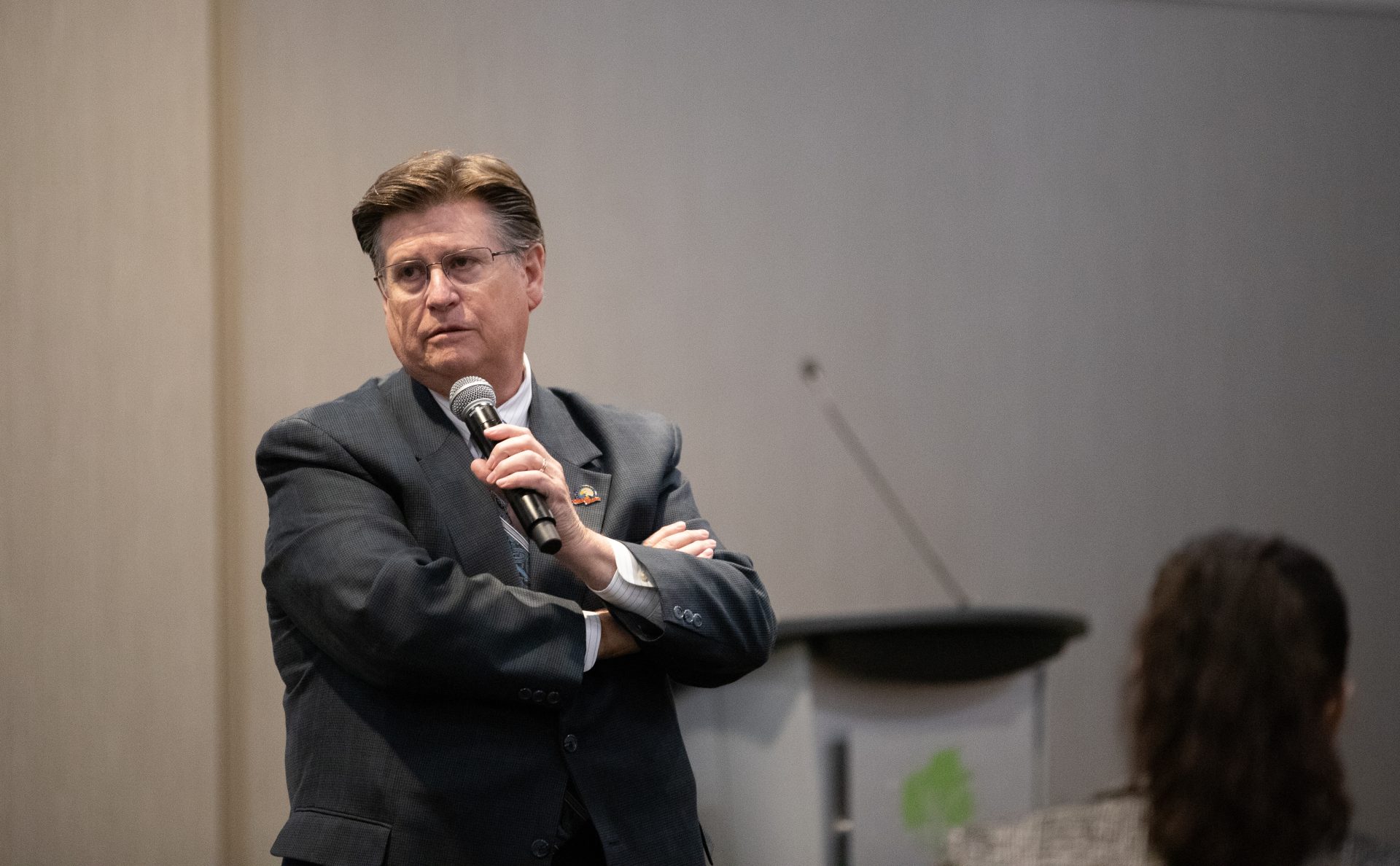
Galaviz, who asked Cameron to speak at the event, told EdNews that the investigation report may include ethical violations or even recommendations for criminal charges.
“Given all of that, I’m hoping that with more data and more light shed on the actual details of what happened, by whom, and when, maybe the state would be more inclined to extend a hand to help them figure out what comes next,” Galaviz said.
Similar to Galaviz, Furniss said he wants the Legislature to revisit the state plan. He would prefer rolling all of the districts on the benefit trust onto the state plan.
“I know how incredibly efficient the state employee plan is,” he said. “I know that over the next five or 10 years, that premiums and costs outside the state employee plan will be much higher than the costs inside the state employee plan. There’s just no way they can’t be.”
Too many strings attached, and not enough local control
Several superintendents who were on the job back in 2022, when they had the option of tapping into the $75 million fund to join the state plan, laid out several reasons why their districts didn’t take the opportunity.
The main issue: The state plan provides funding based on support units, which is basically how much it costs to pay for one classroom. But many districts hire more staff beyond those support units.
“We weren’t slapping a gift horse in the face,” said Horseshoe Bend’s Chesnut. “We just couldn’t make it work financially.”
Twin Falls Superintendent Brady Dickinson said as long as the state plan’s funding is based on the number of staff allocated from the state, it will be difficult for most districts to join. For example, the state plan wouldn’t pay for staff paid by federal funding or from local supplemental levies.
“Most of us are all over on classified folks,” he said. “So we have more custodians and secretaries. You got to get that number down as close to what the state gives you the money for as possible.”

He said the district’s insurance committee looked at joining the state plan back in 2022, but found it would be more expensive than their existing plan.
“The one-time buy-in, we could have done that,” Dickinson said. “But the cost, the yearly cost, was so much more because of the fact that we have so many people that are outside of the state funding.”
In the Coeur d’Alene School District, Hocker said joining the state plan would have cost the district $4 million more per year.
“We were like, ‘Yeah, no way,'” Hocker said. “This is really a non-starter for us.”
In addition to the support unit issue, he said the state plan wouldn’t cover retirees under 65, the benefits weren’t as good as the district’s existing plan and joining would take away local control.
“We’re obviously a state that really believes in local control,” Hocker said. “When you’re on a state insurance plan, you don’t have much control. You don’t have any say.”
The state plan would also require districts to offer coverage to all benefit-eligible employees. Chesnut said some employees don’t take the district’s insurance and are instead covered through a spouse or from veterans benefits.
“They would have said, ‘Listen, you have this many qualifying employees, and so this is how much you have to pay us,'” Chesnut said. “That is what I recall being the fatal flaw.”
He said he hopes lawmakers can do something to ease the burden of joining the state plan.
“Why did so few districts make the jump when almost every district wanted to make the jump?” Chesnut said. “If they look into that and can fix that or get it close, I think you’ll see a lot of districts take advantage of it. I know we seriously considered it.”
Hocker had a similar message. He said the “opportunity is prime” to revisit the state plan this coming legislative session, but joining would ultimately all depend on the cost.
“If the state plan came out and it was going to cost me more money, that’s not going to be well received in Coeur d’Alene,” Hocker said.
But there is a tradeoff to low-cost plans, as benefit trust members found out this year.
Galaviz said districts on the benefit trust were used to its low annual rate increases, while they saw higher increases on the state plan. Instead of jumping on board, lots of districts stayed with the benefit trust and were stuck this year covering an unexpected, unbudgeted $13 million shortfall when the risky plan burst under the pressure of high claims.
“As we know, the trust was able to say, ‘No, we’re only going to have a 7% increase or an 8%,’ when everyone else had double digits,” Galaviz said. “Well, we also know where that ended up because of it.”
Retroactive funding? ‘Get in line.’
In addition to revisiting the state plan, school trustees want the Legislature to retroactively equalize healthcare funding for school districts.
For fiscal year 2026, the Legislature provided a flat appropriation of $21,901 per support unit to all school districts regardless of where they get healthcare.
That changed during this year’s session. Senate Bill 1444 allocated $792 more per support unit for districts on the state plan. Those districts received $25,065 per support unit compared with $24,273 for all other districts.
At the ISBA conference earlier this month, trustees overwhelmingly approved a resolution asking legislators to retroactively equalize that funding.

Galaviz said districts on the benefit trust this year were dealt a one-two punch. They received less money from the state, and then had to pay the trust’s shortfall.
While she thinks the state should provide the same level of healthcare funding for all districts, she doesn’t expect the Legislature to take retroactive action.
“Schools aren’t the only ones that are going to be advocating for restoration of cuts that were made previously,” Galaviz said. “Get in line, right?”
Furniss, however, said he thinks districts on the state plan should get more money. He doesn’t support the resolution.
“No, not retroactive,” he said. “I think there should be a benefit if you come on the state employee plan.”
While the state provides schools with a bucket of money for healthcare, what they do with that money is up to them.
Twin Falls has a private plan and did not have to cover the benefit trust shortfall. Coeur d’Alene is the trust’s largest member and will likely consider other options before summer. Horseshoe Bend was part of the trust last year, and had to pay down the shortfall, but as of Sept. 1 they are covered through Regence Blue Shield.
“We got out one year too late because we had to pay the trust a pretty big chunk of money, but we’re out,” Chesnut said. “So what do they do with the trust? I don’t know.”