
Enrollment in college-level courses provided by the Idaho Digital Learning Alliance fell 46% in summer and fall 2026 compared with the same period last year, as new fees took effect after a major cut to the state-funded online learning program.
In the summer and fall of 2025, IDLA recorded 5,540 dual credit enrollments. In 2026, it recorded 2,980 dual credit enrollments in the same time period.
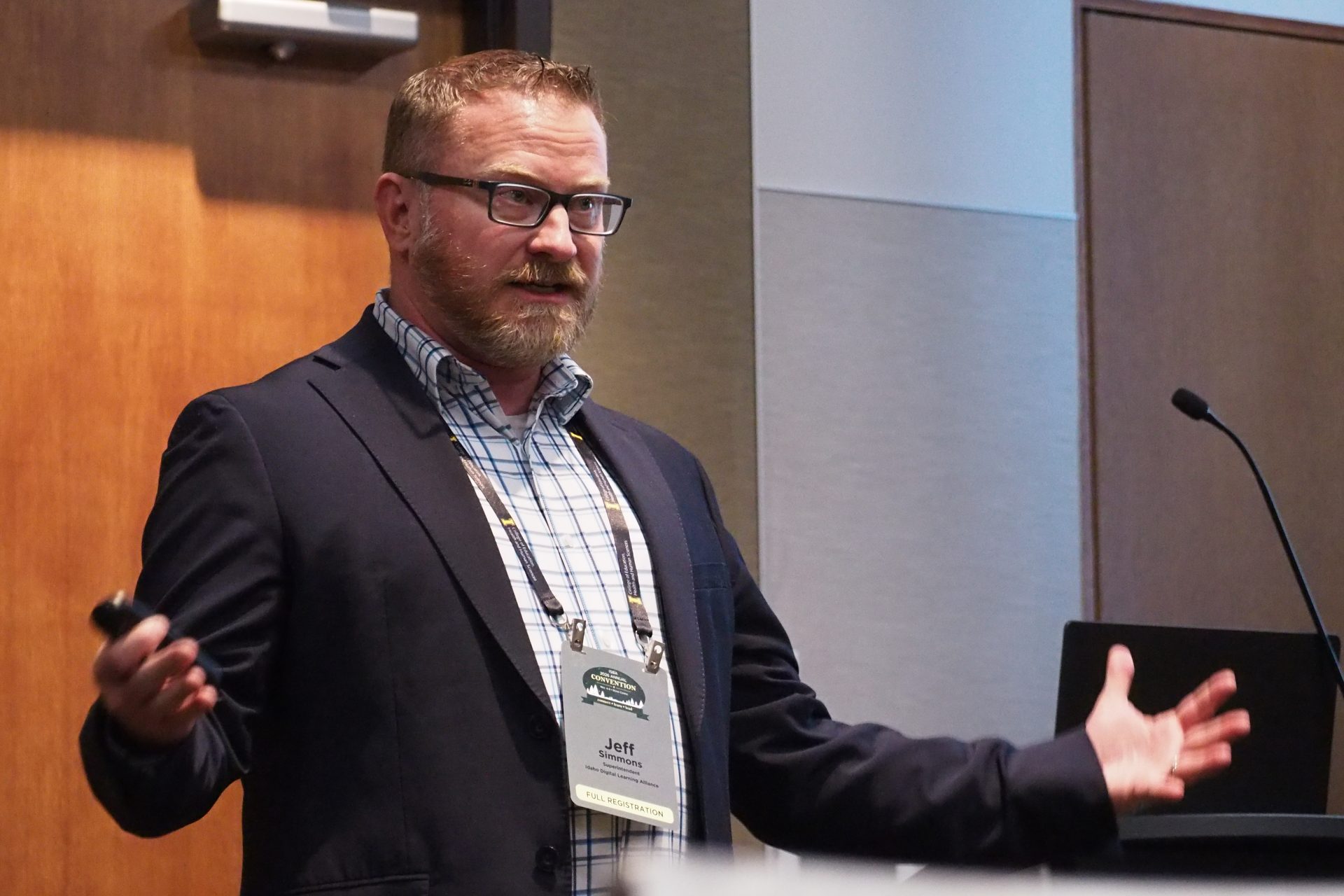
IDLA Superintendent Jeff Simmons discussed the decline during a Thursday workshop at the Idaho School Boards Association’s annual convention in Boise.
A decline in funding has forced IDLA to draw on its savings to serve more students than the program is funded to accommodate.
“That’s certainly not something we can do every year,” Simmons said of using savings to serve more students than its funding allows.
IDLA is a state-funded online learning program that offers virtual courses to Idaho students, including classes that let high schoolers earn college credits. The decline in those courses could limit student access to affordable college classes, particularly in rural communities where schools rely on IDLA to expand course offerings.
Simmons said the declines are largely because of course fees schools and students must pay after legislators slashed about half of the virtual program’s budget and limited its scope during the 2026 legislative session.
“We used to waive the course fee for a dual credit class, so we didn’t charge a fee,” Simmons told several trustees and school administrators Thursday.
Previously, students could use Advanced Opportunities dollars to cover the cost of college credits when taking dual credit courses through IDLA. A new law requires IDLA to charge a fee of $40 for classes that are a graduation requirement or $100 for classes that aren’t.
In a survey of rural schools, Simmons said 70% of responding districts cited the course fee as the reason students weren’t taking dual credit courses.
“I don’t think this was an intentional outcome of the legislation,” Simmons said.
Simmons doesn’t know where students are turning to take college courses instead. To find out, “we’re trying to do some collaborative data collection, so we can bring a full picture back to the State Board and the state Legislature,” he said.
Brett Arnzen, board chair at the Highland School District in Craigmont, said his district will have to make changes if IDLA “continues on the path it does.”
The district works IDLA’s fees into its longtime supplemental levy. But as the levy becomes more difficult to pass — gaining approval by just three votes last year and 150 votes this year — Arnzen worries about asking for more.
The enrollment picture extends beyond college courses.
Over the summer, IDLA enrolled 8,608 students – 2,200 above what it’s funded to serve. Currently, 12,056 students are enrolled for the fall semester – 806 over what the statewide online school is funded for.
This year, IDLA received state funds to serve 32,000 students. The program enrolled 56,000 students last year, before the Legislature cut $13.4 million from IDLA’s $26 million budget.
IDLA’s leaders are working with state superintendent Debbie Critchfield and Gov. Brad Little to “right-size” the budget for next fiscal year, Simmons said.
But the budget is not the only issue Simmons expects to face at the Statehouse next year. Last week, he attended a speech at the Statehouse by Jared Cooney Horvath, a neuroscientist and author whose book caught the attention of legislators who plan to “discuss” it during the session.
Horvath railed against the use of technology in the classroom – IDLA’s primary mode of operation.
“We know there’s likely legislation coming,” Simmons said. “So, making sure that we’re being intentional about our technology use is an important thing for us.”
Simmons agrees that no form of learning is ideal for every single student and that teachers are the most important part of a student’s education. But he disagrees with Horvath’s conclusion that classroom technology should effectively be eliminated.
“We can’t just be completely anti-tech,” Simmons said.