
About 60% of Idaho students in grades K-3 were reading at or above grade level when they took the Idaho Reading Indicator (IRI) in September — the highest fall proficiency percentage in at least seven years.
The Idaho Department of Education released the scores Monday. The results mark an increase of about 3 percentage points from last fall, the first time Idaho students took a new version of the exam developed by Amira, an AI-powered reading assessment company. Students read aloud to a computer on the new version, which state leaders say tests a higher level of understanding than prior multiple-choice exams.
“The improvements we are seeing are so much more than a number on a report or a point on a graph,” state superintendent Debbie Critchfield said in a news release. “These results are about our students: their educational careers, their plans after high school, and their futures building careers, lives, and families in Idaho and beyond.”
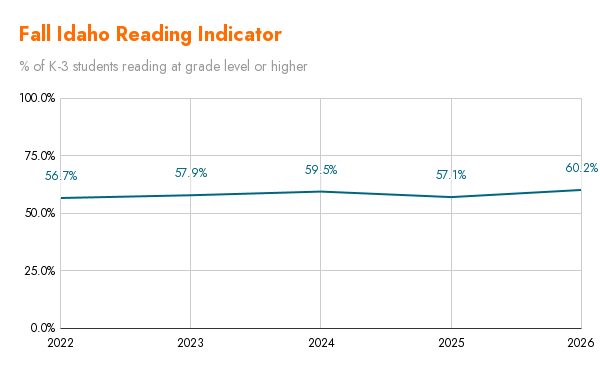
Fall proficiency rates are routinely below those measured in the spring, in part due to summer learning loss. Critchfield and other state leaders view the fall exam as an annual baseline with growth throughout the school year shown on the spring exam.
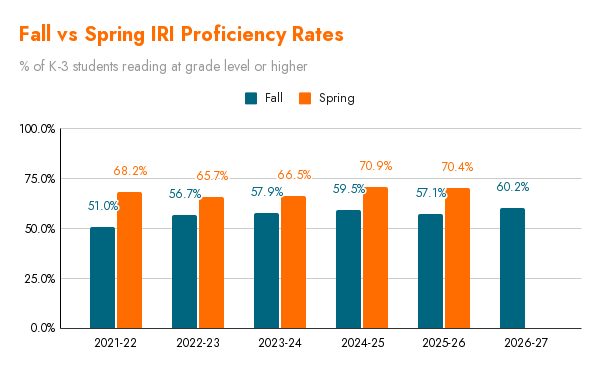
While numbers improved statewide, kindergarteners struggled this fall with 43.85% of students proficient or better, a slight drop from the prior year.
Last fall, the IRI was given in October to give schools more time to sort out technology issues with the new exam. This year, the testing window returned to September.
The low kindergarten baseline is an indicator that kindergarteners are coming to school less prepared than in the past, said Kacy Proctor, state IRI coordinator. Idaho’s youngest students not only struggle with literacy skills but with using the computers and headphones required for the exam.
Critchfield hosted a school readiness summit last month with national experts to discuss why students are coming less prepared.
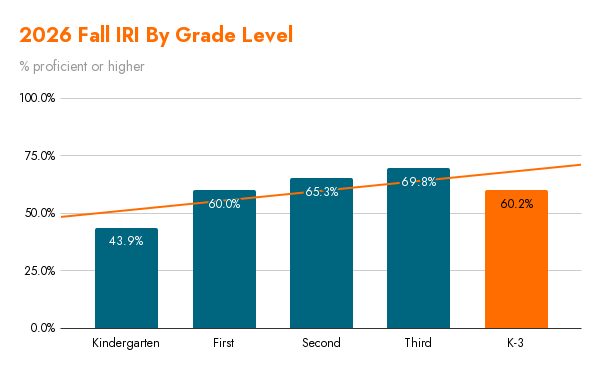
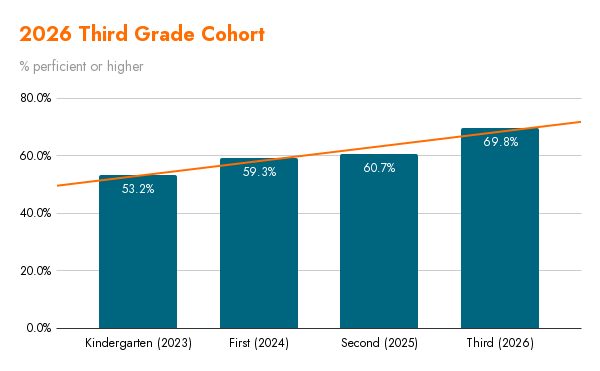
Idaho’s third-graders showed growth in the second year of the Amira exam, with nearly 70% of students reaching proficiency.
“Though we’re not surprised to see Idaho students continuing to improve, we are very pleased to see our continued investments in early literacy continue to pay off for our youngest learners,” Critchfield wrote. “We can now demonstrate improvements beyond the baseline that was established during the fall 2025 assessment administration.”
Other key numbers:
- 51.8% of economically disadvantaged students were proficient this fall, up four percentage points from last fall.
- 33.8% of tested English language learners were proficient, up three percentage points.
- 32.8% of tested special education students were proficient, up four and a half percentage points.
Students with severe disabilities are not required to take the IRI. English language learners can take the assessment, but students can qualify for an exemption if they are in their first two years attending U.S. schools and if they score below 2.0 on a screener exam.
Literacy funding in Idaho grew from $13.1 million in 2019 to $72.8 million in 2025. That funding does not include training through the Striving to Meet Achievement in Reading Together (SMART) Project that hundreds of Idaho teachers and school leaders have received thus far.
“I am proud that Idaho’s five-fold increase in literacy funding is paying off. Children need a strong start in reading for our investments in education to have the biggest impact,” Gov. Brad Little wrote in a news release. “Learning to read proficiently early on is one of the most important building blocks for future success.”

