
When are kids ready for school? And what does school readiness mean?
Those are questions Idaho Superintendent of Public Instruction Debbie Critchfield hopes to tackle through policy and innovation. To continue the discussion, Critchfield, joined briefly by Gov. Brad Little, hosted The Readiness Zone Summit on Thursday, which brought in national experts on school readiness and reading.
“Some of the folks that you’re going to hear from today that have really changed my thinking on how we approach this,” Critchfield said. “We don’t wait for money. We don’t wait for some silver bullet to come into Idaho and say this is the magical thing that will get our kids there.”
Those experts included Richard Reeves, founder of the American Institute for Boys and Men, that researches, in part, how boys development impacts their education.
Reeves advocated for flexibility around when boys start school and innovation when it comes to the kindergarten transition. Other experts discussed the national landscape when it comes to policies around school readiness and the importance of building children’s vocabulary as a stepping stone to reading.
Watch a recording of the Readiness Zone Summit here.
‘Redshirting’ and a flexible first year
Critchfield is a fan of Reeves’ 2022 book, Of Boys and Men: Why the Modern Male Is Struggling, Why It Matters, and What to Do About It.
In the book, Reeves advocates for “redshirting” boys, the idea of waiting to put boys into kindergarten until the end of their eligibility window. Reeves’ views since publishing have softened, he said, but the core principle remains: Boys develop mentally often behind girls, and that impacts the classroom.
“Boys aren’t less smart in any way, less cognitively advanced,” Reeves said. “But they are struggling non-cognitively and they really struggle with literacy.”
He pointed to data that fourth-grade Idaho boys are eight percentage points behind girls in reading on the National Assessment of Educational Progress (NAEP) exam.
Nationally, Reeves noted that women earn far more college degrees than men.
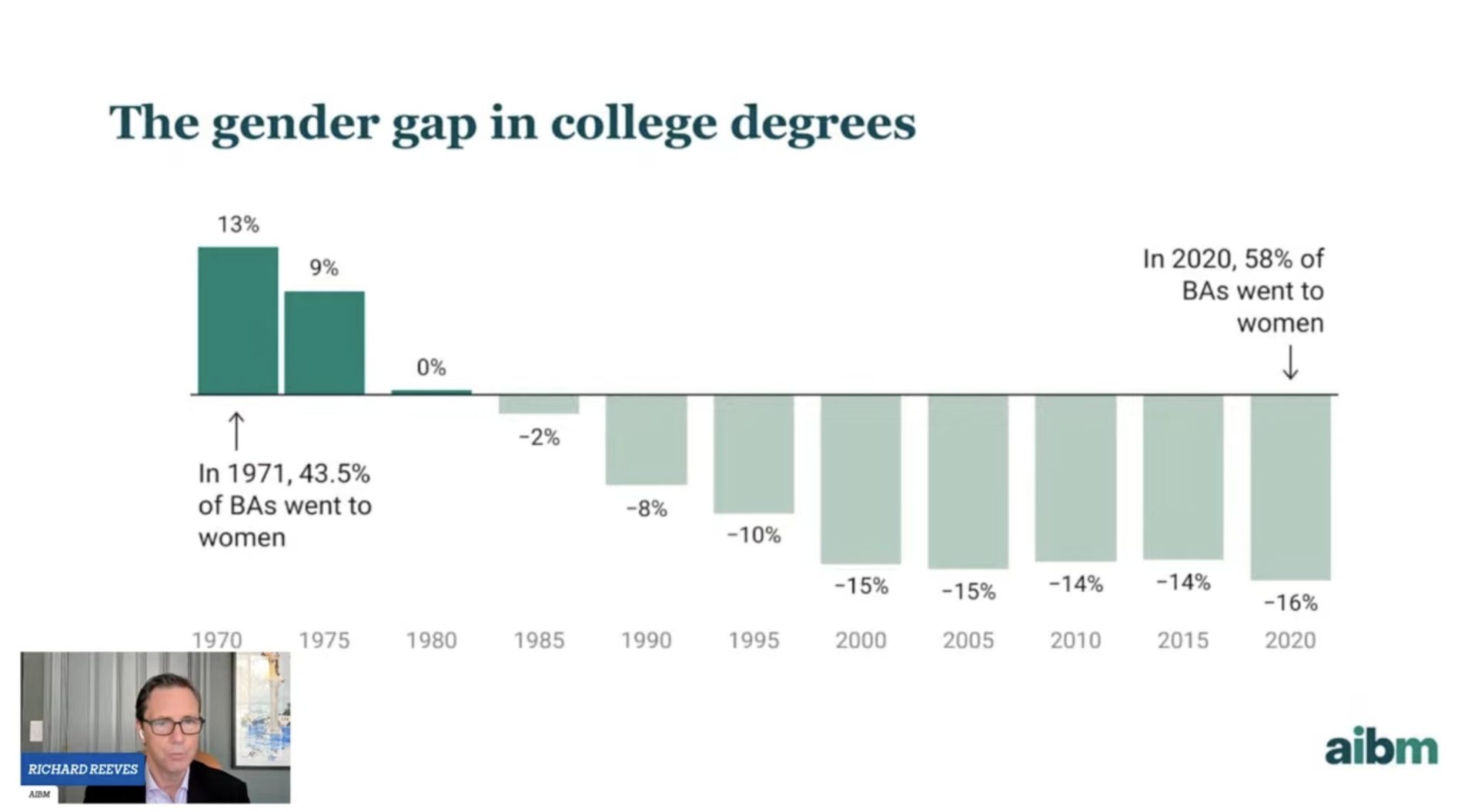
“We have slightly bigger than Title IX-level gender gaps on college campuses, but the other way around to the way they were when we passed Title IX,” he said.
Being older in class can mean better test scores, but often the benefit is less tangible, he said. It can mean students enjoy coming to school more and are better behaved in class.
Reeves advocates for a more flexible start generally for students, while acknowledging that’s not always equitable due to the financial pressures families face around childcare.
Those flexible approaches include:
- An extra learning year like transitional kindergarten,
- staggered start dates so a student could start kindergarten mid-year,
- fluid ways to have children repeat kindergarten and
- an increase in K-1 combination classes.
Defining school readiness
Nationwide, 17 states have a definition of school readiness and 23 states have policies in place to guide the kindergarten transition, said Adrienne Fischer, with the Education Commission of the States.
Idaho does not have uniform guidelines for that transition. Fischer gave examples of what other states are do before discussing options for Idaho with Critchfield.
Critchfield said this doesn’t have to be a legislative process that leads to guidelines but could instead be policy developed through conversations with stakeholders.
“Many times we wait for that other group or that other place or another state to solve the problem,” Critchfield said. “It isn’t depend upon that. When we’re talking about readiness, communication with parents, professional development, we have the ability starting at the local level to really enact those changes.”
Vocabulary key to early literacy
Nothing about reading is natural or innate, said MaryBeth Flachbart, senior consultant with Mountain West Associates, a firm that supports schools, districts, and state education agencies.

It’s hard to learn how to read, and a key building block often gets missed: vocabulary.
“We can teach kids how to decode, how to do phonological awareness,” Flachbart said. “But ultimately vocabulary is what is going to serve them throughout their life.”
She referenced a 1995 study where researchers compared families across socio-economic boundaries. Children of professionals have been exposed to 50 million words as toddlers compared to 10 million words for children living in poverty.
“The three-year-olds of the professional families had the same vocabulary in terms of breadth, depth, and expression as the parents of the children living below the poverty line,” Flachbart said.
That translates to a student’s ability to read because if students don’t know a word orally, it won’t be in their reading or writing vocabulary, she said.
There have been huge changes to how parents interact with their kids since the 1990s, though with the rise of smartphones and tablets, Critchfield noted, maybe less talking in general at the dinner table or in the car.
Flachbart agreed but said there aren’t long-term studies on the issue yet.
“All we know right now is less kids are showing up for school language ready,” Flachbart said. “They don’t have the language to self-regulate. They don’t have the language to get along with their peers. We’re seeing less sophisticated language.”
Flachbart encouraged families to read to or with their children 20 minutes a day. Using free resources like the library, PBS, or even audiobooks on Libby, a free library app, are good resources, Flachbart said.
“We can’t do enough to increase vocabulary,” she said.

