
The Idaho Digital Learning Alliance could lose 23% of its course enrollments next school year — even after tapping reserve funds to soften the blow from state budget cuts.
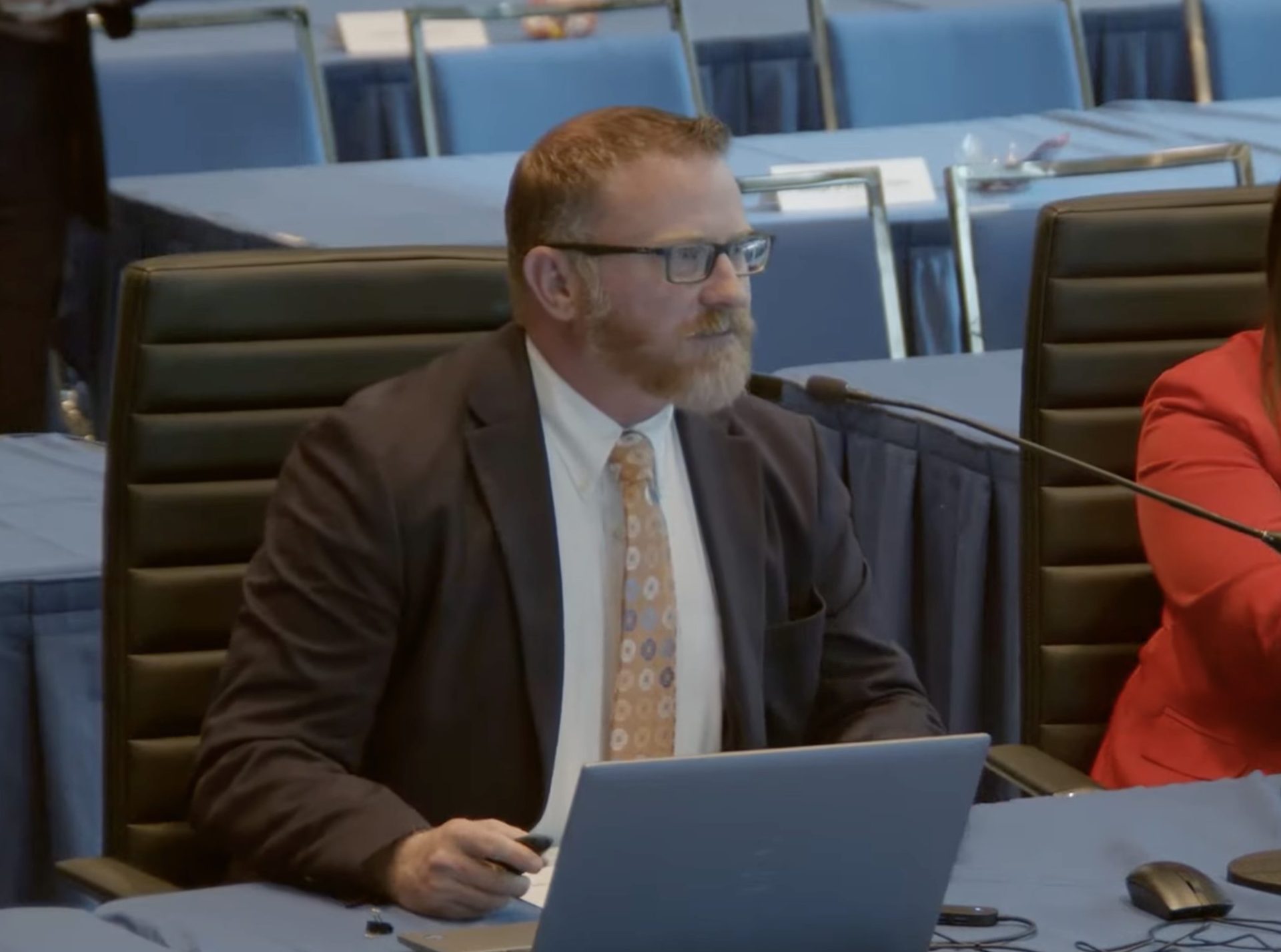
IDLA Superintendent Jeff Simmons shared the enrollment estimate Thursday as part of his annual report to the State Board of Education. It was the third and final day of the State Board meetings at Boise State University this week.
Last school year, course enrollments at the state’s virtual learning provider reached 56,695 — a figure that includes students who enroll in multiple courses. Next school year, enrollments are expected to dip to about 43,500 after state leaders cut the platform’s budget by more than half, Simmons said.
The 23% decline would come after IDLA taps $5.5 million from its fund balance. The state’s appropriation will cover about 32,000 course enrollments.
“We’re narrowing our course catalog and really focusing the course offerings that we can provide … on courses that would be a graduation requirement or lead towards some type of certificate or degree,” Simmons told the State Board.
Earlier this year, the Legislature — with support from Gov. Brad Little and state superintendent Debbie Critchfield — cut IDLA’s $26 million annual budget by $13.4 million while downsizing course offerings, imposing new course fee requirements and restricting state reimbursements for certain students.
House Bill 940 eliminated IDLA’s elementary program, which offered public schools supplementary reading instruction, along with driver’s education courses. The legislation also limited “custom sections” — online courses in which all students come from one school district — to instances when districts can’t find a qualified teacher. And it cut state reimbursements for private schoolers and students attending all-virtual public schools.
The policy changes forced IDLA to lay off 27 elementary teachers, Simmons said.
Meanwhile, dual credit enrollment is down about 50% during summer school. While HB 940 preserved state reimbursements for dual credit courses, covering most of the cost, IDLA must now collect a fee for the college-level classes — between $40 and $100, depending on whether the course satisfies a graduation requirement.
Previously, dual credit was free for many students. IDLA waived its fee for dual credit, and students could use the state’s Advanced Opportunities program to cover the college’s fee. While they can still use Advanced Opportunities for the college fee, students must now cover IDLA’s fee.
“That’s the only change in our dual credit program from last summer to this summer, and so we do think that’s making an impact,” Simmons said.
State Board approves new literacy plan
Also Thursday, the State Board approved updates to Idaho’s “Comprehensive Literacy Plan,” a broad-strokes document that sets a vision and goals for reading instruction across the state.
The plan is updated every five years. The latest changes include new research on the science of reading, a body of scientific research that explains how literacy develops and informs educators about how to address students’ reading and writing challenges.
Another addition includes new sections that track progress toward state goals since the last plan update. “That way, we can really see the work that’s been happening in Idaho to continue to push our early literacy project forward,” said Alison Henken, the State Board’s policy director.
For instance, one goal from 2021 to 2026 was “collaborative leadership” among various public agencies to maximize resources and student achievement in literacy. Progress included, among other things, the Idaho SMART Project, a statewide training initiative to improve reading instruction.
The new plan also includes a few case studies from schools that saw significant growth in scores on the Idaho Reading Indicator during the 2024-25 school year. Ponderosa and Ustick elementary schools in the West Ada School District and Fernan STEM Academy, a charter school in Coeur d’Alene, had test scores improve between 31% and 38% that year.
State Board President Kurt Liebich lauded the three schools but noted that similar progress isn’t being made statewide. “What tangibly can we do with this plan to replicate the best practices that we saw in those three schools?” he asked officials from the Idaho Department of Education.
Scott Thunstrom, IDE’s director of content and curriculum, said the comprehensive plan will work in conjunction with a forthcoming instructional guide. The guide “will lay out very specific strategies … that we know make significant differences in student achievement with literacy,” he said.
Click here to read the updated Comprehensive Literacy Plan, which starts on page six of Thursday’s agenda packet.