Idaho has the most acute doctors’ shortage in America — and $186 million in fresh-from-Uncle-Sam federal healthcare grants.
Problem solved, right?
Not necessarily.
After a legislative hearing Wednesday, it’s not clear how much of Idaho’s $186 million would go into medical education and the expansion of a patchwork of partnerships with medical schools in the region.
Idaho universities have a stake in the outcome, since they would benefit from expansion. Idaho patients — present and future — have a more personal stake. Idaho ranks last in the nation in physicians per capita, an access crisis that worsens as Idaho’s population grows and Idaho’s doctors grow older.
State officials are racing to commit Idaho’s Rural Health Transformation Program grants by Oct. 30 — and if they don’t, the feds could cut Idaho’s grants for the remaining four years of the program. But legislative leaders have insisted on having a say over the grants. Wednesday’s hearing put that pushback on display, with the clock ticking.
‘I think it’s somewhat dangerous’
The third meeting of the Legislature’s Rural Health Transformation Committee began with a midsummer dog-day vibe. One of the Statehouse’s larger meeting rooms was largely empty, save for a few reporters and some lobbyists who were dressed more appropriately for golfing than for arm-twisting. Only three of the committee’s eight members attended in person, with a couple of other lawmakers participating via Zoom.
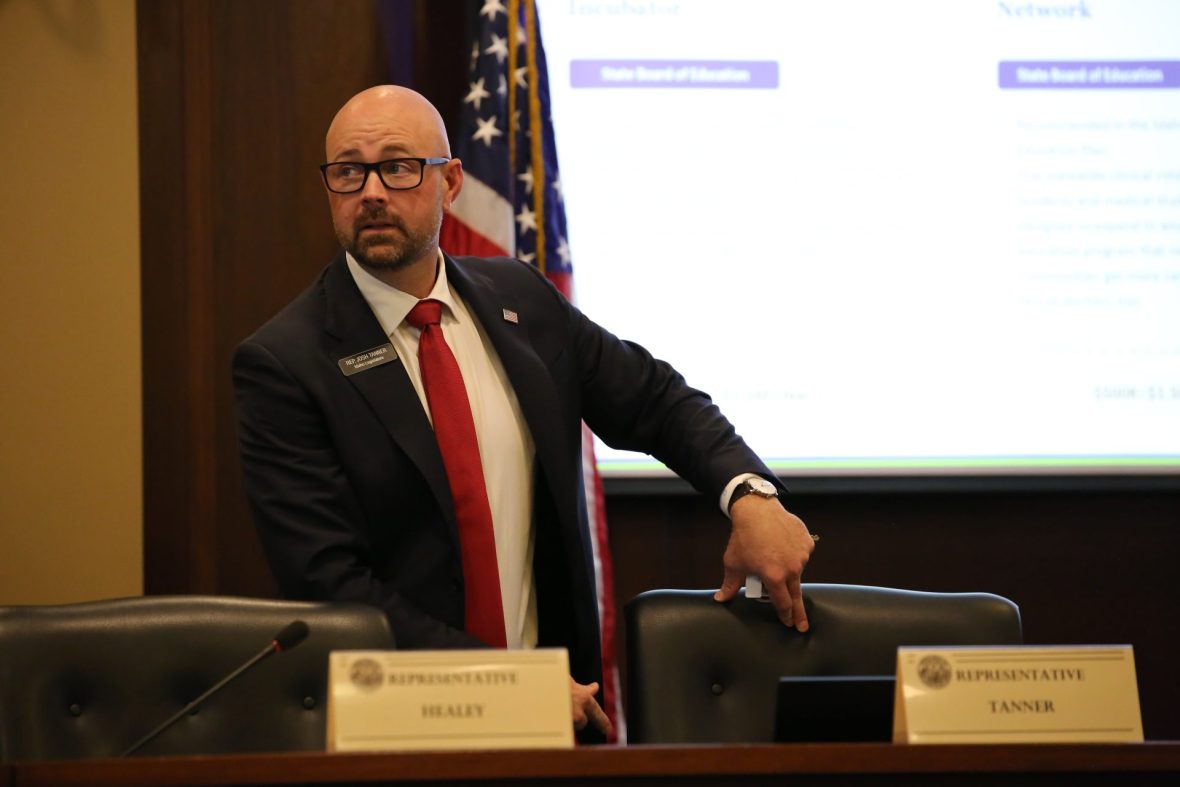
Rep. Josh Tanner arrived late but quickly made up for lost time, taking the somnambulant hearing on a sharp turn. The Eagle Republican immediately locked in on using federal grants for medical education expansion. Tanner expressed “angst” about Idaho ending up on the hook after the five-year grant program ends.
“I think it’s somewhat dangerous, mostly because we are committing long-term cost,” said Tanner, putting State Board of Education Executive Director Jennifer White on the spot.
White and Idaho Department of Health and Welfare Director Juliet Charron didn’t dispute the point. “This is a much larger conversation,” White said.
And it’s important to note that Tanner is no bit player in this conversation. He co-chairs the powerful budget-writing Joint Finance-Appropriations Committee. He’s a full-throated fiscal hardliner in a Legislature with plenty of spending hawks. He’s a close ally of House Speaker Mike Moyle, the Legislature’s single most powerful figure.
He’s skeptical about this projected $930 million surge of federal money. And he’s not alone.
What will probably get funded
State officials have earmarked $8 million of the first-year, $186 million grant for medical education. But not all medical education is the same. The terminology matters and it gets confusing.
The state’s plan emphasizes programs that fall under the heading of graduate medical education, or GME. This includes rural residencies for medical school graduates and fellowships that provide added training for students who have already completed residencies.
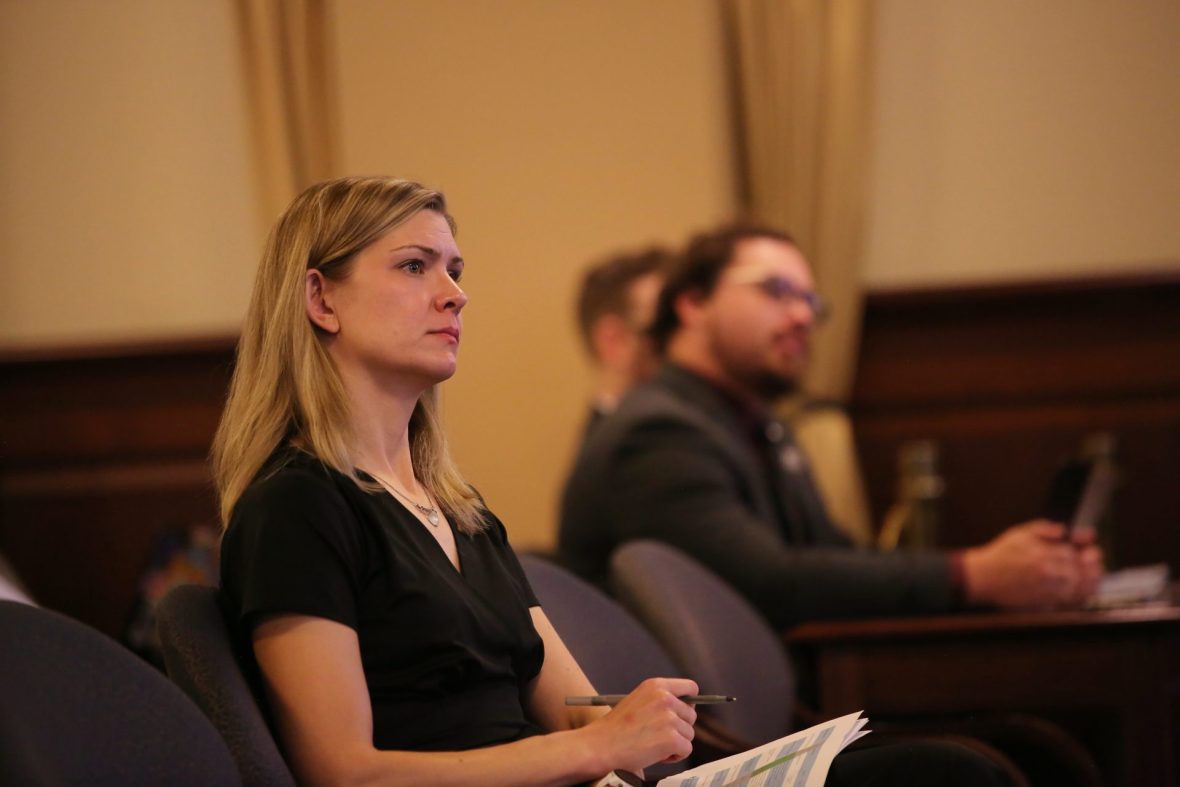
By 2030, Idaho hopes to have 10 additional students complete a residency, and 20 students complete a fellowship. The residencies will focus on areas such as obstetrics and gynecology, psychiatry and geriatrics, “because we know that’s what we need in rural communities,” Charron said in a recent Idaho EdNews interview.
Idaho is hardly alone here. Most states have a GME component in their rural healthcare plans, Charron said. It stands to reason, too.
Post-medical school residents and fellows are close to becoming full-fledged physicians — launching their careers, perhaps, in the communities or states where they received their GME training. In other words, GME programs could help Idaho address its physician shortage a little more quickly.
And even before that, residents and fellows can see patients, generating billings for a hospital or clinic. The GME programs can help pay for themselves, after the federal grants go away.
Add it all up, and it appears likely that Idaho will put some federal money into GME programs, building on a $900,000 state funding increase passed earlier this year.
What might (or might not) get funded
The state can probably fund the programs atop its GME wishlist with about $5 million, White said Wednesday. The remaining $3 million opens up some options.
Idaho could double down on GME, White said, creating an incubator program and a training site network geared toward rural communities. Or it could put the money into medical school — known as undergraduate medical education, or UME.
In this UME arena, the state could subsidize additional seats at the University of Washington and the University of Utah medical schools. These partnerships, dating back to the 1970s, allow Idaho students to attend these out-of-state programs at a reduced price.
The state could also subsidize medical school seats at the Idaho College of Osteopathic Medicine, a private, for-profit medical school in Meridian.
What about an ICOM purchase?
Some powerful lawmakers have made no secret of their interest in the Idaho College of Osteopathic Medicine. ICOM is closely partnered with Idaho State University, and university administrators are also interested in acquiring the college. ICOM isn’t for sale now, but it’s expected to go on the market at some point in the future.
However, Idaho would not be able to use its share of federal Rural Health Transformation Program grants to finance a deal. “We can’t purchase property,” Charron said in a recent EdNews interview.
The state could also use the feds’ money to kickstart a University of Idaho-University of Utah satellite medical school campus in Boise, which could accept 30 students by 2028. For the fledgling program, the feds’ money could come at an opportune moment.
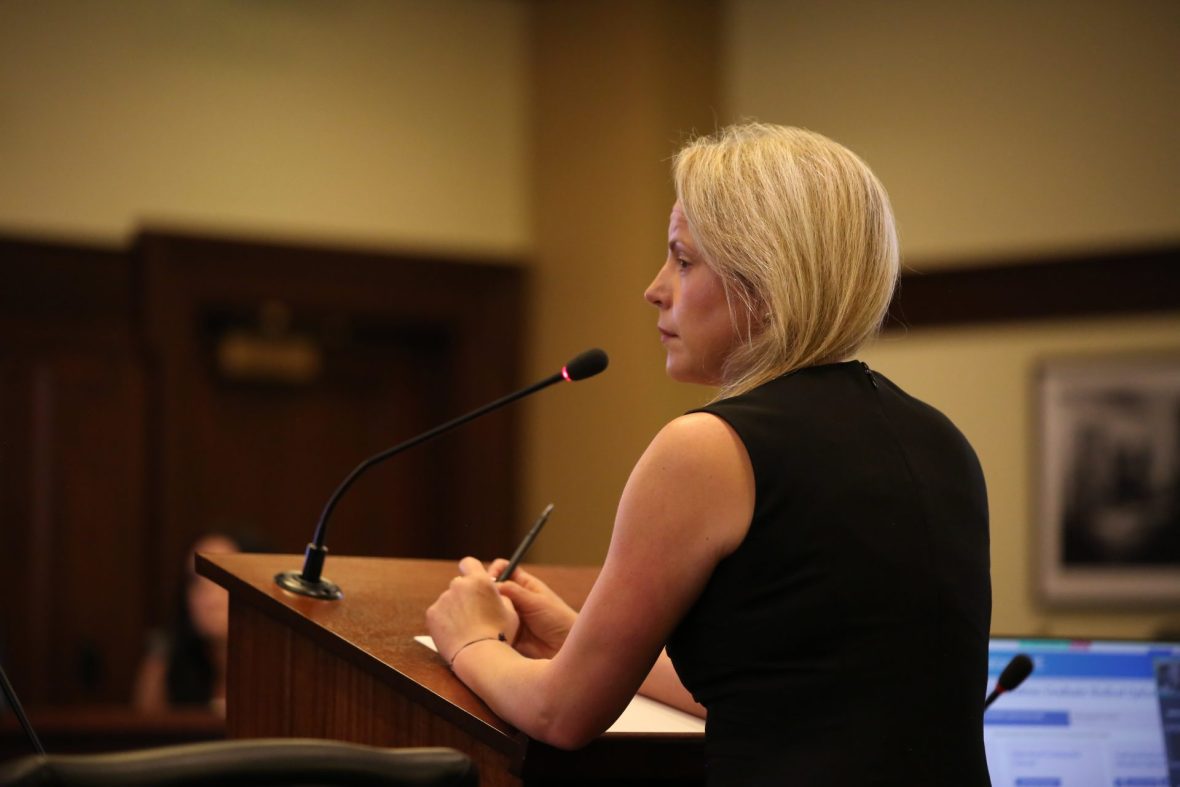
“This project is new enough that it can be fine tuned to meet the requirements of the rural health transformation grant,” White said Wednesday. “They’re building the curriculum, they’re building who they’re going to serve, they’re building the pipeline for those students.”
But there’s a catch — actually, two. The feds would have to allow Idaho to change its grant proposal and shift money out of GME and into UME. And the state would have to make a long-term funding commitment to any UME expansions.
The Legislature’s role — falling to eight lawmakers
While Tanner made no secret of his skepticism Wednesday, another lawmaker made his impatience clear.
Rep. Dustin Manwaring has been a central figure in a UME debate that exploded during the 2025 legislative session. The Pocatello Republican helped to broker a compromise proposal that calls for the state to subsidize additional medical school seats — while, perhaps, cutting seats at the University of Washington’s WWAMI program, a five-state cooperative serving Washington, Wyoming, Alaska, Montana and Idaho. Later in 2025, Manwaring co-chaired a state working group that spent several months studying the physicians’ shortage.
Coming next week: Another deep dive
It’s not just about medical school. The federal healthcare grants could fund a host of other education programs in Idaho. We’ll take a closer look at other projects that could be in the pipeline.
But as Manwaring noted, the 2026 Legislature didn’t follow up, adding no medical school seats.
“We already had this debate in 2025,” he said. “We should have funded it this year, and we didn’t do it.”

Manwaring is speaking for a bipartisan supermajority of the Legislature, which overwhelmingly passed the 2025 medical education law. But by the same token, Tanner speaks for legislators who see danger in the five-year healthcare grants — a Trojan horse that could leave the state with unfunded bills to pay later.
And because they have two seats on the eight-member Rural Health Transformation Committee, Manwaring and Tanner have amplified voices. Committee members will have the chance to review every grant-funded project. And because the state must make its grant spending decisions by Oct. 30, more than two months before the 2027 session, these eight Republican lawmakers will act on behalf of their 97 colleagues.
Wednesday offered a first glimpse of what that oversight could look like.
Kevin Richert writes a weekly analysis on education policy and education politics.