
Despite a $10 million state budget cut, there should be enough money to cover this year’s Idaho Launch postsecondary grants.
“We should not be turning away high school grads,” said Wendi Secrist, executive director of the Workforce Development Council, the state agency that oversees the Launch program.
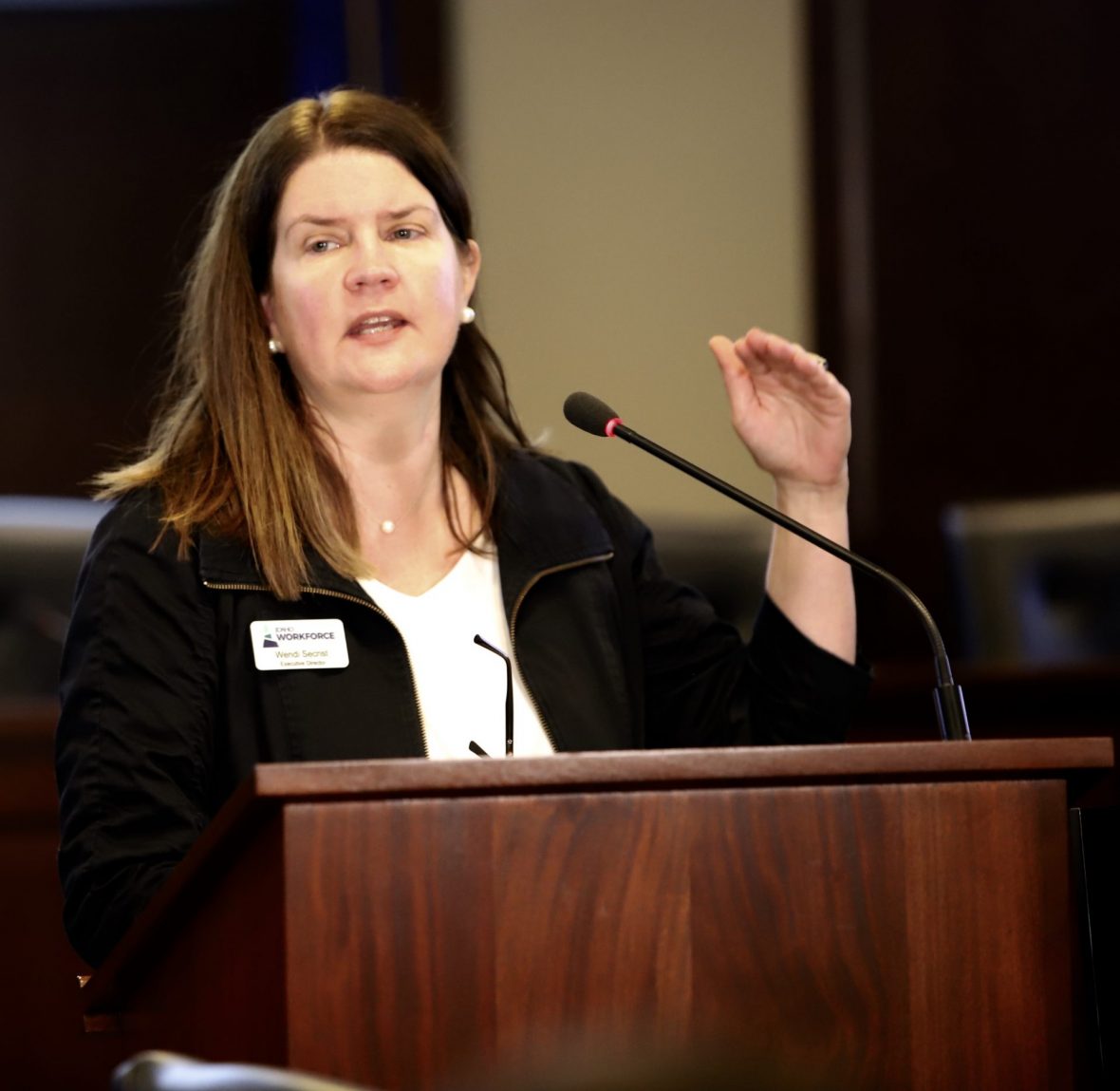
But the cuts will have an impact, Secrist said. Student grants could gobble up the full $65 million provided by the 2026 Legislature, leaving no money to boost a companion Launch program for adults.
In a recent Idaho EdNews interview, Secrist and Idaho Launch Program Manager Sherawn Reberry provided a status report on Launch. They talked about what they know of young adults using the Launch grants — and when they’ll have answers about the pipeline from Launch to the workplace.
The Launch budget, this year and beyond. On the one hand, the Launch cuts were standard operating procedure in a 2026 session defined by downsizing. On the other hand, they also represented the Legislature’s biggest step to rein in Gov. Brad Little’s Launch initiative — a program that has long rankled conservative lawmakers.
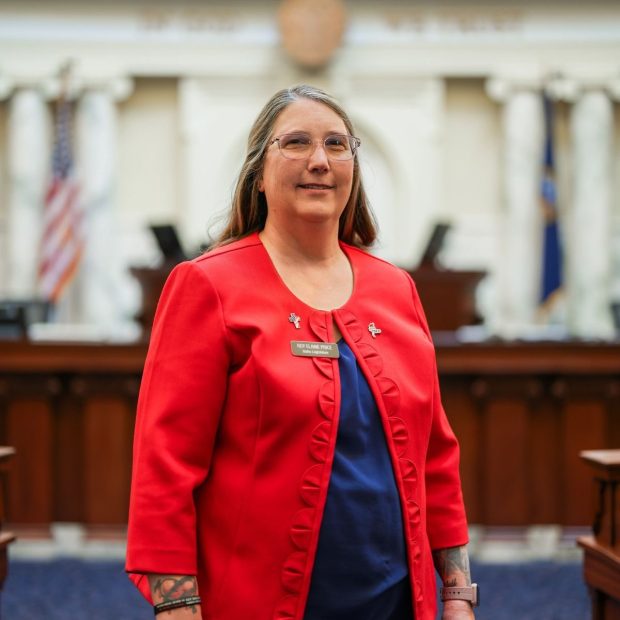
During a February Joint Finance-Appropriations Committee hearing on the Launch budget cuts, Rep. Elaine Price spelled out her concerns. “Why should JFAC treat Launch as a proven?” said Price, R-Coeur d’Alene.
Ultimately, the Legislature shifted $10 million in surplus from Launch’s 2025-26 budget, a move Little supported, and a $10 million cut for this year. Little did not recommend this cut, but he ultimately signed it into law.
But Secrist is also operating on the assumption that the cuts are not permanent. When she submits the council’s budget request for 2027-28 — a document due on Sept. 1 — she will request $75 million.
From there, Little will present budget proposals to the Legislature in January. If Little signs on for $75 million, which would appear likely, that’s the number that would go to lawmakers.
“The Legislature would have to specifically take action to transfer funds out of the program,” Secrist said.
Applications, by the numbers. Slightly more than 10,000 students applied for Launch money this year, Reberry said. That’s up from about 9,700 applications the previous year.
Launch applications are only part of the story. The more salient metric is the acceptance rate — the number of students who say yes to their share of the money. And here, the program is “definitely farther ahead” of its pace from last year, Secrist said. About 7,000 Class of 2026 graduates have accepted a grant, with their applications either finished or somewhere in the pipeline.
Secrist expects an acceptance rate of 75%, or maybe higher. But if three of every four Launch applicants take their grant — each worth up to $8,000 apiece — that would exhaust the available $65 million, Secrist said.
STEM school designation program comes to an end
The Workforce Development Council and the STEM Action Center formally joined forces on July 1, under a merger unanimously approved by the 2026 Legislature. The merger eliminated two positions and moved remaining the STEM Action Center staff from rented space at Downtown Boise’s Hoff building — netting overall savings of $329,400.
The merger also marked the end of Idaho’s STEM school designation.
The Legislature created the program in 2017. And one of its benefits was an emphasis on “project-based learning,” linking classroom instruction to real-world industry needs. The STEM Action Center will still emphasize project-based learning — and could push it into more schools — by getting rid of a program with only 12 to 15 participating schools.
The STEM school designation set up a labor-intensive process, and the designation meant only so much, said Wendi Secrist, executive director of the Workforce Development Council and the STEM Action Center. “Any school can put STEM in its name.”
Who’s applying, and where are they going? Secrist is seeing a slight shift in where students use their Launch dollars. While most Launch recipients have enrolled in four-year schools, more students are choosing two-year schools or shorter-term career-technical programs.
That’s consistent with the goal of Launch — helping prepare students for in-demand careers that don’t necessarily require a four-year degree. And the shift isn’t really a surprise to Secrist. As Launch enters its third year, student advisers and career counselors are more attuned to the variety of options available to high school graduates.
State officials won’t have an enrollment breakdown until fall, and they won’t have a breakdown on career paths until fall. But the in-demand career fields aren’t changing much. Healthcare fields, business, engineering, education and public safety are still the most popular paths, Secrist said.
But are Launch recipients landing good jobs? Three years in, that’s still the big unanswered question about Launch.
Secrist is encouraged by the participation metrics.
More than 16,000 high school graduates have accepted a Launch grant so far.
During the first two years — the classes of 2024 and 2025 — nearly 96% of students were on track to completion.
Meanwhile, 73% of Launch recipients come from families earning less than $120,000 per year.
“Everything is trending in the right direction,” Secrist said. “But we still have work to do to see the actual outcomes, because those students have to graduate, they have to get a job.”
In other words, the Workforce Development Council doesn’t know if Launch recipients are using their grants to land good-paying jobs in high-demand careers, outearning their peers who didn’t get a grant.
There are several reasons why the council can’t answer what is, basically, the rubber-meets-the-road question about Launch. Students have three years to use their Launch money, so the jury is still out, even for the class of 2024. Students can use money for a short-term career-technical program, but they can also put their money toward an apprenticeship that runs up to five years — so many Launch recipients aren’t yet in the workforce.
So the council is starting small — looking at the 200 or so first-year Launch recipients who enrolled in short-term career training programs. The results could shape future legislative debates over Launch funding. But they aren’t ready yet.
“That’s what we’re working on,” Secrist said.