Leaders of a trust that funds health insurance for more than(opens in new tab) 100 school districts and charter schools this week are weighing three options to pay off money owed to Blue Cross of Idaho.
The Idaho School Benefit Trust has exhausted its reserve funds and met last week with Blue Cross, the trust’s third-party benefits administrator, to address a shortfall that’s likely more than $10 million.
During the Thursday meeting, Blue Cross representatives presented three payment options, according to documents obtained by Idaho Education News. All three options would require additional monthly payments from the trust’s members: public school districts and charter schools. Blue Cross asked the trust to make a decision by Wednesday.
But there are still unanswered questions surrounding the shortfall, including which districts and charters are responsible for covering it and how much they will owe.
Most of the people who oversee the trust and administer the health benefits for thousands of public school employees and their families have been tight-lipped since EdNews first reported on the shortfall last week.
Debbie Hainke, benefits manager for the trust, declined to be interviewed. But she sent a written statement to EdNews that said she’s “doing her best to answer calls, emails, texts between meetings.”

“This is a difficult situation for everyone,” Hainke wrote by email. “I ask for your professional courtesy to allow us to work through this and communicate information as it becomes available.”
Idaho Department of Insurance public information specialist Julie Robinson told EdNews Tuesday that the situation was an “ongoing regulatory matter” and the department is unable to comment at this time. Blue Cross of Idaho didn’t return a message seeking comments Tuesday.
On Friday, EdNews reported that two weeks after the Idaho School Benefit Trust asked school districts and charters to renew their membership for the upcoming benefit year, Hainke sent a letter to members that said the trust had exhausted its reserves after a year of “extremely high” claims. Hainke told members that they’re responsible for covering the shortfall, which is estimated to be about a month’s worth of contributions.
Along with the benefits manager, five trustees appointed by the Idaho School District Council oversee the Idaho School Benefit Trust. The Idaho Department of Insurance oversees the trust at the state level.
One trustee, Gaylen Smyer, responded to questions from EdNews this week. Smyer confirmed that Blue Cross of Idaho provided the trust with three options for repayment, and trustees will meet this week to finalize a decision.
He said trustees are considering two of those options. Both include, among other payments, an additional cost of $26.22 per member per month until the shortfall is resolved.
Blue Cross asked trustees to sign a letter of intent by Wednesday, then sign a definitive agreement by Aug. 5.
All school districts and charter members are expected to deliver signed definitive agreements by Aug. 14.
‘We thought we were navigating our way through this’
The trust in recent years has touted its low renewal rates — 6.1%, on average, between 2016 and 2026 — compared to other benefit plans.
But the trust’s fund balance dwindled from $22.5 million to $2.1 million between August 2021 and August 2025.
Then medical claims spiked for the 2025-26 benefit year, which ends Aug. 31, and in mid-July, Hainke told members that the trust had run out of money.
Smyer said trustees were aware that the trust’s fund balance was shrinking in recent years.
“We saw the decline, yes, and we were taking steps to try to address it,” Smyer told EdNews on Tuesday. “But we did not anticipate the utilization that occurred.”
EdNews asked Smyer why school districts weren’t notified sooner of the financial shortfall. Hainke’s letter came after districts and charters had finalized their budgets for the upcoming school year.
“We thought we were navigating our way through this,” Smyer said.
The extent of the shortfall is unclear. The trust hasn’t offered a specific number, except that it’s estimated to be about one month’s worth of contributions.
According to financial disclosures reviewed by EdNews, the trust collected, on average, $161 million from members between 2014 and 2024. The average monthly revenue during this period was about $13.5 million.
Who are the trustees?
- Chairman Gordon Woolley, former Teton County superintendent
- Vice Chairman Chuck Kinsey, former Lakeland superintendent
- Treasurer Darren Uranga, CFO for Elevate Academy
- Trustee Gaylen Smyer, former Cassia County superintendent
- Trustee Wil Overgaard, former Weiser superintendent
Hainke’s mid-July letter to members mentioned there will be an “immediate cash impact” for participating schools.
Two superintendents on Monday said they were told to “sit tight” and wait for more communication from the trust.
“I’m not aware as to what the next steps are for resolving the issue,” New Plymouth Superintendent Wade Wilson said Monday.
The trust’s latest publicly available tax document from 2024 lists 113 member districts, charters and education organizations, including the Idaho Education Association and the Idaho School Boards Association.
As of this month there are 108 members, according to a list provided by the Idaho Department of Insurance. To view the full list, click here(opens in new tab). The number of members will likely change when the new benefit year begins Sept. 1.
According to the trust’s website, it funded benefits for 13,310 employees and nearly 11,000 dependents in 2024.
Can the state bail out the trust?
State leaders are aware of the situation, but they signaled this week that it’s up to the trust to find a solution.
While the state appropriates money to public schools for employee health insurance, local leaders choose their plans. The Idaho School Benefit Trust is one option that allows members to pool their money to cover claims. Public schools can also join the state plan — administered by Regence BlueShield of Idaho — or seek private plans.
Joining the state’s insurance plan comes with a hefty buy in. Wilson said when he worked for Weiser School District it would have cost more than $400,000 to buy in to the state plan.
“We just didn’t see where we could swing that,” he said.
In fiscal year 2023, the cost to join was $3,465 per benefit-eligible employee, according to a school district decision guide on the Office of Group Insurance website.
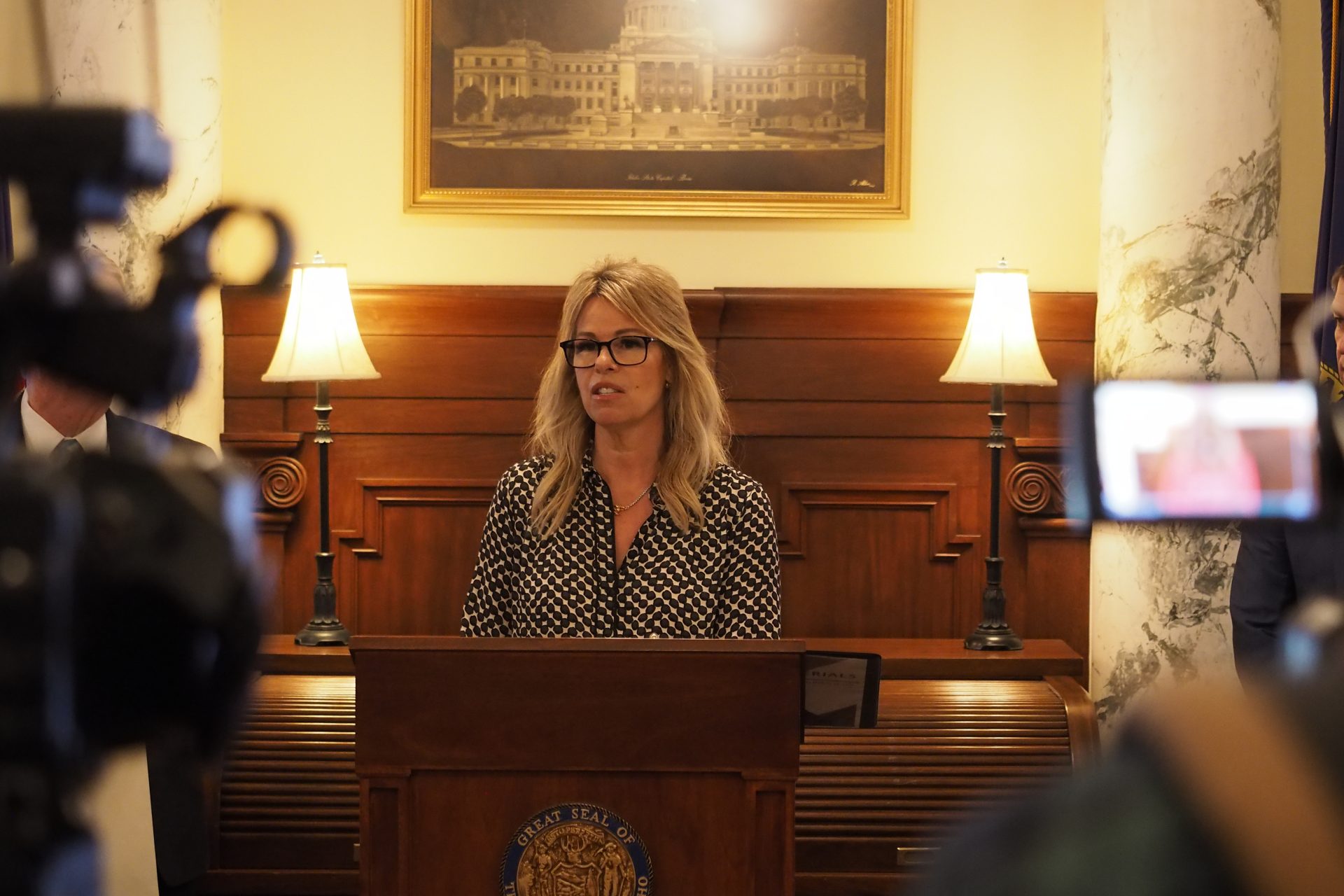
So the trust is particularly attractive for smaller districts and charters, said Superintendent of Public Instruction Debbie Critchfield, a Republican. “The larger the group, the more leveraging power you have.”
Critchfield’s office has talked to leaders of the trust, Critchfield said. But her office is involved to the extent that it can answer questions from local leaders. Trustees have not asked the department to step in and “bail us out,” Critchfield said.
“I just wanted to be in a position where I could provide factual information when asked,” she said by phone. “There are solutions on the table. They’re working with Blue Cross. They’re working with the Department of Insurance. This is getting immediate attention.”
Republican Gov. Brad Little’s office also emphasized this week that employee insurance is driven by local decisions.
“The trust is a private, independent, self-insured organization that sets its own premium rates and selects its health benefits,” Emily Callihan, Little’s communications director, said by email. “We are working to understand the options available to local decision makers.”

Sen. Janie Ward-Engelking, a Democrat from Boise and one of the Legislature’s leading public education advocates, said state leaders could help by tapping the Public Education Stabilization Fund, a rainy-day fund, to cover the shortfall.
“I think it’s something we should look at,” she said.
Ward-Engelking said she isn’t surprised the trust ran out of money, and she pinned the blame on what she sees as the state’s chronic underfunding of public schools. The state underfunds healthcare for Idaho schools by $76 million, she said, by sending out money per support unit instead of per employee.
“We knew it was going to happen,” Ward-Engelking said Monday. “We underfund everybody.”