
School districts are not being asked. They are being told.
Pay their share of the $13 million Idaho School Benefit Trust shortfall, or their employees and dependents will be left with unpaid medical claims and the Idaho Department of Insurance will take action to collect districts’ “legal obligation to the trust.”
Some teachers may find their lingering medical claims submitted before Aug. 31 are already being delayed. The sooner school districts and charters comply with a Sept. 10 deadline to pick either a lump sum or monthly installments, the sooner their employees’ claims will be paid.
“If a school district can’t decide, or refuses to pay, they are delinquent and their employees’ claims will not be paid,” Department of Insurance spokesperson Julie Robinson wrote in a Thursday email to EdNews.
The Idaho School Benefit Trust — with more than 100 school district and charter school member employers with 16,676 staff members and dependents — has run out of money and is unable to pay medical claims.
The department is conducting a financial condition examination to find out what happened. But, regardless of that review, districts have to make a payment decision by Sept. 10 and pay the lump sum or first installment Sept. 30. The monthly payments will continue for three years, and include interest.
“You are not deciding whether your district owes this amount,” according to the department’s new webpage with information for member employers. “Your district agreed to pay the required contributions to fund the Trust when it signed the Employer Participation Agreement. You are deciding how and when to pay it.”
More coverage
Click here to read all of our stories on the Idaho School Benefit Trust. We also recorded a video podcast available on YouTube and Soundcloud.
Blue Cross of Idaho is planning on loaning the trust $11.9 million with 6% interest to cover unpaid claims for the 2025-26 benefit year, which ended Aug. 31, but will not pay out the loan until it has “firm commitments of repayment” from member employers. The $13 million contribution call that the trust sent out on Aug. 20 is that $11.9 million plus interest.
“September 10 is not a preferred date,” according to the department. “It is the last date that still allows the payment of claims to begin again without undue delays and harm to district employees and dependents who are currently facing unpaid medical bills.”
If districts don’t pay up, the department will act as a collector and “initiate appropriate action” against those delinquent school districts. But first, Fourth District Court Judge Lynn Norton would have to approve the department’s request to take over and rehabilitate the trust.
“All told, school districts should be exercising emergency standards to meet, approve, and send back their decision,” Robinson wrote. “Until the contribution delinquencies are resolved, ISBT is insolvent and claims cannot be paid.”
School leaders deliberate over payment options
Districts and charters have been conducting special meetings over the past two weeks to discuss and decide on a payment option.
“Our school board decided to move forward with one lump sum payment to be made on September 30,” Post Falls Superintendent Anna Wilson told EdNews. “However, we basically are making that under protest. We’re not happy about it, but that’s what we need to do.”
Lapwai School District, with fewer than 500 students, will probably take the lump sum option, according to Business Manager Nathan Weeks. But he said he’s not ready to cut a check yet. He wants more information about the estimated extent of the unpaid claims.
“Not every medical billing has happened yet,” Weeks said. “How can they know what the claims are? They didn’t know before, and how do they know now?”
The $13 million contribution call is the maximum that schools will be required to pay, according to Robinson. That figure is a best guess of total claims through the end of the 2025-26 benefit year, and any run-out claims that will continue to trickle in, plus the interest owed to Blue Cross. It can take months for healthcare providers to finalize claims.
If the department’s investigation uncovers any savings, the contribution call could be lowered and employers could be refunded for part of their payments, Robinson wrote.
“We know that every school district wants to know how ISBT arrived at this shortfall,” she wrote. “Some schools even want to examine the situation themselves. We ask that they wait for our team of certified examiners and actuaries to find that answer and issue it in a public exam report.”
As EdNews previously reported, other districts — including Lewiston, Grace and Marsing — are leaning toward the monthly payment option. Paying a lump sum eliminates interest.
Lakeland School District, one of the larger member districts with about 4,600 students, owes $705,941. The district can choose 36 monthly payments of $19,609, or pay a lump sum of $644,677. Trustees discussed the options at a special meeting Wednesday but tabled a decision.
“This is a catastrophic failure for districts around the state,” Lakeland Superintendent Jake Massey told trustees. “There’s no way around it and there are lots of things that we cannot account for, and the trust cannot account for. It’s unacceptable, but that’s exactly why we’re here today.”
Vice Board Chair Ramona Grissom said she has a lot of questions, including the district’s usage rates in proportion to other districts. The trust has not provided that information and established repayment rates based on the number of employees and dependents.
“I need to see every district, every enrollment level — who was responsible for what?” Grissom said. “I mean, it’s a big disaster, if you ask me. And unfortunately, a lot of taxpayer dollars just got lost.”
Board Chair Michelle Thompson said it bothers her that there hasn’t been transparency on what the trust is, and the risks included in a self-funded pool, where employers are liable to cover all claims instead of an insurance company.
“Not being given this type of information at all is a bit disheartening,” Thompson said.
According to the Department of Insurance, the trust should have provided regular updates on its financial condition.
“It was the trust’s responsibility to keep its members informed,” the department wrote in an FAQ.
Public tax documents show the trust’s fund balance was $22.5 million in August 2021, but dwindled to $2.1 million by August 2025, after the trust recorded a loss of $9 million in one year.
State issues order and takes legal action
The state of Idaho, through the Department of Insurance, is waiting on court approval to take over the Idaho School Benefit Trust, as EdNews previously reported.
In the week after the trust’s benefits manager, Debbie Hainke, sent out the $13 million contribution call to members on Aug. 20, the department took two legal actions to address the trust’s “deteriorating financial position” in an effort to protect the employees and dependents that rely on the trust to pay their medical claims.
First, Director Dean Cameron on Aug. 25 issued an order that found the trust is in a hazardous financial condition for the public and policyholders. Cameron ordered the trust to execute a “cure” and permitted the trust to pay only medical claims of employer members “who are not delinquent in their contribution payments.”
To make sure claims are paid, the trust is borrowing the $11.9 million from Blue Cross of Idaho. This is the department-approved “cure.”
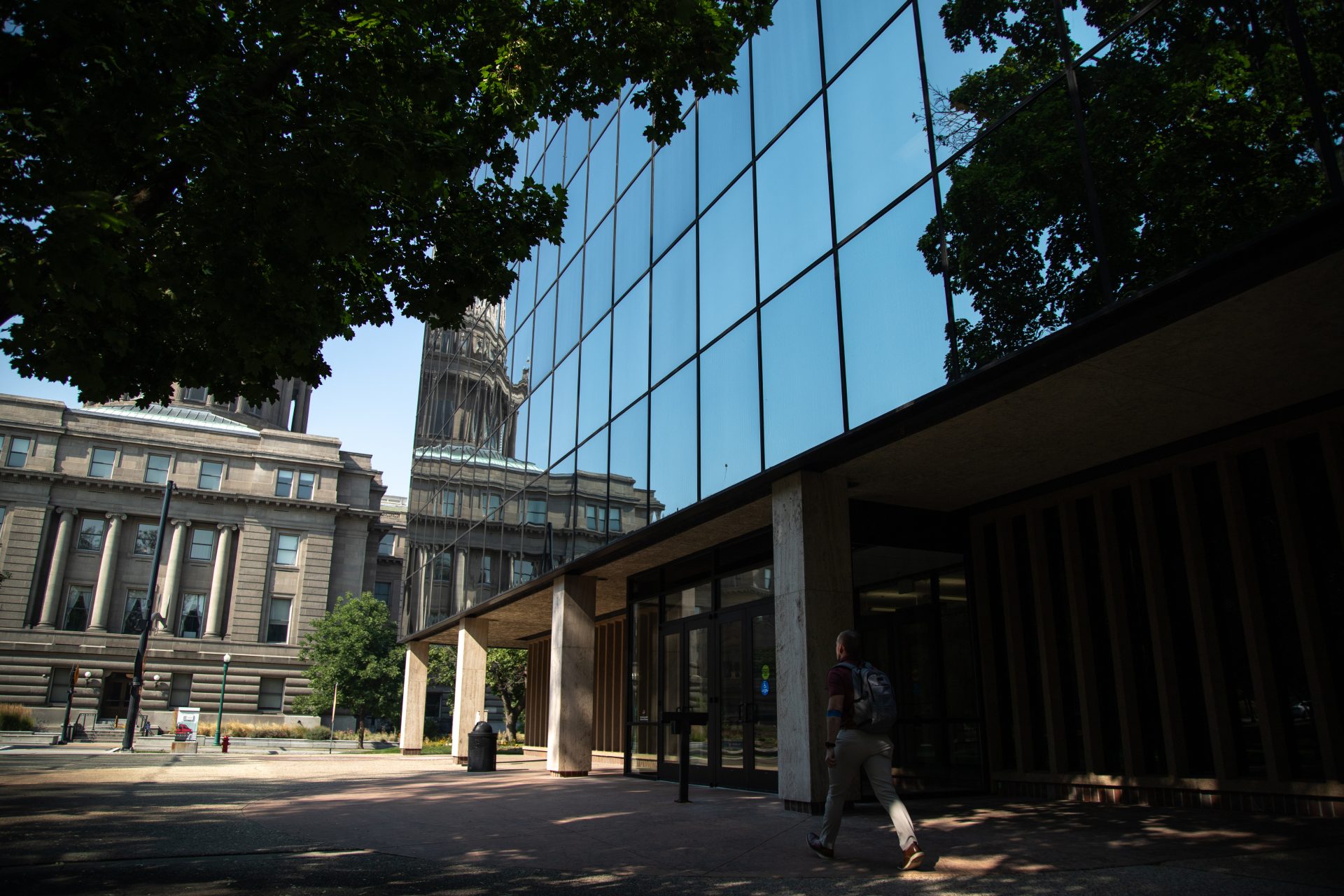
According to the order, the trust has more liabilities than assets and does not meet minimum surplus requirements under Idaho law. That means it is out of compliance and the department has the authority to “terminate the trust’s registration at any time.” But the department wants to avoid that, and prefers to rehabilitate the trust and allow it to borrow money to pay claims.
“At this time, it would not be beneficial to the employees of the member districts to terminate the Trust’s registration and effectively liquidate it – which is kind of like a bankruptcy proceeding,” Robinson wrote.
Second, Cameron on Aug. 27 filed a petition for a rehabilitation order in Fourth District Court, which would allow the department to take over control of the trust. As laid out in Idaho statutes, Cameron had to declare the trust hazardous to the public before the court could consider a rehabilitation order.
“Rehabilitation gives the Department legal authority over the Trust’s affairs, which allows the borrowing arrangement to proceed and enables claims to be paid,” according to the department.
Pending court approval, the rehabilitation could go one of two ways, according to state law.
If Cameron believes continuing to rehabilitate the trust would be “futile,” he could petition the court to liquidate the trust. But if the rehabilitation is successful and the trust is actuarially sound and able to pay claims, possession of the trust would be restored.
A timeline of how we got here
The department’s 14-page court filing provides a timeline of events this year. Here’s what the filing show.
Feb. 28: The trust provided the department with its independent certified audit for tax year 2024, which showed a fund balance of $2.12 million as of Aug. 31, 2025. This revealed that the trust no longer met legal requirements to operate. The trust and department “attempted to remediate these deficiencies.”
June 23: The department became aware that the trust had become insolvent, meaning it was no longer able to pay claims.
July 9: The department met with the trust and began working on solutions, along with third-party administrator Blue Cross of Idaho.
July 14: The trust notified member school districts and charters of the funding shortfall caused by “extremely high” claims, and that they are responsible for covering the shortfall. The email did not disclose a dollar amount.
July 29: The trust approved borrowing money from Blue Cross to cover the shortfall and pay claims for the 2025-26 benefit year.
Aug. 3: The department called for a financial condition examination of the trust.
Aug. 20: The department, trust and Blue Cross all accepted and approved the trust to borrow $11.9 million from Blue Cross. The trust sent out a contribution call to employers informing them they are responsible for paying a $13 million shortfall.
Aug. 25: Cameron issued an order finding the trust was in a hazardous financial condition to the public and policyholders.
Aug. 27: Cameron filed a petition in Fourth District Court to allow the department to take over the trust.
Aug. 31: The final day of the 2025-26 benefit year.
Sept. 1: The first day of the 2026-27 benefit year, which includes a 19.5% rate increase for member employers.
Sept. 10: Member employers are required to decide on a lump sum or monthly payments.
Sept. 30: Member employers are required to pay the lump sum or make a first payment.