
School funding was central to both candidates’ pitches at Tuesday’s state superintendent debate at the College of Idaho.
Republican incumbent Debbie Critchfield touted her efforts this spring and summer to rewrite the state’s more than 30-year-old funding formula, her top priority if re-elected. She pointed to her relationships with legislators as key to passing a fund for high-needs students last legislative session, along with other education priorities.
Those relationships, she said, will help her push a funding formula rewrite across the finish line next session if reelected.
Democratic challenger Becky Sundin Mitchell emphasized enrollment-based funding and questioned whether Critchfield could succeed where previous state superintendents failed: getting lawmakers to approve a new K-12 funding formula.
Sundin Mitchell stressed that Idaho’s public schools need more funds, in general, as they routinely rank 51st in the nation for per-pupil spending. She repeatedly called for legislators to spend more time in public schools.
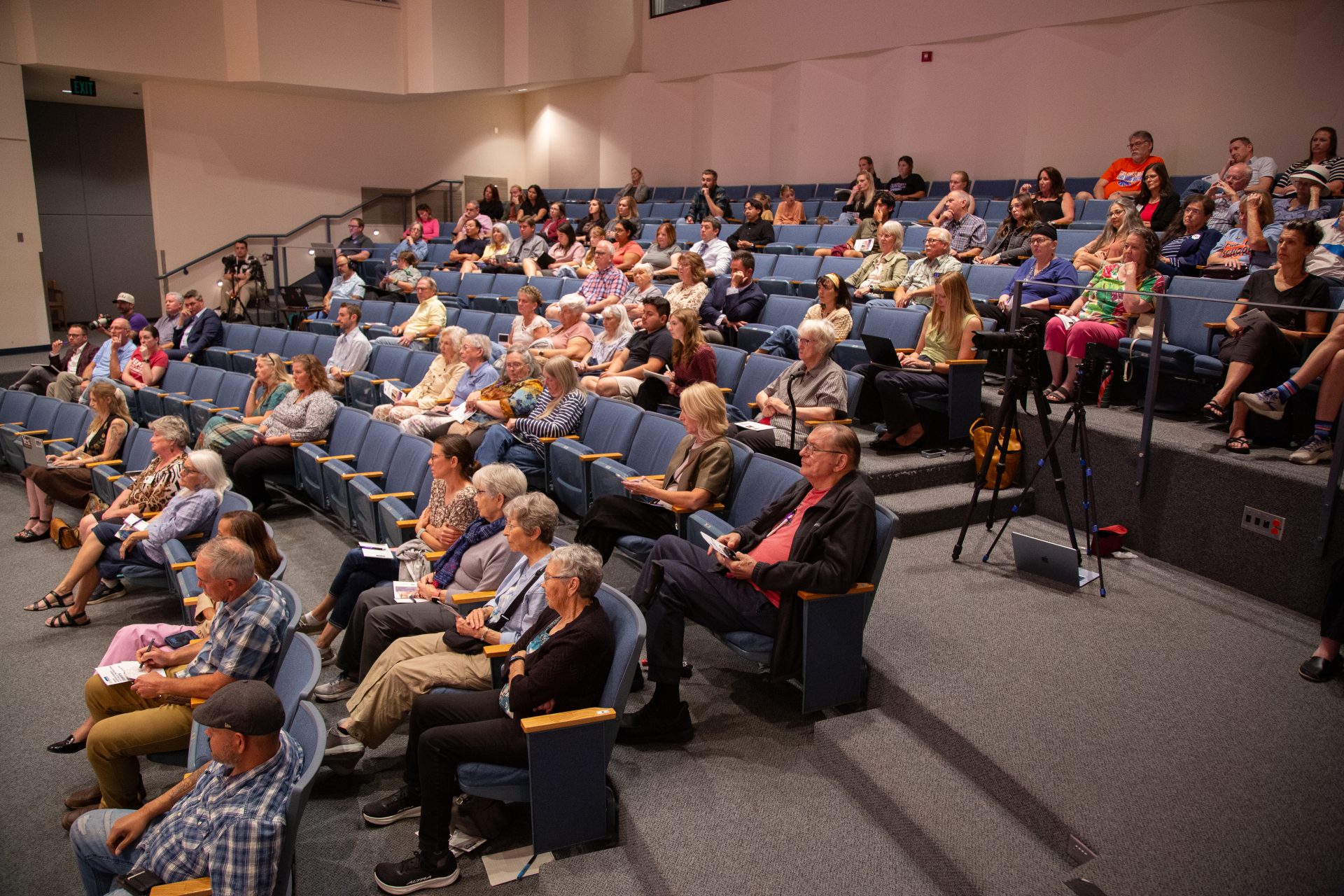
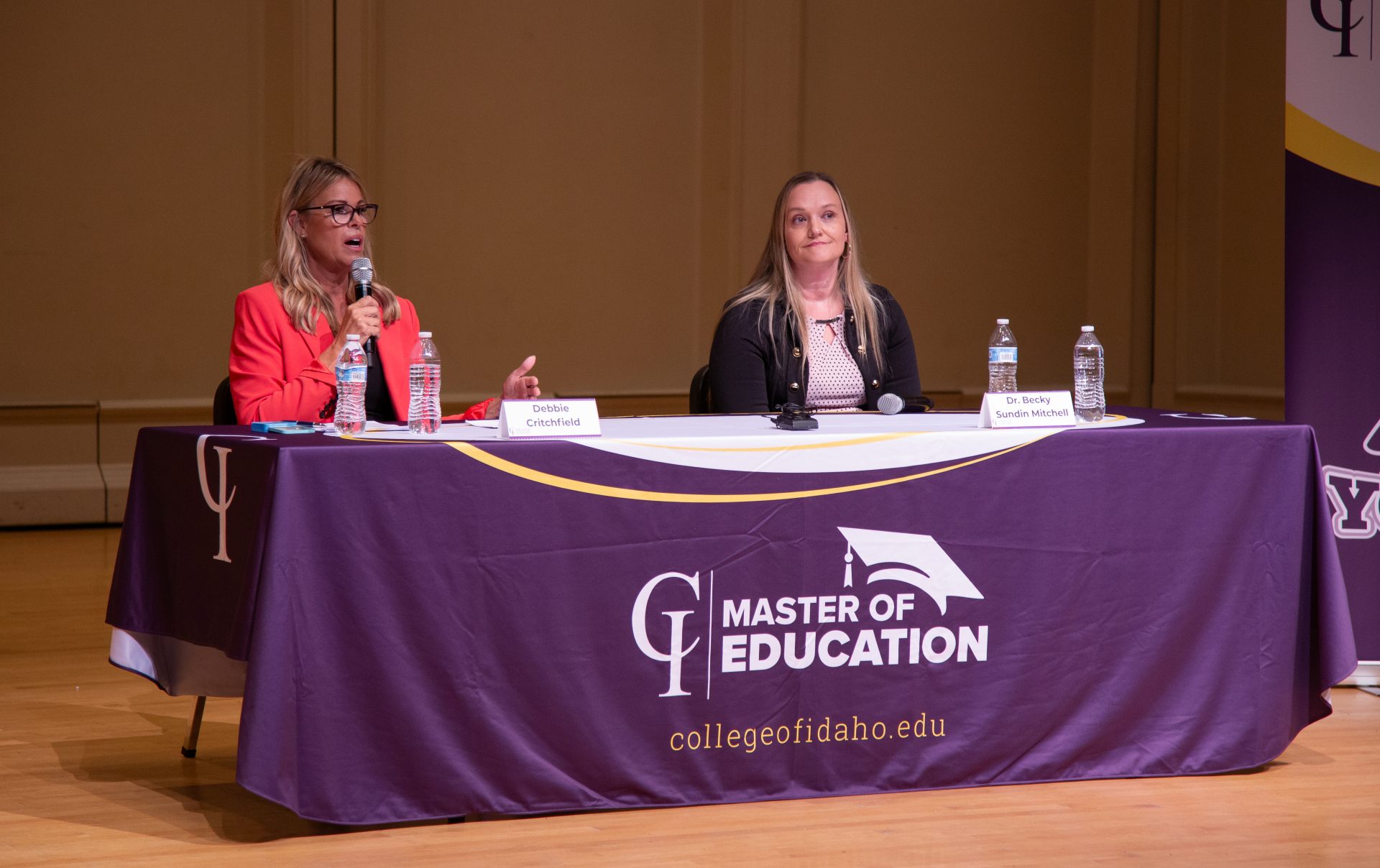
The debate, hosted by Idaho Education News and The College of Idaho, provided a glimpse into the candidates’ different approaches to school funding and a range of other issues, including the state superintendent’s role, a lingering special education funding gap, Idaho’s new private school tax credit law, and how much politics should shape education policy.
Watch a recording of the debate here.
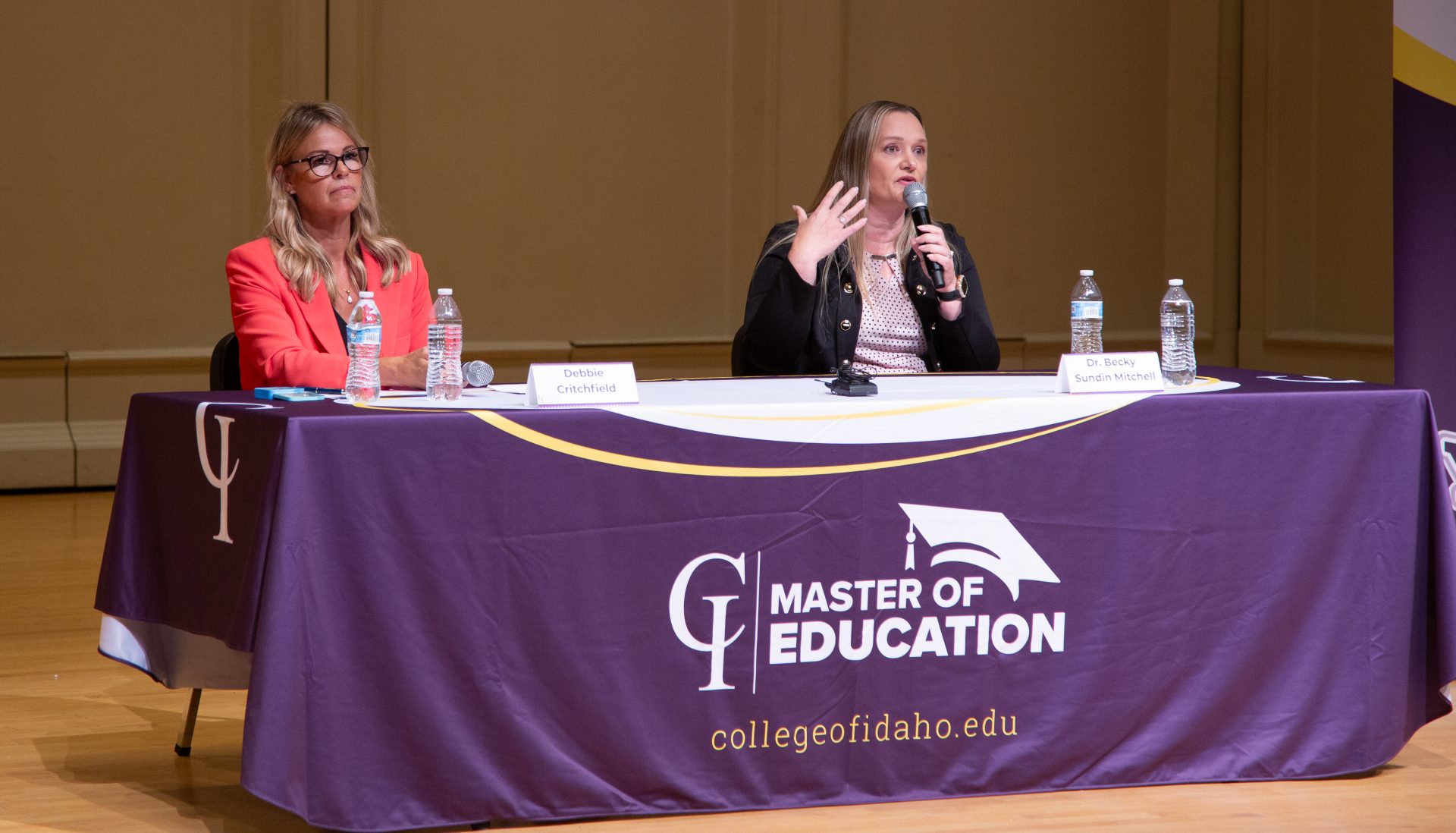
Critchfield, who is seeking a second term, was elected in 2022. She previously served on the State Board of Education, where she still holds a seat as state superintendent. She has also served on the Cassia County School Board.
Sundin Mitchell, a Democrat, is a political newcomer. She was Idaho’s 2018 teacher of the year and has largely taught in charter schools.
The state superintendent oversees Idaho public education, which includes a $3.2 billion budget, 127 Idaho Department of Education employees and 310,000 public education students.
The superintendent is one of seven statewide offices up for election on Nov. 3, along with 105 legislative seats.
Here’s a closer look at some of the issues from Tuesday’s debate at the college’s Langroise Center:
Candidates clash over private school tax credit
Last year, state lawmakers created the $50 million Parental Choice Tax Credit program, subsidizing K-12 private school tuition for the first time.
Sundin Mitchell has opposed the tax credit and taxpayer funds for private schools more broadly during her campaign, calling the concept unconstitutional.
“Until we can fully fund public schools, we should never be sending money to private schools,” she said.
She also raised concerns about accountability and transparency in the law. The Idaho Tax Commission has refused to release a variety of data on who received the tax credits and how the funds were spent to the public.
“We don’t know that students are being educated,” Sundin Mitchell said. “We don’t know that any schooling is taking place at all.”
Critchfield largely stayed out of the debate over the tax credit last year but has signaled on the campaign trail that she’s unhappy with the lack of transparency and accountability.
Still, she isn’t fully opposed to the idea.
“This is not a yes or no question to me,” Critchfield said. “I think that anytime there is a tax bill that comes forward it needs to earn my support on its merits.”
School funding puts candidates at odds
This spring and summer, Critchfield has trekked across the state, gathering input from stakeholders on how to improve Idaho’s school funding formula.
An update is Critchfield’s number one priority heading into the 2027 legislative session, even at the cost of less funding to support a high-needs special education fund established last year. She has yet to publish a specific proposal for a funding formula rewrite.
Sundin Mitchell has supported a return to enrollment-based funding that districts saw during the COVID-19 pandemic. Rural school leaders have led that call, she said.
Critchfield argued that focusing solely on enrollment in a new formula would hurt most of Idaho’s rural districts.
“I’m looking at something that is predictable and stable,” Critchfield said.
An attendee asked how candidates would spend an extra $1,000 per student. Sundin Mitchell said classroom supplies. Critchfield said school operations.
Special education gap brings funding into focus
Much of Critchfield’s first year in office included a focus on the $100 million gap between what school districts spend on special education services and reimbursements they receive from the state and federal government.
Critchfield secured a $5 million investment from lawmakers in a high-needs fund in 2026 but cut her proposal for 2027 to $1.7 million to focus on funding formula changes.
She argued Tuesday the fund was meant to “alleviate” the strain on districts until she’s able to overall the funding formula.
Sundin Mitchell said her child received special education services and described the system as severely under-resourced. For her, the issue is rooted in more funding for public schools. She wants legislators to spend more time in public schools to see the issues firsthand.
“It couldn’t be a more broken system,” she said of special education.
Education politics divide candidates
Sundin Mitchell argued the state superintendent’s office, much like being a teacher, should be nonpartisan.
She said the Legislature has focused too much on social issues and not on what’s best for kids.
“Politics has zero role in education,” Sundin Mitchell said, adding that educators are experts and should be trusted to teach the curriculum.
Critchfield acknowledged the Legislature has spent a lot of time in recent years discussing social issues. Her approach, she said, has been to secure a seat at the table when more political or social issues are discussed.
Legislators are comfortable picking up the phone and calling her, Critchfield said. That can mean some bills never make it to committee or that a different version of a bill is ultimately signed into law.
“I can absolutely be a leader in the conversation,” Critchfield said.
A recording of the debate is available on EdNews’ YouTube page.

