After 15 months, it took the State Board of Education 45 minutes to wrap up the Boise State University president’s search Wednesday.
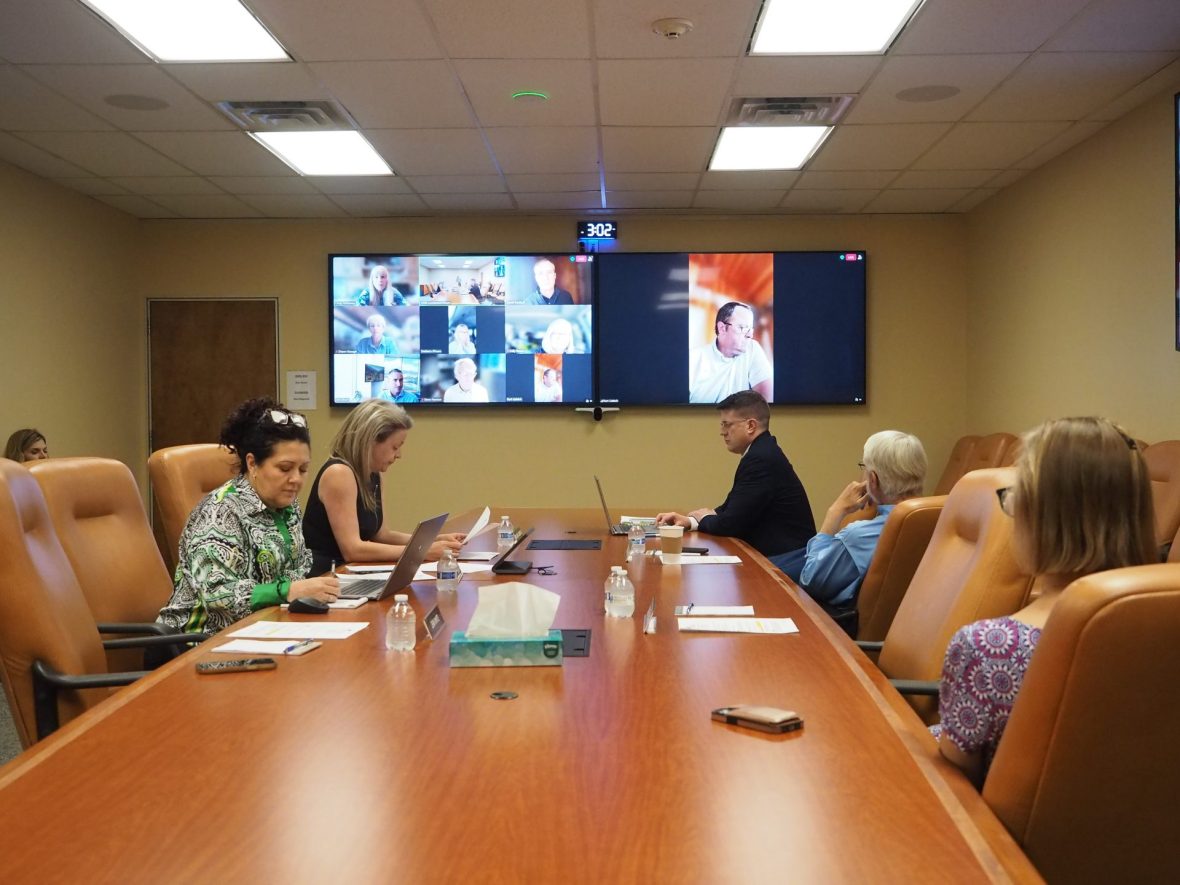
As expected, the State Board hired David Hahn as Boise State’s eighth president in a unanimous voice vote Wednesday afternoon.
Hahn’s hire came 15 days — and 10 working days — after the State Board named the University of Arizona College of Engineering dean the sole finalist for the job. Hahn is the only person who has been publicly linked to the vacancy at the state’s largest university.
“Boise State University is the place for me,” Hahn said after Wednesday’s vote. “I can’t wait to get going.”
“I hope you’re ready to hit the ground running, because you’re running as of today,” State Board President Kurt Liebich said.
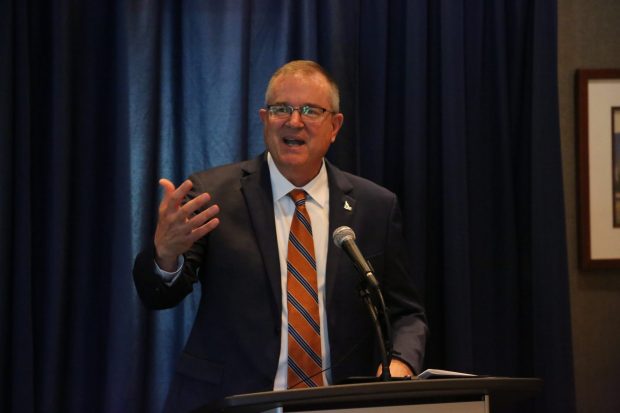
Hahn begins effective immediately, and is expected to begin work on campus by Aug. 10. He will earn $480,000 a year — the highest presidential salary in Idaho, and a slight increase for the Boise State job. Hahn’s predecessor, former President Marlene Tromp, earned $473,449 per year.
By comparison, University of Idaho President C. Scott Green earns $479,192, Idaho State University President Robert Wagner earns $420,000, and Lewis-Clark State College President Cynthia Pemberton earns $297,413.
Executive Director Jennifer White said the State Board was not looking to award Hahn a record salary, nor was it seeking “a bargain.” She said the board considered Hahn’s current salary at the U of A and salaries at Boise State’s peer institutions. For example, she said, Hahn’s salary falls about $200,000 below the low end of salaries for presidents in the Pac-12, Boise State’s new athletic conference.
“The data gave us room to go higher,” White said.
Hahn brings a research background and a high-tech focus to his new job.
The U of A has been actively growing its portfolio in semiconductors and microelectronics. In June, the U of A joined a Southwest regional semiconductor education consortium, similar to a Pacific Northwest partnership led by Boise State.
A mechanical engineer and the holder of 12 U.S. patents, Hahn has also pledged to help Boise State grow its $70 million-a-year research portfolio — and achieve top-tier R1 research status from the Carnegie Classification of Institutions of Higher Education. The U of A, an R1 institution, conducts more than $1 billion in research annually.
Hahn has touted a 40% enrollment increase during his time leading the college of engineering, and an emphasis on increasing diversity in the college’s faculty.
How we got here
Wednesday afternoon’s meeting had an anticlimactic feel. Only one of the State Board’s eight members, Pete Koehler, attended the meeting in person. Shortly after convening the meeting at 3 p.m., the board quickly went into a closed-door executive session to discuss the presidential vacancy. After 35 minutes in executive session, it took the board less than 10 minutes to vote to hire Hahn.
Hahn surfaced as Boise State’s president in waiting on June 16, when the State Board named him as sole finalist. Hahn spoke at a question-and-answer session on campus on June 17 — fielding questions on diversity, equity and inclusion, Boise State’s relationship with the Legislature and athletics, among other topics.
The State Board opened a public comment portal, taking emails on Hahn. However, the board has refused to release these public comments, saying board members were using the input as part of their deliberations on the hire.
These final stages of the hire culminated a long and uneven process.
The State Board launched the search in March 2025, days after Tromp accepted the president’s job at the University of Vermont. But the search stalled out in October, with State Board leaders saying some qualified candidates did not want to participate in a public process — with their names released on a list of five finalists.
The 2026 Legislature responded with a law, written at the State Board’s behest, which made the presidential search an almost entirely closed process. The new law allowed the search committee and the State Board to privately screen applicants and publicly name only one finalist, which turned out to be Hahn.
David Turnbull, a State Board member and head of the Boise State presidential search committee, alluded to the new law Wednesday. He thanked the Legislature and Gov. Brad Little for changing the law, providing “the path and a process for attracting the best candidate possible.”
And on Wednesday, Turnbull said he was “doubly confident” that Hahn was the right choice, calling him a “builder.”
“We need a leader at Boise State that can match the moment,” Turnbull said.