SALMON — It’s not the Taj Mahal, but Salmon finally has a new school.
After a dozen failed bond elections to replace the decaying Pioneer Elementary, district voters said a couple years ago that they would only support increasing their taxes to pay for a new school that wasn’t too fancy.
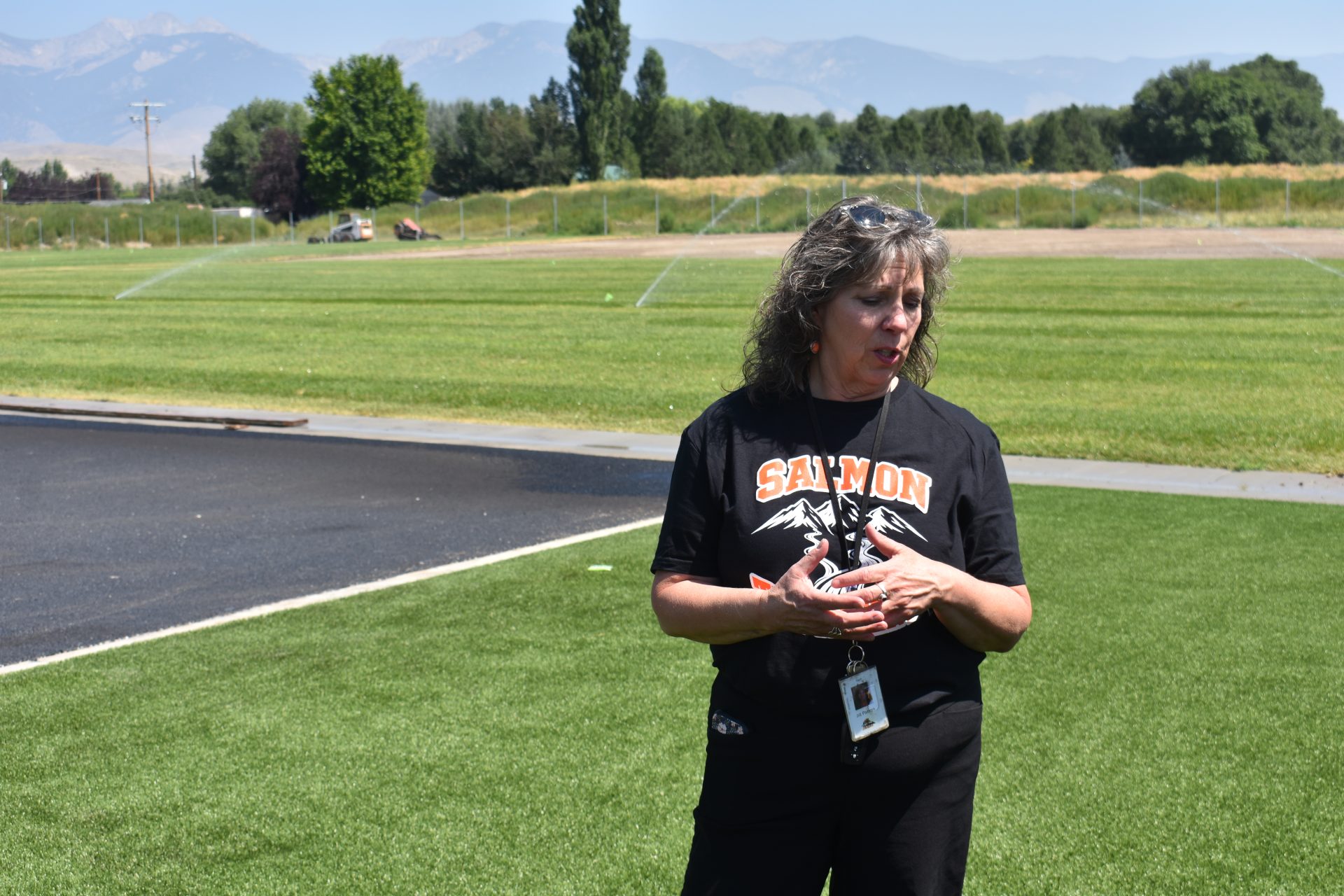
What they got is an understated but functional schoolhouse that’s nearly complete, on time and under budget with just a few splurges — like bouncy artificial turf on the playground instead of wood chips. The latter would’ve been less safe and ended up in kids’ eyes during recess, said Jill Patton, superintendent of the Salmon School District.
“We had to build something that was very straightforward and represented our community, because our community is not a bougie community,” Patton told reporters during a tour of the new building Wednesday.
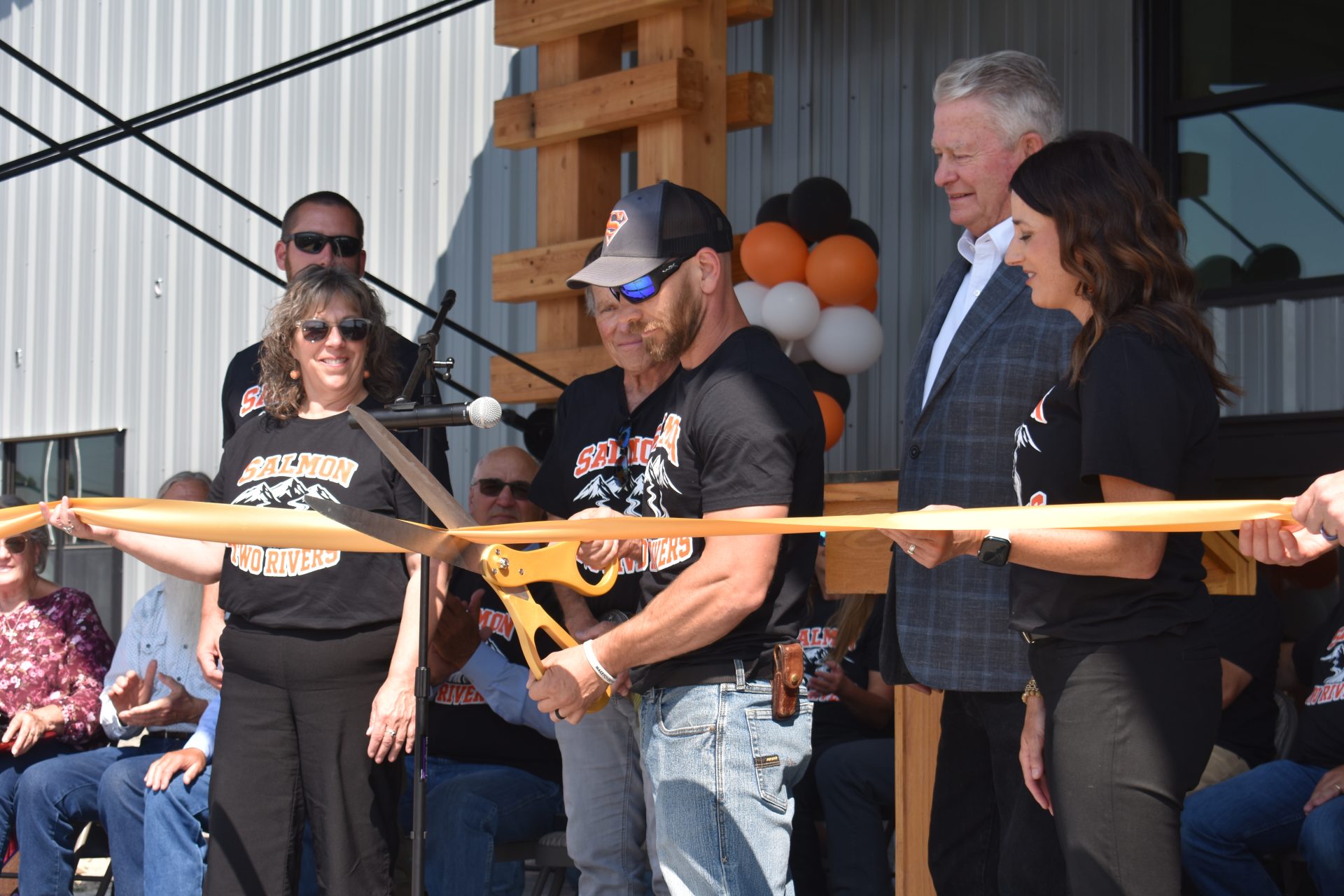
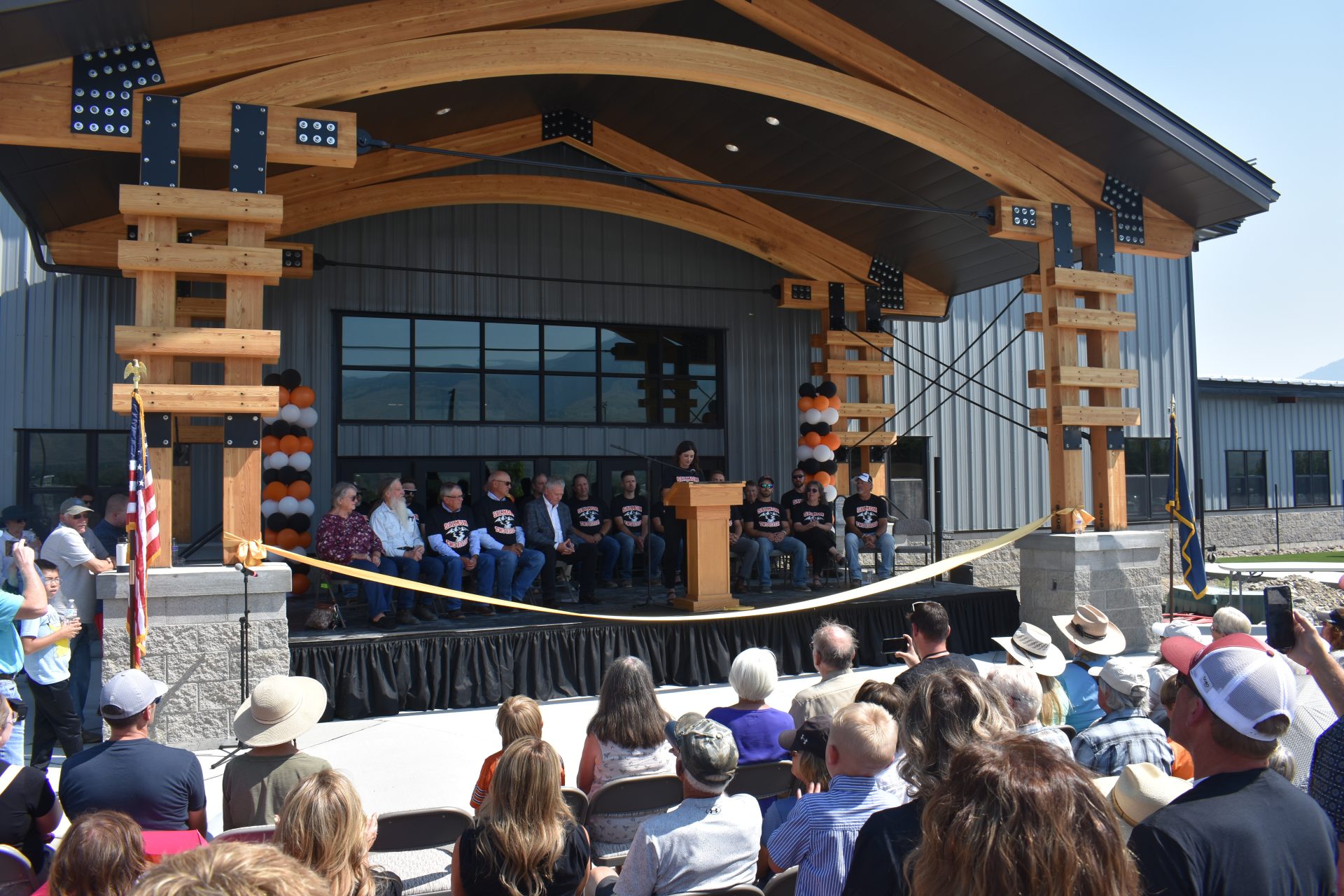
Salmon Two Rivers K-8 will welcome students next month as the new school year begins. District leaders and the volunteers who cobbled together financing for the school hosted a jubilant ribbon-cutting ceremony last week. Hundreds of people attended, including Gov. Brad Little and two state legislators.
The event spotlighted the people who helped make the new building happen: the voters who overwhelmingly supported a $20 million bond two years ago and volunteers and donors who raised millions more to complete the project. Ultimately, the $28 million building cost $1 million less than anticipated.
“When you collectively get the heart and soul of the community behind something, and then you get those incredible supporting partners that are part of it, you are going to create success,” Little said.
Named after a pair of rivers — the Salmon and the Lemhi — that converge just north of the town center, Salmon Two Rivers will serve elementary and middle school students in 30 classrooms.
Aside from a conspicuous wooden-beam entryway — donated by QB Corporation — the new building has few frills. The building has elementary and middle school wings, with cafeteria and recreation spaces in the middle. Behind the building, there’s a playground, grass field and basketball courts.
“It’s a box,” said Breann Green, a leading member of the Salmon School Needs Assessment Committee, the volunteer group that campaigned for the school bond. “I haven’t heard from anybody who’s like, ‘Oh, this was too much.’”
Salmon Two Rivers replaces Pioneer Elementary, a nearly 70-year-old building that had a crumbling foundation and sewage seeping through the floor, among other unsafe defects. It became the poster child for Idaho’s widespread neglect of aging public school facilities and the difficulty of raising money for new buildings.
Between 2006 and 2019, the Salmon School District asked voters 12 times for a bond to finance a replacement for Pioneer. Every ballot measure failed to garner the two-thirds supermajority support required by Idaho law to pass a school bond.
Leading up to the 2024 election, the assessment committee led one final bond campaign. They met with voters to find out what they would be willing to support and made up the difference through state funding and donations. The bond passed with 72% support.
On Wednesday, two donors were celebrated for their contribution. Robert “Rob” and Nancy Roberts, owners of R&M Steel Company, donated a steel frame for the 70,000-square-foot structure, which was estimated to be worth about $1.8 million.
The Roberts have donated to dozens of school districts across the state in recent years. The governor presented them with a plaque expressing Salmon’s gratitude. Little also revealed that the bus loop in front of the school will be called “Roberts Lane.”
“I cannot think of … two people, individually, that have done more to help education facilities in Idaho than they have,” he said.
Other donors included Ed and Kathy Tolman, who gave 18,000 cubic yards of gravel, and local businesses that donated materials, equipment, labor and food as volunteers cleared the site before construction manager Bateman-Hall started building.
Each of the school’s 30 classrooms has a sponsor who donated $20,000, raising a combined $600,000. A neighbor even offered to take excess dirt from the site, which lifted his property by a foot and a half.
Patton also thanked Little and lawmakers for supporting the state’s recent investments in school facilities. In 2024, House Bill 521 distributed $1 billion to 115 school districts through an attendance-based formula. Just a handful of districts received enough money to cover a new school building, and Salmon only got $2.6 million.
Still, it helped Salmon get to the finish line. District 31 legislators, Sen. Van Burtenshaw, R-Terreton, and Rep. Jerald Raymond, R-Menan, attended last week’s event. Rep. Rod Furniss, R-Rigby, who helped Salmon get another $9 million from the state last year, couldn’t make it.
“This new school stands as a lasting reminder of what we can accomplish when we work together for the future of our children,” Patton said.
Previously, Salmon’s 628 students were split between the elementary building and a separate middle/high school. Now, grades K-8 will move to Salmon Two Rivers while high schoolers will have Salmon Junior/Senior High School to themselves.
Pioneer Elementary, along with other district-owned property nearby, will be sold, and the proceeds will go toward paying off the bond. That’s a promise that the Salmon School Needs Assessment Committee made to voters before the bond election in 2024. A valuation of the property is forthcoming.
“It’s not gravy,” Green said of potential proceeds from land sales. “But once those parcels sell … that will go back to pay debt service.”
Salmon isn’t done improving its school facilities. The district is using money from the Public School Facilities Cooperative fund to relocate a bus shop and add a career-technical education classroom. The current bus shop location forces students to cross the town’s busiest intersection.
Meanwhile, community volunteers have a new project: They’re raising money for a performing arts center. One thing that Salmon Two Rivers lacks is space for the arts, Green said. The new group of fundraisers includes many of the same people who campaigned for the school bond. They decided, “we’re going to finish this thing, all the way through,” Green said.