
Members of the Idaho School Boards Association (ISBA) are set to vote on eight resolutions that would guide the advocacy group’s policy priorities heading into the 2027 legislative session.
Some of the resolutions are familiar attempts at addressing longstanding issues. One proposal calls for extending the maximum timeframe for a supplemental levy from two to four years. Other proposals ask, again, for more predictability and stability in school funding — along with an enrollment-based formula.
But a couple resolutions respond to more recent problems. One resolution asks lawmakers to fix a burdensome law that requires schools to show 5th- through 12th-graders a fetal development video in every class that discusses “human biology,” among other topics.
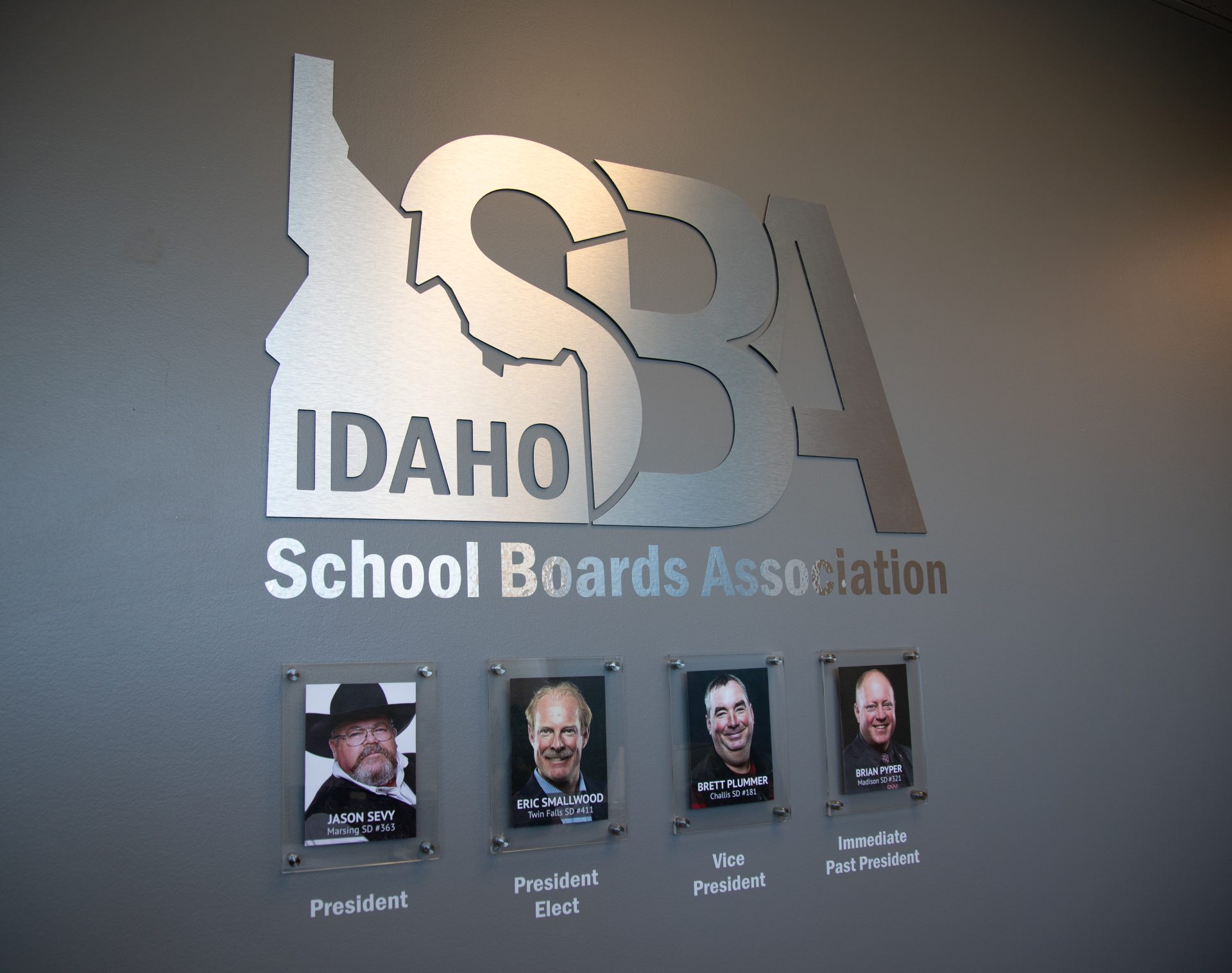
ISBA is a nonprofit that advocates on behalf of public school trustees at the Legislature. The group also provides school boards with resources like model policies and consulting on superintendent searches.
Trustees from an ISBA member district, or multiple districts, submitted each resolution, and the school board members will vote on the proposals during ISBA’s annual convention, scheduled for Nov. 4-6 in Boise.
The ISBA executive board voted to recommend that all eight resolutions pass.
Here they are:
Resolution No. 1: Human growth and development video
Submitted by the Boise School District
Public schools have had one year to implement a law — enacted through Senate Bill 1046 — requiring that students in grades 5-12 watch a high-definition, ultrasound video during instruction on human growth and development.
So far, it’s not going well.
The resolution, according to a statement of purpose, asks lawmakers to “clean up conflicting and impractical” legal language that has created “confusion for parents and schools, repeated notices, repeated video presentations in courses where the content is not instructionally relevant, and timelines that do not fit school scheduling.”
“The resolution seeks clarity, local flexibility, practical timelines, and consistent parent rights so districts and charter schools can comply with state law without unnecessary disruption to instruction.”
Resolution No. 2: Statewide educational resource development program
Submitted by the Council School District
While a handful of Idaho’s largest school districts might have staff dedicated to finding funding opportunities, like grants and donations, most small and rural districts don’t.
This resolution proposes a “statewide educational resource development program” that could help school districts compete for funding.
“No Idaho student’s educational opportunities should be limited simply because their school district lacks the staff, expertise or capacity to pursue resources that already exist,” says the resolution’s statement of purpose.
Resolution No. 3: Test options for students with disabilities
Submitted by the Marsing Joint School District
This resolution encourages state leaders to consider additional testing options for students with disabilities who don’t qualify for the Idaho Alternate Assessment but “whose academic functioning is significantly below grade level.”
Resolution No. 4: Funding stability and predictability
Submitted by the Bruneau-Grand View Joint School District
This resolution argues that predictable and stable school funding is necessary to meet the needs of students.
But the state’s current system isn’t cutting it when it comes to recruiting and retaining teachers, funding special education services or covering the growing fixed costs of school operations.
The resolution directs ISBA to support legislation that preserves the career ladder, Idaho’s teacher salary funding model. It also calls for increasing special education funding and amending the state’s school funding formula to remove “attendance-based penalties.”
“Idaho’s public school funding system should promote stability, local control, and equitable opportunities for students regardless of the size, location, or demographics of their school district,” the resolution says.
Resolution No. 5: Local control
Submitted by the Boise School District
This resolution is simple: It reaffirms that public schools are best governed by local leaders.
It directs ISBA to advocate for the “preservation and strengthening of local control” while opposing legislation that “unnecessarily removes decision-making authority from locally elected school boards or public charter school governing boards.”
“(L)ocally elected school boards are best positioned to balance parent voice, student needs, educator expertise, taxpayer resources, legal requirements, and community values,” the resolution says.
Resolution No. 6: 4-year supplemental levies
Submitted by the Coeur d’Alene, Kellogg, Twin Falls, Blaine County school districts
A repeat of a previous resolution, this proposal calls for extending the timeframe of supplemental levies.
Currently, levies are limited to two years. The resolution asks for an option for four-year levies.
“Providing longer options for the term will allow districts to operate with greater financial stability for a longer period of time and create stability among staff to focus on their primary purpose of education, while still setting a limit for boards and electors to reassess,” it says.
Resolution No. 7: Funding formula principles
Submitted by the West Bonner County School District
State leaders for more than a decade have debated changes to the complicated and aging school funding formula, and it’s likely to come up again next legislative session.
While touring the state and meeting with educators and parents this summer, state superintendent Debbie Critchfield said her office is working on a bill that would update the formula.
ISBA members will consider a resolution with principles that guide revisions and make a demand:
“The Idaho School Boards Association demands that the State fulfill its constitutional responsibility by providing adequate, stable, predictable, and equitable funding for all public schools while reducing reliance on ‘supplemental’ levies for essential operations,” says the resolution.
The principles, meanwhile, include predictability, adequacy, transparency, stability and quality staffing, among other things.
Resolution No. 8: Enrollment-based funding
Submitted by the Kootenai School District
Idaho public schools receive state funding based on their students’ attendance.
But school leaders say the “average daily attendance” (ADA) model is unpredictable, and they have long advocated for an enrollment-based funding alternative.
This resolution proposes that school districts with 90% or greater attendance receive funding based on enrollment. Just eight districts wouldn’t qualify under this threshold, according to an Idaho Education News analysis.
“Attendance is important, but ADA-based funding models should be adjusted to better account for public school variables that disproportionately affect average daily attendance,” says the resolution’s statement of purpose.