
Educators are used to the pendulum swing.
Put computers in front of every kid one year, then pull them back the next.
Superintendent Derek Bub said West Ada’s new screen time guidelines are not another pendulum swing, but a shift to the middle. Teachers are a school’s most important asset, he said, and technology needs to earn its way into every lesson.
“It’s not the go-to,” Bub said.
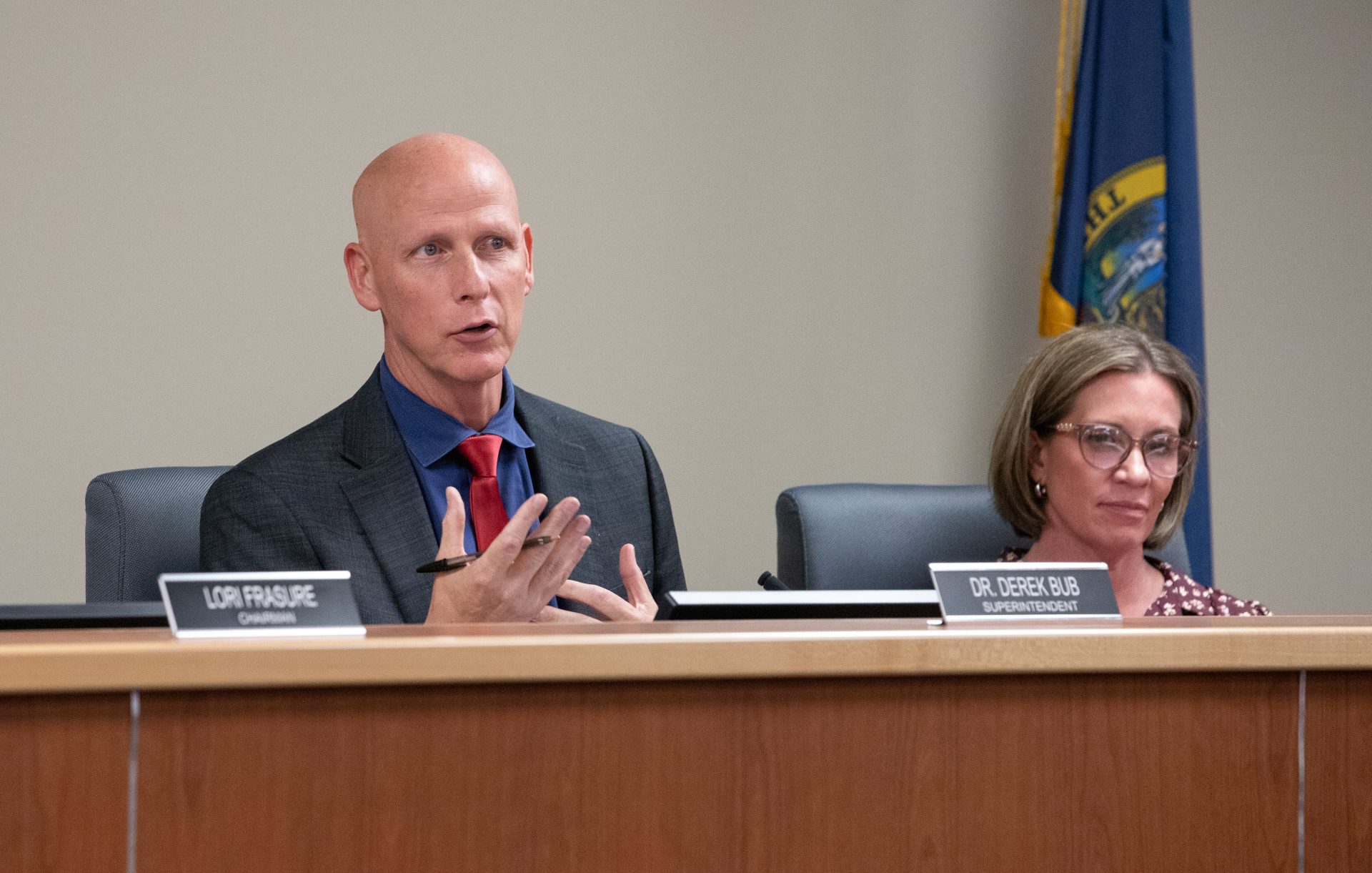
With school starting Wednesday, students across all grades in West Ada classrooms will follow a set of new screen-time standards. There will be no device use during unstructured time throughout the district. Elementary classrooms will be screen-free for 90% of the day and middle school classrooms for 80% of the day. The new guidelines do not set a specific percentage for high school. Some technical courses, like engineering, require computers.
Rhonda McDonough, chief academic officer over teaching and learning, told trustees that the new guidelines are intentional, phased and grounded in research. Classroom screen time, she said, is an ongoing national conversation.
“Before using a screen in a lesson, we ask: Could this be done better without one?” McDonough said. “And if the answer is yes, we’ll choose that.”
The guidelines are a continuation of work over the past two years. First, the district restricted cellphone use. Then, last year, it began to reevaluate the one-to-one device policy. That process brought up two priorities: intentional use and limiting screen time.
“Now, there’s still feedback we need,” McDonough said. “There’s a lot of questions we need answers to, but at this point it’s important for us to get started.”

Trustees did not adopt an official policy on Monday, but heard a presentation on the new guidelines that will be in effect this school year. Over the next several months, district staff members will compile data on what apps students use and for how long, then come back with another report to trustees later in the school year.
The new guidelines are built on three pillars:
- No device use during unstructured time
- Devices earn their place in every lesson
- Real data, not assumptions
In general, students across the district will no longer be able to use devices during class when there is no “defined task.” That includes indoor recess at the elementary level.
“I think this is going to cause us to ask a lot of hard questions about what we default to,” McDonough said.
To collect data, the district will use Lightspeed Digital Insights to track student time and application use on district-issued devices. EdNews asked Bub if there are any privacy concerns with collecting that data.
He said Lightspeed will only gather information on school computers to see what students are accessing while at school.
“Obviously we have a responsibility by federal law to monitor when students are on their computers and what they’re looking at to make sure that it’s appropriate material,” Bub said. “This is really no different than that.”
The five trustees supported the new guidelines but had some questions. Trustee Rene Ozuna asked McDonough about online textbooks that require devices.
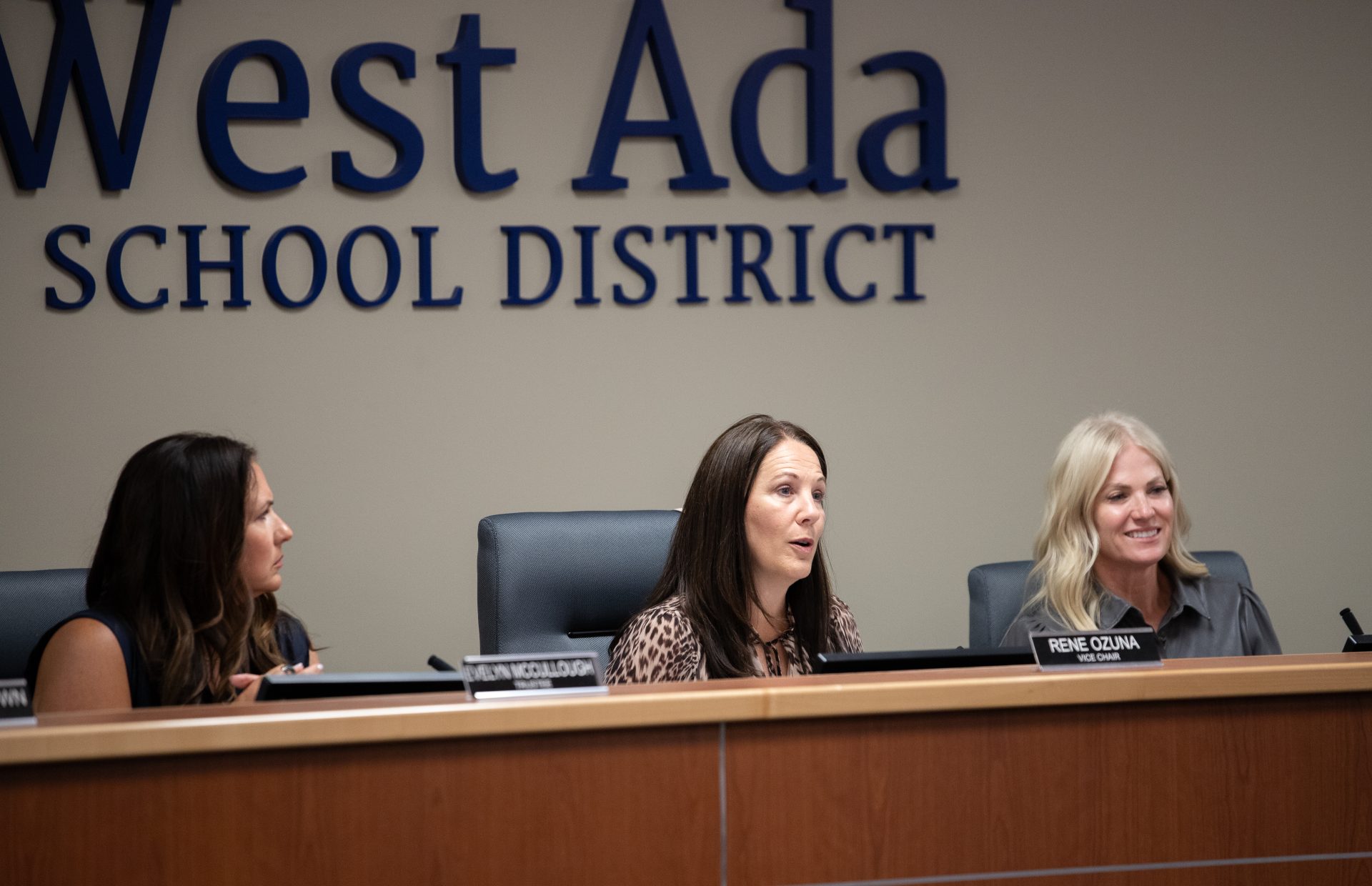
McDonough said that’s why the district is not making a sweeping decision. The guidelines may have unintended consequences. But she said the district has made an effort to step away from curriculum that relies on digital materials.
“The teacher is our most valuable resource in the classroom,” she said. “Technology supports high-impact instruction — it should never replace it. We wanted to be cautious of that with adoptions.”
The new guidelines are intended to maximize student learning, but McDonough said there may be social benefits. When the district limited cellphone use, she said it opened doors for students to make new friends without the distraction of screens.
“I don’t know that the teaching and learning team would be invested in this if it were just social,” she said. “We expect this to impact learning significantly, and the research shows that it will. So, let’s give it a go.”
VIDEO: Students at Pepper Ridge Elementary use Chromebooks to take an assessment in May. (Sean Dolan/EdNews)