
With a federal grant of nearly $8 million, Boise State University will head a statewide research project — focused on taking microelectronics beyond cellphones and computers and into harsh, extreme settings.
The research could have implications for aerospace, energy and defense.
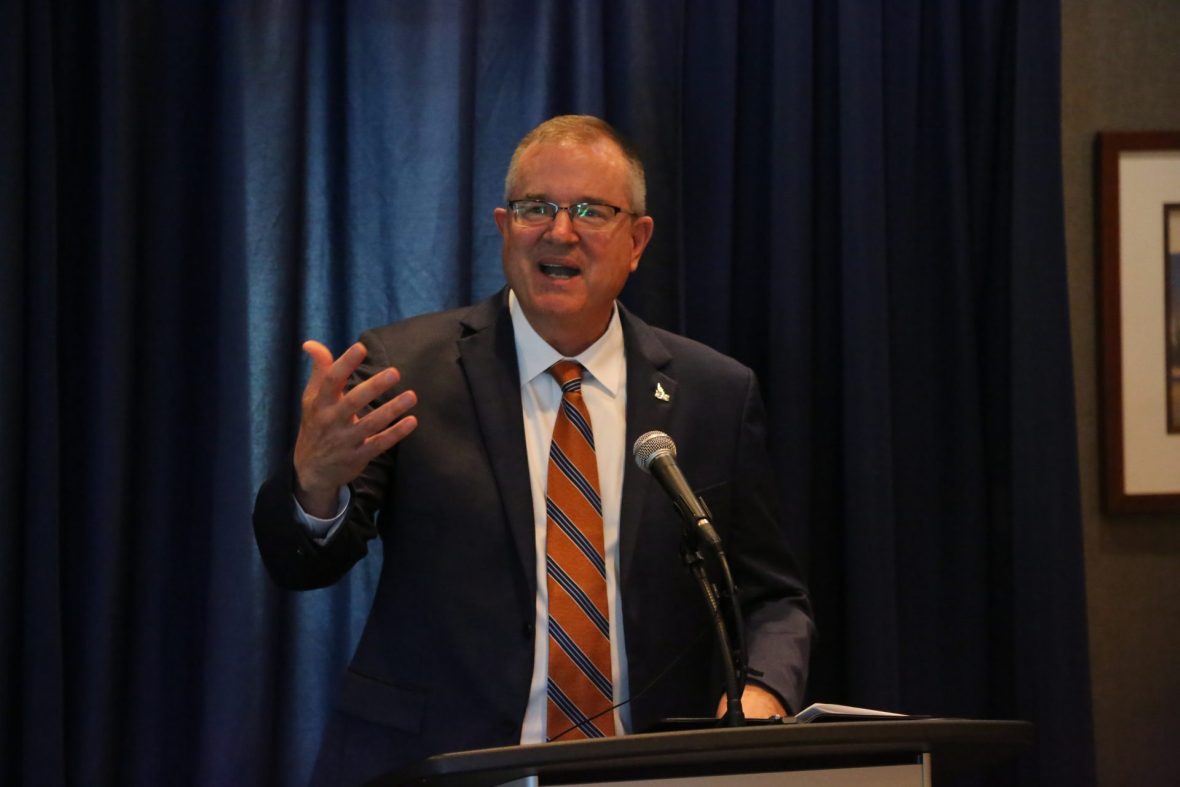
“This is the next generation,” Boise State President David Hahn told EdNews in an interview Monday, hours after the university announced the partnership. “This is taking these things to the most difficult challenges of hostile environments, and for our students, that’s wonderful.”
The joint project will “ensure Idaho’s national leadership in microelectronics,” Boise State said in a Monday news release announcing the grant. And it will take in a variety of Idaho partners, beyond Boise State. Five other Idaho colleges and universities will have a hand in the project: the University of Idaho; the College of Western Idaho; College of Southern Idaho; the College of Eastern Idaho; and Brigham Young University-Idaho. Micron Technology and the Idaho National Laboratory also are on board.
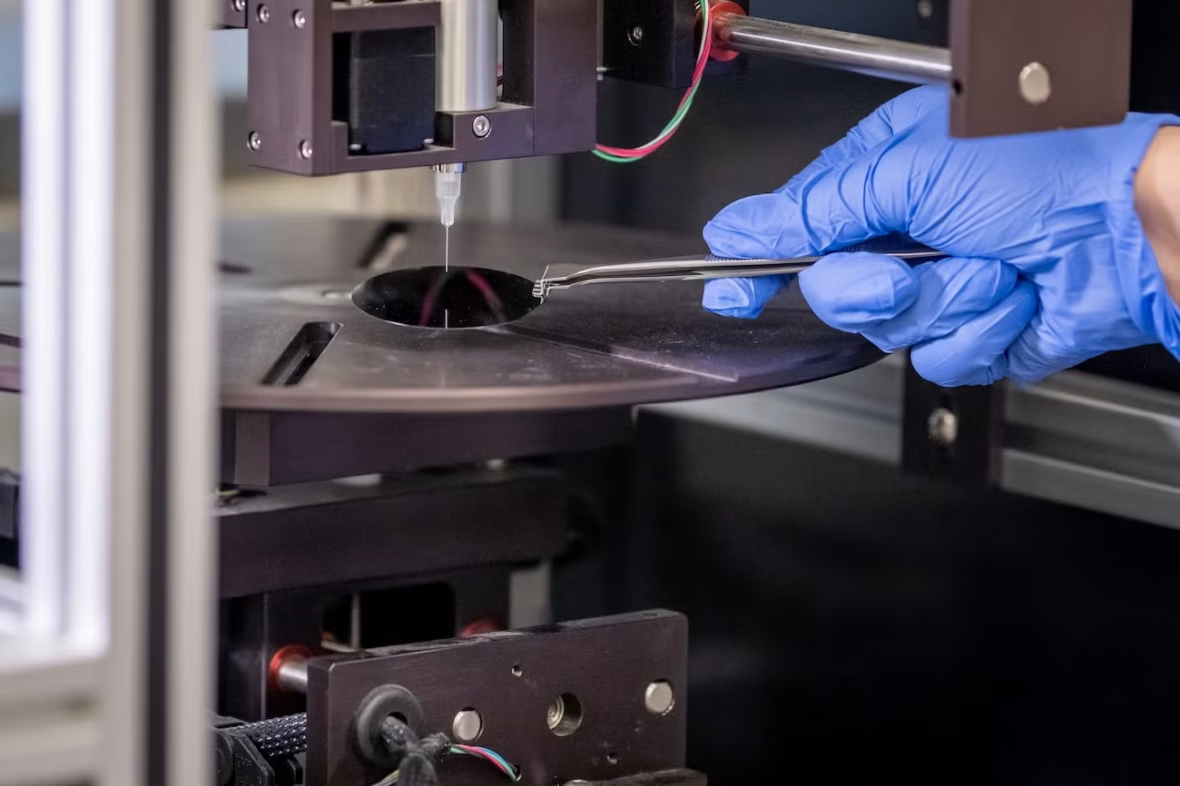
Dubbed “Capacity Building for Resilient Microelectronics for Extreme Environments,” or XTREME, the research will focus on the way materials perform under high temperatures, radiation and mechanical stress.
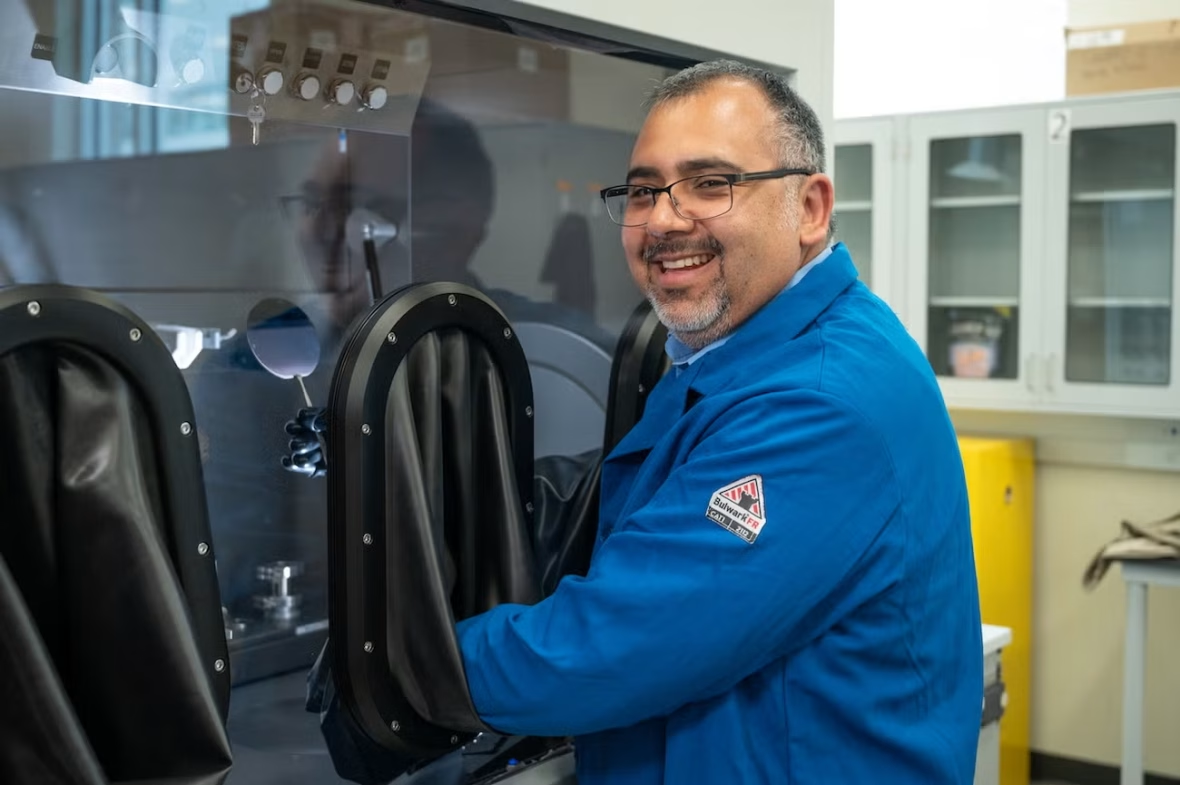
“We aim to discover materials that enable microelectronics and sensors that can survive high temperatures (greater than 1000 Celsius) and high-radiation environments so we can discover new knowledge critical to the design of future energy and defense systems,” said Boise State University Materials Science and Engineering Professor David Estrada, the principal investigator on the research award.
“Advanced reactors, defense systems and space missions all depend on electronics that can operate reliably in extreme conditions,” said Todd Combs, the INL’s deputy director for science and technology.
Hahn says doctoral, master’s and undergraduate students should all be able to find a role in this research project.
“Professor Estrada does that extremely well,” he said. “He has one of the largest student-driven research groups on campus.”
For Hahn, hired in July, the research grant ties into one of his top priorities: elevating, and maintaining, Boise State’s research profile.
Hahn believes Boise State is in “great shape” as it pursues R1 research status from the Carnegie Classification of Institutions of Higher Education. R1 designation is crucial, because it could help Boise State recruit sought-after faculty, land new research dollars and build on its $78.3 million research portfolio.
Hahn says Boise State meets the R1 benchmarks now — and should get this top-tier status when Carnegie updates its R1 designations in 2028. But a new $8 million award with a four-year lifespan will help Boise State stay an R1 institution beyond 2028.
“It’s a continuous thing,” he said. “You don’t just make it once and stop. You have to keep going.”
Boise State officials say the joint project has been years in the making — growing from a 20-year Boise State-U of I partnership with the INL. Micron’s $25 billion investment in microelectronics fabrication in Boise “catalyzed” this partnership, Boise State said in its release.
Boise State says the joint project also builds on a decade’s research at its Micron Center for Materials Research, which the Micron Foundation bankrolled through a $25 million donation.
For Hahn, the $8 million federal grant invests in global competitiveness — and brings back manufacturing that had been outsourced.
“The United States is now catching up a little bit,” he said, “and Boise State is in a great place to contribute at many levels.”