It’s too early to fully compare Boise State University president-in-waiting David Hahn with his predecessor, Marlene Tromp.
But here’s the more important thing. It’s impossible to compare Hahn with anyone else who wanted the top job at Idaho’s largest university. Idahoans got to know Hahn this week, but in a vacuum. He’s the sole finalist for the president’s job. He’s the only person who has been publicly linked to one of the most important (and highest-paying) jobs in state government.
Maybe Hahn, the dean of the University of Arizona’s college of engineering, is uniquely qualified to serve as Boise State’s eighth president. Maybe he’s even a unicorn. But no one knows. That’s the price that comes with a process that pushes presidential searches almost entirely into the shadows — and places unchecked power in the hands of the State Board of Education.
‘People are cautious of stepping out’
David Hahn says he first applied for the Boise State University president’s job last fall, while the search was on hold. He reapplied earlier this year, after a new state law essentially moved much of the search process behind closed doors.
In other words, Hahn was not part of the first failed phase of the presidential search.
Nearly a year ago, a search committee selected eight semifinalists from a field of 42 applicants, holding closed-door interviews at the Boise Airport in August. Weeks later, the process hit a standstill, when the search committee said it did not have a list of five finalists to forward to the State Board of Education. State Board leaders had already complained that some viable candidates were reluctant to be publicly outed as a job applicant.
The 2026 Legislature responded with a law that requires the State Board to disclose only a sole finalist for a presidential job. On Tuesday, the State Board introduced Hahn as the sole Boise State finalist.
During a news conference Tuesday, Hahn said he understood the need for confidentiality. “Leadership stability is very important. I think people are cautious of stepping out. … “You worry about what (message) that sends to the team.”
Hahn is not Boise State’s new president. At least not yet. The State Board cannot formally vote on his hire until July 1. But the waiting period, the time for public comment, smacks of formality. Barring the dramatic and unexpected, Hahn has the job.
It’s hard to envision State Board members hearing or learning anything in the next eight business days that would make them change their minds. Reversing course now — after what has already been a tortured 15-month search — would be a humiliating public admission. The kind of royal screwup, frankly, that should cost State Board members their appointed posts.
So Hahn is essentially a done deal.
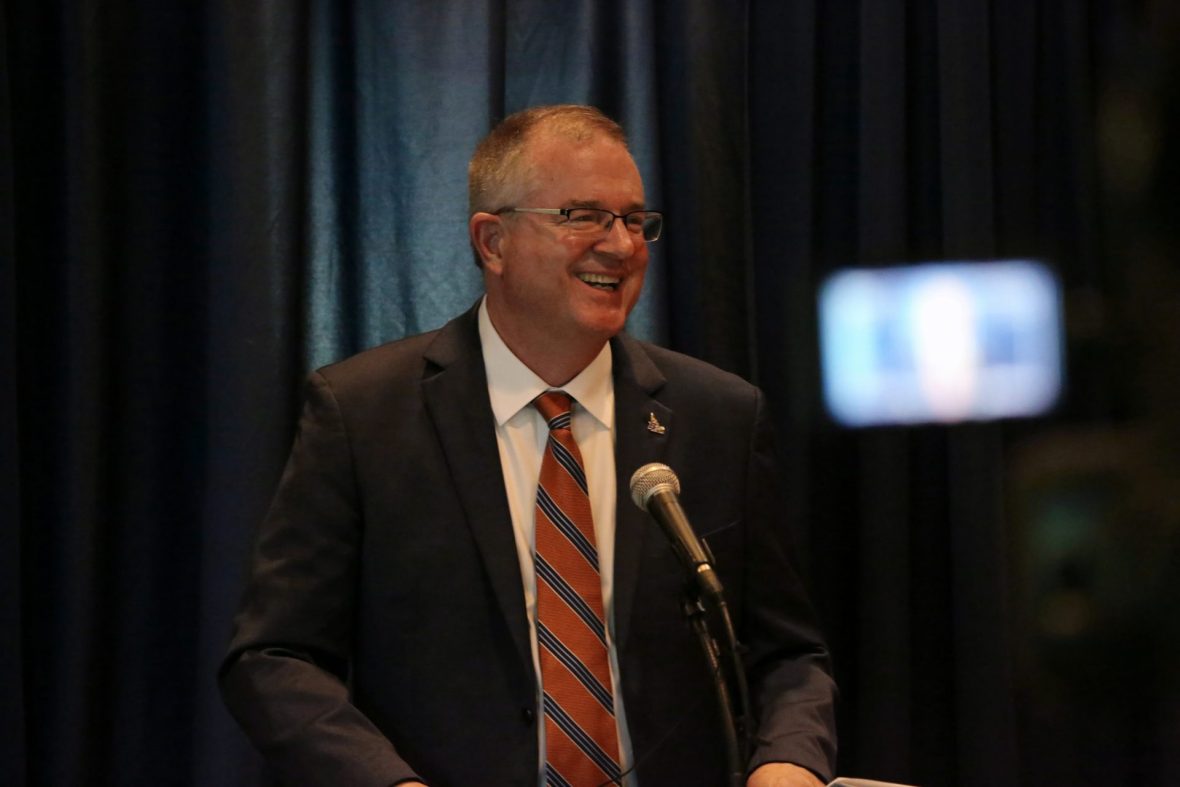
All that said, what exactly do we know about him?
A dive into Google — and let’s not kid ourselves, we’re not the only folks giving our search skills a workout this week — reveals that Hahn is most definitely a science guy. It takes no effort to link to news releases on the U of A’s role in a regional partnership on microelectronics and semiconductors, a federally funded mineral processing pilot and a training program focused on preventing drone-launched military strikes.
Hahn’s curriculum vitae reveals that he holds a dozen U.S. patents and has authored more than 130 scholarly articles. The most cited article of the bunch is titled: “Laser-Induced Breakdown Spectroscopy (LIBS), Part II: Review of Instrumental and Methodological Approaches to Material Analysis and Applications to Different Fields.”
So on a surface level, Hahn is a different breed of academic than Tromp, who specializes in research on Victorian literature.
The stark departure was not lost on Ann Campbell, the chair of Boise State’s department of English literature. Campbell asked the first question at an open forum with Hahn Wednesday afternoon — and asked for his vision on the role of humanities and liberal arts.
Hahn said he could understand the reason behind the question but stressed that he wants academic programs that are greater than the sum of its parts. “What I really value about a university is the diversity of thought.”
Not surprisingly, Hahn was at ease talking about research, and its role at Boise State. He wants to grow Boise State’s research presence, focusing on fields where the university has a foothold, or room to grow. “We just have to align ourselves thoughtfully. … We just can’t do all things in research.”
And Hahn guaranteed that, under his watch, Boise State will gain top-tier R1 research status from the Carnegie Classification of Institutions of Higher Education — a designation that would bring in even more research dollars and star-power faculty.
But this isn’t much of a contrast with Tromp, or her predecessor, Bob Kustra. Since 2005-06, the Boise State research portfolio has swelled from $9 million to $78.3 million annually. Tromp also coveted the R1 designation during her six years at Boise State.

However, Hahn’s grounding in research and STEM had to score points with the State Board’s search committee — which included executives from semiconductor giant Micron Technology and Idaho Power, among other business leaders. And the State Board’s pronounced business emphasis likely worked in his favor.
So far, Hahn appears to share common ground with Tromp on DEI issues. Hahn pledges that Boise State will follow the law and obey state restrictions on diversity, equity and inclusion programs, which the university was already doing under Tromp’s watch. But Hahn said nothing this week to walk back from his track record and his strong support of diversity efforts at the U of A and, previously, the University of Florida.
“Education lifts every single person, so we want to make Boise State as welcoming as possible to every single person from all walks of life,” Hahn said during a news conference Tuesday.
How would Hahn — pro-research and pro-STEM but also pro-diversity — go over with a Legislature that hasn’t exactly been pro-higher education? A Legislature that followed up on its DEI crackdown with deep and disproportionate cuts in the higher ed budget this year?
We’d find out soon. Perhaps very soon. It took only 12 days, barely one Scaramucci, for Republican legislators to urge Tromp to disavow Boise State’s social justice agenda.
Hahn didn’t go into many details Wednesday, but he said he has had “good conversations” with lawmakers on both sides of the aisle. That prompted one skeptical professor to step up to the microphone and pose a pointed question to Hahn, twice. “What is your approach to sharing unpleasant realities when necessary?”
Wednesday’s hour-long Q&A wasn’t long on unpleasant realities. Yes, students and staff asked good questions, in their one public forum with Hahn. And Hahn made a good-faith effort to provide answers. Still, the event had a certain all-things-to-all-people vibe — like a job interview when the job is more or less in the bag.
This is the first time the State Board has named a sole finalist for a presidential job. That’s because the 2026 Legislature, acting on the State Board’s urging, traded off transparency in an attempt to get the stalled Boise State search out of the ditch.
Gone are the days when the State Board must publicly name five finalists. Gone are the days when a field of finalists comes to campus to meet with students, faculty and the community at large. The David Hahn tour, times five.
A speed-dating approach, maybe. But it at least allowed the campus community to make some coarse comparisons, and check the State Board’s work.
Boise State’s next president — who is, for all intents and purposes, Hahn — will inevitably work in a fishbowl. That comes with leading a university that has 28,500 students, a $307 million budget, a national athletic brand — and baggage at the Statehouse.
But this is a State Board hire, more overtly than any presidential hire before it. That places the board under increased scrutiny as well.
Kevin Richert writes a weekly analysis on education policy and education politics.