Boise State University’s athletics department faces a budget deficit that could rise to $18 million this fiscal year, after the Broncos made a costly move to the Pac-12 and amid mounting demand to pay athletes.
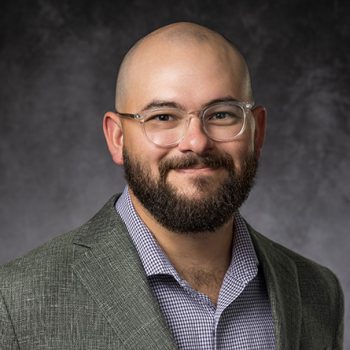
Boise State Athletic Director Jeramiah Dickey and other university officials told the State Board of Education about the projected deficit during the board’s meeting Thursday at Idaho State University. Board policy requires athletic departments to notify the State Board when they face a deficit.
Boise State Athletics ended last fiscal year $2 million in the red, according to a written update shared with the State Board. The hole could have been deeper if not for an $11.5 million surplus from the prior year supported by revenue from the Broncos’ trip to the College Football Playoff and a lucrative Post Malone concert at Albertsons Stadium.
Without similar backstops in the current fiscal year, the deficit could grow to between $14 million and $18 million, which could be covered by the university’s reserves, according to Thursday’s update.
Boise State officials attributed the deficit to two factors:
Revenue sharing. College athletes are now eligible for direct payments from universities — known as “revenue sharing” — in addition to sponsorship deals. And Boise State is facing pressure to hike payments as the Broncos aim to compete with higher-spending programs.
Boise State, for the first time last fiscal year, paid athletes $10 million. University officials expect to increase payments this year, although they haven’t settled on a number. Dickey said Boise State could rank third or fourth in the Pac-12 when it comes to revenue sharing.

“We are falling behind,” he said.
Still, Boise State won’t reach the revenue-sharing cap established by House v. NCAA. The legal settlement that laid the ground rules for paying college players says universities can pay athletes up to $21.3 million this year.
Boise State “will not approach that maximum,” according to the written statement shared with the State Board. “We don’t need what everyone else has,” Dickey said. “We just need more than we currently have.”
Pac-12 move. The other budget pressure comes from Boise State’s move to the Pac-12 Conference, university officials told the State Board.
In 2024, Boise State announced that it was joining the Pac-12 along with four other Mountain West Conference members — San Diego State, Fresno State, Utah State and Colorado State.
The Mountain West sued the five schools, seeking $55 million in “exit fees.” It also sought $100 million from the Pac-12 for “poaching” its members. After a two-year legal battle, the parties settled this month for an undisclosed amount.
The San Diego Union-Tribune reported that the total settlement was around $70 million, and the five universities are on the hook for just under $10 million each.
According to a budget summary shared with the State Board this week, Boise State Athletics’ operating expenses went up about $7.6 million between FY 2025 and FY 2026, an increase attributed to the Mountain West Conference “exit.” 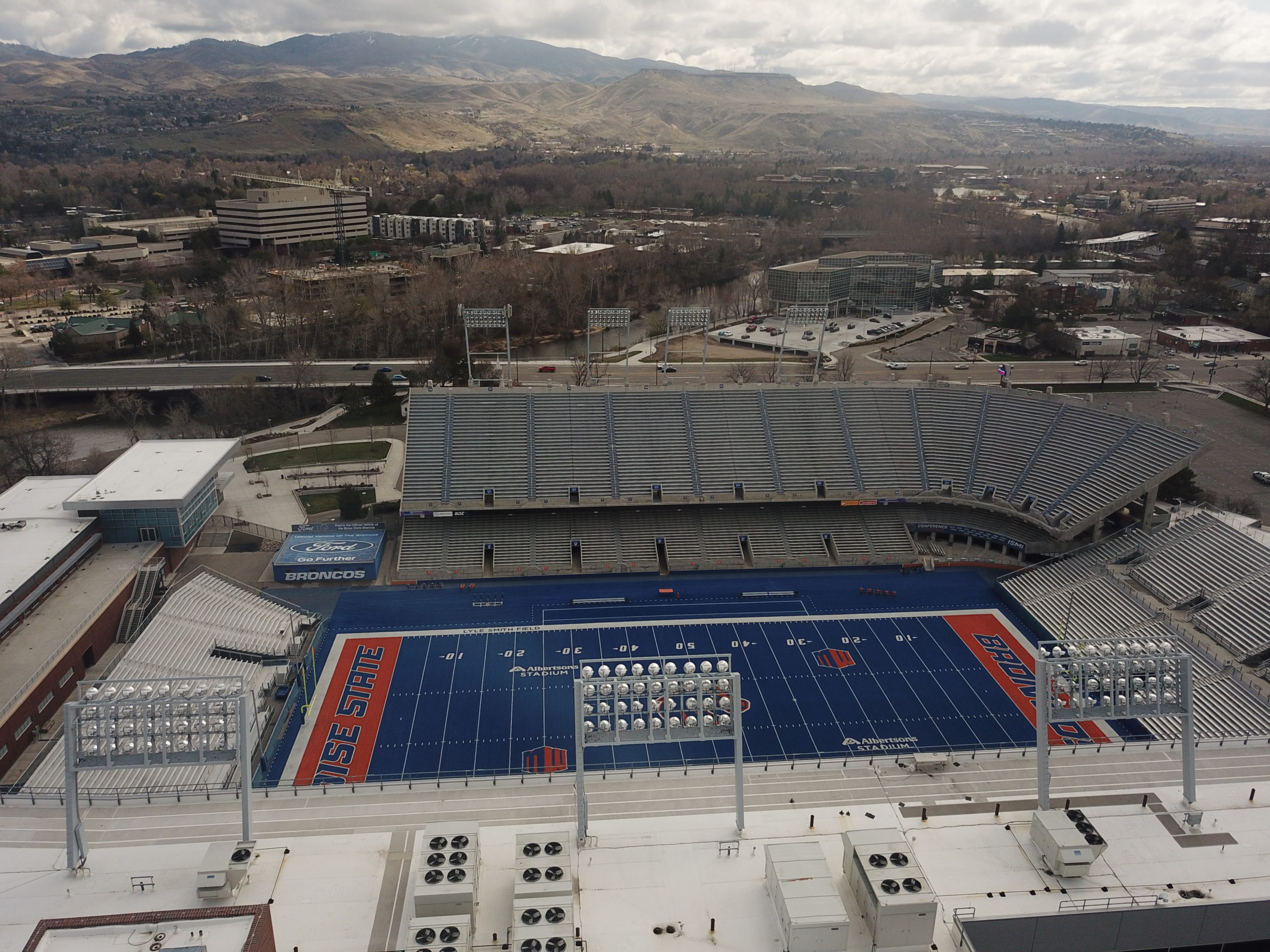
University can cover athletics deficit with reserves. State Board Executive Director Jennifer White noted Thursday that the athletics department’s budget hole is not a “structural deficit” at the broader university.
According to written comments from State Board staff, Boise State has “sufficient institutional reserves” to “absorb the projected deficit without adversely affecting the institution’s overall financial position.”
It’s not uncommon for universities to subsidize sports; in fact, it’s the norm. A recent report from the Government Accountability Office found that 94% of Division I athletics programs lost money during the 2023-24 school year, and the median revenue gap was $20.6 million. Universities typically use student tuition and fees along with unrestricted funds, like investment earnings, to subsidize sports, the report said.
Boise State officials say they’re leaning on special events and continued donor support to boost athletics revenue. This summer, Albertsons Stadium hosted a monster truck rally and Banana Ball, and the university recently announced that country artist Luke Combs will perform at Albertsons Stadium in 2027.
“In the short term, we are looking at how we increase revenues with that type of activity,” said Stacy Pearson, Boise State’s interim chief financial officer. “But in the longer term, to keep up with this, we’ll have to identify other areas of revenues as well as expenses, including the ongoing support of our foundation and donors.”
State Board says farewell to 2 members
Also Thursday, the State Board and Gov. Brad Little celebrated two members whose terms are expiring: William Gilbert and Cindy Siddoway.
State superintendent Debbie Critchfield presented the outgoing board members with pens that were crafted from the wood of a “remarkable tree” at the University of Idaho. President Theodore Roosevelt planted the tree in 1911, and it fell during a windstorm last year.
“It seems especially fitting that part of it should now be placed in your hands,” Critchfield said, reading from a statement prepared by fellow board members. “Like that tree, your service has been deeply rooted in Idaho and dedicated to creating opportunities for generations to come.”

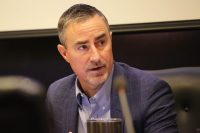
Little appointed Gilbert and Siddoway to the board in 2021, and he attended Thursday’s meeting in Pocatello. The Republican thanked the members for their years of service, and in particular, for supporting the Idaho Launch program.
“What’s taking place in Idaho right now is phenomenal, and this board has been not only on-board but some of the largest promoters of it,” Little said. “And (for) generations of kids in Idaho, it will change their lives, it will change their trajectory, it will change the business environment.”
A news release Thursday said Little will announce their replacements at a later date.
Serving on the board has “been a joy,” Siddoway said. “It’s been such an education for me, to realize what wonderful, dedicated people we have, all working for these amazing students.”
Gilbert added that he cares most about the sustainability of Idaho’s public education system. And despite a more challenging environment, he feels better about where the system is now than when he started. “We have incredible leadership with all of our institutions. We have incredible leadership in K-12 education, in our districts, at the state level.”