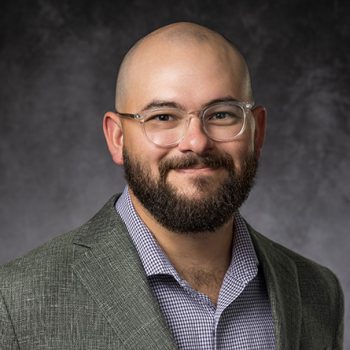
Public school administrators got a closer look Tuesday at the three candidates vying to be state superintendent for the next four years.
The Idaho Association of School Administrators held a panel discussion with the candidates during the group’s annual conference in Boise. All three candidates attended and answered questions for more than an hour.
State superintendent Debbie Critchfield is the Republican nominee and incumbent seeking a second term. Democratic nominee Becky Sundin Mitchell and Constitution Party candidate Teresa Roundy are the challengers.
Becky Meyer, superintendent of the Lake Pend Oreille School District, and Blackfoot Superintendent Brian Kress asked the questions, which covered topics affecting school administration, from local control to the state’s funding formula. The candidates received the questions prior to Tuesday’s panel discussion.
Here’s what they covered:
Top priorities
Critchfield told school leaders to expect more of the same if voters give her a second term. She said she’ll continue to focus on literacy, math and career-technical education while trying to fill a gap in special education funding.
Critchfield acknowledged that she hasn’t yet figured out where to focus attention and resources to address classroom management — a leading concern among teachers. “But there’s going to be a lot of attention in that area in the next year,” she said.
Sundin Mitchell argued it’s time for a change in leadership that could better bridge a divide between public schools and the state lawmakers who fund them. She proposed a program that would invite legislators to visit classrooms — and hold them accountable to show up.
“If they’re making decisions about public education, they need to spend some real time in public education,” Sundin Mitchell said, adding that she would also focus on alleviating teacher burnout.
Roundy’s campaign is focused on child safety, and much of her remarks Tuesday centered on what she called a “civil conspiracy” that allows child protection services to “kidnap children without due process or evidence.” She suggested that school resource officers and teachers are complicit.
“We can’t allow Idaho teachers to participate in the erasure of parents,” said Roundy, who ran for mayor of Garden City on a similar platform. “They must protect the parent-child bond with proper training, and we will do that.”
Roundy also said she plans to implement a “first-of-its-kind curriculum” designed to address trauma and combat youth suicide, and she would integrate “successful methodologies from homeschooling.”

Local control
Meyer and Kress’ first question focused on which decisions should be made by local school leaders and when the Idaho Department of Education should provide “stronger direction.”
Critchfield said she became a school board member — in Cassia County, where she was a trustee for a decade — because she believes in local control. She said there must be a balance between what state leaders expect and what local leaders can implement and accomplish.
“You, at the state level, have policymakers and appropriators who say, ‘Our goals around reading are important. We have priorities for literacy. We have priorities for math,’” Critchfield said. “The implementation of how, when, where … needs to be maintained and honored.”
Sundin Mitchell said that local education leaders best understand their populations and how to serve them. But local leaders are struggling to focus on education because of state requirements, and they need a “better seat at the table,” she said.
“We know, those of us who have been in the classroom, that all we’ve gotten is a lot of micromanaging from the top down for many, many years,” Sundin Mitchell said.
EdNews previously reported that Sundin Mitchell was 2018 Idaho Teacher of the Year. But she was no longer a teacher as of March, working instead for a research company part time.
After Tuesday’s panel, Sundin Mitchell told EdNews that she will be back in the classroom next school year. She’s teaching science at Heritage Community Charter School, a dual-language immersion, K-8 school in Caldwell.
Roundy’s answer touched on parental rights.
“My vision is an education system where schools empower parents as the ultimate authority in their children’s development and focus on objective learning rather than state-mandated narratives,” she said.

State funding formula
Sundin Mitchell said decision-makers need to understand that public schools are at a “crisis-level,” like they were during the COVID-19 pandemic.
During the pandemic, the state temporarily funded schools based on enrollment before switching back to the attendance-based model, which provides fewer dollars to schools. Sundin Mitchell argued for making enrollment-based funding permanent.
“In the next year, I would make sure those decision-makers understand we’re at the crisis point,” she said. “We have to make those hard decisions now, not only updating the formula but switching to a model that has a lot more predictability, like enrollment-based funding.”
Critchfield in recent months has traveled the state, inviting administrators, trustees, teachers and parents to weigh in on potential changes to the formula. Her staff is working with legislators on a bill that could be introduced next session.
On Tuesday, Critchfield didn’t share specific changes that could be in the bill. But she noted that administrators need a formula that’s more predictable, stable, sustainable and simple.
“And I think we need something that is aligned to the students that we have today,” Critchfield said. “The 30-plus-year-old formula is not getting the job done in all the ways that it was designed to do back then.”
Critchfield in recent years has pushed for reforms that would distribute state dollars per student — as opposed to the current model that effectively pays for a classroom — and would add weights for students who are costlier to educate. Her proposals have yet to clear the Legislature.

Federal changes
The candidates also discussed shifting federal priorities around education, as the Trump administration over the last year and a half pushed to dismantle the U.S. Department of Education.
Critchfield has supported the administration’s efforts, and she focused Tuesday on her development of “critical relationships” with federal partners. These helped Idaho obtain waivers that gave schools more flexibility to spend federal dollars, and they helped rescue tens of millions in grants for community schools that had been paused, she said.
“We want to maximize every single opportunity that’s available for us at the federal level, which is what we are doing now, and that will continue on my end,” Critchfield said. “The whole reason that we’re building the relationships and having those conversations is so that you can best do the job that you need to do.”
Sundin Mitchell, on the other hand, said that educators have been “shocked” to see the U.S. Department of Education “disintegrate before our eyes.” She noted that the federal changes have led to layoffs and defunded programs.
“We’re going to have to also do without a lot of that federal funding and go to Washington and fight for what Idaho is owed from the federal level,” she said.
Education myths
During a “lightning round” of questions to close Tuesday’s discussion, Meyer and Kress asked the candidates to dispel one common myth about education.
Sundin Mitchell said that opposing taxpayer subsidies for private education doesn’t mean that someone doesn’t support school choice.
“I’ve worked a lot of years in charter schools. They’re a wonderful (form of) school choice. They allow for all the same accountability that we put in our neighborhood schools,” she said. “But when we give $50 million away in vouchers to private schools that have zero accountability, that’s the issue I hear most across the state.”
Critchfield sought to dispel the myth that public schools are failing and parents are fleeing for private options. Data doesn’t support that public schools are failing, and the majority of parents continue to choose public schools, she said.
“That’s a message that we’ll continue to share,” Critchfield said.