Parents, educators and school leaders who gathered Thursday at the College of Eastern Idaho to discuss Idaho’s school funding system repeated a familiar refrain: Simplify the model and base funding on enrollment, not attendance.
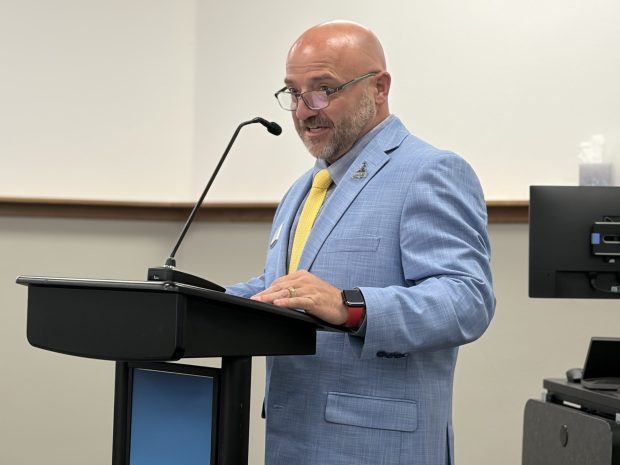
“It should not be complex,” said Meridian Medical Arts Charter High School Executive Director Benjamin Merrill. If the formula takes longer than five minutes to explain, he said, “it is probably too complex.”
About 45 people gathered with state superintendent Debbie Critchfield and Senate Education Committee Chair Dave Lent, R-Idaho Falls, for a listening session on the K-12 funding formula.
The Senate this session passed Lent’s resolution directing Critchfield’s Department of Education to draft legislation updating the formula and analyzing its impacts. Although the resolution stalled in the House, the department is moving forward with the rewrite, holding a statewide series of listening sessions.
The formula, based largely on average daily attendance, distributes billions of dollars to public schools annually. It hasn’t had a significant update since 1994, despite a decade of debate.
Several speakers said the attendance‑based model forces districts to predict the future, making budgets uncertain because core costs stay fixed, even when daily attendance drops.
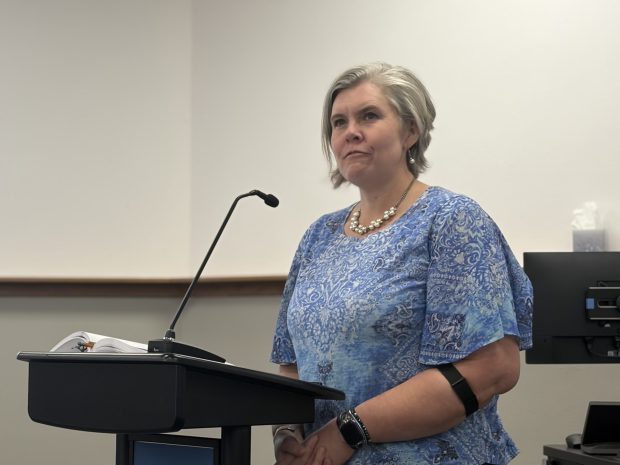
“If we get a bad strain of the flu … you’re going to lose 20% of your funding,” said Pocatello teacher Marcy Curr. “Businesses cannot function like that, and time and time again we hear schools need to be competitive, schools need to act like businesses. Then treat us like businesses. Stop with this attendance-based thing.”
Participants also repeatedly called for weighted funding for:
- Special education students
- Career-technical education programs
- Alternative education
- Other higher-cost student populations
Former Teton County School District trustee Kathleen Haar stressed that traditional public schools and public charter schools have different missions. Students in rural communities have different challenges than those in urban communities. Even schools within the same district can have dramatically different costs and needs.
“After we establish a base amount, additional funding could follow students who require additional services,” said Merrill, pointing to special education students, English language learners, low-income and gifted learners, career-technical education students and students in smaller rural schools.
Several speakers stressed the need to boost CTE funding — a focal point for Gov. Brad Little and other leaders in recent years.
“CTE is invaluable,” said Curr. “That costs money, that is expensive to do.”

Critchfield has pushed for adding weights to the formula and funding students based on unique characteristics, like demographics and learning ability. On Thursday, she encouraged speakers to focus on programs and services they’d like to see improved through funding changes — and less on the hard details of the funding model itself.
Other areas speakers stressed include:
- Paperwork loads
- Staffing constraints
- Salaries
- Funding for arts programs
- Alternative education
- Improving transparency
- Accountability for students and teachers
One teacher and parent did not identify himself but compared Idaho to Tasmania, a region often mocked by larger Australian states. He warned that students need something to be proud of and that Idaho must deepen its investments in schools.
“I chose to be here, and I love it in East Idaho,” the man said. “I love the classes, I love the kids, I love the families, I love the feeling, I love the community, and I just wonder if the people who make the decisions about schools have that faith that the people that live here have, because if they did, maybe they would think we need to invest in Idaho and Idahoans.”

The meeting was the second stop in Critchfield’s listening tour. The first meeting took place last week in Boise. Two more listening sessions are set for this month:
- Coeur d’Alene: June 18, 6-8 p.m., Coeur d’Alene School District, Midtown Meeting Center.
- Virtual meeting: June 25, 6-8 p.m.
Critchfield’s office will collect feedback throughout the summer. A proposed funding model is expected later this year.