
Calls for more funding emerged as a central theme Thursday during a listening session on possible changes to Idaho’s K-12 funding formula.
“We can’t take pride in being funded dead last in the country and expect significant improvement,” Coeur d’Alene Superintendent Shon Hocker told attendees.
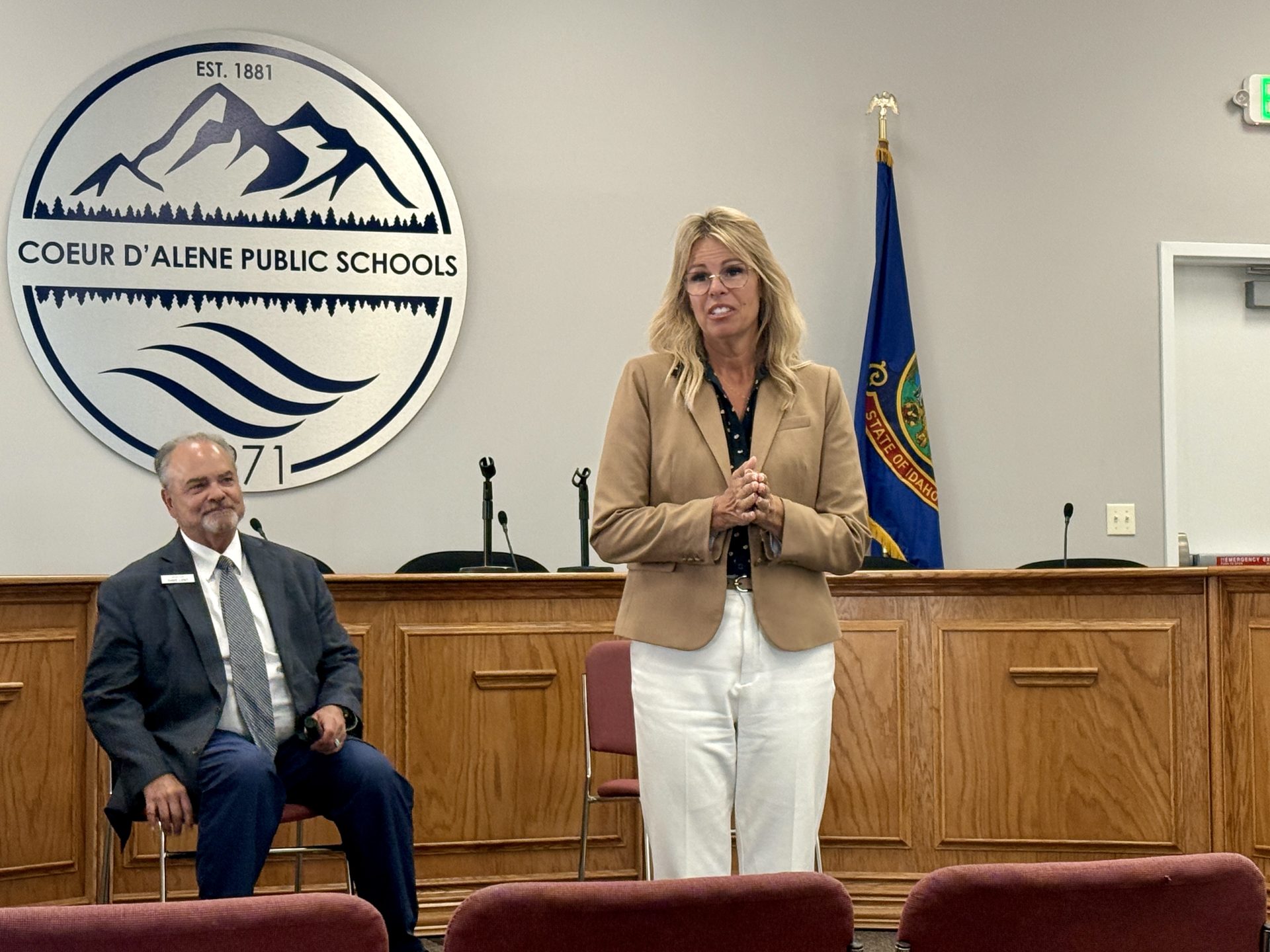
Hocker was among about a dozen people who attended the session in Coeur d’Alene, the final stop on state superintendent Debbie Critchfield’s tour to collect input on ways to modernize the complex and archaic funding formula — for the first time since the 1990s. A final virtual listening session is set for June 25.
Idaho routinely spends the least per K-12 student in the country. Sometimes another state might drop below the Gem State, but Idaho always circles the bottom.
Many of the ideas and issues brought up Thursday came back to concerns over underfunded schools.
‘Half of not enough is still just not enough’
Hocker, a lifelong Idahoan, left for Wyoming and North Dakota before returning to lead Coeur d’Alene Public Schools in 2021.
That experience outside of the state underscored how Idaho’s current funding model is “broken,” he said.
Legislators may see Idaho’s low per-pupil spending and middle-of-the-pack student performance as evidence that the state is getting a “good bang for its buck,” he said. But that performance is partly supported by supplemental levies, which bolster district budgets while shifting more of the tax burden to local property owners.
Coeur d’Alene, on many metrics, is one of the highest-performing districts in the state. Hocker said the district’s performance is supported by 164 employees paid for outside the state’s funding formula through a supplemental levy that makes up more than 25% of the district’s budget.
Due to inflation, trustees voted to increase the levy request to $30.25 million this fall.

Gaps the levy fills include funding full-day kindergarten. Early intervention is crucial to reducing special education caseloads, Hocker noted. The local funds also cover jobs that the funding formula written in the ’90s didn’t contemplate, like IT directors and additional human resources staff for growing districts, he said. Those classified employees are reimbursed at $42,000 a year, Hocker said, far less than what it takes to hire qualified professionals.
Even the administrator pay scale is far behind, he said, with some principals being paid just $2,000 more than teachers.
“There are no principals in Idaho that are going to get paid $2,000 more than a teacher to take on all that additional responsibility, work significantly longer contract days, all of those things,” Hocker said.
While education may take up more than half of Idaho’s budget, Hocker argued that the state’s total budget is too small.
“Half of not enough is still just not enough,” Hocker said.
Without additional funds, Hocker equated reworking the funding formula to moving chairs around on the deck of the Titanic.
“We’re not going to make a significant difference,” he said.
Other attendees agreed and suggested ways to raise revenues, like updating the homeowners’ exemption or adding a sales tax that funds education.

Special ed, enrollment funding, out-of-the-box programs dominate discussion
Longtime West Bonner trustee Margy Hall voiced the need to bring back regional education hubs for small, rural districts. The hubs would house school psychologists, business experts, speech language pathologists and counselors.
“I’m sorry that died because for a small district that would have benefited us in a lot of ways,” Hall said.
Instead, districts end up paying large amounts to contract with private businesses to provide those services, Hall noted.
Critchfield said regional hubs are something she’s trying to bring back without legislative action.
Hall and Post Falls trustee Sara Rodriguez suggested removing the word “supplemental” from levy language and replacing it with something like “maintenance and operations levy.”
Rodriguez suggested keeping supplemental levies for things like sports and extracurriculars, but shifting staffing and operations cost to maintenance and operations levies.

She argued that many state property tax relief bills in recent years have simply shifted the burden to local school districts to fund school operations. The issue is further complicated by the fact that the school portion of property taxes in many areas, including Post Falls, is going down, but city and county property taxes are going up.
Patrons often don’t vote on those increases, she said, but they do see school levies on the ballot every two years and thus take the blame for requested funds.
The current funding model, based largely on average daily attendance, leaves Post Falls, which has an average attendance rate of around 93%, losing out on enough funds to buy a car every two days, Rodriguez said. Absences are usually for things like doctor appointments, sports and family vacations, she noted.
In total, it’s over $3 million a year, said Josh Gittel, Post Falls’ chief financial officer.

Rodriguez also noted North Idaho must “battle” to keep teachers from driving 20 minutes to Washington for higher pay.
Most attendees agreed that moving to an enrollment-based model would help districts, which must still hire enough staff for the number of kids enrolled.
Critchfield noted that the switch from a temporary enrollment-based model back to one that emphasizes average daily attendance funding following the pandemic amounted to around $100 million.
Meanwhile, special education services are draining districts’ general funds, said Marni Wattam, who works for several districts’ special education departments.
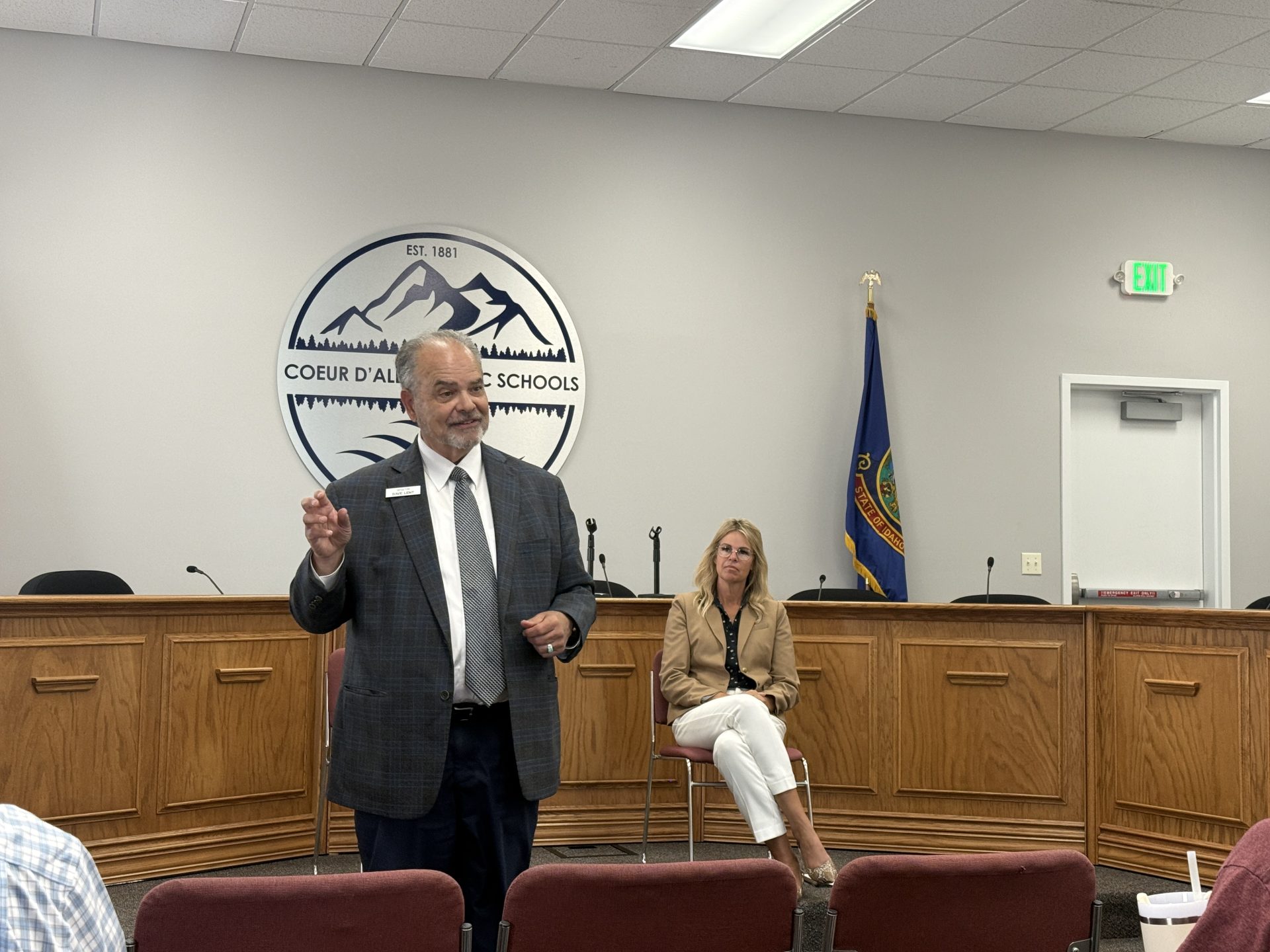
Sen. Dave Lent, who has traveled with Critchfield to the listening sessions, noted that he thinks there has been an upward trend in behavioral issues and students who qualify for special education services.
Wattam agreed and argued that increased training for staff and funds to do early intervention would help.
Brian Smith, a principal and community schools coordinator in Moscow, asked for state funding for community school coordinators. Idaho almost lost the federal community schools grant earlier this year, but Critchfield intervened.
He said that, for the cost of the coordinator’s $65,000 annual salary, the district has received about $900,000 in donations and services.
“The return on investment is huge,” Smith said.
The program has also built community trust, connection and support for public schools, he argued.

