Debbie Critchfield is starting a new state special education program — while watching an overhaul at the federal level.
They are two big changes — two important transitions — affecting special education services for roughly 41,200 Idaho students. And Critchfield, the state’s superintendent of public instruction, is also hoping to see a changing mindset on Idaho’s special education crisis.
“For people that have been outside of the educational system for a while, I respect and can appreciate why this feels new and sudden. We haven’t talked about it,” Critchfield said in a recent Idaho EdNews interview. “I’m hoping that I don’t have to convince people anymore that it’s a thing.”
No matter how things play out, Idaho is still going to face a serious special education budget problem. That said, here’s what’s at stake this summer.
Coming this fall: An in-depth look at special education
Idaho Education News is working on a deep dive into the special education crisis — looking closely at the staffing issues facing the schools.
Watch for our coverage this fall.
And reach out to us with any questions, comments or tips. Email krichert@idahoednews.org
Critchfield’s new program
Critchfield has $5 million for a new “high-needs” special education program — to help schools pay for full-time staff or expensive equipment, for students requiring more than $30,000 in support.
The $5 million probably won’t be enough. It’s just what Critchfield could piece together from interest and other accounts.
“We think $5 million is going to be gone in a minute,” she said.
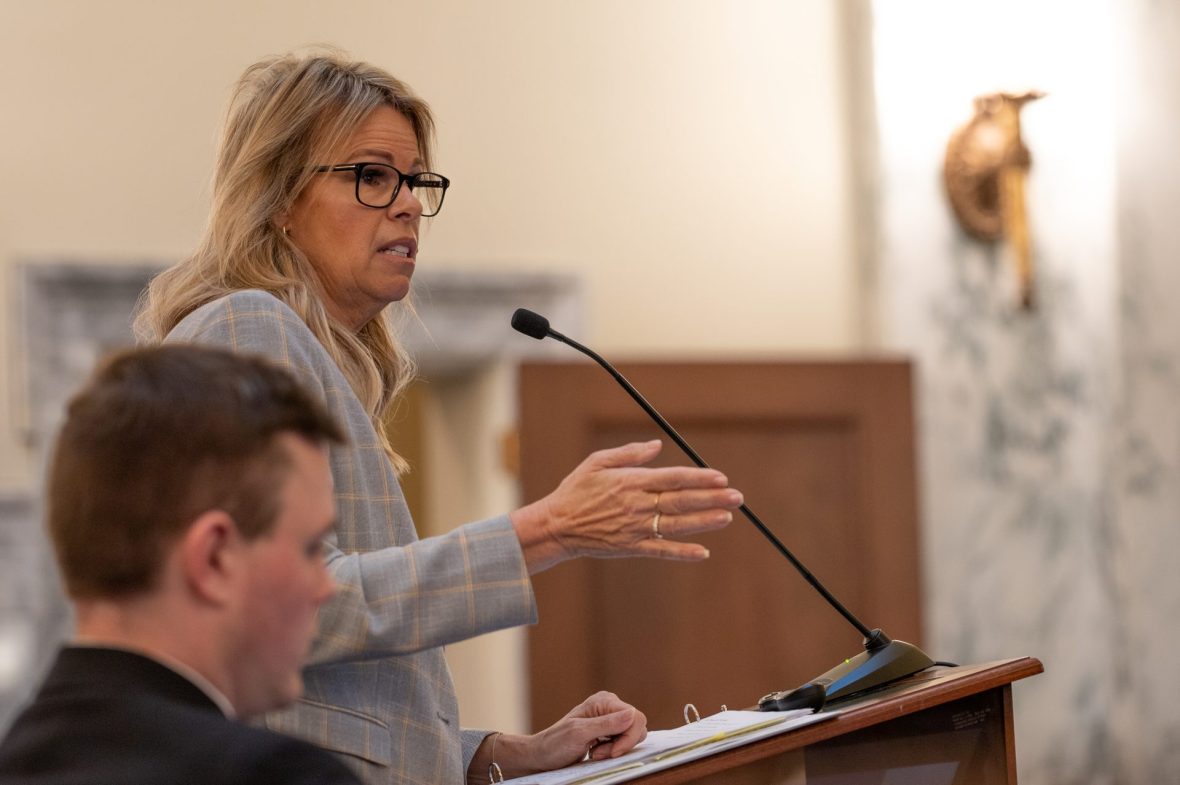
It would be easy for the West Ada and Boise districts — serving about a fifth of Idaho’s students — to burn through that $5 million all by themselves, she said. The new law won’t allow that to happen. Up to 40% of the money is earmarked for rural schools.
The startup should be a learning exercise. Critchfield wants the Idaho Department of Education to track when the money goes out the door — and when schools seek and receive reimbursements under the new program. She’s encouraging districts and charters to put in claims, regardless of the odds that might be stacked against them.
“Obviously, we want to help as many people as we can,” she said, “but we also want to know who we’re not helping. That’s an important data set.”
It’s important too, because Idaho’s special education debate didn’t end with this year’s bipartisan passage of the high-needs law. The law created a program — but a program with no long-term funding mechanism. If Critchfield is re-elected this November, she plans to come back to the 2027 Legislature with a short-range plan to fund Year Two of the high-needs program, using $5 million in interest.
And let’s keep the $5 million in full context. Idaho’s special education shortfall, the gap between local costs and state and federal funding, is on the order of $100 million.
Provided, once again, that Critchfield is re-elected, she hopes to address that $100 million hole by tackling Idaho’s aging school funding formula. She hopes the 2027 Legislature will adopt a “weighted” system that provides additional dollars for special education, and other student groups that need added support. She has been traveling the state this month on a funding formula road show, gathering comments on a possible rewrite.
Hence her year-to-year approach to the high-needs program. “We don’t want to create a system, while we’re trying to overhaul something else,” Critchfield said.
The feds’ looming overhaul
On June 16, the White House announced sweeping changes that are consistent with President Donald Trump’s desire to jettison the U.S. Department of Education. One change would move special education services from the husk of the Education Department to the Department of Health and Human Services.
As with most things Trump, this is a polarizing proposal.
“This partnership … will cut bureaucratic barriers, better align federal resources, and deliver more effective support for individuals with disabilities and their families,” HHS Secretary Robert F. Kennedy Jr. said in an Education Department news release.
“(This) is not an administrative adjustment,” said Becky Pringle, president of the National Education Association, a preeminent teachers’ union. “It would drag us backward by treating disability as a medical issue instead of an educational right and by unraveling decades of progress.”
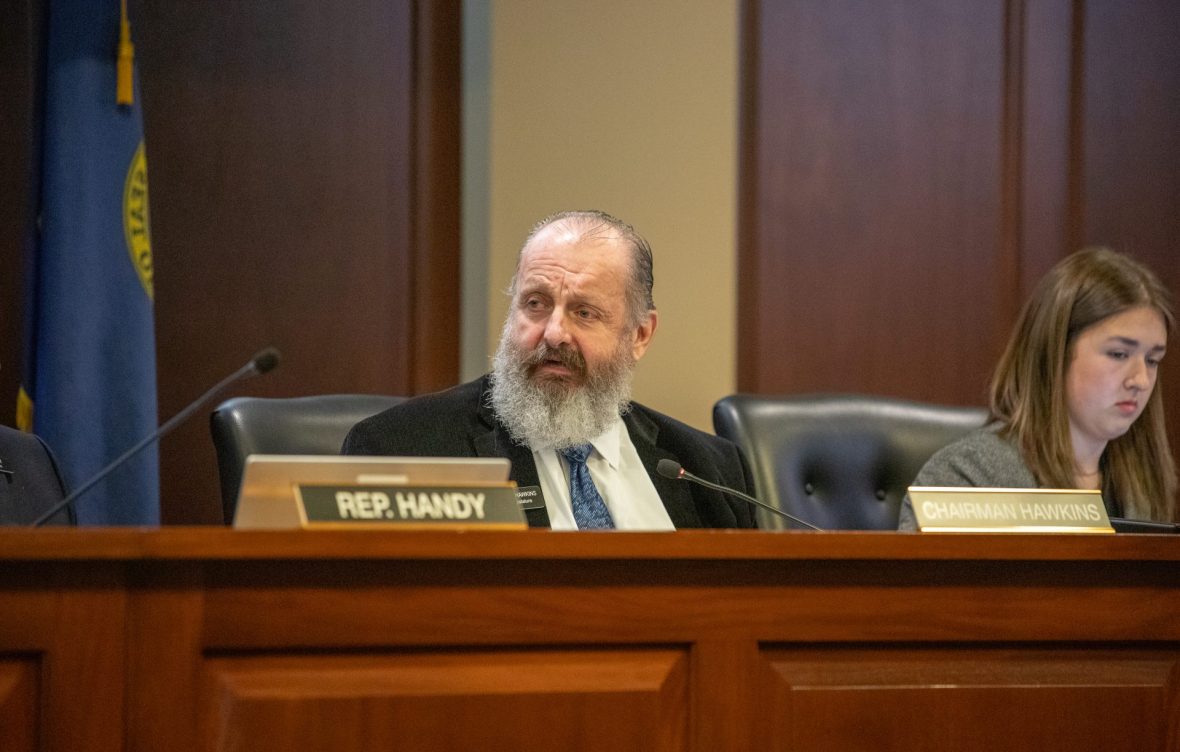
There’s an underlying debate here: Who is best equipped to help children with disabilities? This all might sound familiar, because it surfaced during the Legislature’s debate over the high-needs bill. House Education Committee Chairman Dale Hawkins, among others, said the new program burdens school employees with a role better suited for healthcare professionals.
Critchfield doesn’t view the feds’ shift as a philosophical question, but more as a practical matter. She sees a logical connection with HHS and its public health role.
“Many of our students that are being served through special education services are also receiving services through Medicaid,” she said. “Why don’t we bring them under the same roof?”
Critchfield also points to the bottom line — as the Trump administration did last week. The Individuals With Disabilities Education Act, the centerpiece federal special education law, isn’t going anywhere. The feds’ spending obligations aren’t going away either, she said.
The budget crisis
Here’s something else that isn’t going away: the special education spending crunch.
No matter which federal agency winds up in charge of IDEA, the law provides Idaho about $71 million a year for special education. Medicaid, a program serving low-income households, kicks in about $50 million to $60 million a year.
Idaho’s special education bill runs about $400 million a year — leaving the state and local schools to pick up the rest, and leaving legislators to resort to passing a nonbinding memorial urging the feds to step up spending.
Even if HHS can run special education services more efficiently than the Education Department — and that’s a big and unproven assumption — the streamlining isn’t going to erase Idaho’s shortfall. It would more likely, and at best, represent an incremental step. Not unlike the state’s high-needs program.
The more things change, the more the fiscal realities seem to remain the same.
Kevin Richert writes a weekly analysis on education policy and education politics.