A federal judge Tuesday partially blocked Idaho’s new law that made it a crime for transgender people to use their preferred restrooms. It was set to take effect next month.
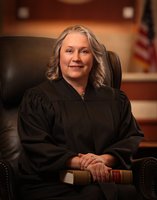
Chief U.S. District Court Judge Amanda Brailsford ruled that transgender Idahoans who challenged House Bill 752 are likely to succeed in arguing that the law is unconstitutionally vague. Brailsford granted the plaintiffs’ request for a preliminary injunction.
The injunction temporarily blocks law enforcement agencies from enforcing portions of the law’s criminal penalties against transgender people while the lawsuit proceeds.
“This ruling will allow transgender people throughout Idaho to find and use a public restroom, without the fear of arrest looming over them, while we continue the longer fight to permanently defeat this discriminatory law in court,” Kell Olson, an attorney at Lambda Legal, which is representing the plaintiffs, said in a news release.
HB 752 made it a misdemeanor for a transgender person to use a restroom that doesn’t align with their birth sex in government buildings and places of “public accommodation.” These buildings include public schools, universities and libraries, and private businesses with public restrooms, such as restaurants, entertainment venues and gas stations. Violating the law a second time would be a felony, punishable by up to five years in prison.
Tuesday’s injunction blocks enforcement of the criminal penalties in buildings that don’t have single-user restrooms, or in instances when the single-user restroom wasn’t available at the time a transgender person used a multi-user restroom.
On April 29, six transgender Idaho residents asked the federal district court for Idaho to declare the law unconstitutional. The plaintiffs are represented by Lambda Legal, the American Civil Liberties Union, the ACLU of Idaho, Alturas Law Group, and Munger, Tolles & Olson.
GOP lawmakers overwhelmingly passed HB 752 in March, and Republican Gov. Brad Little signed it into law in April. The bill was sponsored by Rep. Cornel Rasor, R-Sagle, and Sen. Ben Toews, R-Coeur d’Alene.
Republican Attorney General Raúl Labrador’s office is defending the law. Labrador said Tuesday that his office plans to appeal the injunction, calling it a “results-driven decision that misapplies the law, confuses the issues and misrepresents the position of the State.”
“Biological sex is not vague, and neither is this law,” Labrador said in an emailed statement. “The good news is that this ruling is narrow. Idaho’s law remains enforceable in most settings, including changing rooms and many restrooms. The injunction applies only in limited circumstances and to certain people.”
Meanwhile, a separate law restricting transgender restroom access in schools remains in effect. Senate Bill 1100, from 2023, requires public school students to use restrooms and locker rooms consistent with their birth sex. Schools could face civil penalties for allowing transgender students to use facilities that don’t align with their birth sex. This law went into effect last year, following an injunction, and a legal battle closed last month.
Judge rules HB 752 likely unconstitutionally vague
Brailsford ruled that the plaintiffs were likely to succeed in their claim that HB 752 is unconstitutionally vague “because it fails to provide sufficient standards for law enforcement” that could “prevent arbitrary enforcement.”
The judge’s argument focused on the exceptions to the law’s criminal penalties. A transgender person is allowed to use a restroom that doesn’t align with their birth sex if:
- It’s a single-user restroom that’s the “only facility reasonably available at the time,” or
- The person is “in dire need of urinating or defecating” and the facility is the “only facility reasonably available at the time of the person’s use.”
But the law “does not provide any objective criteria governing its application,” making law enforcement officers responsible for determining, “on a case-by-case basis,” whether a particular restroom was “reasonably available,” Brailsford wrote in her ruling.
“Different officers could reasonably reach different conclusions regarding identical conduct, not because the facts differ, but because the statute furnishes no standards by which those facts are to be evaluated,” she wrote.
Brailsford cited concerns that law enforcement groups shared with the Legislature before lawmakers passed HB 752. She quoted from an Idaho Chiefs of Police Association letter that said the bill presented “significant practical enforcement challenges,” and the exceptions to criminal penalties would be “extremely difficult for officers to evaluate in real time.”
President Joe Biden, a Democrat, appointed Brailsford to the U.S. District Court for Idaho in 2023. Previously, she served on the Idaho Court of Appeals after being appointed by former Idaho Gov. C.L. “Butch” Otter, a Republican. A University of Idaho College of Law graduate, Brailsford practiced law in Boise for more than two decades before becoming a judge.
While the plaintiffs also claimed that the law violates equal protection and privacy rights, Brailsford only ruled on the vagueness argument Tuesday. She reserved her right to consider the other arguments later.
Brailsford also wasn’t convinced by the state’s argument for the law — that it protects women and children from harm in public restrooms. The judge cited existing laws that punish and deter violence or a person’s unwanted presence in a restroom. Among the risks that state attorneys pointed to, only one incident — from more than a decade ago — involved a transgender person, who was prosecuted under existing law, Brailsford wrote.
“The Court does not question the inherent privacy interest implicated by restroom use nor Idaho’s interest in protecting the public from wrongdoers,” she wrote. “But Idaho may protect those interests without infringing upon Plaintiffs’ constitutional rights.”