Six transgender Idahoans filed a lawsuit Wednesday challenging a new state law that makes it a crime for someone to use a public restroom that doesn’t align with their birth sex.
The plaintiffs argue that House Bill 752, if it’s allowed to take effect, would subject them to “life-changing criminal penalties or physical and psychological harm for simply using the restroom.” They’re represented by the American Civil Liberties Union, the ACLU of Idaho, Lambda Legal, Alturas Law Group and Munger, Tolles and Olson.
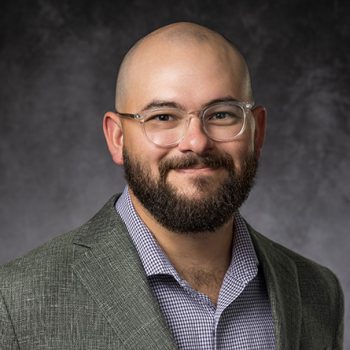
Diego Fable, a transgender man and plaintiff, said in a news release that the law would force him to use women’s facilities and “face tough choices every time I leave my home.”
“Do I know the restroom situation when I go out to eat with my friends? Do I know the restrooms available when I go to public parks to go birding? What do I do while I’m at work all day?” Fable said. “Ultimately, complying with this law would be extremely isolating. The only safe option truly available is to just stay home — or leave the state entirely, leaving my treasured friends and community behind.”
The federal lawsuit asks the U.S. District Court for Idaho to declare the law’s enforcement unconstitutional and issue an injunction blocking it before July 1, the date it’s scheduled to take effect.
Republican lawmakers overwhelmingly supported HB 752 during this year’s legislative session. A pair of North Idaho Republicans, Rep. Cornel Rasor of Sagle and Sen. Ben Toews of Coeur d’Alene, co-sponsored the bill. Republican Gov. Brad Little signed it into law April 1.
“Gov. Little believes women and girls have a right to privacy and should feel safe and comfortable in bathrooms, locker rooms and showers,” Joan Vargas, Little’s press secretary, said by email Thursday. “These private spaces should remain restricted based on biological sex.”
The law makes it a misdemeanor for a transgender person to use their preferred restroom in government buildings and “place(s) of public accommodation.” These buildings include public schools, universities and libraries along with private businesses with public restrooms such as restaurants, entertainment venues and gas stations.
Violating the law a second time would be a felony, punishable by up to five years in prison. Among states with bathroom laws targeting transgender individuals, Idaho is the only state restricting private businesses, and Idaho’s law “carries the steepest criminal charges,” said the ACLU of Idaho’s news release.
Paul Carlos Southwick, legal director for the ACLU of Idaho, said in the release that HB 752 has “a clear discriminatory intent” while its prohibitions and exceptions are “vague, forcing Idahoans and law enforcement alike to guess at its meaning.” The ACLU noted that law enforcement groups raised concerns about how they would determine someone’s “biological sex.”
“The law invites intrusive stops, questioning and even detention based on appearance alone,” Southwick said. “It also pushes the government into one of the most private areas of our lives, undermining the basic Idaho value that people should be left alone in matters of personal privacy.”