
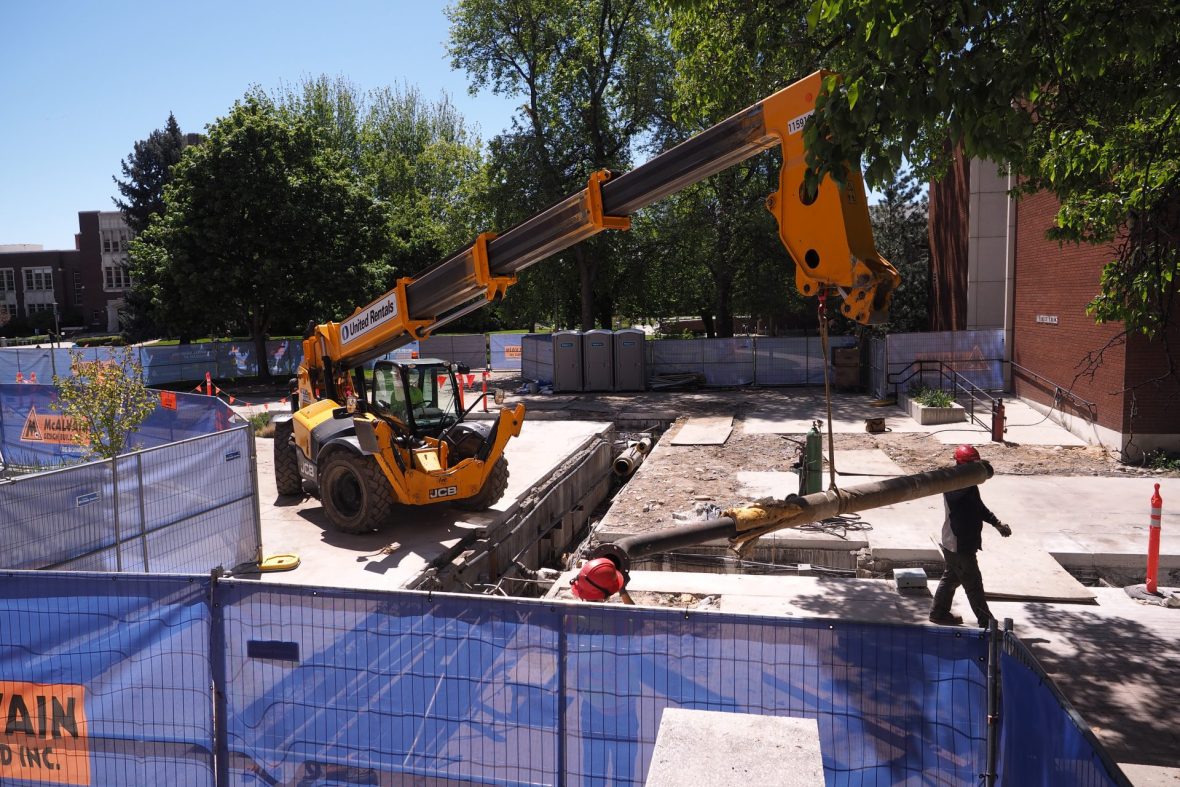
The State Board of Education has endorsed Boise State University’s master facilities plan, but that isn’t the last word.
The Boise City Council will decide whether to incorporate Boise State’s document into its comprehensive land use plan — perhaps within the next few months.
And the university’s next president will have a chance to put an imprint on the blueprint. The new president will inherit a document that was designed to be flexible, and responsive to funding realities.

“This plan, the way it’s structured, shouldn’t constrain a new leadership group,” said Drew Alexander, Boise State’s associate vice president for campus operations.
And unlike its predecessors, the new document doesn’t try to spell out 30 years of projects. “(This) is a focused 10-year roadmap, grounded in realistic projections and achievable goals,” State Board staff said in a report to board members, who unanimously approved the plan on April 15.
So what does the next decade hold in store?
Alexander sat down with EdNews recently to walk through the rollout of the Boise State master plan.
A project at the head of the line
First things first.
A new science research building will consume much of Boise State’s attention — and funding — over the next several years. It’s a big reason why the 10-year plan is “lean” on spendy projects, Alexander said.
At 90,000 to 110,000 square feet, the new project is planned for the fringe of campus, south of the Environmental Research Building. The project carries a projected $140 million price tag. The state kicked in $31 million via 2023 and 2024 spending bills, but that covers just a fraction of the costs.
The rest will come from bonds — and, at least to some degree, from students. The State Board Tuesday approved an increased Boise State “institutional operations” fee. Some of that increase, $69.72 per year for a full-time student, will go toward debt service on the science research building.
The science building project will eat up Boise State’s bonding capacity, at least for some time, Alexander said. But when it does open, and it’s scheduled to come online in the fall of 2029, almost half of its square footage will be dedicated to research labs.
These new labs are critical for Boise State — which is actively seeking coveted R1 research status from the Carnegie Classification of Institutions of Higher Education, but lags behind its peer institutions in terms of research space, by some 200,000 square feet.
“It has an impact,” Alexander said. “It’s not resolving the entire 200,000-square-foot deficit for us, but it’s going to be a workhorse research building for us to help with that.”
Selling the ‘why’
With state funding limited — and bonding capacity spoken for — Boise State will likely need to find new ways to fund projects.
Public-private partnerships are one option. Fundraising is another.
Both pose their own challenges.
No two public-private partnerships are alike, so there’s no template, Alexander said. Each one requires detailed negotiations on the front end, so a private partner knows exactly what’s expected.
A capital campaign must compete against other fundraising efforts — aimed at student aid, athletics or other high-profile objectives.
That means selling the “why,” Alexander said: why a capital project matters, and why it’s good for students.
Sometimes the narrative is easy.
Like the link between lab space and R1 status, which could allow Boise State to compete for a wave of new research grants.
Or the need for more dorm space.
“That story has an easy hook, because it’s all about student success and graduation rates,” Alexander said.
Filling niches in the housing market
The master plan is built on several growth projections. For instance, Boise State is expecting nearly 18,900 “campus-based” undergraduate and graduate students by 2034, an enrollment increase of nearly 1,500.
The plan calls for adding more than 750 housing spots, but selectively.
Boise State will emphasize housing for first-year students — based on research that says students who begin their college careers in on-campus dorms are more likely to stay in school.
The template is Syringa Hall, a first-year dorm that opened last fall, at 86% capacity. “We know that if you start at Boise State, in the community like that, your likelihood of reaching graduation is much higher,” Alexander said.
Boise State will also focus on graduate student housing, another need.
As for the rest of the market — especially for students who are past their first year in school — Boise State will continue to lean on the private sector.
“The private sector has responded pretty aggressively to Boise State’s growth,” Alexander said. “(It’s) a product that we’re not eager to compete with right away, since the product is there and online.”
Boise State’s new front door
Boise State’s architecture is intertwined with city land use policy.
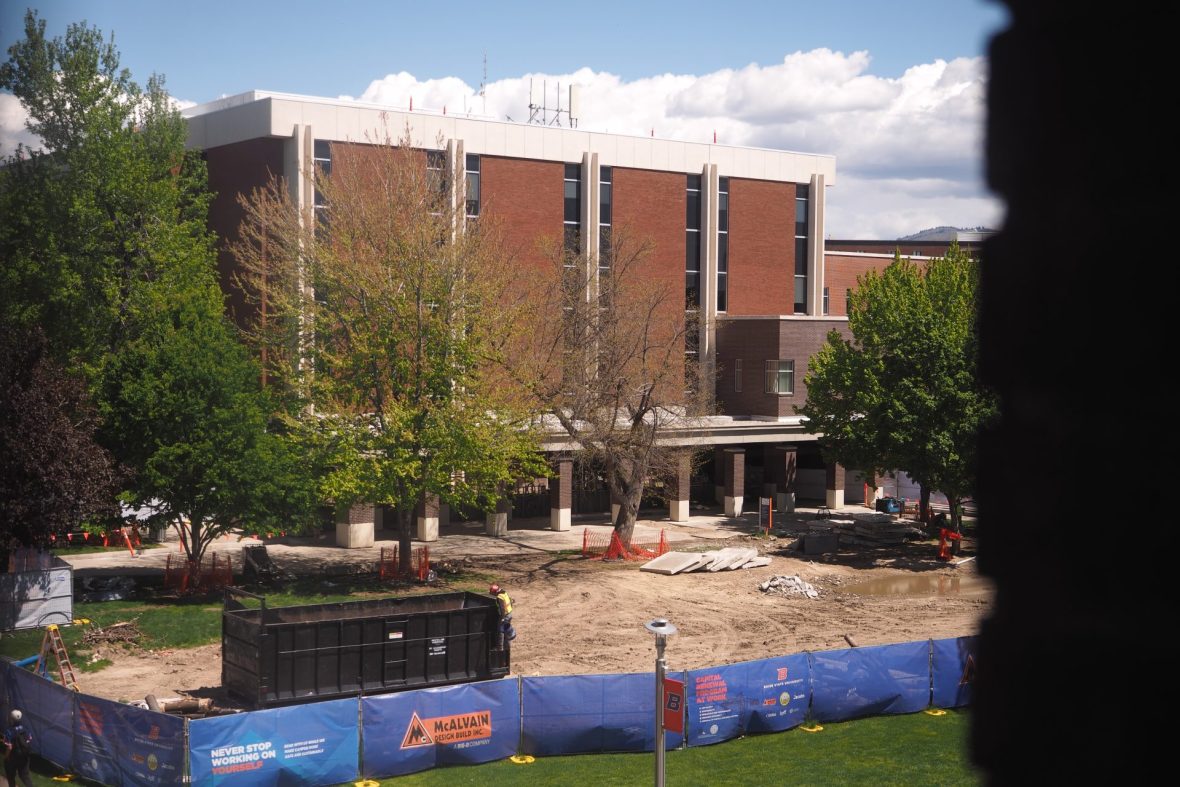
In the 1960s and 1970s, municipal leaders embraced the idea of a Boise River Greenbelt, a transformation from a trash site to a community treasure. Many of Boise State’s buildings went up in the 1970s, during an early campus growth surge.
At least figuratively, the university turned its back on the river that serves as its northern boundary, wedging service areas and heavy equipment between buildings and the water’s edge. That began to change a decade ago, with Boise State treating the riverfront “like a front door,” Alexander said.
The master plan will continue that vein.
A last section of Greenbelt — from Theatre Lane east, past Albertsons Stadium to Broadway — will finally be brought up to city standards, with a 12-foot concrete path. And Alexander is excited about the exterior projects built into the 10-year plan.
“Boise State’s campus is likely the most dynamic pedestrian area in the entire state, and there’s many projects in the plan that just simply focus on the spaces between the buildings,” he said.