
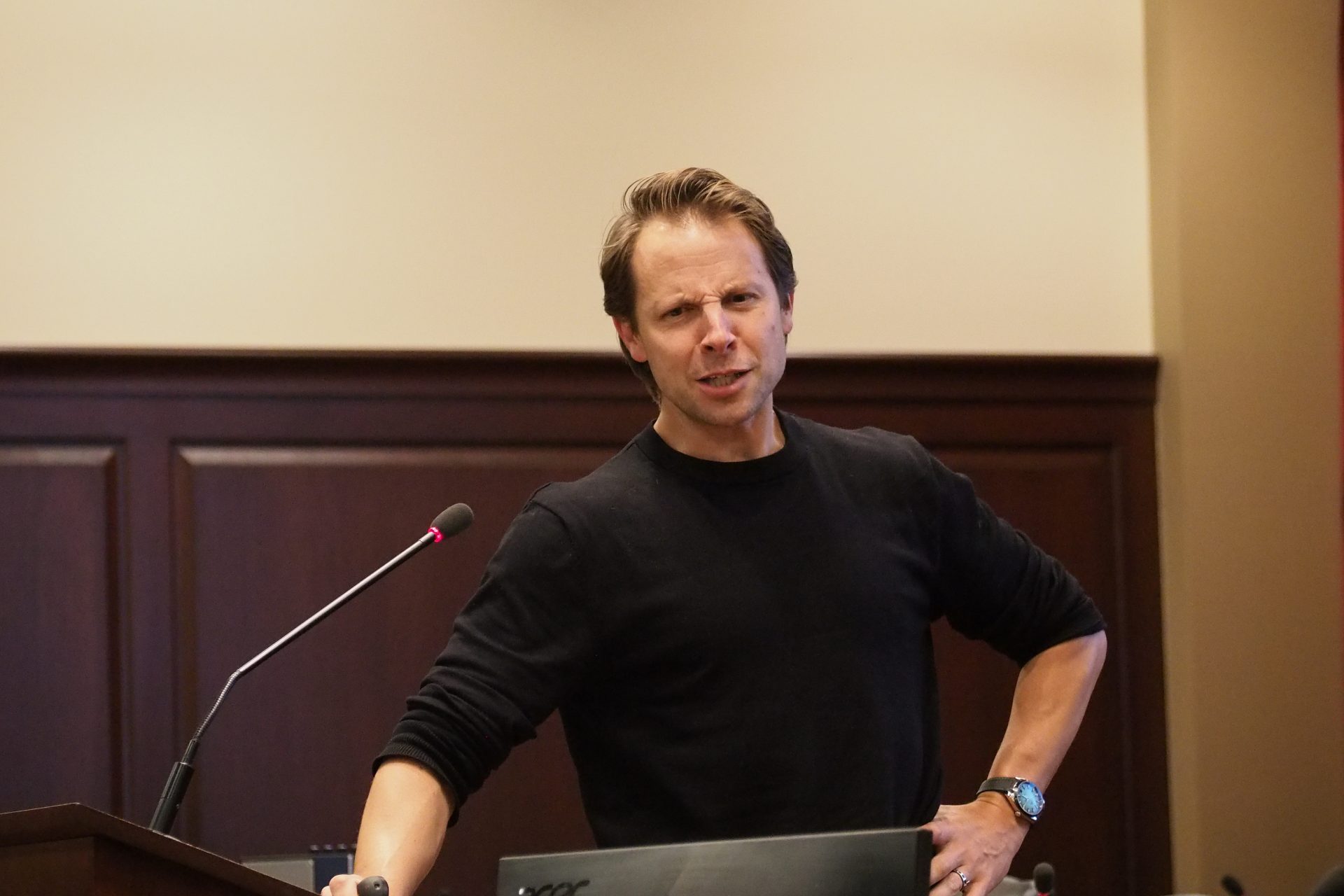
A neuroscientist and education researcher who says classroom technology hinders student learning urged educators and lawmakers to rethink its role in schools Tuesday night at the Idaho Capitol.
Jared Cooney Horvath, also an author, decried classroom technology and argued it has only negatively impacted student learning.
Some 60 public educators and lawmakers attended the event, organized by charter school support nonprofit Bluum and the American Classical Schools of Idaho. Attendees received free copies of Horvath’s book, “The Digital Delusion: How Classroom Technology Harms Our Kids’ Learning — and How to Help Them Thrive Again.”
Horvath was a new face for most educators and lawmakers Tuesday, but his work has already impacted Idaho students. Inspired by the book, leaders in Idaho’s largest school district, West Ada, opted to reduce student screen time by as much as 90% in August.
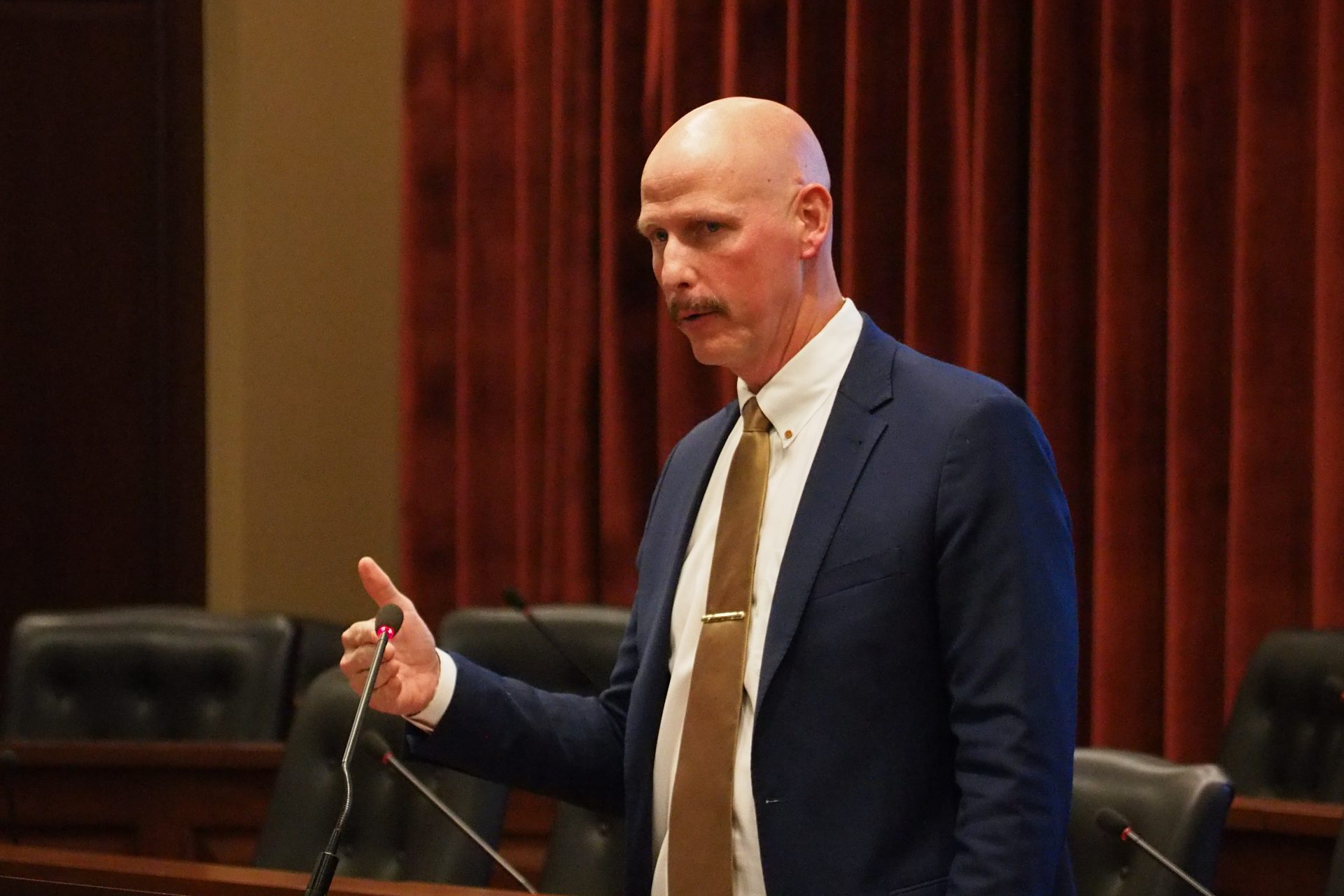
West Ada Superintendent Derek Bub hasn’t heard any negative feedback from students or teachers since West Ada implemented the change, he said during a speech at the end of the event.
Sen. Dave Lent, R-Idaho Falls, who chairs the Senate Education Committee, said he has copies of the book for each committee member. He plans to dedicate “time to discussing it” during the upcoming legislative session.
‘Go back to analog tests’
Horvath believes schools must scale back technology use — not just “use it better.”
“If I had six decades of data showing that cigarette smoking harms your lungs, the proper response is not going to be ‘I think you’re all smoking wrong,'” he said.
Using data from the Organization for Economic Co-operation and Development, he said education hit a worldwide “peak” between 2008 and 2012, but began to decline as schools implemented more student-facing technology.
It’s hard to track what exact methods are more effective in education, Horvath said, because “everything works in education.” Students will always learn because their brains are wired to do so, he said. But he stressed that no data supports the effectiveness of educational technology.
In his book, Horvath writes that the bond between a teacher and a student is something no algorithm can replace.
On Tuesday, he emphasized the value of teachers working directly with students, particularly because of their ability to empathize.
“We can measure empathy. It’s the synchrony between two or more pairs of biology,” he said. “… If I’m a kid empathizing with a teacher, in that moment, I am not learning from her. I am thinking like her. I am in her head.”

After his speech, Horvath fielded questions from Bluum CEO Terry Ryan, who asked what he recommends Idaho’s legislators do about student screen time.
Horvath praised a proposed bill in the New York state legislature called the FOCUS Act, which would make several changes to how New York classrooms use tech, including:
- No devices in K-5 classrooms
- Analog homework for K-8 students
- Requiring parents to opt-in for high school students to have personal school-issued devices
- Tightened regulations on devices, including removing cameras, social media and AI chatbots
- Requiring the state to vet educational technology companies
- Allowing parents to opt-out of educational technology for their children
Horvath also recommended Idaho eschew digital testing.
“You want to make Idaho look good next year?” Horvath asked. “Change nothing. Just go back to analog tests.”
Bub touts successes in reducing tech use
After reading Horvath’s book, Bub said he walked into another administrator’s office and said “Hey, I think we need to get rid of technology in our classrooms.”
Initially, he worried about pushback from teachers, students and parents. To his surprise, he said, they went with it.
A group of 60 teachers, his advisory council, said “let’s get rid of laptops tomorrow,” Bub recounted.
“I’ve got teachers that want to do it. I’ve got students that are saying, ‘Thank you for doing that,’ and now I have parents saying, ‘This is one of the best things that we could have done.'”
Since West Ada’s move in August, the Kuna School District is considering a similar initiative.
Legislators focused on artificial intelligence in schools during the 2026 session. Screen time will be more of a focus this session, at least in committee, Lent told EdNews.
Horvath’s speech confirmed “a lot of things we’ve all highly suspected” about technology in the classroom, Lent said.
Disclosure: Idaho Education News and Bluum are both supported by grants from the J.A. and Kathryn Albertson Family Foundation.