
Moscow’s plant facility levy proposal was “semi-confusing” to longtime resident Scott Fleischman, so he showed up to the district’s open house Monday to learn more.
After putting five kids through Moscow public schools, with his youngest still in high school, Fleischman was “fairly supportive” of any proposal to update the district’s buildings.
“We knew something needed to happen,” Fleischman said.
The $65.6 million plant-facility levy proposal kicks off the first phase of a decade-long plan to convert the district’s middle school into a high school. Phase 2, building a new middle school, would require a second ballot measure.
The approach is groundbreaking in Idaho, where plant-facility levies are typically used for maintenance. However, districts are more frequently considering them for major building projects as bonds become nearly impossible to pass.
For Moscow trustees, the seven-year, $9.37-million-per-year proposal seemed like the most realistic approach, with 60% of voter support needed to pass. Bonds need 66.7% support to pass in Idaho.
But trustee Dulce Kersting-Lark acknowledges the district’s levy approach is more confusing than a bond.
“The simpler solution would be a really big bond,” she said. “That would be very straightforward and easy to understand, and it would not be feasible. So every tradeoff we make adds complications.”
Fleischman wanted details explained to make sure the plan was solid. He left the open house confident that it “needs to happen and is a good plan.”
Others aren’t as convinced.

The proposal
The $65.6 million, seven-year levy would largely fund converting Moscow Middle School into a high school over the course of about seven years. Funds would also go toward replacing the HVAC system at Lena Whitmore Elementary and renovating the former John Russell Elementary School building to house the alternative high school and district offices.
The levy would cost taxpayers $280 per $100,000 of taxable assessed value. The levy needs 60% support to pass.
Read more about the project and how trustees selected the approach.
Upgrades ‘way overdue’
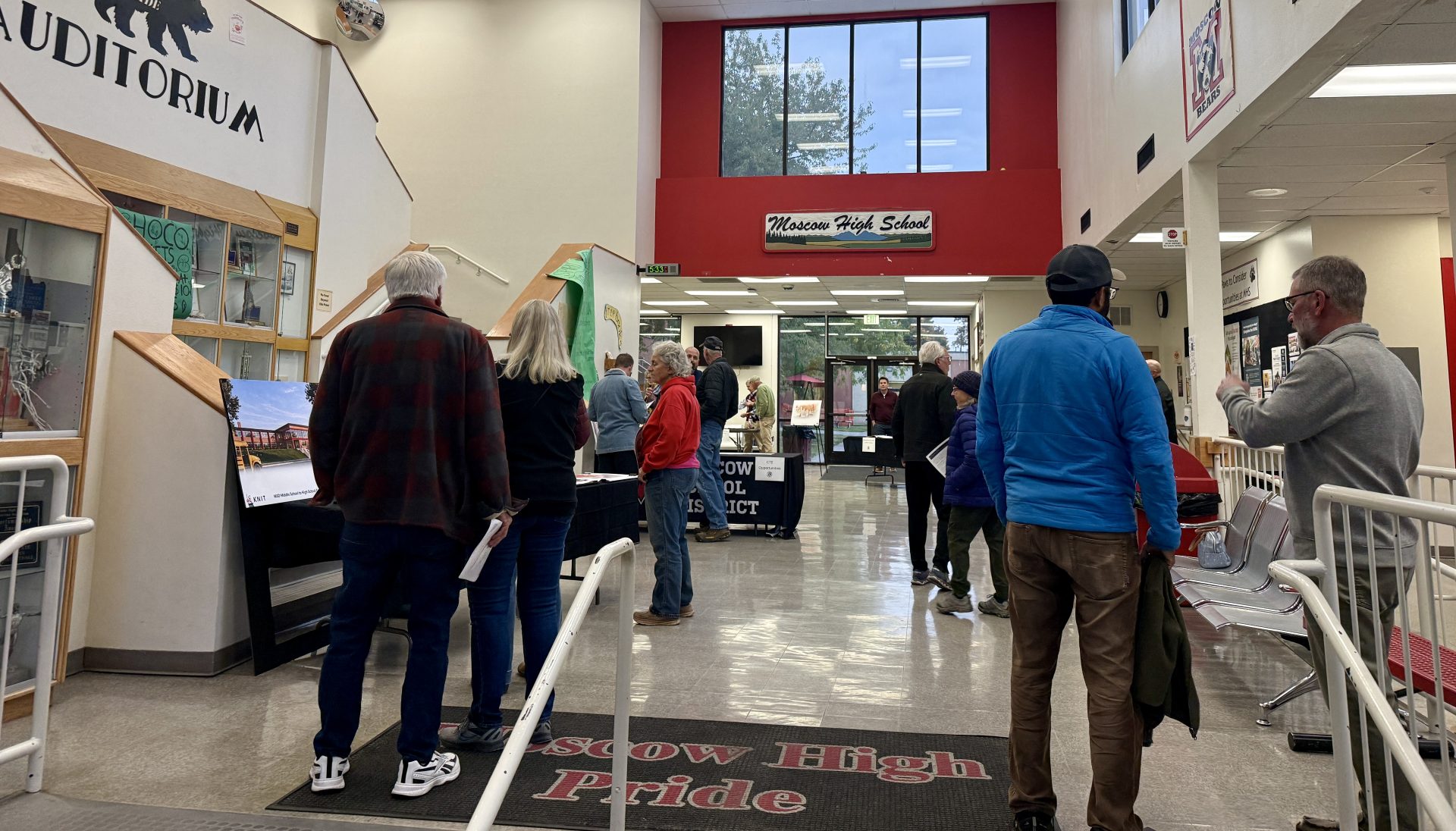
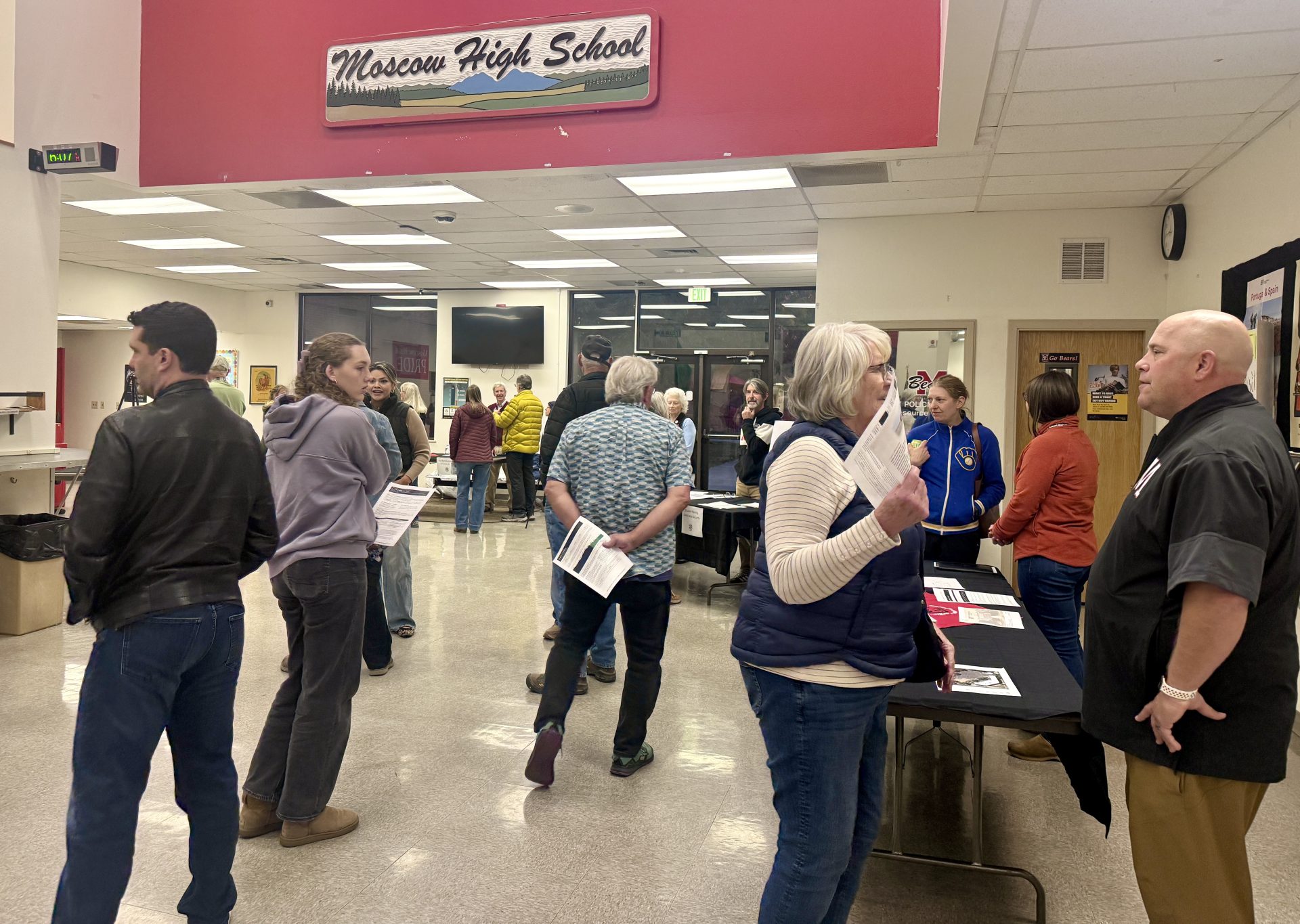
Most attendees EdNews spoke with at Monday’s open house support the measure.
Patron Mitch Parks attended largely to pick up a yard sign from CARE Moscow, the political action committee supporting the levy.
“They’re way overdue to upgrade facilities,” Parks said.
The IT professional has two kids in school. He hopes his 10-year-old, who recently fell in love with music, will get to use the proposed auditorium.
Parks said he learned more about the proposal Monday. He appreciates that the plant-facility levy, while drawing out construction over seven years, also saves the community millions of dollars in interest that would be paid with a bond.
“In the end, that helps,” Parks said. “It’s a lot of money up front for folks but no interest.”
Tammy Lanting and her husband Jerry Leonard, a 1968 Moscow High graduate, toured the school Monday and recognized many features from Leonard’s own high school experiences.
The retirees estimate that the levy will cost them $3,000-plus a year but remain supportive.
“We think our schools need to be improved,” Leonard said.
Recent Moscow High graduate, McKenna Knott, 20, acknowledged that people her age routinely don’t vote, but she hopes they make time this election.
“We need to think about our high school experience — and how can we make it better for those generations coming?” she said.
Expanding career technical education opportunities, especially for students who may not want to pursue a traditional higher education, is important, she added. The middle-to-high school conversion would feature a medical arts building and expanded shop space for existing programs like welding and construction.
Eliminating the back-and-forth for middle schoolers, who use the smaller high school gym currently, and high schoolers, who use the middle school’s athletic facilities, would simplify things for everyone, she added.
The measure faces pushback
John Slagboom, who ran unsuccessfully for city council last year, dedicated a page on his website to opposing the levy.
He argues that a drop in enrollment of about 200 students over the last 10 years makes the investment in the district unwise. Slagboom met last week with Superintendent Shawn Tiegs to discuss the issue but said he remains unconvinced the plan is the right move.
Slagboom told EdNews he was not persuaded that the conversion “is the right answer for a district with fewer kindergartners enrolling every year, despite a growing population in Latah County.”
The current high school isn’t overcrowded, he argues. Instead, Slagboom proposes using state facilities funds to upgrade Lena Whitmore Elementary School’s heating and cooling systems and convert Russell Elementary into an alternative high school. Then continuing to maintain the existing high school.
Proponents of the plan, like Marie Fabricus-Duncan, a member of CARE Moscow, argue the high school conversion isn’t about accommodating a growing student population. It’s about updating facilities to meet the needs of the current student population.
The district’s medical arts and construction programs are almost always full but lack dedicated space to grow, she noted. Other facility upgrades like a performing arts space would benefit the whole community, she argued.
Fabricus-Duncan acknowledged that K-8 enrollment has dropped over the last decade but attributes that in part to an increase in K-8 charter and private school options, along with Idaho’s new Parental Choice Tax Credit that provides families with funds to homeschool and other private options.
“It’s a misconception that the people against public schools as a whole take and run with,” she said of the enrollment declines.
Some students who leave for other learning options end up back at Moscow High School, she added.
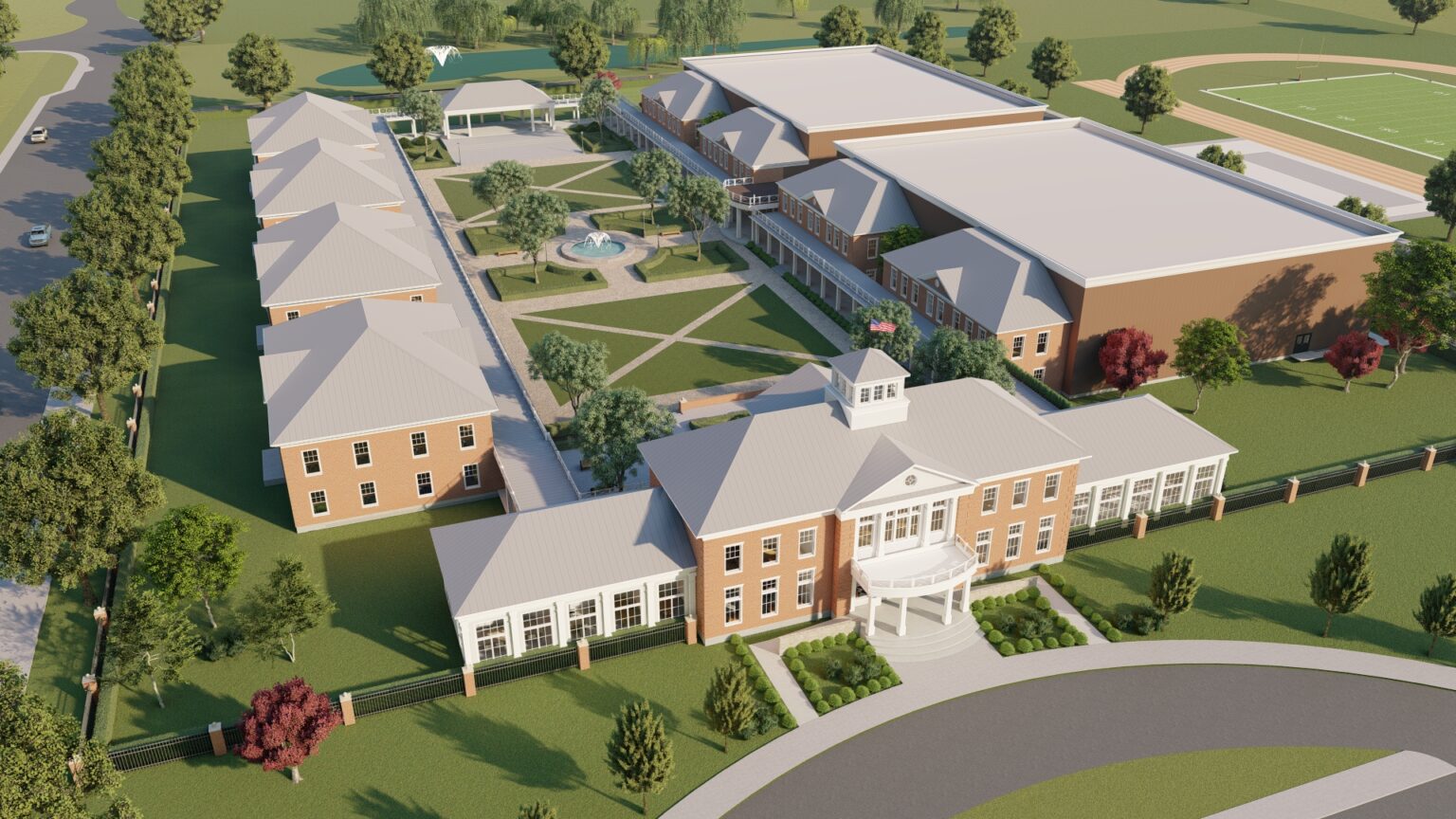
Regardless of whether the levy passes, the Moscow community will see new school facilities take in high school students in the near future. Logos School, a private school run by Christ Church and its controversial pastor Doug Wilson, is in the middle of building a new campus.
Logos Superintendent Matt Whitling did not respond to emails and phone calls from EdNews. It’s unclear how much the new campus will cost, but it’s modeled after Thomas Jefferson’s design for the University of Virginia and set to accommodate the school’s approximately 700 students in grades K-12.
Wilson has historically opposed school levies. However, it doesn’t appear Logos or Wilson have addressed the current plant-facility proposal. Slagboom received support from a PAC tied to Christ Church during his city council run.
“We are mindful that there is a group of people in Moscow who do not believe they need the public school system, or that they use it,” Kersting-Lark said. “I hear that often.”
There are many public goods that Kersting-Lark said she may not personally use but is happy to pay for as a member of society.
“I also think that no matter where your kid goes to school, you benefit from having a general population that is well-educated and prepared to be productive members of society,” she said.
Moscow Schools need updates, Kersting-Lark said, and while the plant-facility proposal has drawbacks and sacrifices, especially for middle schoolers who will attend school through construction, it’s the best plan the trustees could devise.
“The problems at hand cost money,” Kersting-Lark said. “There are no solutions that don’t cost money.”

