
Hundreds of students cheered at Coeur d’Alene High School Thursday as astronaut Scott Kelly took the stage.
Kelly, who spent a year in space, opened with a personal revelation.
“What is a little bit unique to my story compared to other astronauts is that when I was your age, I was not a good student,” said Kelly, who was invited to Coeur d’Alene to deliver the Idaho Humanities Council’s Distinguished Humanities Lecture.
At 18, he read The Right Stuff by Tom Wolfe, a book that chronicles America’s first manned space program. Kelly was drawn to becoming a fighter pilot.
“That spark really inspired me,” Kelly said. “I felt like if I could do better in school, I could maybe fly airplanes in the Navy.”
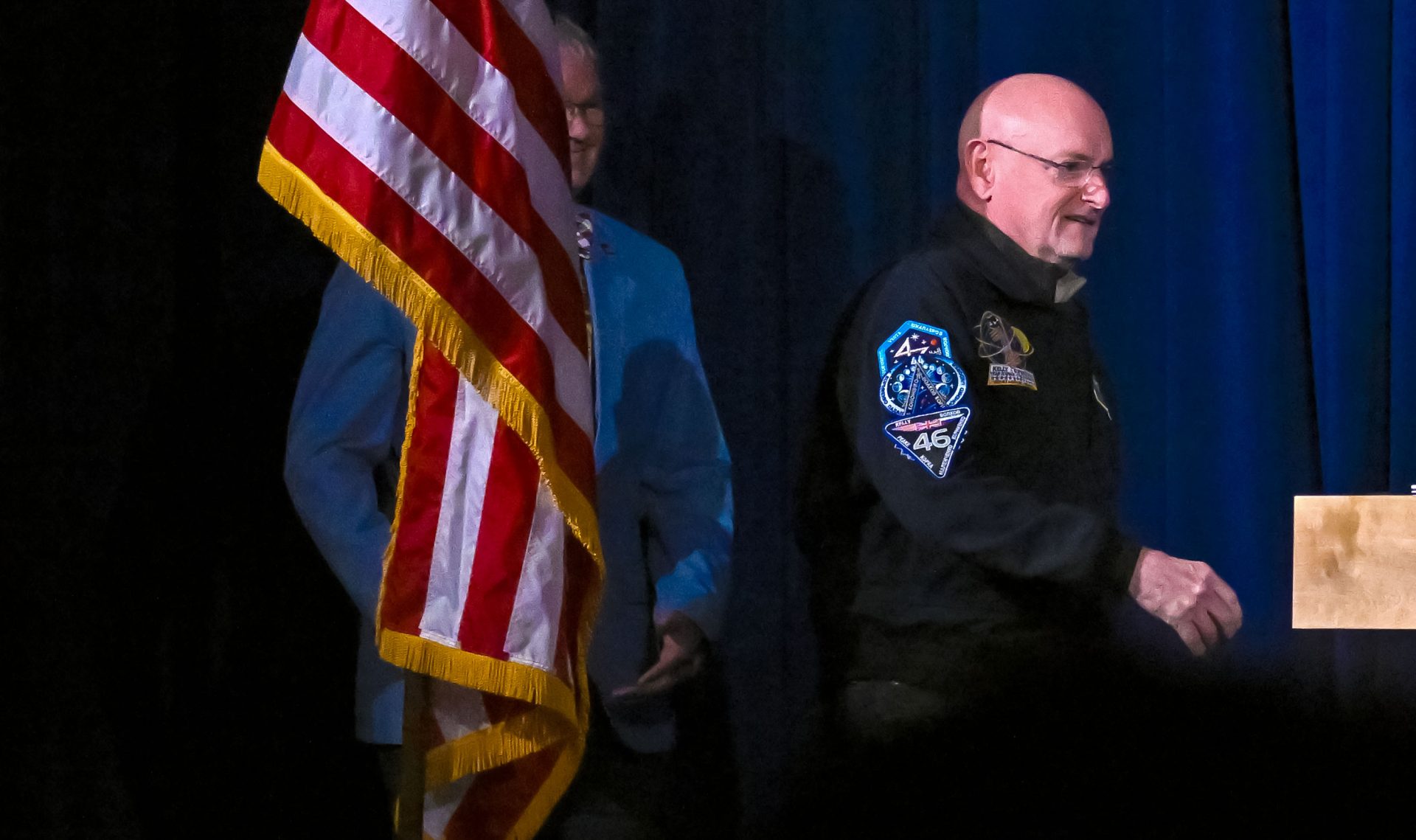
Having a dream to chase was the start of Kelly’s groundbreaking career. He flew the space shuttle on missions throughout the early 2000s before spending a year in space in 2015 with Russian cosmonaut Mikhail Kornienko.
Once he figured out “how to be a better student, the path to be flying in space was a bunch of much more manageable steps,” Kelly told the crowd. “It doesn’t matter where you start off with hard work and never ever giving up.”
Kelly asked students what they thought was the best part of going to space. One student shouted that being weightless was the best part. Another said walking in space.
A space walk is “type two” fun, Kelly said. “It’s not fun when you’re doing it. It’s fun when you’re done.”
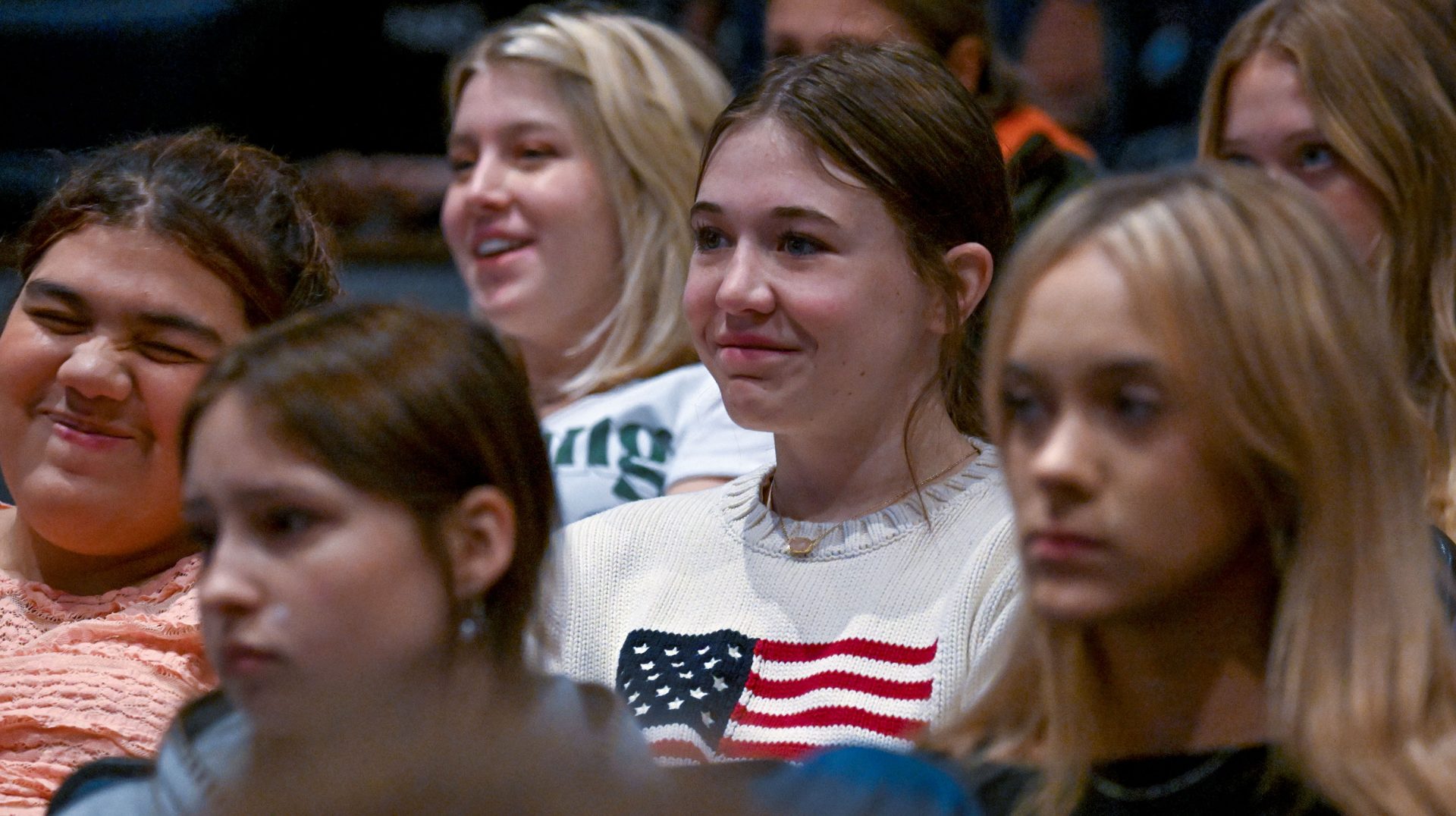
Kelly answered about a dozen questions from students.
Traveling in space had many impacts on Kelly physically. His heart lost 25% of its mass during his year aboard the International Space Station, but he regained it after returning to Earth.
Returning to Earth was a big adjustment after so much time in space, he said.
“It’s really overwhelming,” Kelly said. “Your senses are overwhelmed with what you’re seeing, the number of people, smells, sounds, those types of things.”
Students asked how Kelly dealt with the fear and danger of being in space and the struggle of being away from his loved ones.
In 2011, Kelly was in space when his sister-in-law, U.S. Rep. Gabby Giffords, was shot in an assassination attempt. Kelly said he had to compartmentalize because there was nothing he could do.
“The job of an astronaut while you’re on the space station is like the only job you can’t quit,” Kelly said. “Maybe you could quit, but you’re not coming home.”
Instead, Kelly focused on things he could control, a practice he continues on Earth.
When it comes to the future of space travel, Kelly said he hopes going back to the moon leads to going to Mars. Students asked about Kelly’s view on life on other planets.
“If you consider the amount of planets that must be in the known universe, because there are more stars than grains of sand on the Earth,” Kelly said, “it really would be naive to think that there is not life elsewhere in the universe, intelligent life, possibly, probably, maybe.”
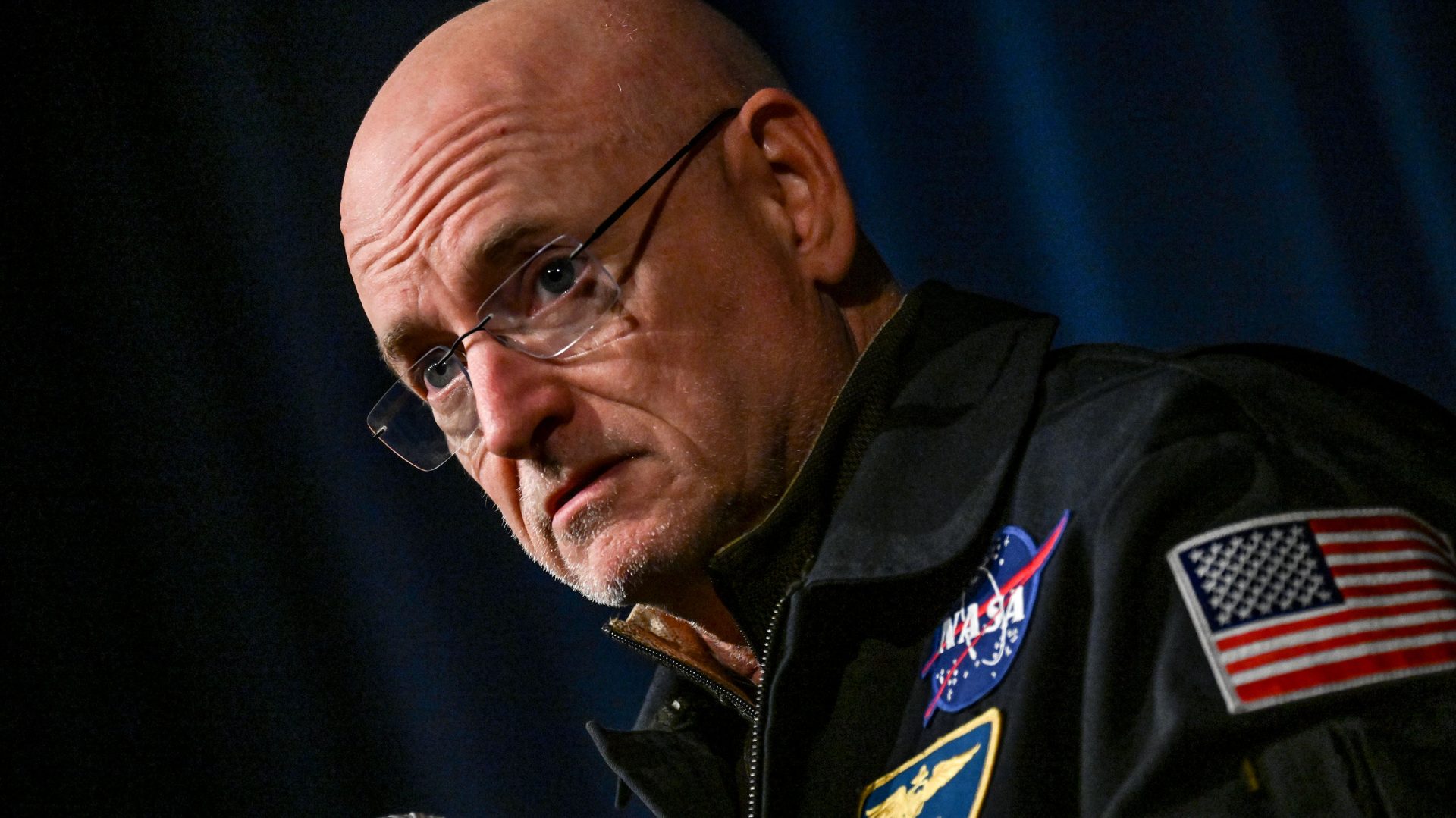
For junior Max Demarre, Kelly’s willingness to talk about aliens was “pretty cool.”
“That kind of grabbed my attention a lot because I think that’s a very like debated topic,” Demarre said.
He also appreciated Kelly’s willingness to talk about his failures.
“I’ve always been told … to work hard, but I kind of could relate with him and trying hard in school, and sometimes you don’t get the results that you want,” Demarre said.
The things that determine success, Kelly said, are usually challenging. To accomplish their goals, Kelly encouraged students to take risks.

