
The U.S. Supreme Court has upheld laws banning transgender athletes from playing in women’s and girls’ sports — including a 2020 Idaho law.
Tuesday’s long-awaited ruling means Idaho’s “Fairness in Women’s Sports Act” is now in effect, bringing to an end a six-year legal battle. The ruling also marks a landmark in the national debate over transgender athletics. Idaho was the first state to pass a transgender athletics ban; 26 other states have since followed.
“May schools determine eligibility for women’s and girls’ sports based on biological sex?” wrote Justice Brett Kavanaugh in the court’s majority opinion. “The answer is yes.”
The Supreme Court’s conservative bloc aligned with Kavanaugh; Chief Justice John G. Roberts and Justices Samuel Alito, Amy Coney Barrett, Neil Gorsuch and Clarence Thomas joined in the majority opinion. Justice Sonia Sotomayor wrote an opinion agreeing in part with the majority opinion, but also dissenting in part; Justices Ketanji Brown Jackson and Elena Kagan co-signed.
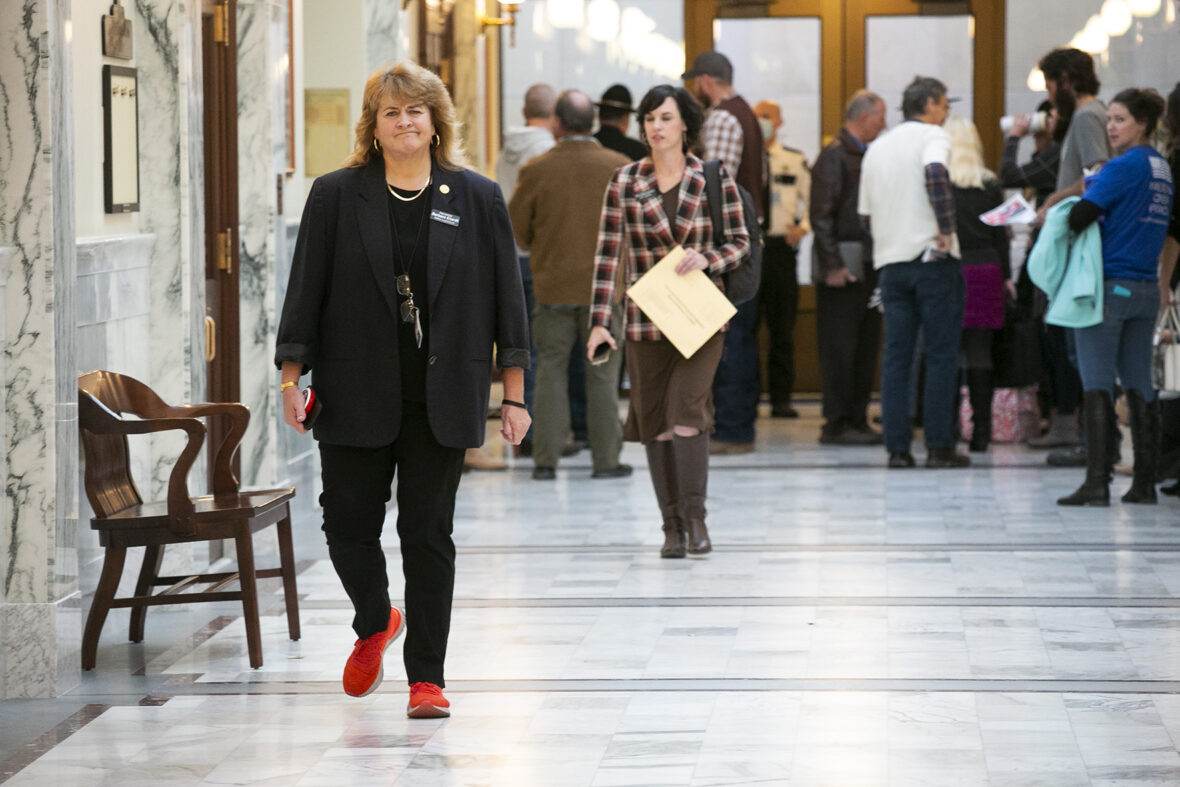
The sponsor of Idaho’s 2020 law, a former collegiate women’s basketball coach, declared victory Tuesday morning.
“Over six years ago, I could see that this issue would quickly become a defining issue for our country and our generation. I determined at that time that I had the experience and the will to fight it,” said Rep. Barbara Ehardt, R-Idaho Falls. “Women were told we didn’t matter. I said we DO matter. Today, we have finally, definitively won this war for women in sports on all fronts.”
The ruling came on the final day of the Supreme Court’s 2025-26 term.
The legal arguments, in brief
The 77-page opinions address two state laws: Idaho’s transgender athletics ban and a similar law in West Virginia. They centered on a matrix of related legal arguments.
A transgender athlete, identified in court briefs by the initials B.P.J., sued West Virginia over its 2021 blanket ban on transgender athletes. B.P.J. argued that the law violated Title IX, a sweeping federal law that prohibits sex-based discrimination in education, and violated the Equal Protection Clause in the Constitution.
Lindsay Hecox, a transgender student and athlete, sued Idaho over Equal Protection Clause concerns.
Kavanaugh’s majority opinion offered a full-throated defense of Title IX, a centerpiece in the West Virginia case. Calling Title IX “a belated but historic response to persistent discrimination against women,” the majority rejected the argument that the protections should extend to transgender athletes.
“We appreciate the desire of every student, including B.P.J., who wants to play school sports,” Kavanaugh wrote. “But the Title IX regulations guarantee ‘equal athletic opportunity.’ The regulations cannot and do not guarantee every student a spot on a team’s roster.”
The majority also rejected the Equal Protection Clause argument, saying transgender athletes generally have physical advantages over cisgender female athletes.
“In the sports context … everyone agrees that the states may maintain separate women’s and men’s teams — in other words, that the states may make distinctions based on sex — because of the inherent physical differences between women and men.”
Sotomayor said she agreed with the majority, to an extent, on Title IX. But in her dissent, she said the majority was trying to settle an Equal Protection Clause complaint “without knowing all the facts” — by assuming that transgender athletes have a competitive advantage and deferring to states and experts to sort out the science.
“Sports, of course, are often zero sum, but the law need not and should not be,” she wrote.
Sotomayor also chided the majority for forcing Hecox to remain a party in the dispute. In September, Hecox moved to drop her case, saying she no longer was seeking to participate in sports at Boise State University. In rejecting her appeal, Sotomayor wrote, the court “accomplishes nothing … but needlessly and gratuitously prolonging the ordeal of ‘harassment’ and ‘negative public scrutiny’ that Hecox experienced litigating this case and has sought to escape by dropping it.”
Reactions to the ruling
Gov. Brad Little, named as a defendant in the case before the Supreme Court, was among the first quick to celebrate Tuesday’s ruling.
“We are leading the nation in supporting generations of women and men who fought hard to uphold Title IX protections and keep girls and women safe,” he said in a statement Tuesday morning. “This is a historic moment for common sense!”
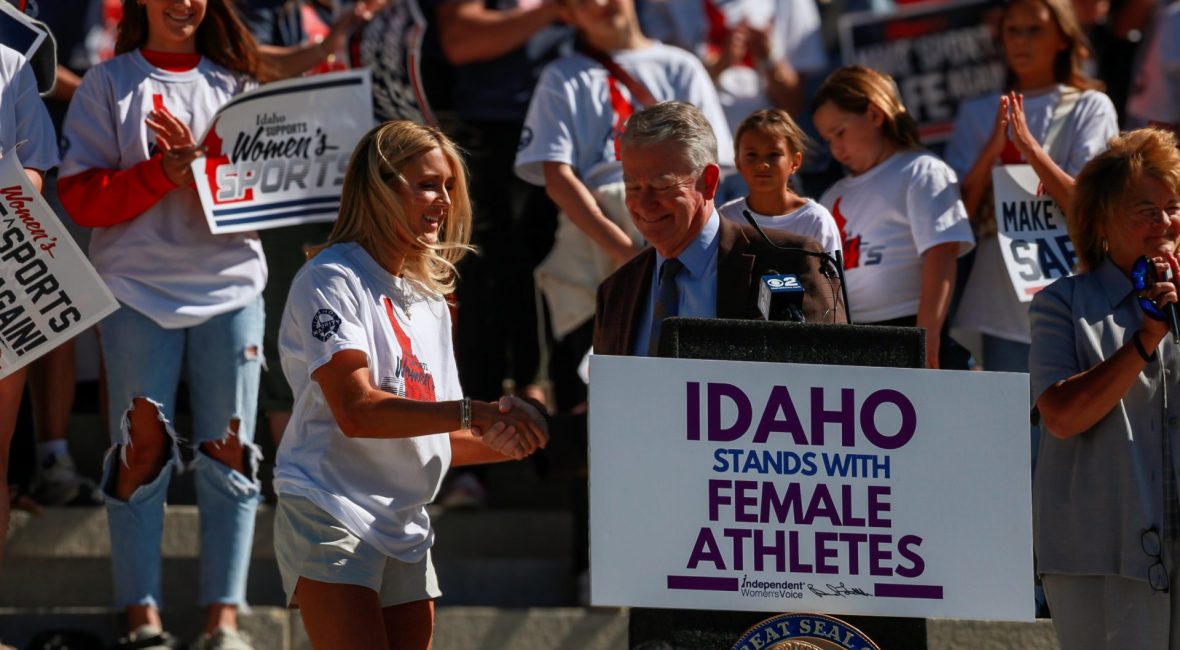
Five months after his legal team appeared before the U.S. Supreme Court, Attorney General Raúl Labrador also declared victory.
“The Supreme Court has now confirmed that states can preserve fair competition and protect the opportunities that generations of women fought to secure,” he said. “Every parent can rest assured that our law protects their daughters competing in Idaho.”
The San Francisco-based National Center for LGBTQ Rights criticized both the Supreme Court and the restrictive state laws affirmed by the justices.
“This is a disappointing decision, but also a narrow one that leaves the door open for the many states and schools that have adopted reasonable policies that protect both fairness and inclusion with respect to transgender students,” said Shannon Minter, the center’s legal director. “Like other health or medical considerations in sports, reasonable policies for transgender student athletes rely on individual assessments rather than blanket bans.”
How we got here
Here’s the chronology of Idaho’s transgender athletics law, and the legal battle that surrounded it.
March 30, 2020. Little signs House Bill 500, the nation’s first law banning transgender athletes from participating in girls’ and women’s sports. “As a former Division I athlete and coach for 15 years, I am grateful to know that Idaho will continue to protect opportunities for girls and women in sports,” said Ehardt. Previously, five former state attorneys general, Republican and Democrat, had urged Little to veto the bill, saying it was fraught with constitutional flaws.
April 15, 2020. The American Civil Liberties Union of Idaho and a feminist organization, Legal Voice, sue to block the law.
Aug. 17, 2020. U.S. District Judge David Nye issues a preliminary injunction, blocking the law from going into effect. Nye says opponents “are likely to succeed in establishing the act is unconstitutional.”
Aug. 18, 2023. Three years and one day later, a U.S. Court of Appeals for the Ninth Circuit panel upholds Nye’s injunction.
July 11, 2024. Labrador petitions the U.S. Supreme Court to take up Idaho’s case.
“Allowing biological men to compete in women’s sports creates a dangerous, unfair environment for women to showcase their incredible talent and access critical scholarships,” he said.
“This ban is designed to alienate and stigmatize transgender people, and we’ll gladly make the case to the court that they should leave the Ninth Circuit’s thorough opinion in place,” ACLU of Idaho spokeswoman Rebecca De Leon said.
July 3, 2025. The U.S. Supreme Court agrees to hear arguments on Idaho’s law — and a similar law in West Virginia, one of 26 other states to pass a transgender athletics ban.
Jan. 13, 2026. Hearing the case, the Supreme Court’s conservative wing signals support for the transgender athletics bans, States Newsroom reports. “For the individual girl who does not make the team, or doesn’t get on the stand for the medal, or doesn’t make all league, there’s a harm there, and I think we can’t sweep that aside,” Kavanaugh said.
June 30, 2026. The Supreme Court upholds the Idaho and West Virginia laws.