Some legislative districts have elder statesmen who have been in office for years. But that’s no longer the case in District 25, encompassing the city of Twin Falls.
It’s the only district this November with no incumbents on the ballot. Republican primary voters in May ousted two freshman lawmakers, and seven-term Republican Rep. Lance Clow resigned in late 2025.
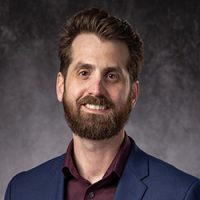
Republican candidate Casey Swensen, who defeated Sen. Josh Kohl in the primary, said the three newcomers from District 25 will face a steep learning curve in writing legislation, understanding bills and working with other lawmakers in Boise.
“There’s a lot of seniority-based stuff up there, so we’re going to have to work as a coalition to be effective,” Swensen said.
It’s a reliably Republican district. Democrat Lane Startin’s 2024 campaign against Clow was the first time a Democrat was on the ballot in Twin Falls since 2018. He took 28% of the vote. Startin now faces Swensen in the general election.
“It’s a tall order, but you just got to keep swinging at it,” Startin said of his chances on Nov. 3.
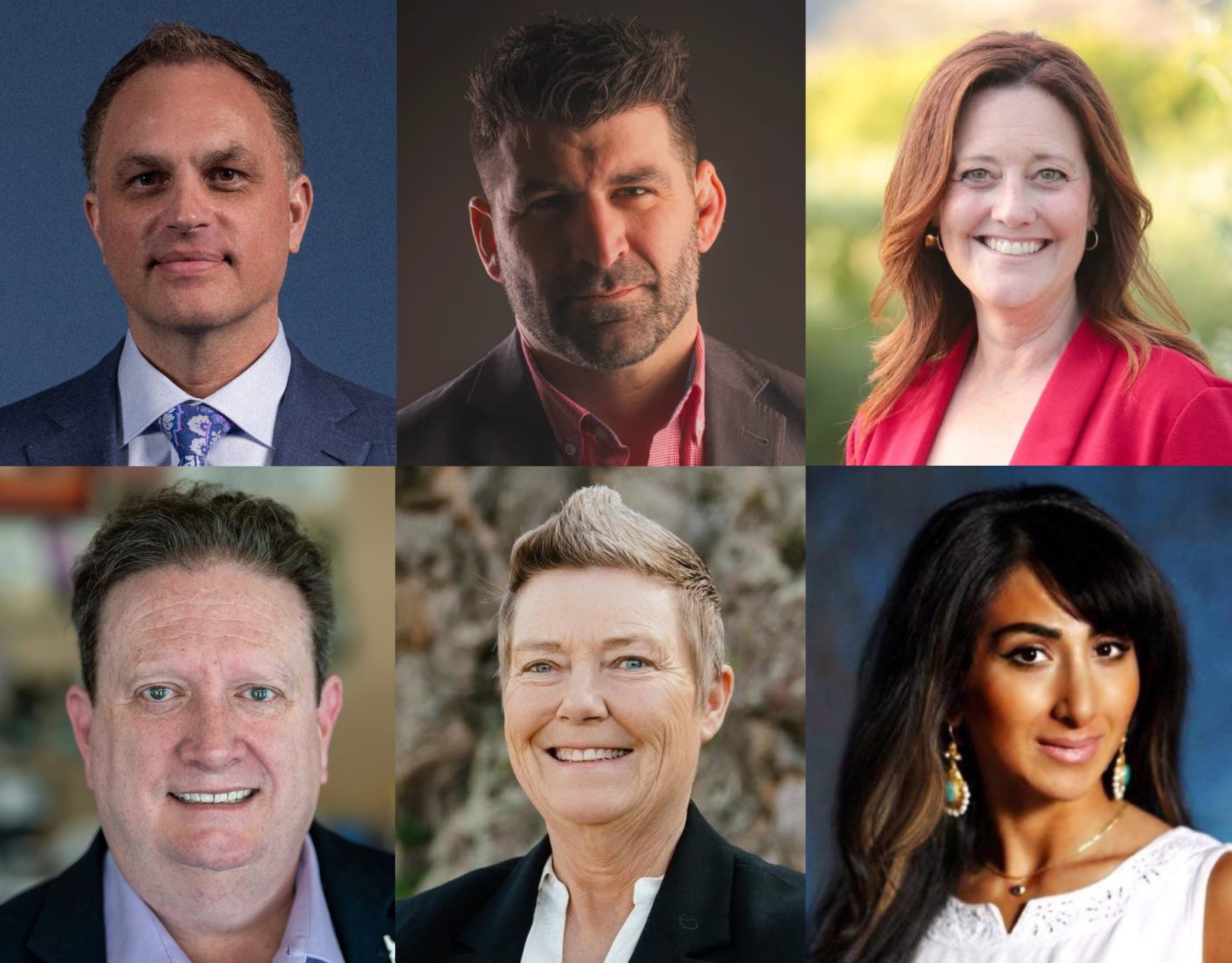
In House Seat A, Clow’s resignation in November led to the appointment of Twin Falls County Commissioner Don Hall, who then had to step back for health reasons. Alternate Grayson Stone, a Twin Falls City Council member, began filling in for Hall in February and is now running for the seat. He faces Democrat Marla Palmer.
Another Twin Falls City Council member is running in House Seat B: Republican Cherie Vollmer. She faces independent candidate Liyah Babayan.
Vollmer describes herself as a “Magic Valley Republican” and said the new slate of candidates voters elected in 2024 did not represent the community.
“I decided it was time to run and get up there and get our Magic Valley voice back,” Vollmer said.
District 25 voters elected Kohl and Rep. David Leavitt two years ago. Next door in District 24 — in rural Twin Falls, Gooding and Camas counties — voters elected Rep. Clint Hostetler and re-elected Sen. Glenneda Zuiderveld, both Republicans from Twin Falls.
The four made up half of the self-proclaimed Gang of Eight, a group of hardline conservatives who pledged to vote against new federal spending, new state employees and any increases to existing budgets.
The Gang sits at the top of the conservative Idaho Freedom Foundation’s Freedom Index and all signed the Citizens Alliance of Idaho pledge. Of the four Gang members from the Magic Valley, only Hostetler survived the primary.
Babayan said the May primary results showed Magic Valley voters were upset and frustrated with their local representation.
“I feel like the voters have corrected course,” Babayan said. “They’re correcting the course in real time — including this election coming up.”
Senate: Republican Casey Swensen vs. Democrat Lane Startin

Swensen said he didn’t like what he was seeing from the new Magic Valley legislators last year.
He said they were attacking public education and voting against local priorities, such as agriculture and water infrastructure. So, he ran. After winning the May primary, he was relieved that voters understood the stakes and wanted change.
“We don’t have candidates anymore that are pledging themselves to out-of-district and even out-of-state groups,” Swensen said. “Local representation is back.”
If elected, he said he would prioritize citizens in the Magic Valley, make sure housing is strong and affordable, that industries are growing and that public education is protected.
“My three kids are in public education. I graduated from public education here, so it was important to me to bulwark those things that are part of the community,” he said.
Swensen has a background in law. He graduated from Twin Falls High School and Brigham Young University, then earned a law degree from Thomas Jefferson School of Law. He started his career as a public defender, then a prosecutor and is now part owner of a pest control company.
On public education, Swensen said it’s important to update the funding formula and ensure that teachers have the right support to manage challenging classroom behaviors.
On the $50 million Parental Choice Tax Credit, he said school choice is “extremely important” but should not come at the expense of public education.
“I don’t want a bunch of Twin Falls tax dollars going up to Boise private schools,” Swensen said. “I don’t want to see that we’re sacrificing our public education for that.”
Startin said he is very pleased he has some help on the ballot this year from Palmer and Babayan.
He wants to make sure voters can hear different perspectives, and that it’s not a coronation in November of unopposed Republicans.
Startin is a medical equipment technician who travels all over the country for work. He spoke with EdNews by phone Monday while at the airport heading to Anaconda, Montana. If elected, he said he would take a leave of absence during the session.
On education, he said he would like to reform school funding so districts don’t have to rely on supplemental levies.
“We need to return to a better education funding overall from the Legislature,” he said. “Like it should be.”
On private school tax credits, he said there are some separation of church and state questions that have been ignored. He doesn’t have a problem with private schools, but doesn’t think they should be taxpayer-subsidized.
He said culture war bills addressing the LGBTQ community are “garbage” and should be repealed.
Reflecting on the past two years, Startin said he thinks establishment Republicans were caught napping in 2024 but have now woken up.
“I think 2024 was an aberration, and this is a correction to what it should be,” he said.
House Seat A: Republican Grayson Stone and Democrat Marla Palmer

Stone is a commercial real estate agent who was elected to the Twin Falls City Council in 2024.
He did not respond to multiple requests for an interview. EdNews attempted to reach him through the contact form on his campaign website, a phone call, text message and his work email address. His campaign website does not list a phone number or campaign email.
“I am running to deliver results for Twin Falls, lower taxes, smarter growth, safer communities, and a stronger Idaho future,” he wrote on his website.
On education, he wants to expand career and training through the College of Southern Idaho.
“A strong Idaho future depends on keeping our kids engaged, skilled, and proud to stay right here in the Magic Valley,” his website states. “Grayson believes education should prepare young people not just for college — but for real careers that strengthen our local economy.”
He supports local control and will advocate for policies that help recruit and retain high-quality teachers, reduce administrative waste and keep classrooms focused on learning, not political agendas, according to his website.
“His vision is for every young person in Twin Falls to see Idaho not as a place you leave for opportunity — but as a place you build your opportunity,” his website states.
Palmer got involved in politics this year as the Legislature considered Gov. Little’s budget recommendation for $22 million in Medicaid cuts. She runs a supported living company for people with intellectual disabilities and understood what those cuts would mean.
During the session, Palmer said she tried to contact her local lawmakers but didn’t have much luck.
“Most of the people in our Legislature just didn’t answer and didn’t return calls, and that frustrated me not because of specifically what my issue was but because of my lack of access,” Palmer said.
As she advocated for Medicaid, she said she received a cold call from Anthony Porto, the political director for the Idaho Democratic Party, who asked her to run.
Palmer filed to run on Feb. 25. A month later, Little signed House Bill 863 into law, reducing the state Medicaid budget by $21.8 million.
She said the across-the-board budget cuts this year were made with an ax rather than a scalpel. As a 30-year Idaho resident, she said that’s very concerning for her.
“If nobody stands up and says things need to be different, things will stay the same,” Palmer said.
On education, Palmer said the tax system needs to change so that educators are paid a living wage. She said the state has lost billions in tax revenue due to tax cuts and incentives. The narrative that devalues educators, she said, needs to change.
“If I’m in the Statehouse, I’m not going to be talking about how teachers are a drain on the system,” Palmer said. “I’m going to be talking about how an educated society is a more wealthy, more profitable, and more knowledgeable society.”
House Seat B: Republican Cherie Vollmer and Independent Liyah Babayan

Vollmer, a self-described “Magic Valley Republican,” said she is a conservative, Reagan-style Republican who looks out for the broader community and doesn’t take an extremely narrow view.
She attributed the 2024 election outcomes to misinformation and fear. She said some of the candidates talked about how things were in other states and how they want to make sure it won’t happen to Idaho.
“Fear gets to people, and the Magic Valley is not used to being misguided,” Vollmer said. “They weren’t used to all this fear, and so I think it worked in their favor in 2024.”
But after seeing how the new lawmakers voted, she said locals realized they “weren’t really Magic Valley community people.” This year’s primary results showed that voters wanted a return to how things were before — to get back to “what makes the Magic Valley magical.”
“You never take anything for granted,” she said. “And I think we learned that in 2024.”
Vollmer is a real estate agent and appraiser who was elected to the Twin Falls City Council in 2024. But she said the city council didn’t bring her to the Legislature. Rather, it was the slew of social bills and new regulations for libraries and public schools.
“We are the least regulated state and we’re on track to not be, and that’s just not right,” Vollmer said. “That’s not what legislators should do.”
She said the Legislature has more important things to be concerned with, such as modernizing the school funding formula and supporting special education.
“Times have changed, and we need to figure out the funding and the staffing to still provide that proper education,” Vollmer said.
Looking to Election Day, Vollmer said she would love to see the Magic Valley continue to break records on voter turnout: 37.2% of registered voters in Twin Falls County participated in this year’s primary, compared with 30.1% statewide.
“It’s very, very important for voters to go out there and let their voice be heard,” she said.
Babayan wants to support students who have fallen through the gaps, are hungry or have experienced trauma.
That desire comes from her experience. She came to America at age 10 as an Armenian refugee escaping genocide. English is her third language. She said she was illiterate when she graduated from Twin Falls High School, but that is not a reflection of the school district or her teachers.
“It’s a reflection on how challenging and impossible learning can be when there is compounded trauma at home,” Babayan said. “For me, it was unique that it was immigrating to a country, poverty, trauma from surviving war.”
Babayan is a business owner and former Twin Falls School District trustee. During her time on the school board, she said she learned how important school funding is and that teachers should be able to make classroom decisions — not bureaucrats.
Babayan said she was a Republican for 20 years but realized running as an independent is the only space outside of the “swamp.”
“The special interest swamp, the status quo swamp, the business as usual swamp,” she said.
She said decades of no accountability for the Republican supermajority in Idaho have disenfranchised ordinary families, and the GOP has not lived up to its principles of limited government and conservative fiscal decisions.
“As an independent candidate, really, truly, purely, you are running grassroots,” she said.
Voters are looking for stability and opportunity, she added, and she sees a path to victory in November.
“I do think it is possible for an independent to win,” Babayan said.