Cynthia Pemberton was working the Statehouse — meeting with lawmakers, trying to line up votes — when she passed House Speaker Mike Moyle in a hallway.
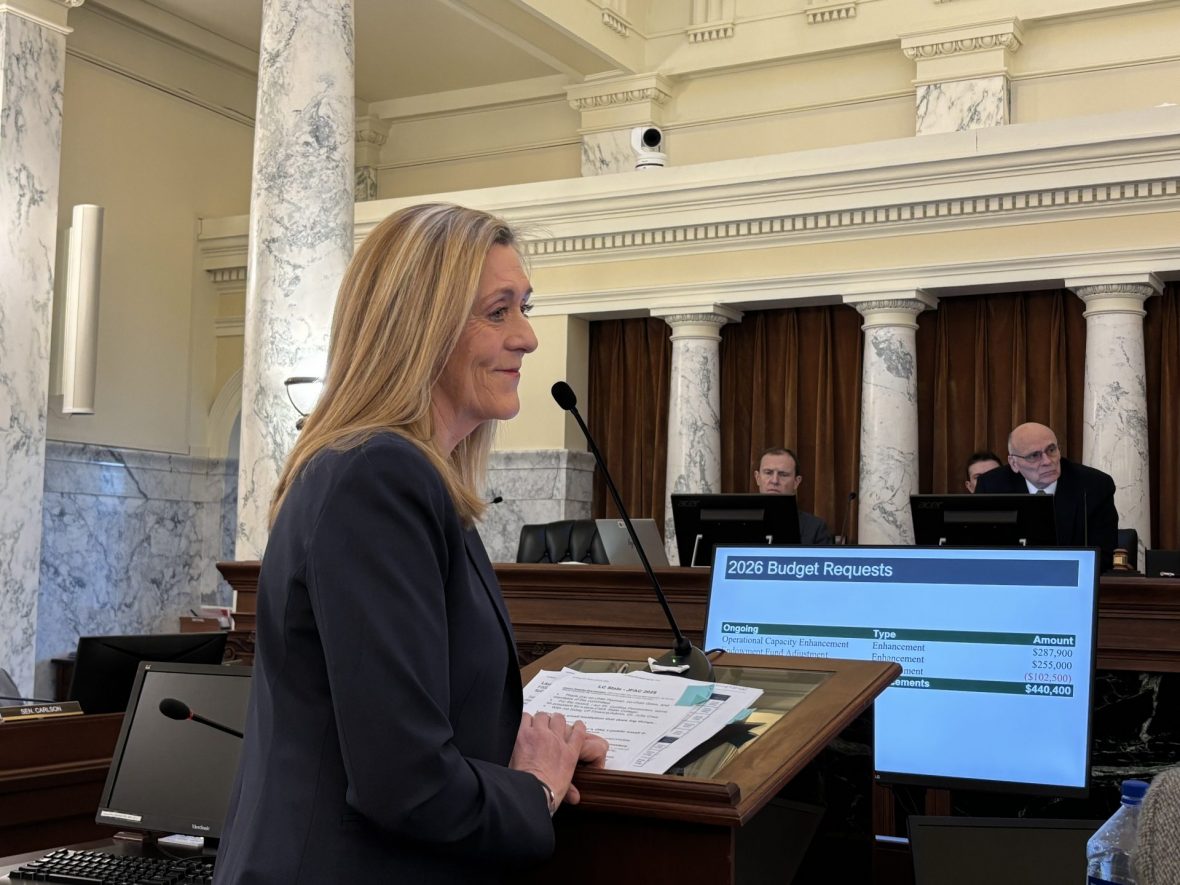
Heading to a meeting, flanked by House GOP Caucus Chair Jaron Crane, Moyle wasted no time getting to the point — Pemberton’s bill to rebrand Lewis-Clark State College as the state’s fourth full-fledged university. “He commented in passing that he hadn’t had time to ‘kill it yet,’” Pemberton, LC State’s president, said in subsequent emails to two other lawmakers.
Pemberton stands by her account. When EdNews asked Moyle about the exchange this week, he chuckled. “She was persistent in the hallway all the time. I was just giving her a hard time.”
Either way, the bill died, without a House hearing. Moyle, R-Star, insists he didn’t kill it, but says he doesn’t support the name change. Pemberton pledges to try again in 2027. “I better try one more time,” Pemberton said in an EdNews interview last week. “The campus community wants me to try again.”
While renaming sounds cosmetic and simple, branding is essential. Supporters say university status better reflects a 133-year-old institution offering everything from associate’s degrees to master’s programs. A name is how an institution of higher learning markets itself to would-be students, prospective faculty members and possible business partners.
A one-word change can change a lot.
And the LC State renaming proposal was the most significant higher ed policy bill from the 2026 session.
Emails between Pemberton and legislators — obtained by Idaho Education News through a public records request — offer an unusual and unfiltered behind-the-scenes look at how this bill died. The name change sailed through the Senate, but ran into high-placed resistance in the House, from Moyle and from his newly appointed House Education Committee chairman. LC State officials lobbied furiously to save their bill — working their skeptics, directly and indirectly — but to no avail.
The case for the change
With a freshly made video and handouts, and a webpage dedicated to the name change initiative, LC State is giving an updated look to the rebranding proposal.
Fundamentally, the bullet points haven’t changed.
A rebrand aligns LC State with Idaho’s four-year universities — and distinguishes LC State from the public two-year schools that have “college” in their name. University status brings LC State in line with other teaching-oriented institutions in the West. It would help LC State compete with a new wave of competition: out-of-state online schools with “university” in their title.
Pemberton sees it as simple marketing. A car dealership wouldn’t want its sign to list only one make of car when it has multiple options on the lot. The same logic applies to the bloodsport of recruiting and retaining students. “It’s not a good business strategy to have a name in Idaho that implies you’re a two-year school.”
LC State quickly put together a posse. The State Board of Education unanimously backed the proposal. Presidents from the state’s other colleges and universities endorsed the change. Local K-12 administrators signed on, too.
Despite this broad coalition of support, the proposal, Senate Bill 1234, ran aground in the House. It didn’t die during a high-pressure committee hearing or floor debate. It quietly perished, outside public view and with little explanation.
And as the emails indicate, trouble began brewing early.
Before the session began, a telling exchange
On Dec. 3, 2025, Pemberton emailed Moyle, seeking some time on his calendar to pitch the name change.
Moyle’s brief response was just long enough to sound an early warning. “You do have a problem now. Some want to combine you with (the University of Idaho) instead of making you a university,” he wrote. “Heads up.”
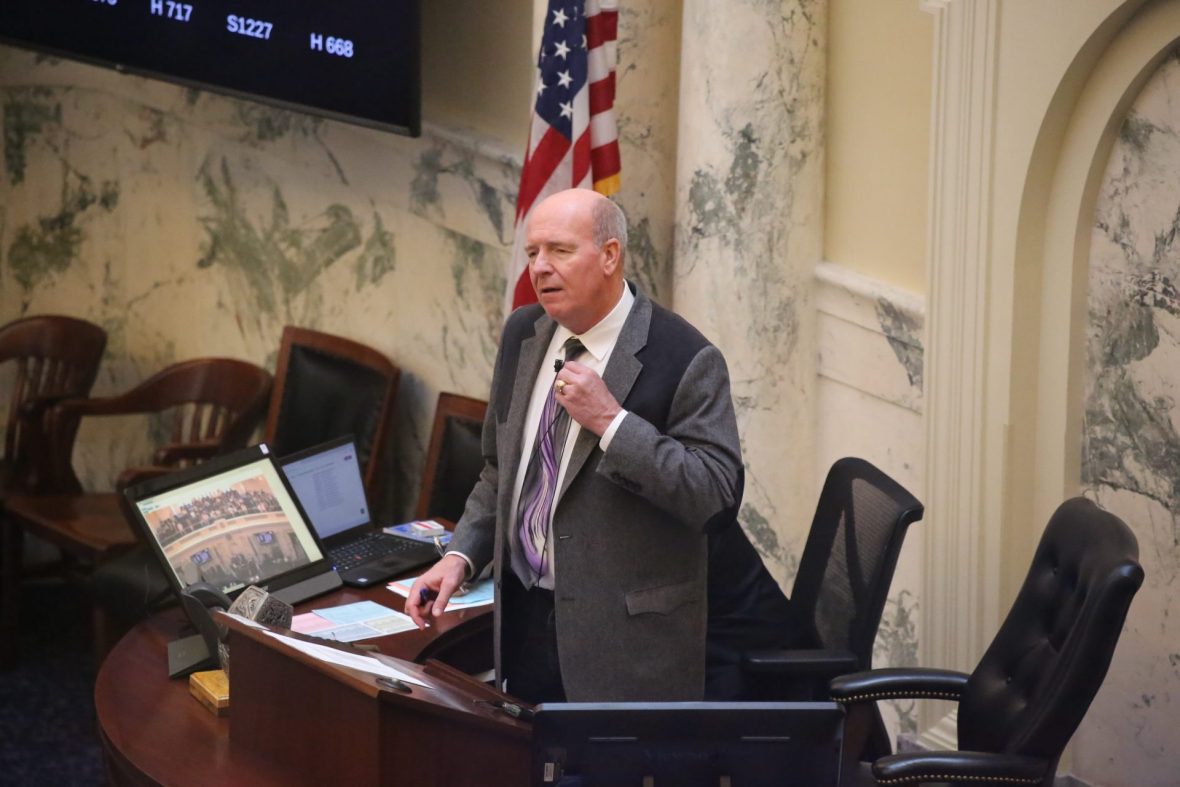
The merger question came up in several other emails obtained by EdNews. But in an interview last week, Pemberton insisted that the merger was not a major talking point. She said she met with close to 90 legislators during a three-week stretch at the beginning of the 2026 session, and the idea came up only a handful of times.
“That was a really small piece of the hours of conversations and meetings I had,” Pemberton told EdNews. “It was a question that was asked early on. It was a question I addressed.”
Pemberton pointed out, and continues to point out, that a merger would be costly. It would force LC State to charge the same tuition and fees as the U of I, costing every student more than $1,500 a year. LC State would also need to bring its faculty salaries in line with the U of I, costing close to $2.8 million. A single college university cannot house NCAA and NAIA athletic programs, so LC State’s teams would be sidelined — an $11 million economic hit, according to a dated, pre-pandemic analysis.
Those numbers were persuasive, Pemberton told EdNews. “Every single time that conversation came up … it immediately went, ‘Oh, that’s not a good idea.’ And I’m like, ‘I know.’”
The idea of a merger came up “a few times” during the session, Moyle said in an interview Tuesday. “Nobody really had the time, or was invested in spending the time doing it,” he told EdNews.
At the outset of the session, a pivotal meeting
On the morning of Jan. 13, the second day of the session, Pemberton met with House Republican leadership, spending 40 minutes pitching her name change bill.
At one point, Pemberton asked Moyle if he supported the bill. He said he didn’t. “I specifically asked if he was telling me to pull the legislation and not pursue it,” Pemberton said in emails to other legislators. “He said, ‘No, I am not saying that.’ … He said I had given him a lot to think about.”
Other members of House leadership were more amenable, Pemberton wrote. Majority Leader Jason Monks, R-Meridian, indicated he was leaning toward it. Assistant Majority Leader Douglas Pickett, R-Oakley, told Pemberton he was “listening.”
Moyle remembers the meeting differently — and the takeaway. He said he couldn’t recall which legislators were in the room, although he did mention Monks and Pickett.
“By the time she got done and she left, I asked, ‘All right, you guys care about this, and are you supportive of it?’ Not one was supportive,” Moyle said. “She didn’t convince anybody it was a good idea, which I thought was interesting.”
Less than 24 hours after the start of the session, Pemberton’s bill already was running into high-powered resistance.
‘The fact is we are cutting budgets’
Less than a week later, one of Pemberton’s legislative allies sounded an alarm.
“The fact is we are cutting budgets and I am told that, yes, this will ultimately cost the state more money,” Sen. Cindy Carlson, R-Riggins, a member of the budget-writing Joint Finance-Appropriations Committee, said in a Jan. 19 email to Pemberton. “It may be better in a year when the state is not focusing on budget shortfalls.”
Carlson’s email echoed the same warning Moyle had delivered before the session: If LC State pushed for a name change, she warned, JFAC members might push for a U of I merger.
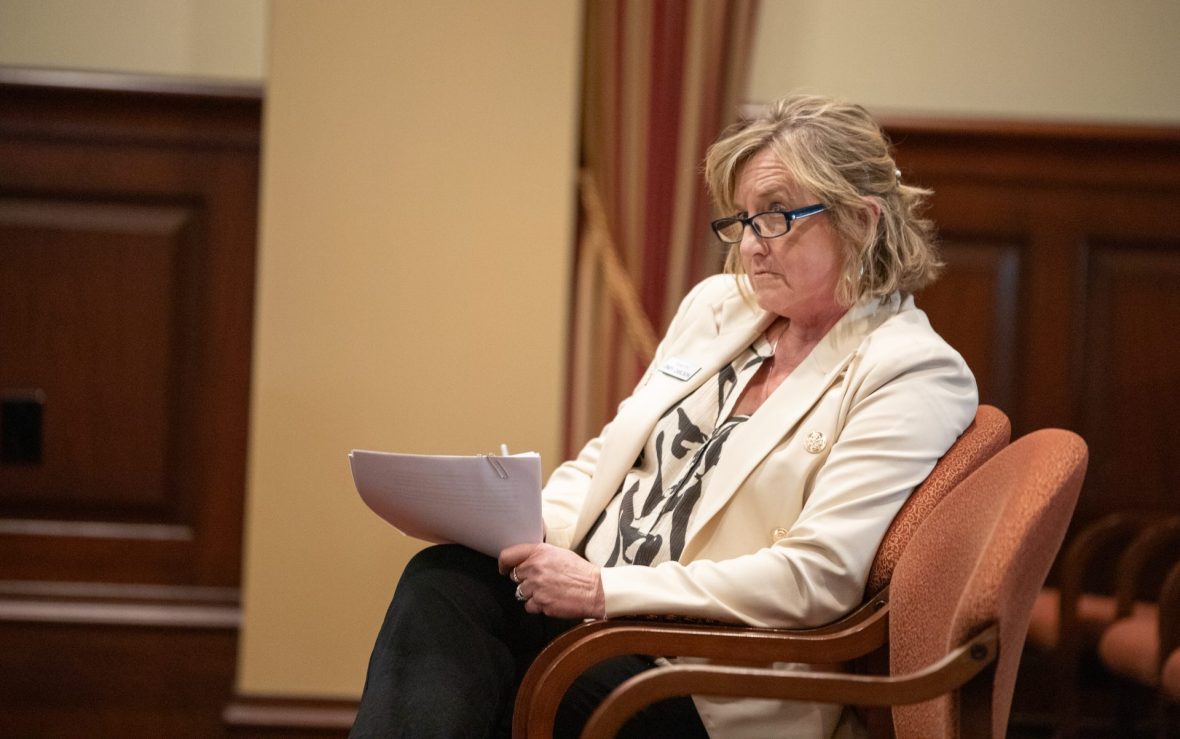
Pemberton wrote back to Carlson, just 24 minutes later. “A name change does not cost the state money, but combining with UI would cost a great deal.”
After the exchange, Carlson stayed on board as a sponsor of the name change bill.
For more than a year, LC State officials have downplayed the cost of a name change.
In June 2025, LC State estimated the costs would come to no more than $50,000, mostly to update campus signage. LC State officials said the money would come from its existing marketing budget.
LC State now pegs the costs at no more than $40,000. Some signage has been replaced recently — with no reference to “college” or “university.”
House Education’s new chair comes to the forefront
On Jan. 22, the same day as the hallway exchange between Pemberton and Moyle, the president met with another central player in the name change debate. She met with Rep. Dale Hawkins, R-Fernwood, the newly named chair of the House Education Committee. Hawkins was only 10 days into the new assignment; Moyle selected Hawkins as chair at the start of the session, after House Republicans elected Pickett to a vacant spot in House leadership.
During the Jan. 22 meeting, Pemberton later wrote, Hawkins said the name change “made sense.”
“(He) was generally supportive,” she wrote.
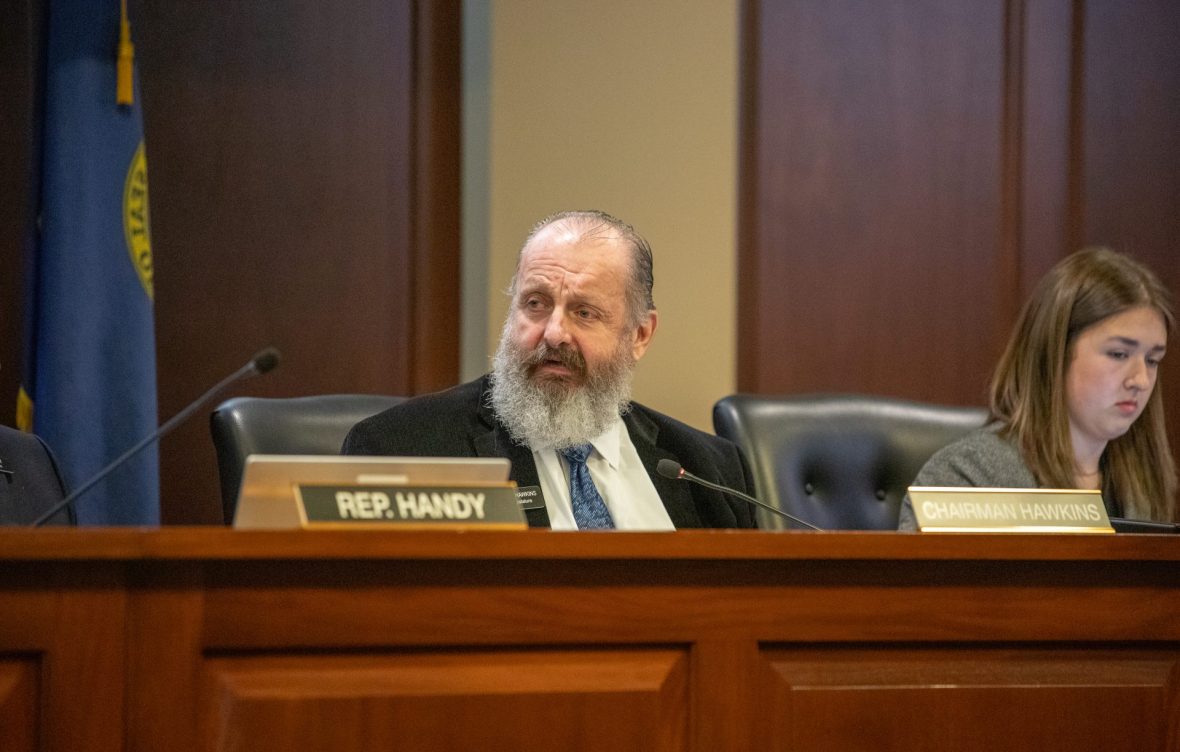
However, Hawkins later emerged as a formidable obstacle to the name change bill. After the Senate passed the bill on Feb. 9, on a 34-0 vote, Moyle routed it to House Education. It remained in Hawkins’ desk drawer for the remainder of the session, dying without a hearing.
EdNews submitted written questions to Hawkins, but received no response. But another key lawmaker offered one theory into the bill’s demise.
“(Hawkins) is being bombarded with texts and emails opposing the change,” Burley Republican Rep. Clay Handy, the committee’s vice chair, wrote in a Feb. 19 email to Pemberton. “I will keep bugging him.”
LC State officials, meanwhile, continued a full-court press of their own. They reached out to Hawkins, in person or via email, on several occasions. In the waning days of the session, Pemberton’s tone took on an added sense of urgency.
“Not a day goes by that I am not fielding questions about the status of the bill from not just our campus community, but our K-12 and healthcare partners, as well as the broader community,” Pemberton wrote on March 19. “The change is of great interest to our constituents.”
The legislative session adjourned two weeks later with the bill still parked in committee.
Moyle said he did not kill the bill. He said he could have routed the Senate-passed bill to the House Ways and Means Committee — a leadership-packed panel that affords the speaker almost unchecked power to fast-track or deep-six a bill. Instead, he sent the bill to House Education, giving Hawkins the call.
“What happened with that bill was Hawkins did his research and didn’t think it was a good idea,” Moyle said.
What happens next?
Pemberton is already looking to the 2027 session — and she’s hoping to shore up support.
She still has her 2026 sponsors, Carlson and Rep. Barbara Ehardt, R-Idaho Falls, and she has recruited another sponsor: Rep. Jordan Redman, R-Coeur d’Alene. Adding a Panhandle co-sponsor underscores LC State’s four-year degree offerings in the area, and its longstanding partnerships with North Idaho College, Pemberton said.
Redman said he’s not sure why the bill ran into resistance this year. But he says the issue is straightforward: School officials think the change will enhance the school’s reputation and help attract students, and that’s reason enough to support it. “If they think it adds value, I’m happy to help them get there.”
Redman, a second-term lawmaker, is one of the Legislature’s most prolific bill writers. He also has a rising profile: He co-chairs a legislative committee overseeing how the state will spend federal rural transformation grants that could come to $930 million over five years. But by the same token, Redman could be a polarizing figure. He poured more than $250,000 into the May GOP primaries, supporting 26 candidates in contested races; 14 of his candidates won, but 12 lost.
Redman downplays the political backlash, on this bill or other issues on his plate. “My goal is to bring legislation that is good enough that it’s very hard to vote against,” he told EdNews Wednesday.
Pemberton also has tried to win over Hawkins and Moyle.
Hawkins toured the LC State campus this summer, a visit Pemberton considered constructive. “When he left, he said he was interested in receiving more information,” she said. “That’s a win.”
Pemberton also met with Moyle this summer. “By the end of that conversation, he said, ‘Cynthia, you may share that I will not oppose this.’ And I said, ‘Does that mean I’ve got your vote yet?’ And he said, ‘Well, I’m not going that far, but you may share that I will not oppose this.’”
Moyle remembers it differently — and the semantic differences aren’t insignificant. Moyle said he still opposes the name change, but he said he told Pemberton, repeatedly, that it’s an issue she needs to work out with Hawkins.
“I told her I wasn’t trying to kill it,” he said. “It’s not something that Mike Moyle is worried about. I’m not a fan. … It’s just, there’s a lot of other fish to fry right now.”
Senior reporter Kevin Richert writes a weekly analysis on education policy and education politics.