
America needs more workers in the microelectronics and semiconductor sectors — and soon.
By 2030, the shortage of workers could reach 157,000 nationally, according to a recent study.
Boise State University could play a regional and national role in addressing this shortfall, under a partnership announced Wednesday. Boise State will head a nine-state collaboration designed to draw students into high-tech majors, and support the region’s semiconductor sector.
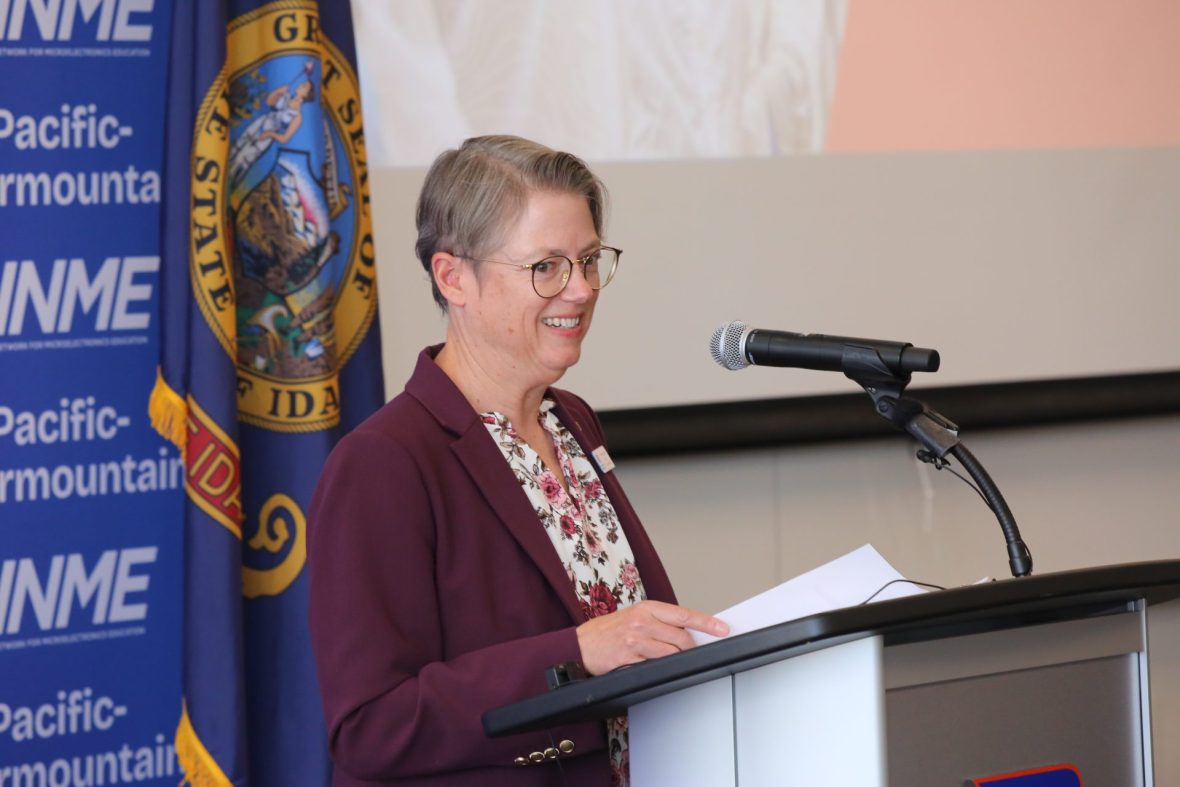
Member schools — across a region stretching from Colorado and Montana to Hawaii — will share curriculum and faculty. Students will have enhanced hands-on learning opportunities in the workplace. And the partnership will also try to foster the next generation of workers, with pre-college programs that provide pathways to a high-tech major.
University, industry and government leaders took turns touting the partnership, which is operating under the acronym PINES: the Pacific Intermountain Network for Education in Semiconductors.
Nancy Glenn, Boise State’s acting president, and vice president of research and economic development, said the partnership will create “life-changing opportunities” for students across the PINES region. “Today’s announcement reflects the power of regional collaboration.”
The need for growing the semiconductor workforce is so great that it will take a “giant village” to address it, said Shari Liss, vice president of global workforce development for the SEMI Foundation, a nonprofit that supports the microelectronics industry. “This is an all-hands-on-deck sort of initiative.”
The partnerships won’t just help traditional college-aged students. They will support students going to college after serving in the military, and adult students looking for a new career, said April Arnzen, executive vice president and chief people officer at Micron Technology. “There is opportunity for all in the semiconductor industry.”
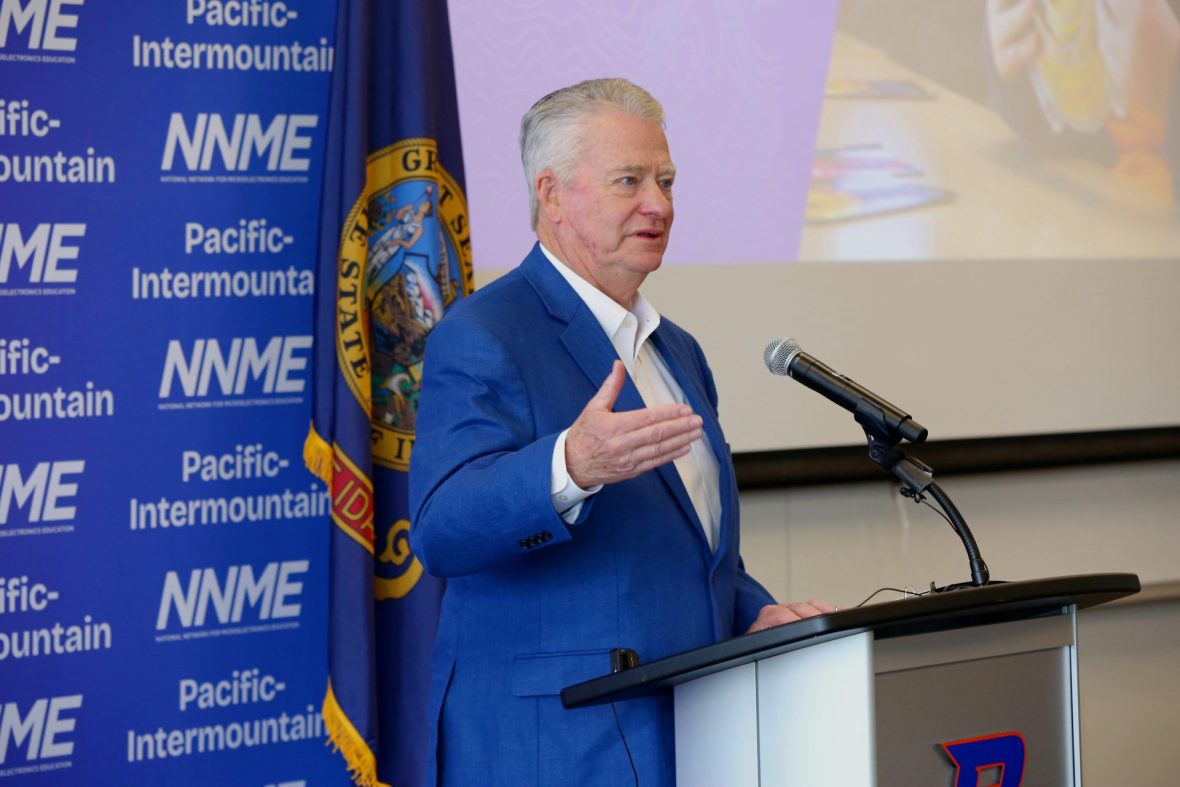
While the high-tech sector has long been one of Idaho’s economic drivers, its future is tied to the state’s education system, said Gov. Brad Little. “Sustaining growth will require talent.”
While Boise State is heading the PINES partnership, seven other Idaho colleges and universities are members: Brigham Young University-Idaho; College of Eastern Idaho; College of Southern Idaho; College of Western Idaho; Idaho State University; Northwest Nazarene University and the University of Idaho.
The PINES partnership will receive $20 million in federal funding over five years, said Brian Stone, acting director for the National Science Foundation. This money comes from the CHIPS and Science Act, a 2022 federal law designed to boost the semiconductor industry.
The NSF is supporting four regional semiconductor education “nodes.” The other regional centers are based in the Southwest, the South and the Northeast.
The Pacific Northwest partnership will position Boise State as a “national leader” in microelectronics, BSU College of Engineering Dean Amy Fleischer told EdNews after Wednesday’s ceremony. And that could impact students across the region, from kindergarten through graduate programs.
“The more students we can touch, the more students we can impact, and show them what the opportunities are and prepare them, the better off we are,” she said.