
Four years after the Nampa School District banned 22 books, administrators are being more cautious and recommended that the school board preemptively remove three potentially controversial books in a new middle school curriculum.
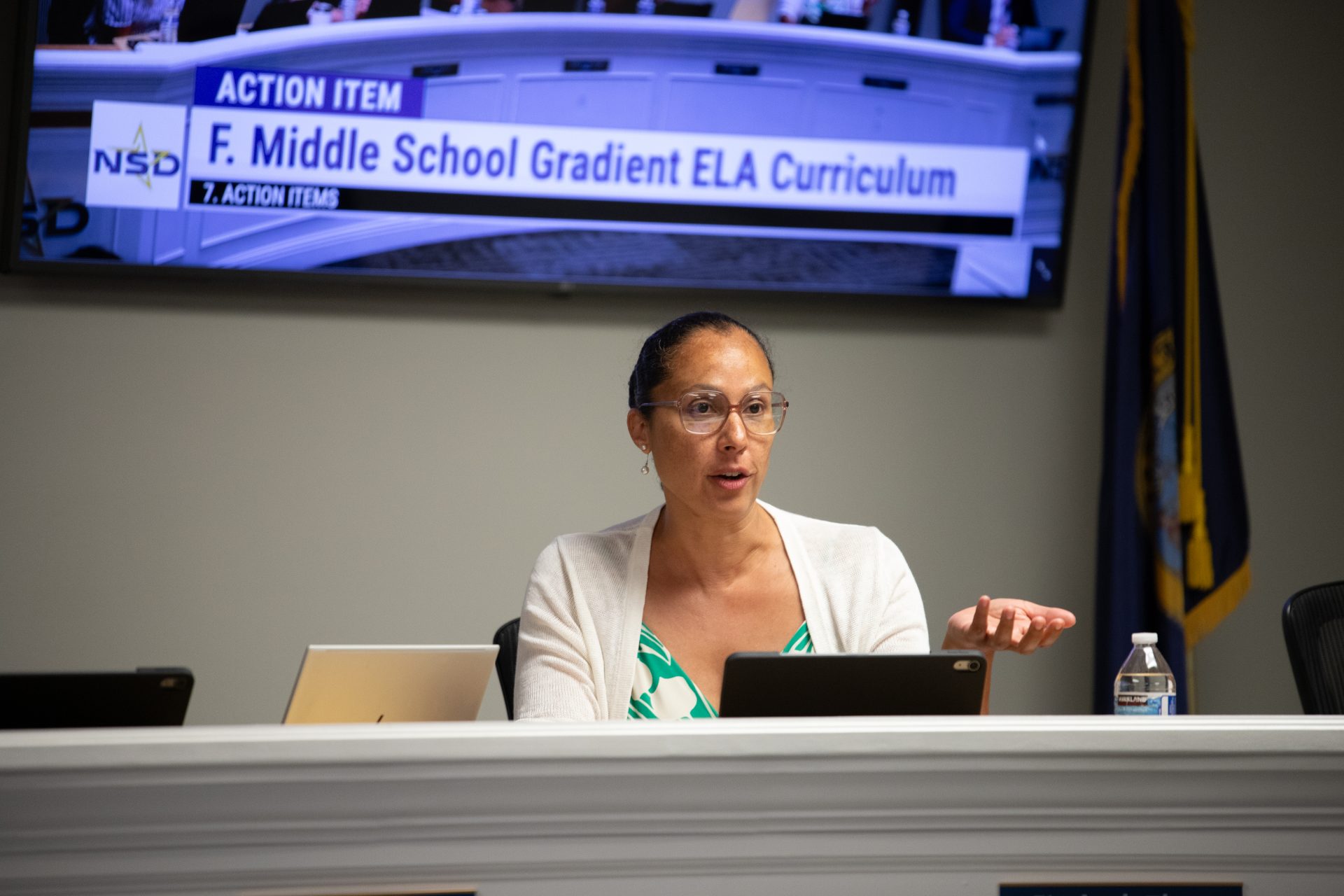
Trustees accepted that recommendation Tuesday and voted 4-1 to adopt the curriculum with the exception of the pandemic nonfiction book “Patient Zero,” a collection of poems called “One Last Word: Wisdom from the Harlem Renaissance,” and the critically acclaimed Holocaust graphic novel “Maus.”
A curriculum committee had recommended adopting the full Gradient “EL Education” middle school curriculum, including the three books, but Superintendent Gregg Russell said he and other administrators had concerns about how community members might misconstrue the books. The district did not receive formal complaints from parents or teachers, and Russell told EdNews that this is not a book ban.
“This was just more of our administration just doing our role and understanding what our community is,” Russell said.
Trustee Stephanie Binns cast the only vote to keep the books in the curriculum.
“I want to speak up in defense of the three books,” Binns said. “The three potentially problematic books.”
‘Patient Zero,’ by Marilee Peters
Binns said her middle school son is a reluctant reader but was absolutely engaged with “Patient Zero.” The story covers the history of eight epidemics and pandemics. Binns said the book is cross-curricular and touches on science, geography and English language arts.
“It opened up some really great conversations, and it engaged him in all three of those subjects,” Binns said. “… I think there is absolutely value in having that.”
Russell said the book covers sensitive topics, including the AIDS epidemic and the COVID-19 pandemic. Some students experienced the loss of loved ones during COVID, he said, and the book may bring up PTSD.
“I just thought it was something that we should be a little cautious with,” Russell said.
The 15-member curriculum committee — made up of administrators, teachers, parents and instructional coaches — submitted written comments with their recommendation.
One member expressed strong opposition to the three potentially controversial books, including “Patient Zero.”
The member wrote that the book suggests COVID originated “in animals and not in lab (sic) where it actually originated from.” The same member was also concerned about the chapter on AIDS because it mentioned stopping the spread through safe sex practices and using condoms.
‘One Last Word: Wisdom from the Harlem Renaissance,’ by Nikki Grimes
Russell said the collection of poems focuses around diversity, equity and inclusion. He was concerned that it may be related to critical race theory.
“We know that we have state laws that we’re not allowed to teach some of that, and I was worried that somehow that could be misconstrued into that,” Russell said. “I don’t believe it is, but it was just something that raised a concern for me.”
The committee member opposed to “Patient Zero” said the poems in “One Last Word” could be racially divisive.
The unit has lots of links, the member wrote, including a YouTube video of Alicia Keys singing the “national hymn.”
“In the video with Alicia Keys are a group of African Americans wearing masks and writt3en (sic) on some o (sic) those masks in (sic) George Floyds (sic) name,” they wrote. “This curriculum may look different in another state or city but it does not fit in with the policies of NSD.”
Another committee member recommended keeping the three books.
“It sounds like we are hiding from the hard conceptual points that challenge our own world view,” they wrote. “I think either the ‘one last word’ or ‘patient zero’ should be taught.”
‘Maus,’ by Art Spiegelman
Russell said the graphic novel about the Holocaust is valuable in how it relays history and atrocities, but it also included some “graphic things.”
He said he did not want to create concerns for the community.
“I feel like there could be other texts and options for us to be able to use, so I presented that in front of the committee,” Russell said. “The committee really felt differently.”

Multiple committee members mentioned “Maus” in their comments.
One member who recommended adoption said the novel is highly complex and worthwhile for eighth graders. The graphics are not overly violent or disrespectful, the member wrote, but there are some scenes that parents may object to.
One member who voted against the curriculum questioned the reliability of “Maus” and other books in the curriculum. They wrote that the books are from “extreme experiences whereby the very nature of the authors’ writing calls into question their validity.”
Binns defended “Maus.” The graphic novel uses different animals as metaphors to describe the horrors of the Holocaust and is told from the perspective of the author interviewing his father, who survived.
She said it is a rich text that is accessible on multiple levels and forces readers to think in a different way.
“There’s no way to really talk about the Holocaust and the impact of that tragedy, without the details of the tragedy,” she said. “I don’t know how to get around that, and it’s not something that we can shy away from.”
‘Kind of a compromise’
In written comments submitted during an open house, some middle school teachers in Nampa expressed concern about replacing several novels the district added last year with a new curriculum.
A seventh grade teacher said their team worked hard to create lessons for those novels, but now it feels like it was all for naught.
“I think these questions need to be addressed: What is wrong with our current efforts? Why do we need to spend more money on something else?” the teacher wrote.
Another teacher said by adopting the new curriculum, students would miss out on “The Giver” and “The Outsiders,” which students look forward to reading.
In a phone interview, Russell told EdNews that the district recently adopted a high school curriculum from the same company and wants cohesion in middle school. He said the Gradient curriculum is cost effective and includes free resources.
Removing the three books means that teachers can still use one of the novels they used this past school year. In seventh grade, for example, removing “Patient Zero” and “One Last Word” does not leave enough content for a full year, so teachers can pick one old novel.
“It’s kind of a compromise where they’re going to use some of the things they’ve done this past year with the new curriculum,” Russell said.