
State budgets might not be cut again this summer — but public education and state agencies should bank on a hold-the-line 2027 legislative session.
That’s the early assessment from Gov. Brad Little’s budget chief. It means K-12 is unlikely to see much in the way of new money next year, and higher education is unlikely to see a reversal of recent budget cuts.

Agency directors should submit “maintenance-only” budget proposals for 2027-28, Division of Financial Management administrator Lori Wolff wrote in a May 29 memo to agency directors and fiscal officers. (Boise State Public Radio first reported on Wolff’s memo Tuesday.)
Wolff’s memo addresses the 2027-28 budget, for a spending year that won’t begin until July 1, 2027. The 2026-27 budget is already set — lawmakers and Little hashed that out in the legislative session that ended in April. When the Legislature reconvenes in January, the 2027-28 budget will be front and center.
Based on the memo, here’s what to watch, before and during the next session.
More spending cuts? Midyear spending cuts “are not anticipated,” Wolff wrote. If things play out that way, that would be a significant departure from recent history. In August 2025, Little imposed a 3% midyear “holdback” across most of state government, exempting K-12. The holdback, eventually made permanent, set the stage for additional cuts during the 2026 legislative session.
If the state can navigate the next few months without a holdback, the 2026-27 budget would remain untouched. But Little and the Legislature already cut that budget by 5% — again leaving K-12 largely untouched, but imposing a disproportionate share of the cuts on higher ed.
Lean budget requests. This is the time of year when state agency heads begin writing their budget requests — hence the timing of Wolff’s directive.
Those agency requests are due Sept. 1, but the memo eliminates some of the suspense. Agencies cannot request any new budget line items that use general funds — the sales and income tax collections that serve as the building block of the state budget. Agencies can use federal or dedicated funds for line-item requests, if Little’s team signs on in advance.
What about new revenue? If tax collections come in higher than expected, that money is essentially spoken for. It would go toward nondiscretionary cost increases, employee health benefits and pay raises, firefighting and “critical health, public safety, and education costs,” Wolff wrote.
What about pay raises? State agencies are being told to add 1% pay raises into their budget requests, as a placeholder. They were instructed to do the same thing a year ago — and state employees and higher education employees did not wind up getting raises.
Wolff’s memo addresses pay raises — known in state government lingo as “Change in Employee Compensation,” or CEC.
“We understand how important CEC will be to all agencies in the current environment,” Wolff wrote. “DFM will work closely with the Division of Human Resources on a CEC recommendation that addresses market challenges and meets revenue parameters.”
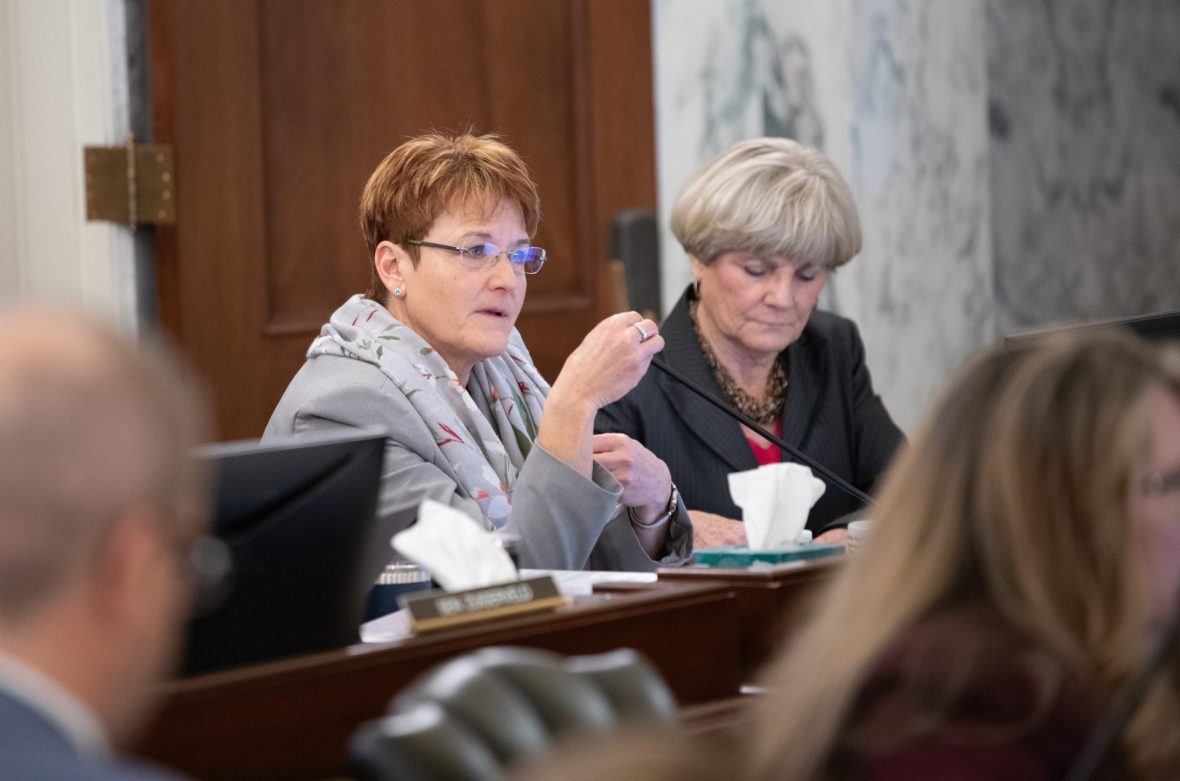
A Democratic member of the Legislature’s budget committee said the Wolff memo was not surprising, but still “really disappointing.”
Senate Minority Leader Melissa Wintrow says she’s worried that state employee pay will be frozen again, and she’s worried that higher education could again take a hit. After two years of reductions to the spending base, even a hold-the-line budget is harmful.
“You’re maintaining cuts, is what it is,” said Wintrow, D-Boise.