
Emi Wilkes knows how important a sense of belonging is for a student.
When she became a mother during her sophomore year, support from an educator at Bear Lake High helped her eventually thrive.
Now as a teacher at the southeast Idaho School, she supports her own students — and uses a partnership with another teacher to expand that support.
For years, Wilkes and colleague Angie Hunter have blended coursework to turn student projects into lessons in creativity, collaboration and acceptance.
The teachers wanted to think outside the box with their electives: creative writing and drawing. So they started collaborating and pushing their students to do the same.
The result wasn’t just captivating poems and beautiful art but a place where students feel safe, challenged and respected.
“We have a lot of creative kids, but without those two they don’t have that outlet,” said Cameron Crane, Bear Lake High counselor.
Passing the baton, impacting students
Wilkes, 30, became a teacher because of a school counselor at Bear Lake.
Wilkes was a star student in high school. Then she got pregnant her sophomore year. A guidance counselor pushed her to transfer to the alternative school.
“It just kind of felt like she was trying to punish me for my mistakes,” Wilkes said.
Crane, also a guidance counselor at the school at the time, stepped in.
Previous administrators were “just trying to shun her to the dark woods,” Crane said.
“And I’m like, ‘This is one of our brightest kids,'” Crane said. “We’re not giving up on your life because you’re pregnant — that’s insane.”
Wilkes had her baby, graduated high school a year early and earned her teaching degree. She returned to Bear Lake to ensure other students with difficult life circumstances can thrive like she has.
“When students are going through a hard time, I can relate so much,” Wilkes said. “I try to use my personal experiences as a ‘You can get through hard things if you put your mind to it.'”
Crane said he didn’t think much of supporting Wilkes until she came back to teach at the high school where he still works.
“You never know the impact you have on people,” Crane said.
Now, Crane watches Wilkes influence students daily.
Creativity and collaboration
Now in her sixth year as a teacher, Wilkes formed a special bond with Hunter, 47, who was her Spanish teacher growing up.
Wilkes teaches English, art history and drawing. Hunter teaches Spanish, creative writing and English.
The pair started collaborating three years ago in their creative writing and drawing classes. One class writes poems, then the second class illustrates them.
The project has taken different forms over the years. Most recently, students illustrated an emotion, then other students wrote about the drawing without knowing what the emotion was.
For the project to work, both teachers focus on creating a culture of safety and open-mindedness in their classrooms, so students feel comfortable having their work discussed.
“We respect creativity for what it is,” Hunter said. “Be yourself, be unique, be you.”
A recent student was an excellent horror writer; Hunter was pleased at how respectful other students were about an unfamiliar genre.
“It might not be for them. It might not be what they read, but they were able to have that admiration and respect,” Hunter said. “It was amazing.”
Crane wasn’t sure it would all catch on after the first collaboration, but about 15 students signed up for each class. The next trimester, Crane had to add an extra section because so many students wanted in.
Now, Crane struggles to fit more traditional English classes into the teachers’ schedules.
“These two just fascinate me. What they come up with is unreal,” he said. “No judgment in either one of their classes; you can create whatever you want.”
Crane remembers one student with severe disabilities who struggled in more traditional classes. In Hunter’s creative writing course, the student wrote some of the best poems in the class.
“I’m just amazed at how much they get out of students,” he said.
Wilkes and Hunter hope to inspire other educators to take the time to collaborate, even if it seems daunting.
“Sometimes it’s hard to collaborate. It takes a little more effort, a little more time, a little more communicating,” Hunter said. “I think that’s why most teachers don’t do it because it’s a bit more work.”
 Angie Hunter
Years teaching: 22
Subjects taught: Spanish, creative writing, English
Why have you stayed in teaching?
“I love kids and I love the craft of it. I love the creativity. I love to try to engage students in different ways.”
What’s the biggest change you’ve seen in education?
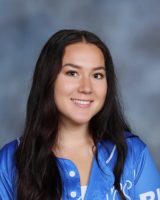 Emi Wilkes
Years teaching: 6
Subjects taught: English, drawing, art history
Our Teacher Feature series highlights the diversity, expertise and ingenuity of educators across the state. Submit your suggestions for a teacher to feature to Emma Epperly at emma@idahoednews.org.

