
The national blue tsunami did not breach Idaho’s shores. Or come that close.
Still, Tuesday’s election hints at some slight changes in Idaho’s political tide. Unlike previous years, 2026 gives Idaho’s Democratic Party some things to build on in future elections.
Now, let’s not lose sight of the big picture. Tuesday was still a very good night for Idaho Republicans. The GOP again swept every statewide race — with no after-midnight vote count suspense. Idaho will again send an all-Republican delegation to Congress, as Sen. Jim Risch and Reps. Mike Simpson and Russ Fulcher dodged a wave election that flipped the House and Senate to the Democrats.
Last and certainly not least, the Republicans’ all-in opposition to Proposition 1 appeared to pay dividends. Party leadership and key Republican officeholders banded together against Prop 1, and 56% of voters rejected a voter initiative seeking to overturn Idaho’s near-complete abortion ban.
So, a predictably red election night in Idaho? Generally yes, but not exactly typical.
This will come as no comfort to Democratic loyalists who are comparing Idaho’s results with the stunning upsets in GOP fortresses such as South Carolina, Texas and Kansas (and perhaps, depending on the final tallies, Mississippi and Alaska). Nor will this comfort Proposition 1 supporters, after what became an unsurprisingly bitter campaign over reproductive rights and restrictions. Idaho progressives were mourning on Wednesday, while many Idaho conservatives were celebrating.
But despite everything that went well for the Idaho GOP Tuesday — and there was a lot of that — this wasn’t another regular Republican rout.
For starters, the Democrats picked up six legislative seats, one in the Senate, five in the House. On the surface, this only changes the Legislature around the margins. Republicans still hold 28 of the Senate’s 35 seats, and 56 of the 70 spots in the House.
But let’s look under the surface.
Six additional legislative seats should give the Democrats some additional spots on key Statehouse committees.
The first place to watch: the budget-writing Joint Finance-Appropriations Committee. Four years ago, House Speaker Mike Moyle assigned nine Republicans and one Democrat to JFAC, arguing that Democrats had long been overrepresented on the Legislature’s most powerful committee. By sheer math, the Democrats now have one-fifth of the House’s seats, which could again get them a second spot on the House’s side of JFAC.
In a similar vein, Democrats might wind up with additional seats on the Senate State Affairs Committee and, possibly, the House Education Committee.
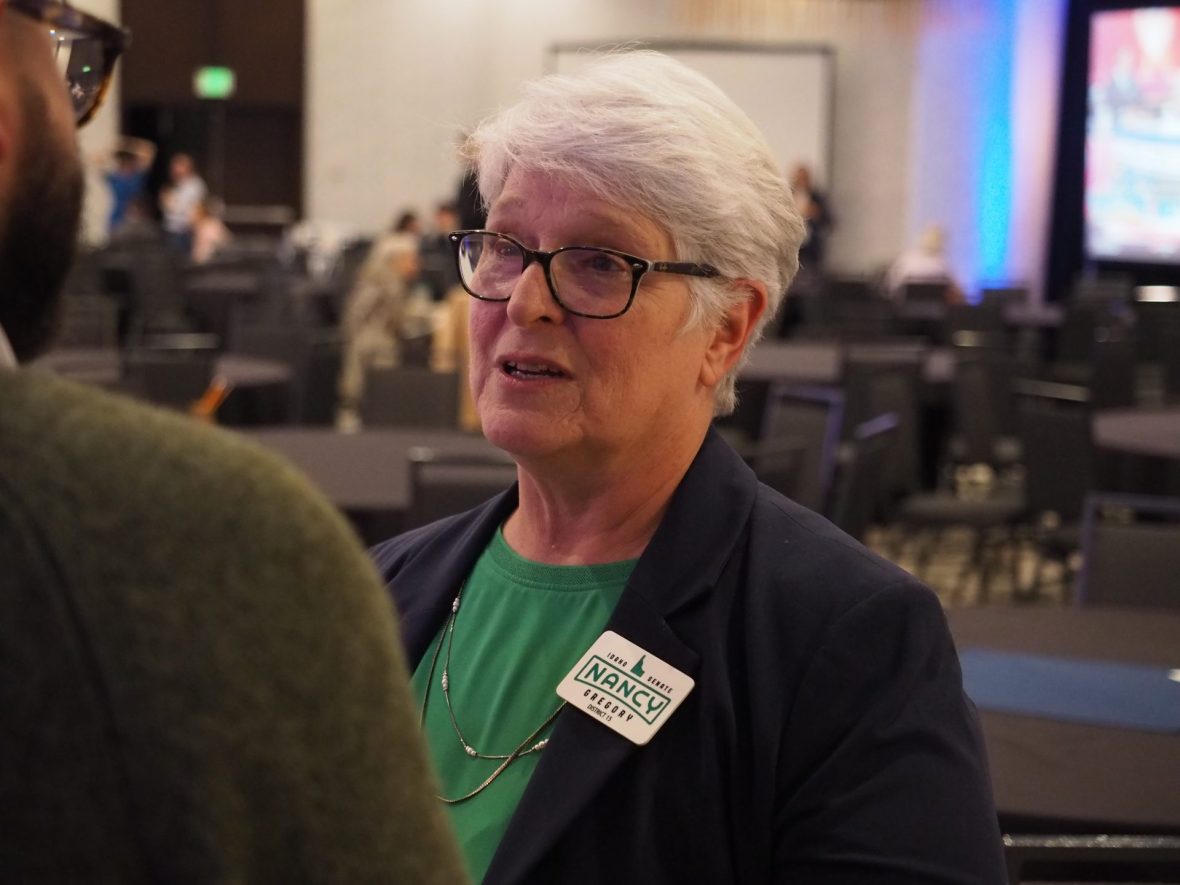
It’s also noteworthy that the Democrats swept three legislative districts that had a split delegation: west Boise’s District 15; District 26, a Magic Valley melange that includes Blaine, Jerome and Lincoln counties; and the Pocatello area’s District 29. The Democrats added two seats in each of these swing districts. Meanwhile, two swing district incumbents, Sen. Ron Taylor of Hailey and Rep. Steve Berch of Boise, won comfortably Tuesday, two years after sweating out wins well into the Wednesday after Election Night.
While the Democrats solidified their grasp on a few legislative districts, the GOP’s vice grip on the top-tier races decreased, at least a bit.
Compared to 2022, Gov. Brad Little’s vote share went from nearly 61% to 57%. Attorney General Raúl Labrador’s percentages fell from 63% to 60%. State superintendent Debbie Critchfield’s percentages fell from 70% to 62%. Risch, Fulcher and Simpson also underperformed compared to their last general elections — which, in fairness, coincided with presidential races that tend to break more heavily toward the GOP.
None of these statewide shifts made for much suspense Tuesday. Republicans still won comfortably. But slightly less comfortably than we have seen in past elections.
The big-picture historical record is grim for Idaho Democrats.
This party still hasn’t won a statewide race in 24 years and hasn’t won a congressional election in 18 years. Those long losing streaks, with only a couple of close elections in between, chart out the long uphill to statewide viability.
The picture still isn’t much better on the legislative front. Fifteen of the Democrats’ 21 legislators reside in Boise. Democrats only picked up legislative seats Tuesday in the scattered locales where Proposition 1 fared well: Ada and Bannock counties, and in a Blaine County-heavy swing district. Democrats came within striking range Tuesday in District 6, a pseudo-swing district centered on Latah County, and in Idaho Falls’ District 33. But competitive losses are still losses, and the rest of the state’s legislative landscape remains an unbroken red.
But while Idaho voters stayed conservative, they might have handed progressives an opening for 2028 or beyond.
While reaffirming the Legislature’s abortion laws, Idaho voters simultaneously and overwhelmingly smoked out the Legislature, as it attempted to snuff out the medicinal and recreational marijuana debate. A whopping 66% of voters rejected a constitutional amendment to essentially ban voter initiatives on drug laws.
So, let’s play a little what-if game for 2028.
Could a marijuana initiative be on the Idaho ballot? (It almost happened in 2026, but an initiative fell short of qualifying for the ballot.)
Could an abortion initiative come back in a rewritten form?
And what will the state and national political picture look like as the next presidential election arrives?
Do any or all of these variables drive turnout in the Democrats’ favor? Or does Idaho’s political landscape remain unaltered, providing another sweeping election for Republicans?
It’s impossible to say, especially when we’re all processing Election Night 2026. But stunning and strange changes can happen in politics, coming seemingly from nowhere. Tuesday provided plenty of evidence of that — outside Idaho.
Senior reporter Kevin Richert writes a weekly analysis on education policy and education politics.