
For 80 minutes Tuesday night, Terri Pickens and John Stegner agreed about almost everything. Especially Brad Little.
Sharing a stage at a Boise junior high school auditorium, Pickens and Stegner took turns laying out a litany of criticisms. Little is too deferential to President Donald Trump. Little compromises too much with House Speaker Mike Moyle and other conservative lawmakers. Little is wrong on private school choice. Wrong about opening Idaho to, potentially, thousands of tons of nuclear waste shipments. Weak on public lands. Too often silent.
Pickens, an attorney, and Stegner, a retired judge, presented a case for the prosecution. An audience of about 150 people murmured their approval, applauded on occasion, and snickered at the zingers.
Little provided no defense. The two-term governor was a no-show for the League of Women Voters forum. A folding chair, reserved for Little, sat vacant. A bottle of water remained unopened.

With 10 minutes left in the forum, Stegner openly addressed the elephant not in the room. “He’s away without official leave, including the fact that he isn’t here tonight.”
It’s a governor’s race with three major candidates and two decidedly different approaches. Pickens, a Democrat, and Stegner, an independent, are crisscrossing the state. In stump speeches and joint appearances, they are desperately trying to take the fight to the incumbent. Meanwhile, the Republican Little seems content to avoid public appearances in general and debates in particular, banking on a big fundraising advantage and the name ID that comes with 25 years in public office.
Nonetheless, the three candidates will appear together once. At least by name, on the Nov. 3 ballot.
Little: A long and complicated education resume
There is an adage in politics, seemingly not in practice in this race. When incumbents are worried about staff or volunteer complacency, they say they want to campaign as if they are 20 points behind in the polls. If any such worry exists in the Little camp, it’s under wraps — much like Little himself.
Little’s campaign declined an EdNews interview request and asked for written questions. Campaign manager Joan Vargas did not answer EdNews’ question about Little’s decision to skip debates and joint appearances.
“Gov. Little has spent eight years traveling Idaho and talking directly with Idahoans. He is confident he will earn the trust of the majority of Idahoans on election day,” Vargas wrote.
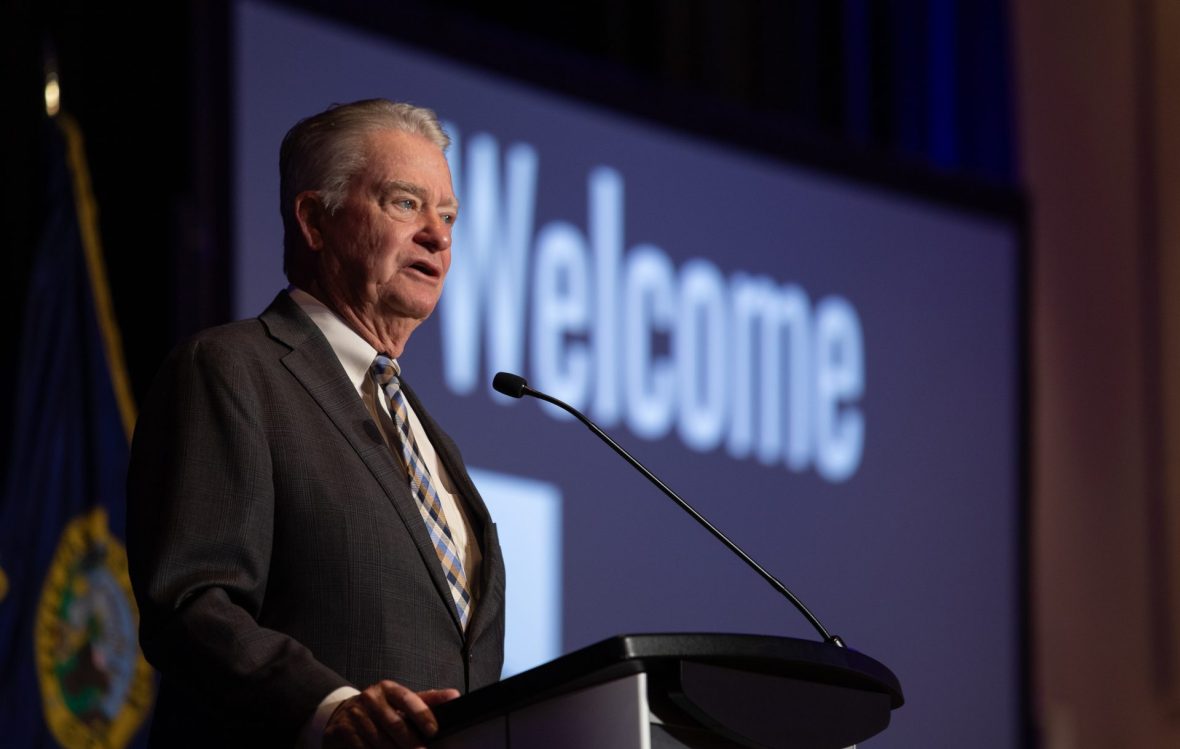
The history clearly favors Little, 72. He hasn’t faced a serious test since the open and high-priced 2018 GOP primary, when he outlasted current Attorney General Raúl Labrador and developer/physician Tommy Ahlquist. In the last four primary and general elections, no opponent has gotten within 20 points of Little. In each of these elections, Little cleared the bulletproof 50% threshold.
And Little has ample money to do the talking for him. He has raised $2.3 million this campaign cycle and has more than $1 million on hand. Stegner has raised $537,000, with $251,000 in the bank. Pickens has raised $218,000 and has $79,000 on hand. This fundraising advantage allows Little to take the message of his choosing to the airwaves — including, for example, a current TV ad touting Idaho’s first-in-the-nation ban on transgender athletes.
The 2020 law, which the U.S. Supreme Court upheld in June, is just part of a complicated resume. If this election is a referendum on Little’s education record, voters at any spot on the ideological spectrum can find something to embrace — or condemn.
- Little has presided over “historic investments” in K-12, Vargas said, a 70% increase over eight years. The biggest-ticket item: an omnibus 2024 law that sunk $1.5 billion into facilities, an attempt to break decades of gridlock over repairing or replacing dangerous or dilapidated schools. Another big splash: a one-day special legislative session in September 2022, which earmarked $410 million for education.
- On the postsecondary front, Little touts Idaho Launch, which provides high school graduates with up to $8,000 for college or career-technical education. Launch has faced fierce resistance from conservative legislators but enjoys strong backing from Statehouse moderates and Democrats. Even at Tuesday night’s forum, Pickens and Stegner praised Launch, although Pickens chided Little for deferring to the Legislature — which cut this year’s Launch budget from $75 million to $65 million.
- In 2025, Little ushered in Idaho’s private school choice era, enacting House Bill 93, a controversial $50 million tax credit program. He signed the bill days after Trump tweeted his support, and after a barrage of more than 32,000 constituent messages urging a veto. More than a year later, the State Tax Commission has steadfastly refused to release crucial data about the fledgling program.
- In April, Little signed House Bill 516, which prohibits teachers’ unions from receiving public support from schools. He signed the bill, despite raising concerns about its “overly broad and ambiguous” definitions. Barely a week later, the Idaho Education Association issued a vote of no confidence in Little — charting a change in political winds. In 2018 and 2022, the IEA had endorsed Little.
An exhaustive record doesn’t necessarily signal what Little plans for a third term. And that’s one problem with Little’s low-key re-election bid, said Rod Gramer, the former CEO of Idaho Business for Education. Voters are forced to choose in a vacuum.
“When you get down to it, elections aren’t about the candidates,” said Gramer, a longtime Idaho political observer, who is supporting Stegner. “Elections are about the people.”
In Wednesday’s statement, Vargas outlined Little’s education priorities in broad strokes. EdNews asked for milestones. Vargas offered none.
“Over the next four years, Gov. Little wants to focus on further improving literacy, student outcomes, teacher quality, and career readiness, and giving parents and students more opportunity and choice,” she wrote. “By 2030, Gov. Little wants Idaho to have an education system that is recognized for preparing students for the economy of the future, not just preparing them to graduate.”
Pickens: Attacks on public education amount to ‘class warfare’
Pickens says Idaho’s public school system is under siege — and it’s no accident.
“When did teachers become our enemies?” she said in an interview this week. “They’re not. The GOP doesn’t want our kids to have good quality education because you can’t keep people in line if they have freedom of thought.”
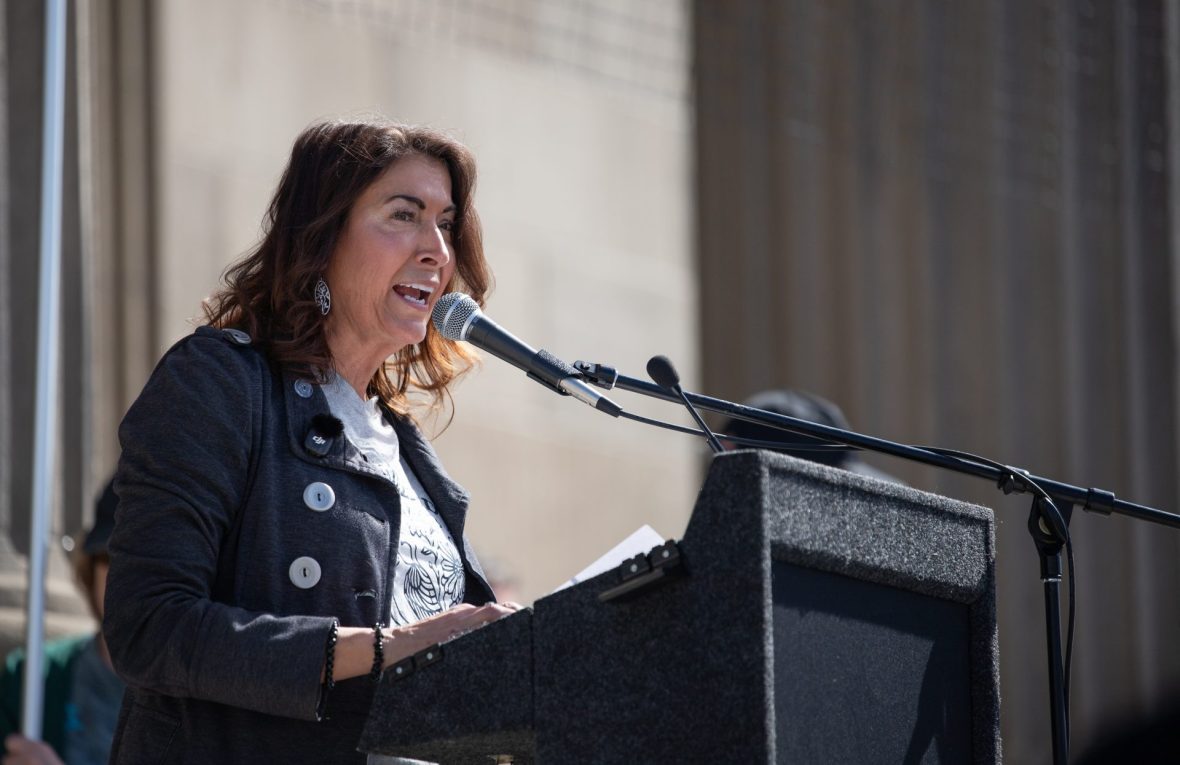
Little, she says, can no longer be trusted to advocate for public schools.
She blasts Little for signing the private education tax credit. She calls it “class warfare” that strips money from public education. She also believes the program could mushroom from its current $50 million; if elected, she pledges to strip the tax credits from her executive budget.
Pickens also condemns Little for targeting teachers’ union activities. She points out that the new restrictions apply only to teachers’ unions, not other unions. And she scoffs at one argument for the law — the notion that using a school payroll system to collect union dues strains a public resource.
“It is laughable to me that they say that that’s taking away genuine resources,” she said.
For Pickens, 54, public education is a personal issue. She ran track at Pocatello’s Highland High School — and if her parents had been charged a pay-to-play fee, Pickens says she would have been shut out. She parlayed her high school track career into a full scholarship at the University of Southern California, and later, a University of Idaho law degree. She is founder of a small Boise law firm, Pickens Law.
A Democratic governor would face stiff challenges in an overwhelmingly Republican Statehouse, and Pickens acknowledges it. Killing the private school tax credit wouldn’t be easy, but she pledges to veto any bill that advances the program. If lawmakers overrode her veto, she said, “I will create every roadblock that I can.”
In short, Pickens promises a dramatically different approach to the job. And a departure from Little — who she says has shirked his duties by refusing to fight for his own budget priorities.
Would it work? Pickens says she’d like to see more Democrats on her side; the minority party holds only 15 seats in a 105-member Legislature. But she also thinks her election would embolden moderate Republicans, restoring the balance the Statehouse once had during Democrat Cecil Andrus’ days as governor.
But first, Pickens must do something that a Democrat hasn’t done since Andrus’ 1990 re-election: She needs to win a governor’s race.
Pickens announced her gubernatorial bid in 2023 — months after losing to Lt. Gov. Scott Bedke, receiving 30% of the vote. Three years into this race, Pickens believes she has put in the work. Her campaign says it is averaging 1.3 million views a month across social media platforms as it seeks to reach disaffected voters. This month, she will finish her fifth campaign swing across what she calls “The L,” Idaho’s long expanse from the Panhandle to its eastern border.
Ultimately, she believes 39% of the vote will win on Nov. 3. She believes Stegner takes support from Little, collecting the protest vote from Republicans who would never back a Democrat. But other Republicans are more receptive, she says. Increasingly, her town halls are populated by independents and Republicans worried for public schools and livid about the economy.
“I’ve heard from the most unusual suspects.”
Stegner: A reluctant challenger to ‘the voucher governor’
For Stegner, running for governor “was definitely not the plan.” In October 2023, he had retired after more than a quarter century on the bench — 21 years as a district judge in Latah County, five years as a state Supreme Court justice.
Fast forward three Octobers. Now 72, Stegner is a reluctant gubernatorial candidate. He entered the race in February. But he printed his first candidate petitions in January — disillusioned, he said, by the message he heard in Little’s State of the State address one day earlier.
He says he’s running because Little no longer has everyday Idahoans’ backs. And like Pickens, he says Little now simply defers to the Legislature’s hardline conservatives. “He’s let a bad political environment make decisions for him,” Stegner said during a Sept. 17 town hall meeting in Boise.

Feeding into the dissatisfaction — and what Stegner calls “a sense of betrayal” — was Little’s decision to sign the private education tax credit. “(Little) said he would be the public education governor, and that was his first term,” Stegner said in an interview last week. “And then in his second term, he became the voucher governor.”
On Tuesday, Stegner said his first act as governor would be to launch a lawsuit to overturn the tax credits — even though the current Supreme Court unanimously upheld the law in February. It would be a challenge, he said, “but I think it’s a challenge worth taking.”
Stegner maintains that Idaho isn’t meeting its constitutional mandate to fund “a general, uniform and thorough” public school system. He points to a 2005 state Supreme Court ruling, predating his time on the bench, that focused on school facilities. Two decades later, and two years after Little signed the 2024 school facilities law, Stegner believes the court’s criticisms still apply.
School funding is a centerpiece in Stegner’s stump speech. During his Sept. 17 town hall meeting, held at a conference room at a church in Boise’s North End, Stegner asked for a show of hands. He asked an audience of about 50 people to raise their hands if they were embarrassed by Idaho’s lowest-in-the-nation ranking for per-pupil spending. Nearly everyone raised a hand.
Stegner thinks he would have vetoed the restrictions on teachers’ unions. “It was the only thing that the teachers asked for from this governor.” But Stegner said his primary concern was process; lawmakers amended an unrelated education bill in an end-of-session rush to get the proposal onto the governor’s desk.
Stegner calls himself a “political agnostic,” but he has GOP roots. He managed Butch Otter’s first gubernatorial campaign, in 1978, but disavowed the Republican Party when he became a judge. When the GOP closed its primaries, requiring voters to register as Republicans, Stegner said he began voting only in nonpartisan May races.
His donor list crosses party lines. Some of his supporters have GOP ties — such as David Pate, the retired St. Luke’s Health System CEO who served on Little’s coronavirus working group; and Stegner’s brother and campaign treasurer, Joe Stegner, a seven-term lawmaker from Lewiston, who once worked alongside Little in Senate GOP leadership. Several donors have Democratic ties — including former gubernatorial candidate and longtime Boise school trustee AJ Balukoff; retired Boise School District superintendent Don Coberly; and several former Democratic legislators.
Stegner says he has spoken to some “old-school Republicans” who say they can’t publicly support him. In the privacy of the polling place, Stegner expects a different outcome.
“I think it’s easier for Republicans to vote for an independent than it is for them to vote for a Democrat,” he said. “There are twice as many independents as there are Democrats. I think there’s a fertile ground for an independent candidacy in this race, and we’re trying to exploit that.”
Can either challenger break through?
In many respects, Pickens and Stegner sound much alike.
Both are former Republicans; Pickens left the GOP to run for lieutenant governor four years ago. Both support Proposition One, an initiative to repeal Idaho’s near-total abortion ban. Both candidates have had daughters leave Idaho — and both candidates place the blame on a political climate hostile to women. In criticizing Little’s position on nuclear waste, both invoke the names of Andrus and his successor, Republican Phil Batt, who worked across party lines to negotiate a 1995 agreement to curtail nuclear shipments.
While often in alignment, the two candidates are still adversaries.
One dustup, reported by the Lewiston Tribune last week, sounds like a verse from a politically themed country song. Pickens said Stegner approached her ex-husband for a campaign contribution — telling him Pickens was planning to drop out of the race. Stegner denies the allegation, and didn’t get the contribution.
Their differences aside, Pickens and Stegner face a more existential fight. As they battle to break through against Little, they are battling to break away from each other. Even if there is voter dissatisfaction with Little, Pickens and Stegner could split the anti-Little vote.
“Pickens and Stegner are competing for some of the same voters,” said Jaclyn Kettler, a Boise State University political science professor.
Like other GOP candidates at the top of the ticket, Little appears to be coasting, Gramer said. The assumption is that the power of the Republican brand is strong enough to ensure victory.
“And they may be right about that,” he said.
Senior reporter Kevin Richert writes a weekly analysis on education policy and education politics.