
Nine out of 10 McCall-Donnelly bus rides have been electric for the past two years — a point of pride for Superintendent Tim Thomas.
The district was among the first in the country to pilot electric buses when it received them a couple years ago, Thomas told EdNews.
Electric school buses are popping up in more Idaho districts, thanks largely to federal grants that have helped them overcome upfront costs. McCall-Donnelly and the Genesee district were early Idaho recipients, and their experiences offer a glimpse of what other districts can expect as they make the switch.
On Aug. 26, the Boise School District will unveil eight new electric buses for its own fleet, purchased with funds from a $2.76 million U.S. Environmental Protection Agency grant(opens in new tab) in 2024. The Horseshoe Bend district received a $400,000 grant the same year.
‘We’re 90% electric, and it works’
In 2022, McCall-Donnelly and Genesee received funds(opens in new tab) from the $1.2 trillion Bipartisan Infrastructure Law. McCall-Donnelly received $3.95 million for 10 buses and Genesee got $1.185 million for three buses. Both purchased electric models from IC Bus, a manufacturer that makes both electric and conventional buses.
When the often-snowy McCall-Donnelly district received the grant money from the U.S. Environmental Protection Agency, it gave the money to then-contractor Harlow’s Bus Service in McCall to purchase and operate the buses.
But McCall-Donnelly’s harsh winter weather presented a challenge: Harlow’s had to mount heaters and automatic tire chains, or drop-down chains, on the buses.
“Harlow’s didn’t really want to do the work to figure out how to make them work up here,” Thomas said, “so we did.”
In June 2025, McCall-Donnelly and Harlow’s negotiated a separation agreement. The district took direct ownership of the buses and created a transportation department.
The district worked with IC Bus on the heaters and drop-down-chain installations, helping the manufacturer develop solutions that districts around the country could use. Since then, Thomas said it’s been smooth busing.
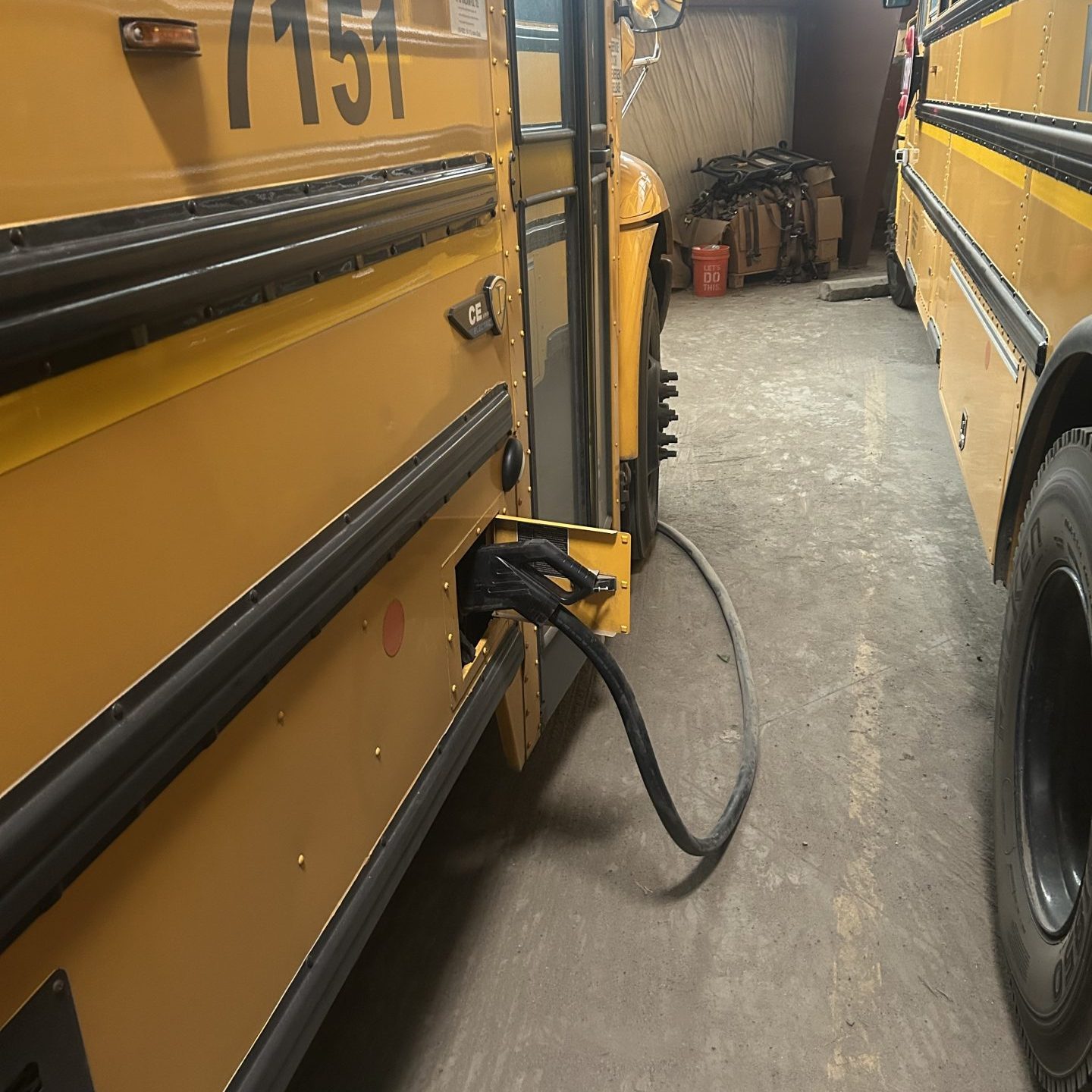
In 2025, the district passed a federal audit to ensure it used the grant money correctly, Thomas said.
The district’s remaining five buses are diesel-powered: four for long-haul athletic trips electric buses can’t make and one to transport students with disabilities.
Electric buses now do 90% of the district’s daily routes.
“We’re 90% (electric), and it works,” Thomas said.
‘I was leery’
Further north, in Genesee, transportation director Greg Moser said the buses scared him at first, but he’s been pleasantly surprised.
Implementing the buses was mostly simple, requiring only minor adjustments. The biggest difficulty was installing charging stations in the district’s facilities, but Moser found that the grant covered all the costs.
“There really was no out-of-pocket cost to us for the infrastructure we have,” Moser said.
Some bus drivers were apprehensive about going electric, Moser said. But the first training in the new buses converted everyone, and the drivers enjoy running routes in the new machines.
“I was leery in the beginning, just because I didn’t know what to expect,” Moser said.