
MOUNTAIN HOME — At Bennett Mountain High, Ashlie Lambrecht wants to give students a reason to come to school.
For one student, that means having a boxing dummy in the alternative school’s weight room. For another, the 3D printing lab is something to look forward to. Growing Basque peppers in the school’s greenhouse encourages another student to get out of bed.
Bennett Mountain is a community school and Lambrecht, a community school coordinator, acts as a bridge between community resources, students and families in Mountain Home. A federal grant pays her salary.
When she tells people she works at an alternative high school, she often assures them that the students are good kids. But they are underprivileged, she said, and often overlooked by society. Some are on probation.
She wants to keep them out of the system.
“These kids — there’s no way to say where they would have ended up had they not had these opportunities,” Lambrecht said.
On Tuesday, Lambrecht led a tour of about 20 supporters and sponsors through Bennett Mountain High to show how the community school functions. It was part of a larger tour, organized by the United Way of Treasure Valley, of three community schools in the Mountain Home School District.
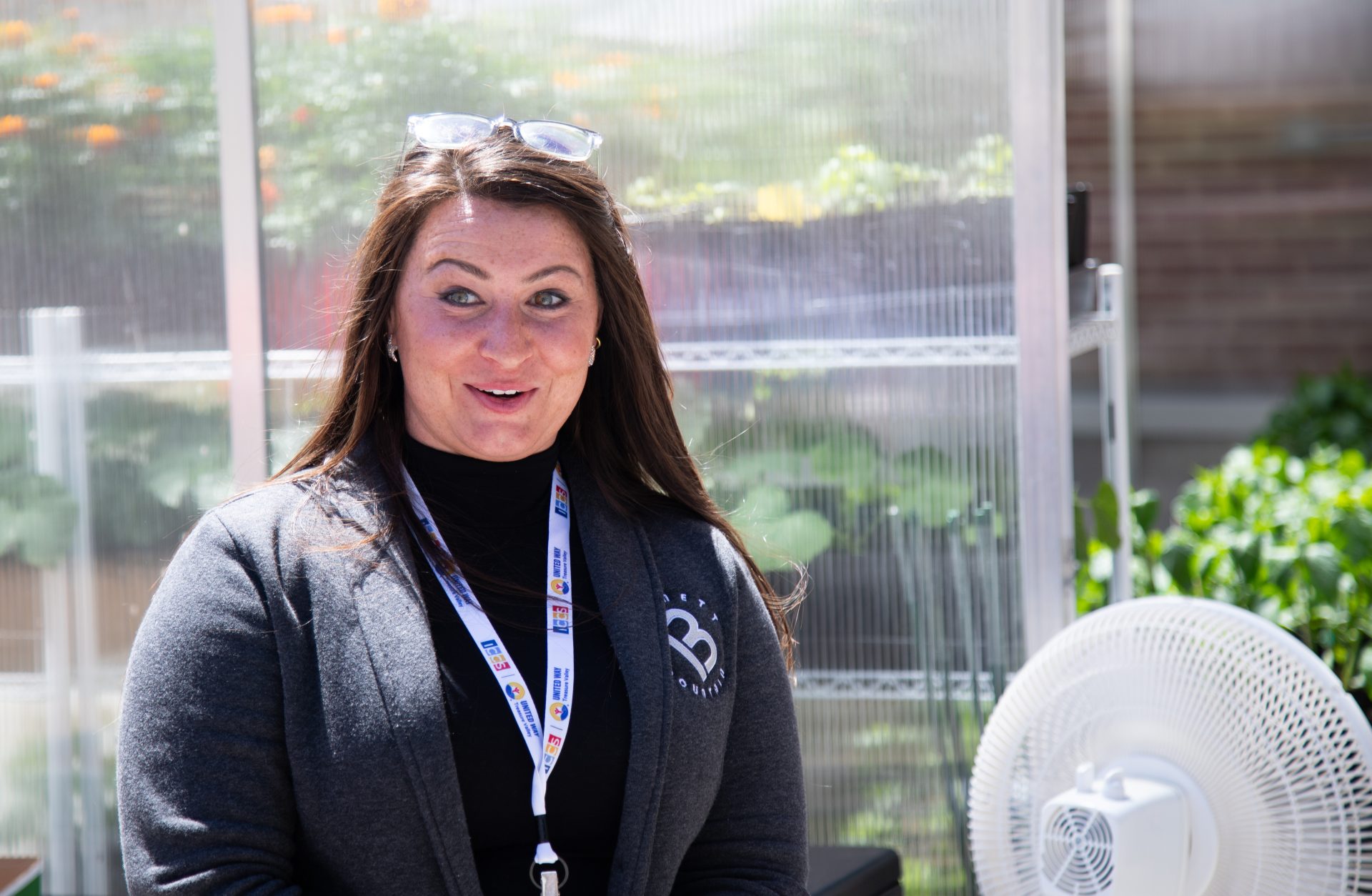
Community schools serve the whole student and collaborate with local resources to meet the needs of local families. There are 65 throughout Idaho, including 47 in rural areas, and each is unique.
The community school approach has spread throughout the state over the past 10 years. The program received a significant boost in 2023, when the U.S. Department of Education awarded the United Way of Treasure Valley a five-year, $45.9 million Full-Service Community Schools Grant. The nonprofit then distributes the grant funding to local schools to cover a coordinator in each building and support programming.
Megan Remaley, president and CEO of the United Way of Treasure Valley, said the nonprofit believes in the power of community. But life can be challenging, she said. Poverty and other roadblocks can prevent students from engaging in education.
“We know that education is a great equalizer,” Remaley said. “It helps folks be able to see all the potential that they have, but when life stuff gets in the way, they can’t take advantage of that.”
The community school strategy, she said, helps remove barriers and expand opportunities for students and families.
Mountain Home’s three community schools distribute free food and clothing; provide health screenings, school-based mental health counseling and low-cost daycare for school district employees; and record a local podcast to communicate directly to families.
Inside the schools
For Lambrecht, the most important part of the program is letting students know they belong.
She wants to get students into the building and make sure they are somewhat regulated — emotionally and physically — so they are ready to learn.
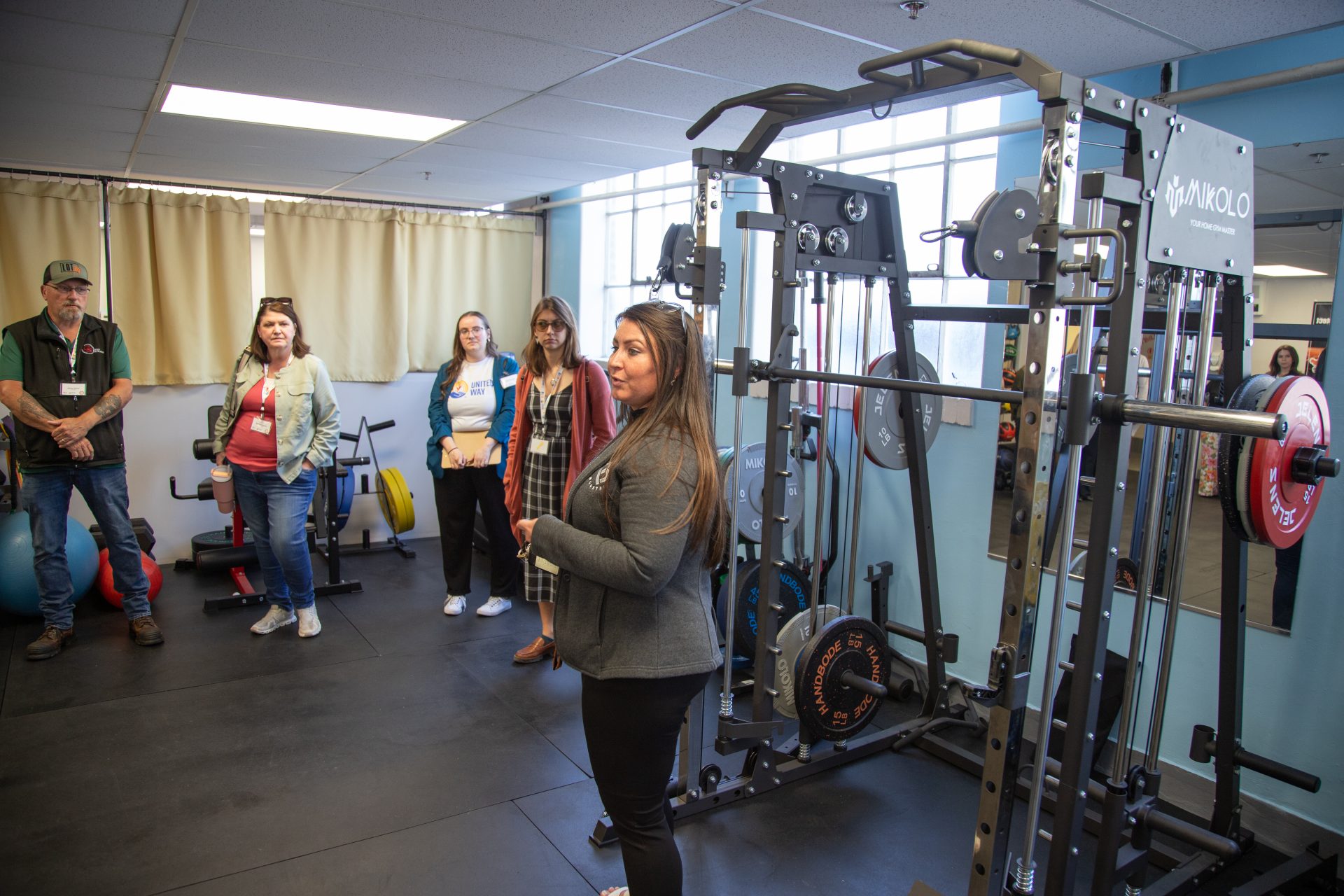
As she led a tour through the 100-year-old building in downtown Mountain Home, Lambrecht said her favorite place is the weight room. The equipment was hand picked by students based on their interests. One student selected the boxing dummy, called Bob, and another selected a ski machine.
To address mental health, the school has a partnership with Desert Sage Health Centers. A room in a portable outside the main building is dedicated to counseling.
Vicky Jekich, community health manager for St. Luke’s, joined the tour.
From a public health perspective, Jekich said the community school partnerships are invaluable. They can help provide upstream prevention and address community needs before folks need to go to the hospital.
“It truly takes everybody to come together,” Jekich said.
Just outside the portable, science teacher Angela Fish tended to Basque pepper seedlings that students grow and sell to the community.
“We had a local Basque gentleman come and say, ‘Hey, if you grow these, I guarantee our Basque community will come,'” Fish said to the tour group.
In two closets down the school’s main hallway, students are welcome to pick out books donated by the Friends of the Mountain Home Public Library and take formal clothing for job interviews or a dress to wear to prom.
“Almost all of our young men are utilizing this,” she said. “They can come get a nice shirt or a tie.”
And then there’s the Bear Necessities Food pantry. Lambrecht said the school distributes about 200 bags of food every month. Students help and rack up community service hours to tout on job applications or fulfill probation requirements.

The pantry saw a big increase in use during the recent partial government shutdown, when some federal employees were furloughed. Mountain Home has an Air Force base southwest of town.
“With us being a military town, our numbers doubled,” she said.
The school also provides affordable day care for district employees. For $200 a month, staff can drop off their babies or young kids before work. She said the district had “massive turnover” due to the lack of affordable childcare.
“It’s revolutionary for our school district,” Lambrecht said.
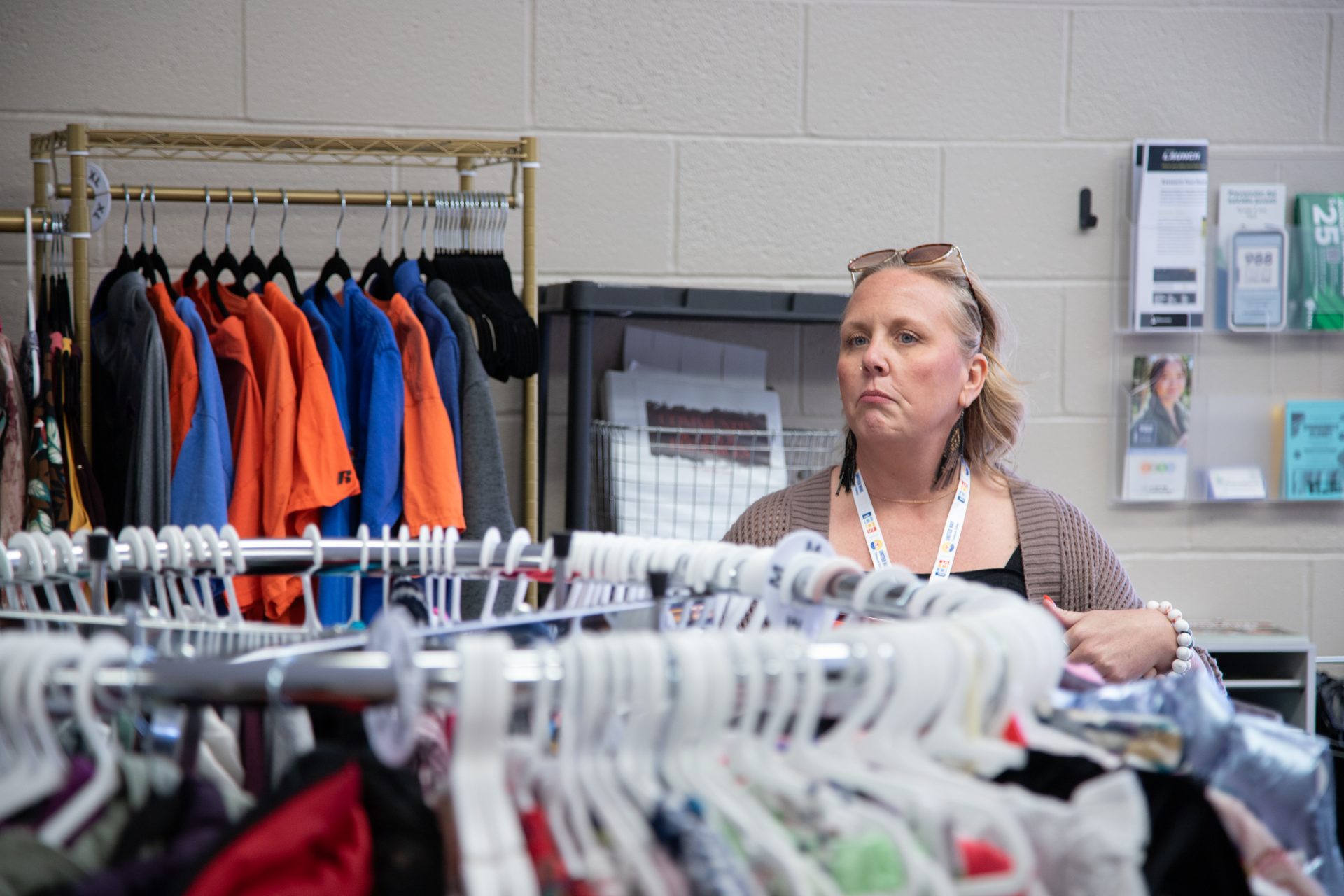
Next door at Hacker Middle School, community schools coordinator Liz Burnett took over the tour group. She started with the community closet, which looks like a thrift store with racks of clothing and shelves full of shoes. But unlike a thrift store, everything here is free. Burnett said a student can ask for a few pairs of pants. She then picks out the clothes, bags them up and sends it to the school.
“They don’t know where it comes from,” Burnett said. “There’s never a question asked. They just have what they need.”
December Drama
Not everyone agrees on the benefits of community schools.
In an attempt to root out diversity, equity and inclusion, the Trump administration in mid-December canceled 70 community school grants throughout the country. That included Idaho’s grant.
Burnett said she was a nervous wreck when she heard of the cancellation. But she also saw an outpouring of support.
“Everyone heard the news and asked, ‘What can we do?'” she said.
Over at Bennett High, Lambrecht said she was devastated, as were her students.
“People were upset,” she said. “They were like, ‘Who’s gonna run the food pantries? Who’s gonna run the closets? Who’s gonna run after-school programs?'”
But a couple of weeks later, after hours of calls and advocacy from state superintendent Debbie Critchfield, the federal government reinstated the Gem State’s portion of the grant.
“We were so relieved when it came back up,” Burnett said.
While Idaho’s grant was brought back, the United Way of Treasure Valley isn’t counting on a renewal once the five-year grant expires in 2028.
Katie Marshall, the nonprofit’s advocacy and sustainability manager, said the federal grant is a “catalytic investment” that has helped scale community schools across Idaho, but is not intended to sustain the program in the longterm.
“We’re planning for a roll off of federal funding, and we’re committed to sustaining this group across the state,” Marshall said.