
Seven Republicans want to replace Gov. Brad Little.
This crowded, underfunded field seems ideal for a well-known, well-financed incumbent. The conventional wisdom goes like this. A cluster of challengers shaves off splinters of the protest vote. No one candidate can break out and pose a true test. And Little coasts through the May 19 GOP primary.
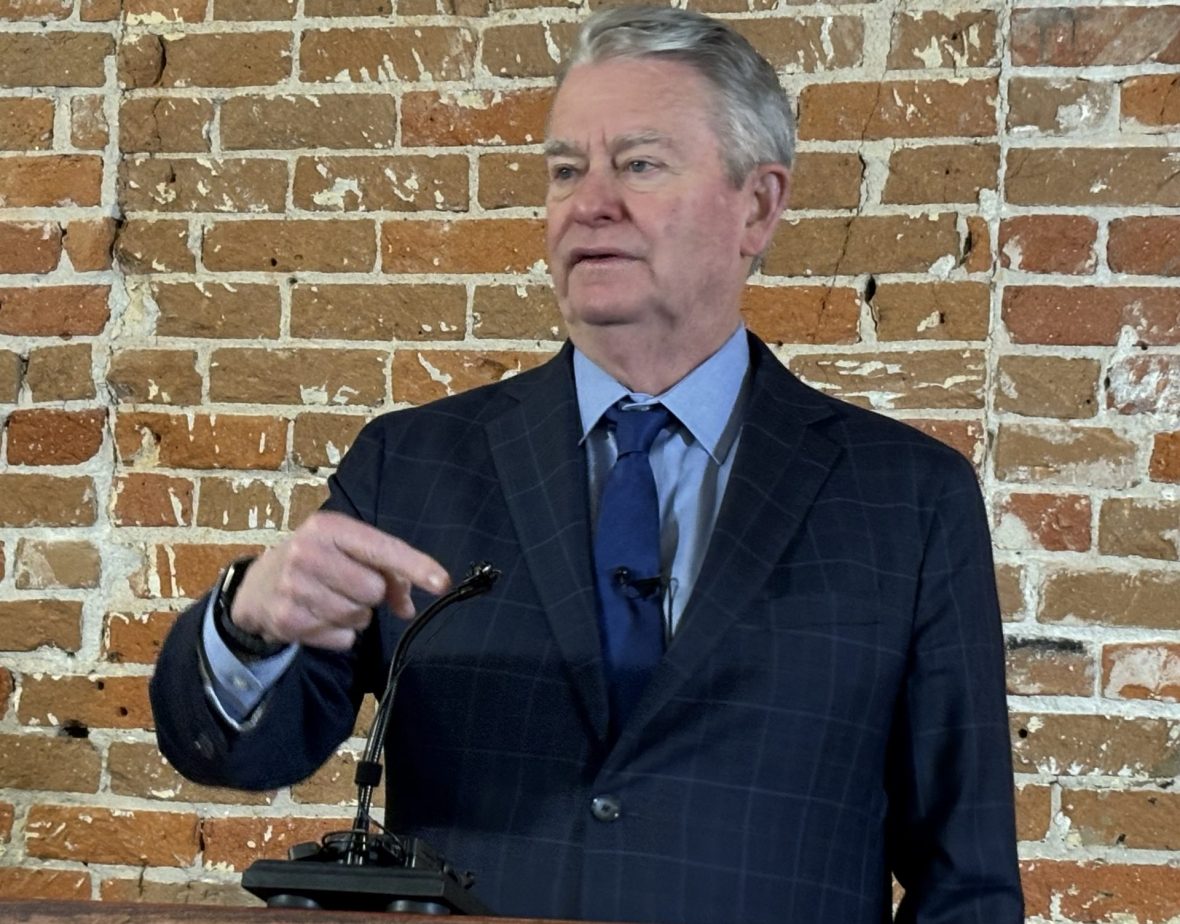
“The real surprising thing about the governor’s primary, I think, is the fact that in an era of such a divided and fractured Republican Party … we don’t have a strong, very conservative, significantly right candidate of stature,” said Boise Republican David Leroy, a former attorney general and lieutenant governor.
While surprising, this isn’t exactly accidental.
It comes after Little has spent eight years in office pivoting to the right, deferring to hardliners in the Legislature — and neutralizing some of his conservative opposition. And after Little has reset his political coalition, turning his back on the teachers’ union that played a pivotal role in past elections.
A crowded field — but no marquee challenger
Eight years can make a difference. So can four years.
In May 2018, Little prevailed in one of the most fierce statewide elections in recent memory — and, with fundraising exceeding $4.6 million, one of the spendiest. The open seven-person primary essentially pit Little against then-U.S. Rep. Raúl Labrador and Boise developer and physician Tommy Ahlquist. Little won with 37% of the vote.
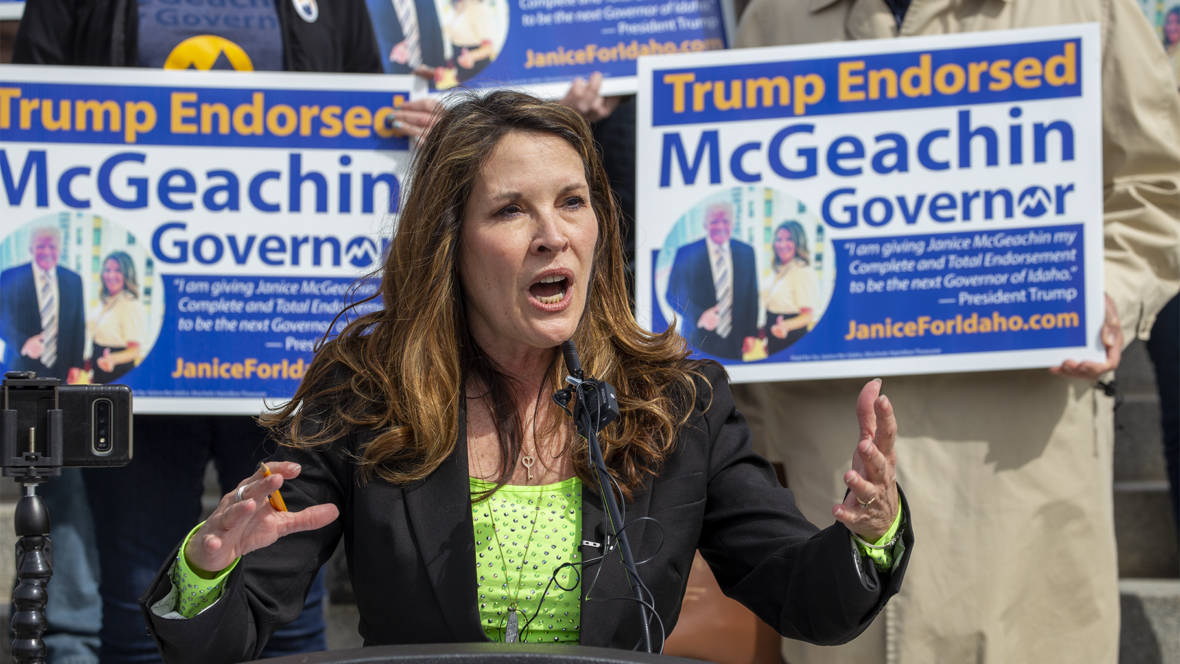
In May 2022, Little’s main adversary was then Lt. Gov. Janice McGeachin, who tried to wring as much leverage as possible from her statewide elected post. When Little was out of the state in May 2021, McGeachin, as acting governor, issued a short-lived executive order rescinding COVID-era local mask mandates. She hand-picked a conservative task force that railed about indoctrination in public schools. McGeachin eventually secured Donald Trump’s endorsement. Yet Little won easily, securing 53% of the vote in an eight-person primary.
The field of 17
All told, 17 candidates are running for governor. Here’s the full rundown:
Republican Party: Brad Little, Emmett (incumbent); Sean Calvert Crystal, Ammon; Mark Fitzpatrick, Eagle; Daniel Chadwick Fowler, Nampa; Ethan Giles, Boise; Ronald James, Driggs; Lisa Marie, Eagle; Justin Plante, Kimberly. (Click here for a closer look at the GOP field, from EdNews’ Kaeden Lincoln.)
Democratic Party: Maxine Durand, Twin Falls; Jill C. Kirkham, Pocatello; Terri Pickens, Boise; Chanelle Torrez, Nampa.
Constitution Party: Pro-Life, Emmett.
Independents: Jacob Burnett (write-in), Nampa; John Stegner, Boise.
Libertarian Party: Melissa Sue Robinson, Nampa; Paul Sand, White Bird.
This year, no high-profile conservative in playing foil to Little. Labrador is seeking a second term as attorney general — possibly biding his time while awaiting an open governor’s race somewhere down the pike. McGeachin is out of politics.
When Labrador decided to stay put — passing on a rematch with Little — that was a “weathervane,” said Rod Gramer, a former Idaho political reporter and retired CEO of Idaho Business for Education. It was a sign that Labrador, perhaps through polling or just from gut instinct, considered Little unbeatable.
But like Leroy, Gramer is surprised at the absence of a marquee conservative challenger. “The MAGA base seems to be a little asleep at the wheel.”
Of Little’s seven primary challengers, only one holds an elected office: Ron James, a commissioner in Eastern Idaho’s Teton County.
And only one appears to be actively fundraising and securing endorsements: Mark Fitzpatrick — the owner of Old State Saloon in Eagle, and an unflinching culture warrior.
‘If they’re showing up … they want Brad Little out’
Fitzpatrick has become a prominent figure in hot-button Treasure Valley politics — organizing a highly publicized but lightly attended Hetero Awesome Fest in Boise in June, and offering a $10,000 bounty in December, to anyone providing incriminating evidence against Boise Mayor Lauren McLean. These local controversies have prepared him for a statewide campaign, he said in an interview this week.
As Fitzpatrick began touring the state, he said, would-be voters didn’t know much about him. They just knew they opposed Little.
He now says people are more interested in what he has to say — on cracking down on illegal immigration, slashing property taxes and eliminating corruption and government waste.
Fitzpatrick admits he does not have a detailed agenda on education, although he opposes Little’s $75 million-a-year Idaho Launch postsecondary aid program. Education isn’t usually the first topic on the campaign trail. “Eventually we’ll get there in almost every conversation,” he said.
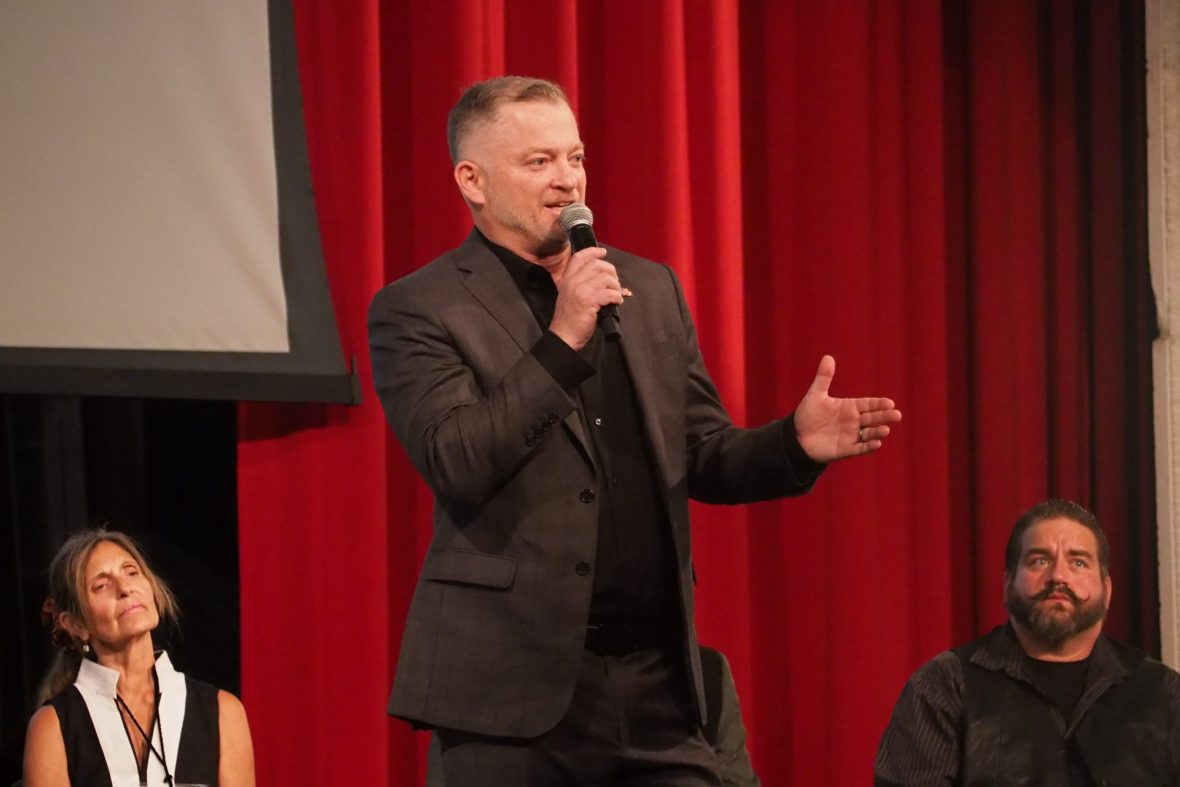
Fitzpatrick recognizes the obstacles against him.
Knowing the eight-person field can dilute the anti-Little vote, Fitzpatrick says he has talked to one of his fellow challengers — he won’t say which one — about publicly supporting him. While Fitzpatrick has far surpassed the other GOP challengers in the money race, with $148,000 that includes $60,000 of his own money, he’s not expecting to run TV ads.
He is expecting a low turnout, and he’s banking on motivating the voters who actually do come to the polls. “If they’re showing up … I think they’re showing up because they want to vote for me. They want change. They want Brad Little out.”
Fitzpatrick also hopes to build on county-level backing. He touts endorsements from seven county GOP central committees, and says more could follow. Little, Fitzpatrick quickly adds, has no county-level endorsements.
In a “titular” sense, the endorsements reflect rank and file backing, Leroy said. But Leroy points quickly to Kootenai County — where the central committee backs Fitzpatrick, but the party is deeply split. “We’ve got, arguably, two or three rank and files.”
The county-level endorsements give Fitzpatrick an edge among the challengers. “He’ll probably stand out in this field of seven,” Gramer said.
But a host of political watchers, interviewed by Idaho EdNews in recent days, agree on one point. They stop far short of giving Fitzpatrick a legitimate shot at unseating Little.
‘Are people just disengaged?’
Statewide incumbents can lose. Just four years ago, Labrador unseated Lawrence Wasden, a 20-year incumbent, in the primary for attorney general, while current state superintendent Debbie Critchfield ousted eight-year incumbent Sherri Ybarra.
But neither of those results were truly upsets. Labrador was a well-tested veteran of statewide elections, including the 2018 governor’s race. While Critchfield was running her first statewide election, she had some profile as a veteran State Board of Education member. Consequently, she amassed a huge fundraising advantage in the GOP primary.
If anything, these two elections underscore why a gubernatorial primary upset would be seismic in magnitude. Little’s 25-year resume in Idaho politics — from the state Senate to lieutenant governor to governor — dwarfs his opposition. Also unmatched is the incumbent’s war chest, nearly a $1.5 million cash balance, according to the latest sunshine report.
Money gives Little the airwaves. In TV ads, Little recaps his second-term resume. The script only briefly touches on education, with Little boasting that he “protected our children from woke politics.”
The Little campaign did not respond to a request for an interview. But the ad is telling. It is, in essence, the kind of safe ad that a prohibitive favorite runs in the latter stages of a campaign.
Like all campaign messaging, Little’s ad glosses over eight years of criticism, from both the right and the left. An occupational hazard of elected office. “Politicians always eventually wear out their welcome by making somebody’s mother mad,” Leroy said.
At least one metric suggests Little has ample reason to play it safe. Morning Consult, a global survey research firm, tracks governors’ approval ratings. Little has been above water his entire time in office, and had a 60% approval rating late last year.
Looking at those numbers, Boise State University political science professor Jaclyn Kettler sees an incumbent who is difficult to beat, and a field of challengers struggling to create a buzz. “Who is motivated to turn out?” she said this week. “Are people just disengaged?”
‘I don’t think “betrayed” is too strong a word’
The Little campaign ad stays in a safe space — at least in the dominion of Idaho politics. Little touts that he is running with Trump’s full endorsement. (Trump still has a 54% approval rating in Idaho, USA Today’s List Wire reported this week.)
Perhaps fearing a repeat of 2022, and Trump’s support of McGeachin, Little sewed up the 2026 Trump endorsement in June. The news came before Little announced his re-election, and before the GOP field could took shape. It was politics of preemption.
It leaves Fitzpatrick salty. He notes that he wasn’t even a candidate when Trump weighed in. Fitzpatrick even went onto X to tag one of the biggest names in the Trump orbit, Elon Musk, to appeal for Trump to take a second look. Musk never responded.
“Trump sometimes makes mistakes, as any human does,” Fitzpatrick said. “I feel very confident that if I were to meet with Trump, and he were to speak with both myself and Brad about the endorsement, I have no doubt that he would choose to endorse me.”
Little certainly lost one endorsement, from an in-state ally. The Idaho Education Association issued a vote of no confidence in April, days after Little signed a bill banning taxpayer support of teachers’ union activities.
In this month’s primary, the IEA’s public rebuke will probably carry no consequences. Little’s allegiance with the IEA surely didn’t sit well with the conservative wing of his party. “That may be a relationship you’d want to keep on the down low, at least until after the primary,” said Stephanie Witt, a professor at Boise State’s School of Public Service.
But the Little-IEA split cuts into the coalition that catapulted Little to the governor’s office. The IEA endorsed Little in the fall of 2018 and the spring of 2022 — and before that, on the day of the white-hot 2018 Republican election, the IEA’s political action committee kicked a last-minute, $5,000 donation into Little’s campaign.
Arguably, Little would not have survived the 2018 primary without a center-based coalition.
Little will likely coast in May, and in the general election, Gramer said. But the emergence of independent gubernatorial candidate John Stegner — a former state Supreme Court justice — also signals a change in the Idaho political landscape. Stegner could draw support from traditional Republicans who have tired of Little, Gramer said. These former supporters have watched Little fixate on declawing his hardline opposition while neglecting his mainstream base.
“I don’t think ‘betrayed’ is too strong a word,” Gramer said.
Kevin Richert writes a weekly analysis on education policy and education politics. Look for his stories each Thursday.