A Democratic leader in the Legislature is claiming the Idaho Department of Education is misinterpreting the intent behind a bill she sponsored, which aims to bring more money to classroom teachers.
The department has interpreted House Bill 728 to mean that school districts should maintain the status quo, and keep paying instructional coaches the same way they have for years — from a bucket of money set side for teachers.
House Minority Caucus Chair Monica Church, D-Boise, told EdNews that the department’s guidance is not OK.
“That is not the intent, nor is that the language as it is written in the bill,” Church said in a Thursday morning phone interview.
Shortly after that call, Church sent a message to EdNews saying she spoke to Idaho Department of Education CFO Gideon Tolman.
“There will be some updated guidance if you want to give him 24 hours,” Church wrote in a text message.
But department staff Thursday afternoon doubled down on their interpretation, and said they are not preparing new guidance.
“We follow the law as it’s written,” department spokesperson Andrea Dearden said. “Not as it was intended.”
Church said the goal of the bill — which easily passed through the Legislature 98-1 with a single dissenting vote from Sen. Brian Lenney, R-Nampa — is to ensure that money lawmakers set aside for teachers is actually going to classroom teachers who instruct students, and not to instructional coaches who support those teachers.
Coaches are often veteran teachers who help mentor and guide less experienced teachers to help improve their craft, build lesson plans or strategize how to handle challenging behaviors. They are more common in large districts.
The bill carves out coaches from the “instructional staff” category and puts them into a new “instructional support staff” category, but does not say how this new category will be funded. This has created confusion in school districts as administrators and staff are negotiating salaries and signing employment contracts for the coming school year.
Districts that employ these instructional coaches are scratching their heads, wondering how they are supposed to pay coaches under the new definition.
“That’s where the confusion was,” Tolman told EdNews in a Wednesday afternoon interview. “Do they have funding associated with them or do they not?”

Earlier that morning, Tolman told school district business managers in a monthly webinar to stay the course and continue paying instructional coaches as instructional staff.
“Because instructional is included in that new definition, and because the legislative sponsors made it clear that there should not be a big fiscal impact to schools, we’re going to move forward with continuing to fund those staff, those instructional support staff, as instructional staff,” Tolman said in an interview.
Church Thursday said coaches are “great and wonderful,” but they are administrators and should be paid as administrators. They do not have to get substitutes, they don’t engage with parents and they do not grade students.
She said coaches are typically classroom teachers who were removed from the classroom in the past few years because of an opportunity to “try out a new thing.” She wants to bring them back to the classroom.
“I think all Idaho parents want to make sure that there are as many possible teachers in our classrooms as our funding allows for,” she said. “What we need are more teachers and lower class sizes.”
Dearden said if the goal of the bill was to change how instructional coaches are funded, Church’s legislation is missing a piece.
“If that needs to happen, we have nothing to say that in the statement of purpose or the fiscal impact note,” Dearden said Wednesday. “We don’t have anything to suggest that. So that’s why we’re going to continue on the path that we’re on.”
If the state goes with Church’s stated intent behind the bill, Dearden said it would mean $3.2 million less in public school funding. There are 392 employees in Idaho who would be classified as instructional support staff under the new definition.
The bill has raised other questions on how districts should classify staff members who wear multiple hats. It includes a provision on “primary employment,” defining it as the role a staff member has for 50% or more of the time. School staff would only qualify as instructional staff if they are in the classroom the majority of the time.

Heather Williams, director of the Idaho Association of School Administrators, said this will create problems for rural districts and small charter schools.
In Clark County, she said, the superintendent is also the principal and a math teacher. Under the new law, which goes into effect July 1, that staff member would only get paid for her work as an administrator. Williams said it’s not very clear what the intent of the bill is.
“It’s a definitions bill,” Williams said. “That’s what (Church) said. That’s what it was passed as. It’s not a funding bill.”
There’s also a question on how the new category of instructional support staff would impact educators’ placement on the career ladder, the state’s salary allocation system.
Williams said instructional coaches don’t typically stay in these positions long term. They might be a coach for a couple of years then go back to the classroom.
“If they’re not able to be allocated as instructors, you know, an instructional allocation, it messes up their position on the career ladder,” she said.
Dearden confirmed Thursday that instructional coaches and other “instructional support staff” would not advance on the career ladder.
Clearing up the ‘gray’ language
The bill was designed to provide a clear, consistent picture of staff roles in public schools, according to its statement of purpose.
When Church introduced her bill to the House Education Committee in February, she told committee members that it would solve a problem in school districts.
Due to the “gray nature” of education language, she said districts were using money set aside for teachers to pay the salaries of instructional coaches.
While these jobs are necessary, Church said, it’s hard to explain why teacher funding doesn’t always make it to actual classroom teachers.
“No educator should be defined as instruction if they are not in a classroom day-to-day,” Church told the committee.
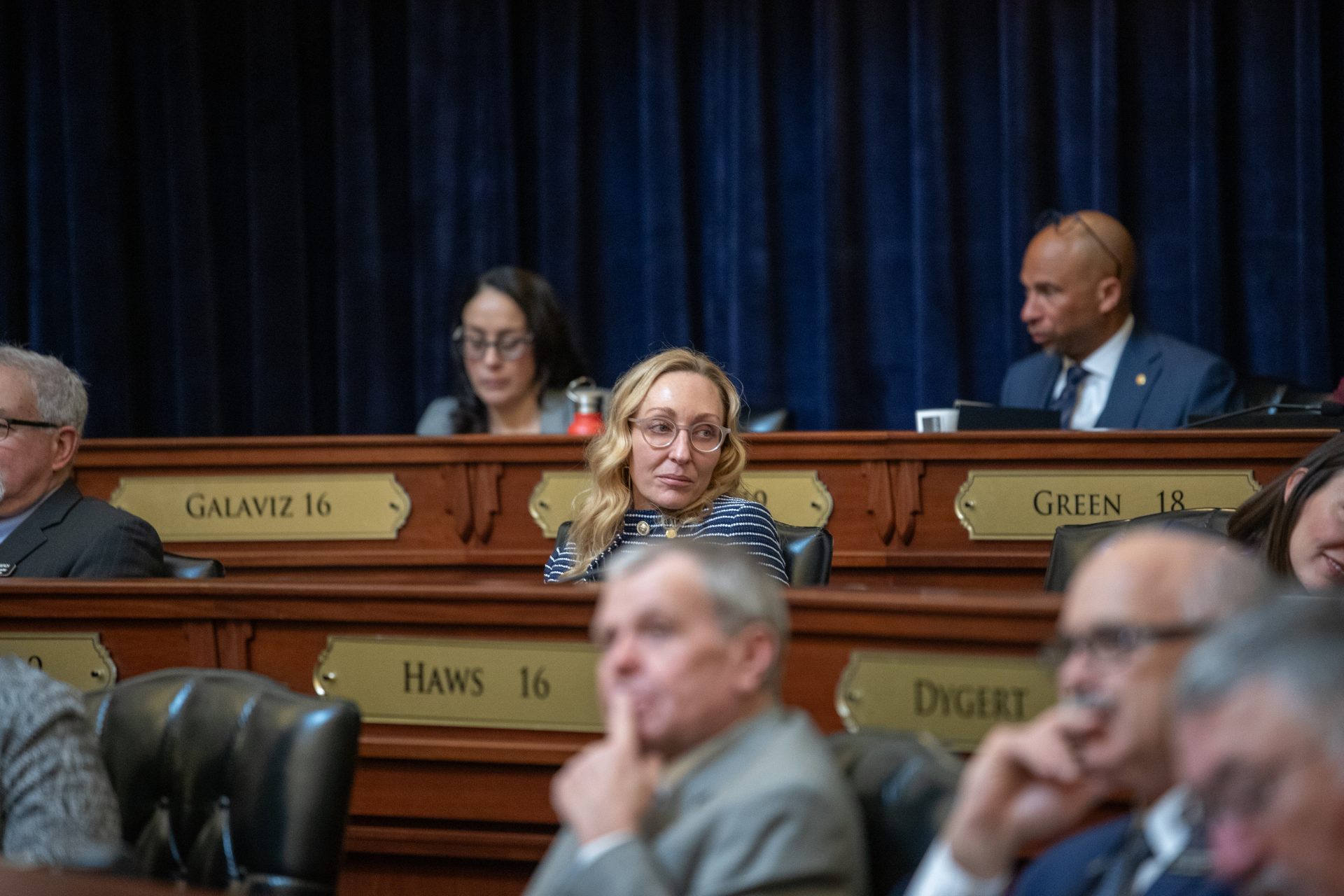
The committee gave an initial approval, then Church came back later that month for more discussion. Committee members supported the idea of helping taxpayers understand where their money is going. They sent it to the House floor, where it passed unanimously.
“This is a great move,” said Rep. Barbara Ehardt, R-Idaho Falls.
When the bill made it to the Senate Education Committee, Church was met with pointed questions and criticism.
While Church said her bill would bring transparency and make school roles more clear and consistent, Sen. Kevin Cook, R-Idaho Falls, didn’t see it that way. He said the school funding formula is already very complicated.
“In my mind, you just complicated it again,” Cook said.
Chairman Sen. Dave Lent, also R-Idaho Falls, mentioned the “Mississippi Miracle” and the importance of instructional coaches and mentors in that state’s massive education improvement from 2012 to 2025. He said the bill might discourage people from becoming coaches.
“When I think about mentors, that’s the piece I’m really concerned about, because they seem to really make a big difference in our classrooms,” Lent said.
Coaches as administrators?
In the Senate Education hearing, and again in a Thursday interview, Church said the intent of the bill is to shift instructional coaches who do not instruct students into the bucket of money set aside for administrators.
“We’re asking not to be labeled as administrators, but to use the funding for administrators,” she said in committee. “Right now, we’re asking teachers to share their funding with non-teachers.”
Three people testified against the bill in the committee hearing, including Peggy Hoy, a longtime educator and instructional coach.
“I want to make it very clear that as an instructional coach, I’m not an administrator,” said Hoy, who is also a governance officer with the Idaho Education Association. “I don’t evaluate, I don’t supervise, and I don’t make any personnel decisions. My role is strictly peer support.”
Williams, from the Idaho Association of School Administrators, had a similar message.
“We believe that these roles are instructional in nature and belong in the instructional allocation,” Williams said.
Twin Falls Superintendent Brady Dickinson said his district uses coaches in every school to support teachers who are not classically trained.
“I have concerns that under the definition under the proposed bill, they would not fit into that instructional category, which means we wouldn’t be able to use the funding for those folks,” Dickinson said. “And if we moved them to administrators, we’d be way over.”
Dickinson was referring to the number of administrators that the state funds, based on support units. For each classroom, the state pays for 0.075 administrators, according to the Idaho Department of Education. If some instructional coaches are classified as administrators, districts would have to figure out how to rebalance their administration budgets.
The department’s interpretation
The Idaho Department of Education agrees with Church that having new categories for staffing would be helpful, Tolman said Wednesday.
The question then is how the new category of “instructional support staff” is funded.
During the department’s post-legislative session roadshow, Tolman said he told school districts around the state that department staff was still trying to figure out the answer to that question.
Within the past week, he said the department decided that the new category of staff would still be funded from the “instructional staff” budget.
“We’ve been kind of scrambling to figure out how we want to communicate it to school leaders,” Tolman said.
Dearden said this is common after each legislative session. Staff examine new laws that impact schools and then issue guidance to districts. On Wednesday, she said the department was planning to issue written guidance next week.
After Church texted EdNews Thursday morning to say the department would provide new guidance in 24 hours, Dearden said that the department has not changed their thought process on interpreting the bill.
“We haven’t issued any guidance, nor have we said we are going to change what we’re doing right now,” Dearden said.